Back
ABA Careers

Season 5: Episode 1 – Raven Healths ABA Data Collection Software

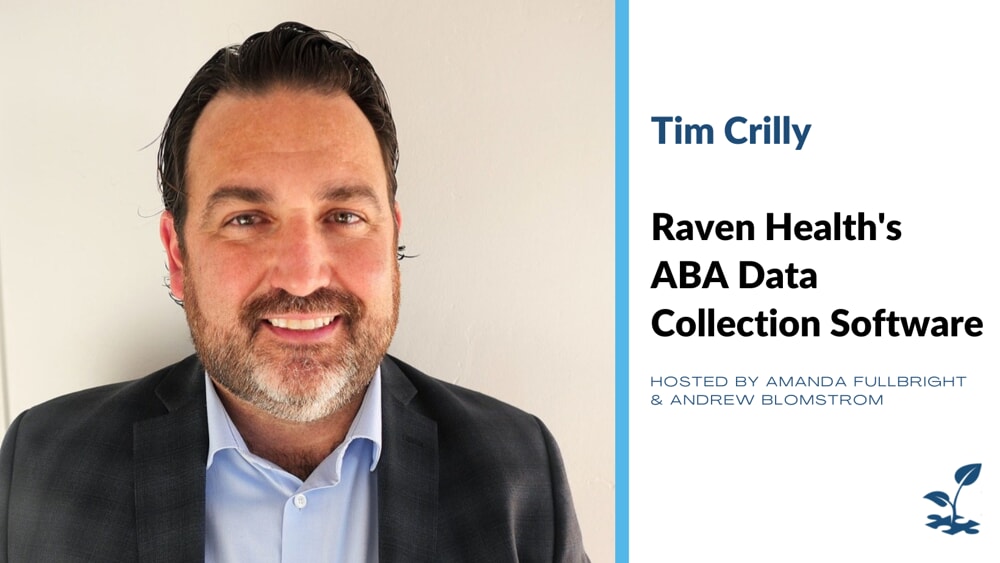
Hosted by Amanda Fullbright, MEd, BCBA, LBA, ANDREW BLOMSTROM, BCBA, LBA, MEd, Tim Crilly
March 21, 2024

Listen now:

or listen on your preferred platform:

Episode Description:

In the Season 5 premiere, new hosts Amanda & Andrew are joined by previous ABA Unfiltered host, and current Senior Vice President of Strategic Partnerships for Raven Health Tim Crilly. Tim joins the podcast to discuss Raven Health’s ABA Data Collection software as well as discuss his time as host of ABA Unfiltered. Join us to learn some new exciting information on the field of ABA and take a journey into the past as we reminisce on previous ABA Unfiltered episodes.

Full transcript

0:16 Andrew Blomstrom: Hello everyone, this is Andrew Blomstrom, along with Amanda Fullbright, and you are listening to ABA Unfiltered, where each episode we interview guests from around the world of ABA. Whether you’re a BCBA, RBT, or just interested in ABA, you are sure to pick up some actionable advice you can utilize on your journey.
0:35 Amanda Fullbright: Hey Andrew, how’s it going? You excited about our first podcast?
0:39 Andrew Blomstrom: I am. It’s been a while since we’ve talked to Mr. Tim Crilly, so it’s exciting to have him back in the BlueSprig world.
0:46 Amanda Fullbright: Yeah. Well, I guess it’s technically not your first podcast. You have been the producer for two or three seasons now?
0:54 Andrew Blomstrom: Uh two seasons behind the scenes. This is the the first season now uh on air for the podcast, which is a nice uh change. It’ll be uh interesting and fun to see how this season goes.
1:06 Amanda Fullbright: Yeah, I’m I’m excited that we were able to pick up the torch from Tim and carry on the podcast, uh, not let Tim’s baby die. So um, and excited to be doing that with you, Andrew.
1:21 Andrew Blomstrom: Yeah, it’s been great. He you know carried us along for four seasons. So, as you mentioned, it’s gonna be nice to kind of pick up his torch and carry it and see where we can take it.
1:29 Amanda Fullbright: Yeah, I’m excited to see what advice he might have for us and and what he’s been up to since leaving us at BlueSprig. So it’ll be it’ll be awesome to talk to Tim.
1:39 Andrew Blomstrom: Me too.
1:41 Amanda Fullbright: So are you uh excited about any other guests we have coming up this season?
1:46 Andrew Blomstrom: Yeah, I’m really actually excited about a lot of the guests we have coming up. Um, you know, talking about some of the supervision stuff with BlueSprig owned Diana Powell. I think that’s going to be awesome. Uh coming up near talking to the attend behavior folks with um, you know, parent and caregiver training. I think that’s huge in the field of ABA. So really excited to hear what they have to talk about. But overall, just super excited about this whole season. Uh, any particular guests you’re uh really dying to talk to?
2:15 Amanda Fullbright: Well, I uh I’m very nervous, very nervous, but uh very excited to uh talk to uh Shahla, um Linda LeBlanc, and Dr. Tyres Sellers about supervision. Um they are just some really great role models in in our field, and it’s an honor to be able to interview them. So nervous, but super excited.
2:38 Andrew Blomstrom: It’ll be fun. Before we get started, we would like to take this time for Amanda and I to introduce ourselves to you, our loyal ABA listeners. Amanda, why don’t you go ahead and start us off?
2:49 Amanda Fullbright: Thanks, Andrew. I’m Amanda Fullbright. I’m really excited to be a new host of ABA Unfiltered. I am a BCBA and I work for BlueSprig Pediatrics as a senior vice president of learning and performance development. I have been a big cheerleader of this podcast and of Tim Crilly, the former host since the inception of the idea for this podcast. And so I’m I’m really honored to step into some big shoes that that Tim has left for us. I live in the Dallas, Texas area with my husband and two cool kids and a really cool cat. What about you, Andrew?
3:34 Andrew Blomstrom: My name is Andrew Blomstrom, and like Amanda, I work for BlueSprig Pediatrics. I am part of the Learning and Performance Development Department. I am the director of learning technology and operations initiatives here at BlueSprig Pediatrics. I have been now at BlueSprig for about three years. I have worked in the education field for uh a little over 20 years now. Uh really enjoy helping uh others learn the skills they need to be successful, uh, not only in their professional worlds, but their personal lives as well. And uh really looking forward to kind of working with you on this podcast and getting to hopefully get some more information out there to all of our listeners. I live in the Orlando, Florida area with my two children and wife and our dog Junior. Uh and uh yeah, looking forward to the season of ABA.
4:23 Amanda Fullbright: Well, we are very excited to be your new hosts of ABA Unfiltered. Thank you so much for tuning in. And we we hope you subscribe and come back as a loyal listener next time. Well, you ready to get into it?
4:34 Andrew Blomstrom: I’m ready to get into it.
4:36 Amanda Fullbright: Let’s talk to Tim.
4:37 Andrew Blomstrom: Now, without further ado, we’d like to welcome back to ABA Unfiltered our previous host, Tim Crilly. Tim, why don’t you start by telling our listeners a little bit about yourself and what interests you about the topic of ABA?
4:50 Tim Crilly: Okay. Uh well, Andrew, thank you. Amanda, thank you. Uh it’s really exciting to be back. Basically, currently I’m uh just a guy without a podcast, so it’s it’s nice to have something to do today. Um yeah, where to where to start? Um, ABA has been my um my career. Uh, like a lot of people, my my generation, my age wasn’t what I had planned on doing, didn’t even know what it was until I started doing it. And even then, I don’t even know if it was ABA back then. It was some other form of something. Um, I was a teacher, so started out um as a as a grade school teacher and quickly found um that that wasn’t really for me. Um, had a a child in the kindergarten class that I was that I had um who’s undiagnosed, made life a little bit of a challenge, but I found myself gravitating more towards towards him uh rather than the rest of the class. And someone from another ABA agency was working one of the special day classrooms there and said, Hey, there’s this, there’s this thing, you can come do it, and it’s more of a one-on-one. And I knew teaching was sort of coming to a to an end for me, and and I went and I gave it a try. Um, and it allowed me to meet a lot of special people along the way. One of those uh would be Dr. Sharyn Kerr. Uh, she was the person I met on my first day of work um at that company, and uh worked there for 10 years in a in a number of different roles and and really fell in love with the industry and the people and sort of the things you were able to do to help families. Like that was what really drew me in. Um, Sharyn unfortunately made me go back to school twice. Uh, so at the the the conclusion of that, I I did uh have my BCBA. Um after that, um, you know, my goal was always hey, how do I have a bigger impact? How can I do something that that has you know more of an influence in different directions? So um I went and I was one of the first BCBAs to work at an insurance company. So it was with Magellan and uh got a chance to help guide some of the uh practices and sort of the the way that they were gonna look at interpreting care for better or for worse. Um, some people like the things that I did, and some of the things made me really famous for all the wrong reasons. Um, but it was a good, really good learning experience for me. Um, it was probably you know the best paid internship I’ve ever had because I really learned a lot about the industry and and I didn’t realize how much I didn’t know until I took that role, which is crazy to think it was almost 10 years ago when I started at Magellan. It was in 2013, so we’re coming up on that 10-year anniversary. And um, I did that for a few years, but but quickly start to realize that there were the red tape um was getting in the way, and it really was a challenge to have the uh impact that I would have hoped I could have had. And then I got a call from uh from a guy I’d never met um with a Yahoo email and said, Hey, I’m starting this ABA company, it’s called BlueSprig. And I you know wrote it down on a piece of paper, and of course, I wrote Blue Spring, and um, you know, he’s like, There’s no website. Um, and he was coming from a Yahoo email, and my wife was saying this is not real, and I said, Well, he’s willing to fly out and and meet with me. It seems like a pretty elaborate uh ruse to uh you know get it up into anything nefarious. So I met with Keith, Keith Jones, the um former CEO at BlueSprig, and and really fell in love with his vision, and that was in the fall of 2017. So I was able to join BlueSprig before it was really anything um of note. It was two clinics, about 11 clients. I think we had nine total authorizations for said 12 clients. So there was a lot of work to do at that time, and pretty quickly um I really fell in love with with what we were trying to do and and was able to get a few folks that came from my past to to join, like like Sharyn. Um, I had a chance to meet um Amanda, and you know, we really formed a bond early on in that time, and and it was some of the greatest professional years of my life of those early days at BlueSprig, um helping grow through both you know the acquisition process as well as the de novo stuff that we were doing at the time, and really were having an impact. Um then, you know, as all things do, they start to change. And and the um, you know, the the role that I was in really wasn’t the thing that I was doing earlier because we were at a different phase in in the life cycle of of BlueSprig, which you know totally makes sense. So I I had the opportunity, um, I met some people with the the group I’m with now, um, Raven Health, and I started talking to them. And lo and behold, they were a uh startup, much like when Keith reached out to me, and I started to realize, and I’m gonna steal a line from Amanda here. Um, I really enjoy building the track uh more than I enjoy running the track. And I get to be um a track builder again over here at at Raven Health. So Raven Health is um a mobile first, so it’s an app-based um data collection tool um, you know, that is really in it in the beginning phases of really doing some some great and amazing things that I think in 2023 people are going to be excited to to see. And I’m really excited about being a part of that process because going back to to my earlier point about having that impact, I do feel that a technology um aspect to to this industry is really needed. I think there’s a lot of a lot of things that we we can automate and we can um really cut down on the non-billable or the back end work that we end up having to do that takes away from our ability to serve the clients that we’re meant to serve. So I’m really excited about the things that that Raven’s doing and to really help people with with practices of of all sizes um out there in the ABA community and beyond, you know, speech and OT. And then we’re getting into some other things as well, but really trying to solve problems for people as it relates to to their data collection, their EMR, and all that sort of stuff. So Raven Health, that’s my commercial, and I’ll uh I’ll leave you guys to it.
11:20 Andrew Blomstrom: Awesome. Well, thank you very much. So you mentioned a little bit about Raven Health uh during your introduction, but was kind of curious how what difference do you see between Raven and some of the other tech solutions in ABA? And how do you think that’s going to make the biggest impact for uh the ABA?
11:39 Tim Crilly: I appreciate that question. Kevin Vick, our our main sales guy will really appreciate that question. Um, you know, I think for for me, if you go back to that that first day where I met Sharyn Kerr and my my first day in the ABA world, you know, it was a binder, and you’re opening a three-ring binder and you just get to work. And I think for me, that’s what Raven really feels like. It’s that I’m opening up a binder, I’m doing one thing and I’m just getting started. You’re not clicking through tons of screens trying to find where you’re supposed to be. It’s just you click on your session, the schedule just takes you right to the to the to the data book, and you’re ready to go and you’re ready to start collecting information on that program, on that client, on that family. Um, you know, it has great offline features. It actually works offline because it’s uh it’s built at first where other ones were built non at first and they tried to migrate over. So that’s why you run into some of the problems um with some of the other ones in that regard. Um we can do multiple types of therapy within it. It’s not just limited to to ABA. Um, we are really looking to solve um the note capturing problem that sort of plagues the industry currently, you know, lost notes or incomplete notes, or you know, okay, I’ll do all those at the end of the week and then they’re inaccurate or they’re they’re not done right, and people are having trouble collecting on those sessions. So we’re trying to really solve for some of those issues. And I think one of the really cool things is we really work with a lot of development partners in the community. So if you guys want to use it and spend some time in it, you can come back to us and say, this is great, this isn’t, and we’re able to fix those things and make those improvements as we move along. So it’s really, it’s not just us trying to tell you what it should be. It it’s part of the community bringing it back and helping us develop something that that could really change the way people uh approach care.
13:37 Andrew Blomstrom: Awesome. Yeah, Pokemon.
13:39 Tim Crilly: Yeah.
13:40 Andrew Blomstrom: Pokemon the website, that offline stuff, uh, I thought was a big win, you know, being out in the community with clients and being able to take notes, even if you didn’t have that connection and being able to have it sync back later when you, you know, back on Wi-Fi or back wherever you are with your clients is awesome. Yeah.
13:56 Amanda Fullbright: I was talking to another BCBA recently about how data collection is like a cornerstone of our science and and of our therapies, but it often can get in the way of the therapy. It can get in the way of building a relationship with a client or delivering services because you’re so immersed in collecting the data. And I think that what you said about just jumping in and getting to work is a real benefit to clinicians, but also the clients they’re serving.
14:26 Tim Crilly: Yeah. And, you know, but it’s not a three-ring binder. So there isn’t a case where you’re going to show up and there’s four pages missing or someone spilled water all over the binder, whatever. You know, it’s all those, all those conveniences of that binder without all the pitfalls that that came with it back in the old days.
14:44 Amanda Fullbright: I remember binder reinforcers, you know, like I was going to just ask you if you remembered those.
14:49 Tim Crilly: Yes, they were like gold, you know, Velcro laminate and binder reinforcers are the three things that I I think I think we kept them in a safe at the office. I mean, they were like, you know, of such value, you know, 20 years ago. Um, so you know, those sorts of things that are are are we able to to take away and sort of reduce a lot of the cost around um getting away from that paper model, but but also you know, making sure that people are feeling like it’s intuitive. And I’ll say one more thing. I would say it is it is built to look more like the other things that you use in your life. So it feels more like getting into the Uber app and ordering a car. So it has a feel that I think you know, as I get older, the workforce gets younger, the families that we’re serving get younger. I think this is a this is a system that really speaks to to that generation of people that are spending the most time in it. And I think that’s a a big selling feature. Uh, just when people walk by and want to look at it, it just looks like something they want to use. And I don’t know if everyone can say that.
15:56 Andrew Blomstrom: Yeah, I mean UI, user interface is a big you know deal when getting uh products out there to make sure that, like you said, it’s something that they’re familiar with and can quickly learn and be able to navigate around to find what they need. Yeah. Totally agree.
16:10 Amanda Fullbright: Awesome. Awesome. Well, uh Raven Health, check it out if you’re listening.
16:14 Tim Crilly: Um call me, whatever.
16:17 Amanda Fullbright: Call Tim. Yeah, well, Tim, I want to talk about the podcast uh of which we are we are currently on. Um take us back, tell us uh how it got started. Oh, yes.
16:30 Tim Crilly: Uh okay, let’s get some of that music with like the you know, the going back in time music. So wavy memory. Yeah I’ll add it in post. Okay, perfect. Um, it was mid pandemic, maybe even earlier in the the beginning phases of the pandemic. And um, we had an intern, um, Lucas, who came in guns blazing, he was gonna help the marketing department. He was a smart kid, you know, just knew his stuff. And he really wanted to do a podcast. And he took it to Keith and Sharyn, I don’t know whom else. And I think, you know, they all just said, Well, let’s have Tim do it. And and at that point in time, I said, Am I being punished? Like, why? Like, what are you talking about? I don’t know anything about this, I’ve never done anything like that. And you know, here I’m thinking, okay, I’ll say yes, it’s never gonna happen. You know, there’s too many things going on, we’re never gonna get this off the ground. But Lucas was very dogged in his his approach, and he had a lot of great ideas, and you know, we sat down and and we we made we made a list of like you know, who can we interview? Like, I I I we always knew it was gonna be an interview type of of show. So and I I sat down and I said, Okay, well, you know, we know a lot of people, and there’s a lot of smart people and people that might have an interesting thing to say. Um and it can really maybe be something that shines a light on on BlueSprig that says, Hey, look at all these cool people we hang out with, you know, look at the like these industry influencers that um you know want to come and talk to us. So that’s really what we set out to do. Um you know, the first season we we kind of made a mistake, but it was a good one. We learned a lot, obviously, from from those those early days of doing this. We tried to edit it too much, so it came off a little choppy. Um, we also recorded a bunch in a row, and then we’re trying to release them, you know, intermittently, and then you’d go and listen to it, and someone would be talking about their fourth of July plans, and the episode came out in September. It’s like, okay, that doesn’t really work. Um, you know, or I think Amanda, some of your team was on, and I didn’t have um oh, no one could help me that day, and nothing got recorded, you know. So, like we had a great conversation. Well, I forget, was it Rachel was in the middle of a hurricane? You know, so it was just um it was a little bit of a wild um time at the beginning, but when it was all said and done, and you could log on and like like you could see that people were like downloading it and listening to it, and it felt really cool. And it it was motivating to say, okay, that was good, we can definitely do better. So, you know, I think we set out um, you know, Lucas graduated, moved on, and and I begged Amanda for for help from Andrew. So Andrew came on and and really helped um push it into that that next next phase and you know really kept me on on track and did all the back end stuff and the technical stuff. And all I had to do was like try to book a guest, write down five notes on a piece of paper, and then just jump on and and start talking. Uh, you know, so I think the other lesson we learned was you have to have interesting people. If you have people that you don’t, you know, they could be interesting, and but talking about something you’re not interested in, it it feels forced. And um, that was a skill that I did not have was that ability to like extract information about a topic that I I didn’t know a lot about or really didn’t have um a lot of uh interest in. So, you know, I’m hoping that you know, with you guys some different voices, you know, you guys are gonna have a whole different take and there’s gonna be a different feel to it because it was really never my podcast, it was you know the BlueSprig podcast that that I was I was hosting. So I’m really excited that it’s living on um because I think we did a lot of good things and it shouldn’t go away. And I I think there is an audience, and you know that you guys have a lot of a lot of great people that you can bring to it. And you know, um Amanda, the the way you approach the the clinical world of ABA is very different than than my perspective, and I’m really excited to sort of see it. And you know, Andrew, I guess they’re letting you out of the box and you’re allowed to talk now. So, you know, I’m sorry I was holding you down all these years. Um, it was a union thing. I, you know, the uh the uh I couldn’t get permission to to get some of those uh technical guys uh you know airtime. So I I apologize. Um so yeah, it was just something that I didn’t think I would ever want to do. Um and when I told my then, I guess he was probably 14 at the time, he said, no, you’re not doing that. Like he was mortified to think that you know, like my voice would be on the ethos. Um, so I he’s never listened to it, so it doesn’t it doesn’t exist in his his world anyway. But um, you know, and the joke was always like we have one listener, it’s my mom, and no, and then you find out that’s not true.
21:32 Amanda Fullbright: Um tell us the elevator story.
21:34 Tim Crilly: Okay, quick side note. Uh, we were at CASP last May. Um, I got into the elevator and I was talking with uh a colleague of ours, and she ended up seeing someone that she knew. So they started talking, and I was kind of quiet, and someone it was a crowded elevator because everyone was like switching to go to a to a different floor for a different talk. And someone said, like across the elevator, hey, do you host that sh that? Podcast ABA Unfiltered. And I said, uh, yeah. She’s like, oh, I recognized your voice from it. It’s it’s really good. I appreciate it. And I think I probably missed my floor. I just like stood in the elevator, like in complete shock, um, as everybody got off and more people got on. Um, so that was really cool. Just, you know, I know that like you guys or you know, people around BlueSprig would listen to it, but just to some stranger out in the out in the world who was out there listening to it was was pretty cool and and like literally recognized my voice because if you you go, my face is nowhere to be found anywhere around the ABA Unfiltered uh material. So there you go.
22:39 Amanda Fullbright: So that I hope that listener is not too sad about your departure and continues to listen.
22:48 Andrew Blomstrom: But now they’ll get to see your face.
22:50 Tim Crilly: I got a new got a new microphone over here. I can I can come back anytime.
22:56 Amanda Fullbright: Uh tell me about L’s and ABA.
22:59 Tim Crilly: Man, and why do you want to torture me? I’m I’m still thinking we can make this happen, and I think we could do it in a different kind of way. It could be the night before um major conferences uh around the country, and you get a couple people together in the bar, and we sit down and we pick a topic, and you get a beverage, and you go, and you just start you just start talking. Um, but it was a concept we had. Um, we wanted to, I guess, have an excuse to expense um alcohol um to the to the company, but we were going to um sit down and have real conversations about the inside stories of of BlueSprig and just sort of how how we all came to be and how in those early days uh you know we were just figuring it all out and to take it from that tiny little group of people in two small offices to what we got it at and sort of like the behind the scenes while while drinking. I think that was the plan. But certain Australian women um who shall not be named um shot it down and and and never let our our dreams live.
24:08 Amanda Fullbright: No, she’s always crushing our dreams.
24:10 Tim Crilly: I know.
24:12 Amanda Fullbright: Do you have a favorite episode you did?
24:14 Tim Crilly: Um there’s one from the first season. Um gosh, and I feel bad I forget his name, but it was um a young man on the spectrum. Um came on to talk about work and you know his his his um what he does and things like that. But he just sort of started telling a story about um um him being bullied in, I think, junior high, early high school. Um, and it was just um it was just a very, very powerful story because he ended up running into one of the the girls that used to give him a hard time later in life, like they were in their like early 20s, and she had so much regret around um Cordell Sherwood, um, had so much regret around um what she had done and didn’t realize that you know he had a diagnosis, and this is why some of the behavior that he exhibited that that he was um ridiculed for, you know, wasn’t really wasn’t really him. Um and it was just a really powerful story. And I remember when we were done and we came back on screen, um, Lucas had just tears streaming down his face. It was like that powerful of a story. So I think that one, if you want to go through the um through the through the logs and find it, it’s a it’s it’s a little rough, like that, you know, because it was the early days, but the story and the uh the message is really amazing. Um, anyway, and then just with with Shala, you know, having having Shala on from UNT to talk about, gosh, I don’t remember what we talked about because it was all so smart and so perfect. Um, it was it was really hard to top.
26:00 Amanda Fullbright: Awesome. Well, she’s gonna be a guest on this season as well. So hopefully it’ll be a good conversation. I expect nothing less.
26:08 Tim Crilly: Yeah, looking forward to that one. Um, very much so. I mean, she’s such an amazing lady, and um just I I think that was one of the ones where I’m like, let me ask you a follow-up question. And and I thought I had had sort of figured out what she was talking about. She’s like, no, that’s not right, you know, but just like in a in a perfect kind of way, and just like help me get like you know, work through like the the topic. And you know, it was about um using the term buy-in. Um, you know, how we talk about like, oh, we gotta get our families to buy in, we gotta get the you know, staff to buy in and all that stuff. And it was just a really, really interesting uh take on something that I had taken for granted and never really thought about. So to me, that that conversation with with her was was amazing. And then we ended up having lunch with her a couple months later, and she brought up an episode that she wasn’t on, and um, it was with um someone from Trumpet, um, Amber Valentino from Trumpet, and she was you know on to talk about uh doing research and how all the little things that you do in your everyday life is research if you sit down and write it down and and and make it research. Um, you know, and and Shala was like, you know, I thought it was really great that the first thing you said was, hey, I want everyone to know that this is me patting myself on the back, by the way, be a Shala. Um, you know, the way you um talked about, yeah, we’re competitors, but why do we have to be competitors? Like we should really be all communicating and doing these things together. And she brought that up at our meeting, and it was like, wait, you were listening, like you weren’t just a guest, you’re actually listening. That was really cool too. So some some real validation there.
27:49 Amanda Fullbright: Well, and uh about the the term buy-in, you know, you and I chewed on that for months, like almost a year. And then um she was on clinical conference, uh presenting at clinical conference, and and I just had to bring it up again. And uh it happened to be Dr. Carl Binder was also in the audience and he chimed in. And I think we’re closer to maybe uh a replacement word for that, which is you know, a shared vision. What is our shared vision instead of buy-in?
28:20 Andrew Blomstrom: So I like it.
28:22 Amanda Fullbright: Pretty cool follow-up. Yeah, but it was a long time that we chewed on that.
28:27 Tim Crilly: Yeah, I mean, because you know, her whole concept is you know, you come in as a as a professional, you know, and you you’ve done the work and you you you know, you you think you have a good plan and a good answer for this family, and it’s your impulse to try to, I don’t want to use the word impose, but you know, you’re kind of imposing that onto that family to say, hey, it worked over here, it worked at the other, it’s gonna work for you. And just because it has in the past doesn’t mean it always will. And it was a really, you know, I I I’ve always known that concept, but it’s her her take on not trying to force the issue was pretty cool.
29:07 Amanda Fullbright: That’s awesome. Love her, love her. So Andrea and I are taking over the podcast. What advice do you have for us or anyone else that might be interested in in stirring the podcast?
29:20 Tim Crilly: I mean, going back to some of those lessons learned, um only do it because it’s a topic and a person of interest. Don’t just do it to churn out content because it won’t be good. And you know, you your time is too precious. Um, I know you know you have so many initiatives that you and your team are are doing. So, you know, make this something that is a fun distraction that also educates or entertains the community. Um, if you try to do things that aren’t interesting to you, you’ll hate it and you won’t want to do it, or you’ll be sitting there, it’ll be sitting on your schedule and you won’t want to go through with that. Um, kind of like parent training. Um sorry, uh I’m just kidding. Um, or caregiver guidance. Sorry, you know, it’s one of those things you want to make it rewarding, um, you know, and then also challenge yourself, like get people that make you nervous. Like a couple of those I had on was was, you know, okay. This is a you know, I mean I had Lorri Unumb on. We had, you know, the you know, she’s so easy, but you know, um to talk to. But it’s like because Lori Unam, like you don’t want to like mess this one up because people might actually like see that she’s on it and want to chime, you know, you know, tune in and listen, and you don’t want to come off sounding like you don’t know what you’re talking about. So, you know, but challenge yourself because I I think there’s there’s a lot of conversations out there that that can do that. Um, but it does make you nervous. I mean, I used to joke with Andrew, like I would get nervous for like for the first about 20 seconds, and then once I got going, I would relax. But you know, it’s that build-up that kind of like, okay, how’s this gonna go? Am I gonna blow this or or what? So that’s my advice. It’s gotta be fun or it’s not worth doing because you know this isn’t a giant moneymaker, uh for you. You know, this is this is something that’s that you’re you know you’re giving back to the community, and so it it should be rewarding to to the two of you and and the put people working on it.
31:21 Amanda Fullbright: Awesome. Thanks for that. I have to ask, and I don’t know the answer to this question actually, but um, did you listen to podcasts regularly before?
31:31 Tim Crilly: Um, there is one basketball podcast called No Dunks that Jack, my oldest, used to listen to when he was little. So if I was driving him to school or whatever, he would put that on in the car. And it was basically like four guys the next morning after a slate of NBA games would record a podcast and they would just talk about anything interest that happened in the NBA the night before. And so um, that was really the only one um I ever listened to. So, you know, going back to like, am I being punished? It’s like I I didn’t even know anything about podcasts, so and I still haven’t really listened to any, to be honest.
32:15 Amanda Fullbright: Just straight winging it.
32:16 Tim Crilly: I just yeah, I just you know, I and you know Andrew can attest. Like, I used to show up for the uh like oh, let’s listen to it together and edit it. And then he was just like, So I’m like, I don’t even want to listen to this again. Like I already had this conversation, like you’re you have to listen to it twice. I don’t. Um, but then a couple times I would listen to it when it actually came out because I would like, oh, let’s see how it turned out and things like that. Um, so but I kind of stopped that even um towards the end, to be honest, because I don’t know, I don’t know if it’s laziness or just sort of like I already know what we said. Um but that kind of thing. So no, I’m not a I’m not a podcast fan, and I know people like freak out about them.
33:01 Amanda Fullbright: So I I did, I mean, I was a listener to to most every episode, if not every episode. And uh I even went back and listened to the ones that that I was on, even though it was painful. Um, but just kind of wanted to see how it all sounded together.
33:18 Tim Crilly: Yeah. I mean, I always just tried to be a little like serious, like it’s a serious, you know, we’re talking, we’re in a serious business, you know, dealing with serious issues. Um, but we always always tried to have a lot of fun too, and and and goof around a little bit. And you know, um, and one thing I I think I I found out about myself that I I I I kind of I I enjoyed interviewing people, and I didn’t think I would as much as I did. So I think that’s the one takeaway I I got from that was oh, you know, it’s it’s kind of interesting. Like I I do like that forum of being part of the the person the being part of the process that pulls out information, like um, because I never want to interview people like for jobs, like I I I I hate that. So like I didn’t think I’d like interviewing them in in this regard. Um, but it it I I found myself really enjoying the the actual process of interviewing people.
34:17 Andrew Blomstrom: There’s a couple late night talk show hosts uh that are retiring soon.
34:21 Tim Crilly: Yeah, I’m sure I’m I’m fifth in line, I think, for a few of them.
34:27 Amanda Fullbright: Absolutely. Um so Tim, you’re one of the most popular guys in ABA. You’ve got uh friends and fans all around.
34:38 Tim Crilly: Oh, sure. One in an elevator, I think that’s it.
34:41 Amanda Fullbright: You have plenty of friends around. Where can we uh catch up with you? Maybe, maybe have an ale and talk ABA with you this year in the conference circuit.
34:51 Tim Crilly: Yeah, the comp well now with Raven, it’s probably a little bit heavier than my normal load. Um, so a few things. I will definitely be at ABAI Autism. It’s local, it’s down here in San Diego in February. Um blue um um Calaba and Raven are um co-sponsoring a tech summit the night before Calaba. So I want to say that Thursday, March 8th. I’d have to look it up. Maybe it’s the ninth. Um, but it’s the night before Calaba starts. So we’re there’s gonna be an event. Um, so we’re co-hosting with some panels. Um friends of yours will be there um on the panel that I’m I’m chairing. Uh it’ll be Stuart with um attend, um, someone from Floreo, and then um some folks from Cognoa, which is a uh remote diagnostic tool. Um, so I’m gonna chair that panel, and it’s gonna be about uh problems, obstacles, you know, in the pursuit of of care and some technological um solutions that those those fig those folks bring to that process. Um I’ll definitely be at CASP. Um, I think that’s in Tampa in April. Um, and then maybe if you’re gonna be at Tech Saba, I’ll definitely come to TechSaba. I think it’s in San Antonio. So I I love I miss San Antonio. My work at the Mac um was some of my most rewarding times uh as well at at BlueSprig. So the ability to go back and maybe take a little visit over at the the Mac would be would would be cool too. So that’s my plan right now. So um, you know, if you’re gonna be at any of those things, please come say hello and you know chat a little bit.
36:41 Amanda Fullbright: Definitely, definitely. Well, thank you, Tim. Are you um game to play question of the week with us?
36:49 Tim Crilly: No. Do I I have to though, right?
36:53 Amanda Fullbright: But you must. All right.
36:56 Tim Crilly: Well then just say we’re doing this.
36:58 Amanda Fullbright: We’re doing this right now. Um, lessons learned already, don’t ask. Yeah, all right. So here’s how it works. We have two questions and then a wild card. So I’ll start with the first question. Tell us something that you have learned lately that you think is cool. You know, we are training people in our day jobs, so we like to talk about learning.
37:25 Tim Crilly: Um I’m not gonna say I I learned this recently, but I am gonna say that it’s been reinforced and I’ve learned other things about this this sort of thing. And it’s something that you and I have been talking about, I think, since February of 2021. And it it relates to sort of that that note capturing process. Um I just I’m gonna rat on our industry a little bit. I think the early days of our profession really set out to like prove that we belonged and do all the the things that that we think were important, and we’ve created a a system that makes it harder and harder for us to practice because it makes it easier and easier for health plans to instill various rules that keep those things in place. So I would say, you know, um over the top um lengthy progress reports, no one ever asks for them, but we continually churn out 75, 80 page reports. And I think this this note capture process for every every session that occurs is is something that um I don’t know how many industries really have this level of scrutiny. And I think it’s partly because we we brought that upon ourselves. So I know it’s not the most positive thing to have learned, but I think it’s something that as a community we need to start really talking about and and how do we fix this? Because it’s it’s causing financial um hardships for for practices that that shouldn’t have it. They’ve done the work, the work was right. Um, they’re just not getting paid in the way they should because of of processes that we we put in place.
39:11 Amanda Fullbright: Causing mental anguish for the clinicians that are writing said and burnout and stress, all this stuff.
39:18 Tim Crilly: So, you know, there’s gotta be a simpler solution to to that process.
39:24 Andrew Blomstrom: Yeah, agreed.
39:25 Tim Crilly: So sorry, it wasn’t the the most uplifting thing I’ve learned.
39:29 Amanda Fullbright: But that’s okay. All right, next up, let’s say you find yourself with an extra hour. Maybe a meeting cancels later today. What are you gonna do in that hour? How are you gonna spend the time?
39:43 Tim Crilly: I mean, not productively, I’ll tell you that.
39:47 Tim Crilly: Um I um I don’t know, I’d probably find something to read, something something mindless, maybe scroll through something like bleacher report and read more about like the Giants going to the playoffs or something stupid like that. Like that’s really what I would do. Um or I know Luke’s been into chess, my my younger son’s been into chess, like maybe get beat by him in in chess. I think that would probably be the two things that would pop into my mind, but just something that’s like disconnected from you know the computer screen and and all those things that sort of eat up your your day at work. It would it would be probably one of those two things. Read mindless sports, get knowledge, crap, junk, you know, whatever, or play a little chess.
40:32 Amanda Fullbright: Awesome.
40:33 Tim Crilly: Are you which I’m not good at I’m not good at I’m like purely defensive and it backfires on me every time.
40:39 Amanda Fullbright: I’m terrible. I’m even bad at checkers. So all right, Andrew, you got the wild card.
40:46 Andrew Blomstrom: So, Tim, we got something a little different for you here. So, in a second, uh, I’m going to go ahead and hit the play button here on this wheel, and I would like you to let me know when to stop. What’s the what’s the wheel stop?
41:02 Amanda Fullbright: Wildcard wheel.
41:03 Andrew Blomstrom: It is the wild card wheel. So the wheel on your screen, I’m gonna go ahead and hit play. Uh, once you tell me to stop, I will stop, and whatever number it lands on will be the question that you get asked. Okay, are you ready?
41:14 Tim Crilly: I know, but sure. Very gosh, you guys really are getting fancy around here.
41:20 Andrew Blomstrom: All right, here we go. And just let me know when you’d like to stop.
41:23 Tim Crilly: Okay. Stop. Exactly on the line.
41:32 Andrew Blomstrom: Would you like three or four? I’ll give you the choice. Choose wisely. Four, four, four. All right, so question number four. If you could hang out with any cartoon character, who would you choose and why?
41:49 Tim Crilly: Um probably um Bob Belcher from uh Bob’s Burgers. Uh I just think uh if you haven’t watched that show, um it’s a it’s a great, um, well-written show. But um he’s just a really good dad. And um just sort of like I he his whole persona as a dad is is really interesting to me, and being a dad is really important to me. So um it’s Bob Belcher. And the hamburgers always look amazing, even though they’re cartoon. So I wouldn’t mind sitting at the counter with Bob having a burger of the day.
42:31 Amanda Fullbright: Awesome.
42:32 Andrew Blomstrom: Sounds like a good day.
42:34 Amanda Fullbright: Well, thank you for playing, even though you were begrudgingly playing to begin with. Hopefully, it wasn’t too painful for you.
42:41 Tim Crilly: Um, if you ever have Jonathan Mueller on, he’s gonna just he’s gonna want to just spin the wheel the whole time and just play wildcard uh roulette or whatever that’s called. So good to know. Yeah, good to know.
42:54 Amanda Fullbright: Um because that’s he does like a question, and I like that about him. I like that about him.
43:02 Andrew Blomstrom: Yeah.
43:04 Amanda Fullbright: Well, Tim, thank you so much for for coming on and officially passing the baton to us. Uh I miss you around here at BlueSprig.
43:16 Tim Crilly: I know, and I’m I’m thankful that you know, I know no no one really cares about this, but I’m you know, your friendship and our ability to stay connected, um, you know, and just the people at BlueSprig and just how important you all are still to me, despite our, you know, the fact that we’re not working together. But I think my whole career has said everyone is still a part of like your work life and the things that you do, and you know, your you’re you’re living proof of that. We we talk more now than I think maybe we were actually working together, which is which is great. And I I really enjoy it. And I’m really excited that it’s you guys. Um, because I think you’re gonna do a fantastic job and it’s gonna be a fun little little endeavor for you.
43:56 Andrew Blomstrom: Looking forward to it.
43:58 Tim Crilly: Thank you. No, and Andrew, um, I’ll you know, I’ll let you know after a couple episodes if you should still be on or if you need to get back in the box. Going back behind the scenes.
44:08 Andrew Blomstrom: We’ll decide we’ll decide later.
44:09 Amanda Fullbright: Never, never, never. Well, thank you, Tim. We will um catch you next time. Hopefully, you’ll come on again. Um maybe on a special episode of Ales and ABA.
44:22 Tim Crilly: Yeah, or a panel. If you ever want to have like a just a you know, get after it sort of panel and just technology and ABA. Yeah, we could argue with some people or something. Yeah.
44:33 Amanda Fullbright: Awesome. Well, very good. Good to see you, pal.
44:36 Tim Crilly: Okay, thanks, guys. Good luck. Thanks, Tim.
44:53 Andrew Blomstrom: If you or someone you know is looking for some CEUs, head over to https://bcbaceu.bluesprigautism.com/ and use the promo code Podcast to get five dollars off any CEU in the catalog. A link to the site can be found below in the description. Thanks again for tuning in, and we’ll see you next time.

Find a center near you.