Back
ABA Careers

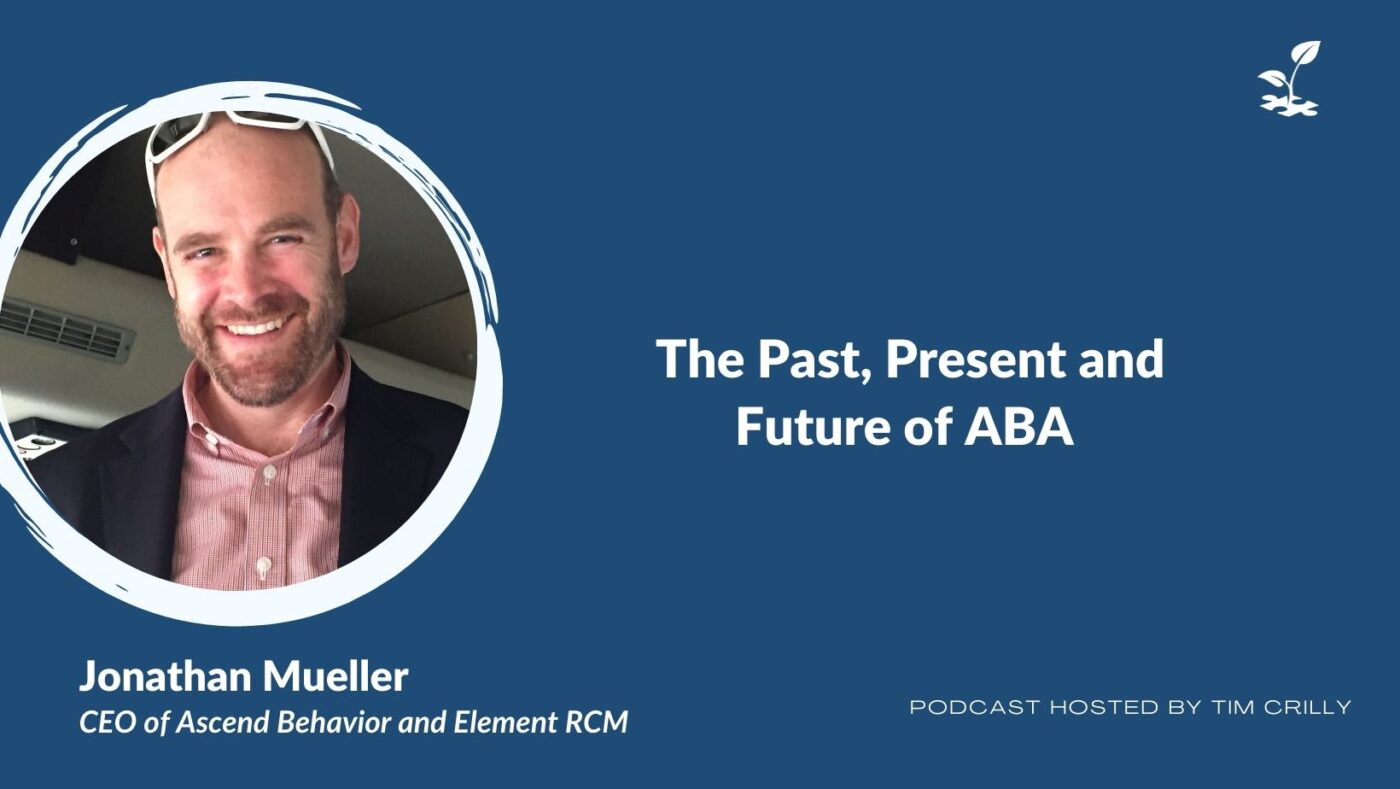
Season 3: Episode 8 – The Past, Present, and Future of ABA

Hosted by Jonathan Mueller, Tim Crilly
March 21, 2024

Listen now:

or listen on your preferred platform:

Episode Description

We are joined by Ascend CEO, Jonathan Mueller, to talk about the past, present, and future of ABA. Tim and Jonathan discuss the path that the ABA industry has taken to get to where it is now and where it might be going. During this conversation, they discuss the good, the bad, and some of the ugly. Tune in for a fantastic chat!

Full transcript

0:11 Tim Crilly: Hello and welcome to the penultimate episode of season three of ABA Unfiltered. I am thrilled to welcome uh today’s guest, uh Jonathan Mueller. Uh, he is someone that I’ve known for quite a while. Uh, he had the the unfortunate of having to call me once to to complain about an issue when I was back at Magellan. And uh just the way he approached the problem made me really, really enjoy uh working with him. And we sort of built a working relationship back then. That must have been 2012 or 13, who even knows how long ago it was. So I’ve known I’ve known uh Jonathan a long time. And since then, he’s moved on to some some really interesting uh opportunities. So he’s here today to talk a little bit about that. So right now he is the CEO at Ascend Behavior as well as a new uh adventure element RCM. So I want to hear a little bit about those two, those two organizations. Uh, but more importantly, Jonathan’s sort of gonna lead us in a conversation about his thoughts around sort of where we started with ABA, uh how we kind of got to where we are, and what he thinks is the next thing. Because I think that’s what’s been the most interesting thing about my my conversations with Jonathan over the years is he really has a good sense of what’s coming next. So I’m I’m really excited to chat with him. So, Jonathan, if you don’t mind taking a minute to introduce yourself, talk a little bit about how you got to where you are, the things you’re passionate about, and then we can jump right into it.
1:44 Jonathan Mueller: Thanks, Tim. That’s a uh that’s a gracious introduction. You know, my passion. Some of it’s true. I have it’s amazing that we’ve gone back almost 10 years now. Yes, it’s about that. Uh when they say time is fun when you’re having flies, I guess. But yeah, I I I had a uh you know, I took a very non-traditional route to getting into our field. I actually, you know, coming out of college, I um uh I did what I was dutifully thought I should do is become a management consultant. And uh um, and so actually to this day I just describe myself as a recovery management consultant. But uh, you know, I did that. I was in Silicon Valley for a number of years, and I’ll be honest, Tim, I woke up about six years, or I woke up one morning, uh, six years into this, and I’m like, I don’t want to sell more supply chain software. That’s not why I was put on this earth. And so uh, so anyway, long story short, did a sabbatical. I was in Tanzania um for for uh uh for about six months, and I was a volunteer business advisor and working with their fam with families who had lost their breadwinner to AIDS and doing microfinance work. Uh that was actually really foundational because not only did it sort of shape the trajectory now the rest of my career, I knew why I was put on this earth, but it was um it taught me really importantly how um you know I could be most successful when I accompanied families on their journey. You know, I wasn’t the one who had to have all the answers, you know, these families I was working with in Tanzania had the answers. So, anyhow, that um that was this transformative experience that got me to uh about 10 years ago when I first got into the field. Um, and I’ll be honest, like I had heard of autism, um, but didn’t know anything about ABA. And uh and and um I got into the field because I had a colleague, Landy Fritz, who uh who had started an organization I had worked with him long, long time ago, 20 years ago in uh in Silicon Valley. Um, but when I heard of ABA and Dr. Linda LeBlanc did this training that um there’s this science where you can like change someone’s behavior simply by reshaping their environment. I was like, my mind was blown. I was hooked. I was like, this is what I want to do for the rest of my life. I had found my calling tip. So anyway, fast forward through that. I spent about uh five years with a uh a larger national ABA provider doing um, I mean like a little bit of everything. Um, and uh and and then four years ago had a chance um to start the organization with with two partners, uh Dr. Mike Wright and Will Beynig. Um, to start the organization we always wanted to be a part of. And it’s been an amazing journey these last years.
4:06 Tim Crilly: That’s really cool. That’s really cool. You know, I got I got to meet your team, and it’s a really great team, you know. And to that effect, um, Jill Jacobson, our our chief growth officer slash compliance officer, and I got to meet you guys a couple of years ago at a um conference and just you know, it was great conversations. And you know, Jill and I, every once in a while we’ll reach out, hey, what’s wonder what Jonathan’s doing? And we’ll just give him a call. And Jill, after we get off the call with you, Jill’s always says to me, like, gosh, I just I just love talking to him. So, you know, I um I told Jill that you were gonna be on, and she was really excited. The fact that you were gonna come on the show and talk. So I think at least one person will listen to this episode. So that’ll be good. So um, you know, uh when we first started talking about what this is gonna be about, I I I I got a got a corny idea since the holidays are coming up. It’s sort of like um the Christmas Carol version of of ABA, sort of the ghost of Christmas past, present, and and future. So um, as as silly as that is, I it just kind of kind of makes sense. So because you know, it like most industries, I’m sure, you know, you know, you you are shaped by what you’re doing now and what you’re gonna do next. Uh, but when you think back to so I I got into this field in around 2003, um by accident, like most people. Um, but like you, I you know, I I sort of fell in love with it. And and that was really before even the BCBA was even, I mean, it was a thing, it was there, but it wasn’t a big thing and it wasn’t like a real push for a few more years before it became a thing. So when you think back, you know, I think about a very, very loosely regulated field. What what what do you think about when you think back? And and what are the things you say, oh my God, how how how are we allowed to do this? Is there anything that jumps out at you?
6:01 Jonathan Mueller: Uh loosely regulated, I think puts it kindly, Tim. You are clearly an OG, right? I only go back to about 2011. I I think about it honestly as Mazo’s hierarchy of needs. I and 10 years ago when I got into the field, the the the fewer than half the states um you know had an insurance requirement law that insurance would pay for ABA. And so the the battle that I saw um back then was simply like, let’s make sure there are funding mechanisms to so families get uh can get treatment. And so, you know, when you’re fighting sort of those battles, if you will, um and making sure insurance companies are you know living up to what they need to do, it’s hard to think about next order things like um uh I don’t know, whatever it might be, quality or or anything else. But I do, I I’ll say this. I distinctly remember shortly after I came on, we it was uh um uh it was about six months before SB940 in California.
6:55 Tim Crilly: Oh yeah.
6:56 Jonathan Mueller: Um and um let me tell you, that was one of the most complicated, just because there hadn’t been an other states have passed insurance reform law, but just think about the number of kiddos that this was going to impact. Um think about the regional center system that had, you know, tried to, you know, do provide all these services in the past, and then that was gonna be transitioning to Medicaid, but you now all of a sudden had this like um it was a super complicated time that required like having to be absolutely dialed in and supporting, you know, at the time at the organization I was with, hundreds of families who were going to be transitioning. So there was actually a ton of disruption that we had to plan for um to make sure. I mean, the basic blocking and tackling, right? Can you talk about any other insurance uh or healthcare um uh setting, like this is like just the day-to-day, but now we’re thinking authorizations. Wait, hold on a second. I’ve got to get an authorization. What’s an authorization? What’s an authorization, right? And you’re telling me if I don’t have an authorization, then I all this hard work I’m doing, I might not be able to actually do it. So that would, those were some of the the the things that we were we were chatting through. And I remember, I distinctly remember our CFO at the time said, Hey Jonathan, um get this right and and and you will be like the foremost expert on how these transactions happen at scale as it ends. I was like, okay, yeah, I’m tall order. I got I gotta make sure I don’t screw up.
8:12 Tim Crilly: You know, it’s funny, that just brings both like nightmares uh for me. Uh, you know, and shortly after that, I I did transition to to Magellan. And, you know, when I when I went over, I you you would have thought the volume of kids that transitioned from it, it was like what July 1st, 2012 was the day the regional center coverage stopped and you had to have an authorization. And basically anyone that did that, um, you know, they kind of got whatever they wanted, like because the insurance company had no idea what ABA was. They didn’t know if a hundred hours a week was appropriate or 10 hours a week was appropriate, you know. So sort of the the the toothpaste was out of the tube as soon as soon as it went over to that to that side, because those authorizations were just like they have to auth it because they have a five-day window and they’d have to be in compliance and all those things. So you start there with just sort of like a complete lack of understanding of what you just described, us as the those ABA providers, not really knowing what the insurance world was, but then the the the insurance world having really no clue what the the ABA world was. So it sort of set us up um off, you know, from a uh just like an awkward, awkward stand. And it’s taken a long time, I think, for us to even kind of get to a point where we’re starting to understand each other. And I think you you mentioned quality. Um, and I think that’s a really important part. And it just it really stuck out when you were talking about it because the goal was get people in care. You know, everyone has you’ve got to get everyone in a seat. You know, everyone needs to be where they are. You want music if it’s musical chairs, you don’t want anyone not sitting somewhere, but no one was really thinking about what that meant. Like what were they actually getting once they were in that seat? So, you know, what are your what are your memories on on sort of that? Like how how did you guys approach, okay, we’ve got people where they’re supposed to be. How do we start to address that uh that that quality standpoint?
10:11 Jonathan Mueller: Quality is the most important thing to a human services organization, to a healthcare organization, to to an autism service provider. And you know, I think right now in this, whatever the the the the ghost of uh ABA present.
10:25 Tim Crilly: Oh, present. Okay, we’re present.
10:27 Jonathan Mueller: Or getting closer to present. Um, what I think started to happen pretty quickly is is um uh uh insurance companies, families, and others, there’s this idea of like, whoa, this is a commodity service. I mean, there’s no way to differentiate quality, right? It’s not like there’s standard heatus measures, right, that primary care or pediatricians or others use. There weren’t standard outcomes, there still are not standard outcomes, measures that everyone agrees on. And so um I think the most important thing, the the question we always asked was are we doing what’s right by this client and their family? And if we were doing that and taking the right data and we had a view critically to what is the life that this kiddo can achieve? That was crucial to differentiating quality. And and what do I mean by that? So, like and we serve early intervention kiddos under age six, but it was like, are we can we accurately describe to the parent that we want their kiddo in two years, as hard as life feels right now, to actually get into a typically developing kindergarten with minimal to no supports, right? The least restrictive environment. Being able to do, think about the power of painting that vision for a family, for the treatment itself. But then all of a sudden you can talk to an insurance company or a payer and have a thoughtful conversation on this is what we think an endpoint can be. That was really critical, right? So you’re starting to now get the provider, the family, and the um uh uh and the insurance company, that some of the critical stakeholders all on the same page around uh quality. And I’ll be honest, like one of the most important things was let’s just let’s look at our data, compare that across our population to the extent we can, um, and communicate that certainly back to families, but let’s make sure we’re communicating it back to payers. Let’s make sure we’re communicating internally to our team so they understand sort of the bigger picture of the um, you know, what we’re achieving. And that just takes a ton of, honestly, it’s a lot of process, right? Making sure you have consistency of what do supervision levels need to look like, what do prescription dosage fulfillment levels need to look like? How many days, you know, should we expect um uh to be able to schedule it, you know, for treatment, those things.
12:29 Tim Crilly: Yeah, uh you talked about, you know, what’s that what’s that success for that that child? You know, you look at it on an individual basis, and I think Keith Jones, our CEO, he said once that we were just in a you know, a small group meeting, and he said, How do we take those those micro successes? So those successes you have, whether it’s one day, one week, one month, one year with that one family, and how do you make those the macro expectations? And when he said that out loud, it just like I remember like scribbling it down, like, oh my God, that’s like the greatest question I’ve I’ve ever I’ve ever heard. But I it’s still something like you alluded to, it’s still something that’s sort of lingering out there. And and part of what, you know, if we’re gonna talk about sort of the the the present, um, you know, I do think there is more of a focus, people are coming more together. You have groups like CASP and things like that that are trying to get people’s heads in the same place to talk about who we should be as an industry. So I think that’s that’s promising. And and you know, if we can get an accrediting body or you know, those sorts of things, if the work of a of a Casp or others can can bring that together and just to kind of give us a little bit of a sense of this is the middle, this is where we’re supposed to be. Um, and if you’re falling out of it, you got a problem, but don’t be afraid to be a little bit better than it as well. Uh that’s what I’m sort of um, you know, kind of excited about right now. I I don’t think we’re there. Um, what are some of the challenges that that you’re seeing in in your work, whether it’s you know with your organization um or sort of all the others that you communicate? Like how how are we, how do we ever get on the same page? Or do you think we ever can?
14:10 Jonathan Mueller: You know, I I’m uh um an eternal optimist. So I will say absolutely I think we can. And in fact, just in the last six months, the rate of dialogue that I have seen across many, many different providers, big to small, and different industry um uh associations and groups is way more than I’ve seen in the in the previous nine and a half years that I’ve been in the field. So, you know, that’s I that’s really important. Um I but I also want to, there’s sort of an elephant in the room that I don’t think gets talked about, Tim. And that is an ABA is just a hard service. Sure. Right. Like there’s this, it’s it’s there’s an expectation, okay, we get a family on board and boom, they’re gonna be totally sold on it. And and I think what we’ve had to do is confront, um, especially for a family who gets it. And this is what we hear from our families. When they get a diagnosis, they go through a grieving process for the child that they thought they had. And that means that um in our experience, making sure certainly that the kiddo has what they need to be successful in treatment, that’s important. And we have to make sure we’re giving parents everything that all the supports they need to now come to terms with this new normal. Um, and to um and to know how to cope maybe with their own men, if they do have mental health um uh issues, help them come to terms with that grieving process, maybe help them get into a parent support group. Um, because look, we’re making a big ask of parents, right? Like consistent parent trainings, or if we’re in the home, like your home has become this like 24-7 therapy environment. And most parents, they didn’t sign up for it, right? Sure. And so it’s um, so like we I have found that we’ve had to over-index spend a lot of time on making sure we’re we’re figuring out the wraparound set of family supports uh that make sure families actually can um you know can uh can accomplish what we would hope they’d want to accomplish in treatment. Um, but like being able to do that then unlocks, I think, some of these neat conversations. iCHOM, for example, coming out with um some clearly defined autism standard sets. Um I think there’s a lot of interesting stuff there. Um, and and they’re building some back-end databases to to to allow providers for free to contribute their data. I think the behavioral health center of excellence is is trying to pull together together data um from their accredited providers. Um but yeah, you know, I do think you mentioned, you know, CASP is going to be coming out with accreditation. There are a number of accrediting bodies out there um from CARF to joint commission to CASP, BHCOE. And it’s um, you know, that that could be, we found at least that that’s an important external validator of hey, there’s a set, not only a set of best practices that an organization has met, um, but that’s an organization committed to continuous improvement. And I think that’s super important in healthcare.
16:53 Tim Crilly: Yeah, I agree. Because I think, you know, you look at sort of the landscape, and there’s obviously some places where there’s you know enough BCBAs to go around. There’s not like an overflow, but you look at other places where there’s just a complete lack. And then, you know, sort of that pressure to get some type of service in place can go back to that, you know, that earlier point about quality. And you’re just okay, we got you something, so you know, leave us alone. Um, so while I don’t think you know an accreditation will solve, obviously, it’s not going to solve the the supply and demand issue, but at least there’s some level of I can put my head down at night and feel like at least these people coming in and working with me have had to go through some level of um you know checks and balances. Because I think that that is important because um we’re we’re really still a young um industry, you know, and um it’s still pretty loosely regulated, uh, way better than it was when I when I got in, uh, you know, which is great. Uh, you know, I took a lot of heat back um in the old days uh when I was at Magellan and said, yes, the RBT now has sort of an exam attached to this process. Yes, I do think that should be the expectation of all of people in our network. And um, you would think that I lit California on fire myself when when we sort of made that that decision, um a lot of a lot of pushback, and I get it, there was an expense and there was work and all those things, you know. But ultimately, and I you know, you you were kind of talking about it earlier. This is, you know, the especially the role of the health plan, it’s really a consumer protection um agency. That’s really what they’re there to do is to make sure that the people that are in there in their care are getting the best possible care. Now, obviously, people slip through the cracks in all walks of life, but we need to we need to do more. So that’s always been sort of my philosophy on this is if there is something that can check a box, well, it might not say that this is the best clinician ever, at least they were able to go in and you know, identify a certain list of terms or whatever it is, it gets you a couple steps closer to not excellence, but um hopefully better care. So I I think that’s a that’s a key element to this. And I hope accreditation can be be akin to that, um, but it’s still up to us in the community to make sure that that we’re we’re working alongside it to always try to improve.
19:30 Jonathan Mueller: I agree entirely, Tim. And you know, so let’s just put a fine point on what you described. I hate hearing this setup of adversarial relationship between insurance company and providers. We hear it all the time in the provider community, right? And it’s it’s like it’s well, we’re going into like a 10-round boxing match. And I don’t know, I think it in life generally, that’s not the way to get what you want out of partnerships. Um, um, but it’s also um, I understand where health plans are coming from. Frankly, what whether there’s something like 6,000 ABA providers, uh organizations out there. Yeah. And like we talked about, there’s a lot of not great ABA, and that’s that consumer protection bit that um and function that health plans can play is critical. And that’s what health plans are solving for. The other thing I just is I don’t want to gloss over it, but the one of the biggest things facing our field now is that supply-demand imbalance. Um, and what are there now? I think the latest I just saw was one in 44 uh kiddos are diagnosed with autism per CDC research. And um, so there’s so many families and kids in need, and yet we can’t produce enough BCBAs and RBTs quickly enough as a field to get there. And uh the other crazy data point I I I recently saw is I think 1600 counties of the like over 3,000 counties in the US don’t have a BCBA in them. And half of those don’t have a BCBA within two counties. Um and so like this is um Yeah, because they all live in Orange County, California. Oh yeah, right, exactly. Like one every eight feet there. Well, I mean, the old joke is like how did in the you know the old days, how did ABA companies expand? Well, there’s a BCBA that moved to a new town that moved to Colorado, right? And there was there wasn’t anywhere there. So it’s and there happened to be a tricare uh uh look location that they needed. Bingo, bingo, bingo. Um, yeah, so there’s um I I just think that is a the the way that we um certainly help produce as a field the you know best trained, best mentored, best coached um BCBAs who are in a great position to best serve families. I mean, and that takes everything from certainly the graduate programs, but to just high quality supervision that I think every provider needs to commit to.
21:37 Tim Crilly: So this has been an ongoing sort of theme for this season uh on the show. Uh we had Dr. Leslie Neely from UTSA, and she runs a program, and hers is really, really good. Um, but she also, you know, it’s only as good as then where that person ends up in their first job opportunity because you know, the pressure is okay, you pass this exam. Go do everything and I’ll see you in a month. And that’s just really a recipe for bad care. Um, you know, there there needs to be like a residency model. I, you know, I don’t know exactly what it is, but we need, and I think it really it’s gonna boil down to can we get health plans to get on board with this to say, uh, I think we’re into the ABA of uh Christmas future now, uh, by the way. So um, you know, can you get a health plan to say yes? We understand that this should be a like a three-tier system where you can take a real intern or a BCBA resident or whatever you want to call it, and they’re doing a certain amount of things, but it’s at a at a reimbursement rate that is commiserate to to the to the process. Because right now the pressure is oh, you have a BCBA, you got to go out and and and build these codes and and go do them independently because we can’t afford for you not to. So you have two choices. You either do that and and and risk poor care, or you go the opposite route and you really work to build up that person’s skill set and train them, but you know you’re doing it um, you know, at a loss, or you know, however you want to look at it from an organizational standpoint. How do we fix that?
23:23 Jonathan Mueller: I love that idea. And in fact, that I said we call we call it our BCBA residency program. Um, and so that what’s neat about introducing maybe another code potentially, um, is that if there’s a modifier or a modifier, whatever it is. But there’s but there’s there’s sort of this recognition of hey, when you get out of grad school, you don’t immediately know everything, right? It’s okay to keep learning. And oh, by the way, that applies to any job or any career um anywhere. It’s it’s interesting. I I almost think back to um, you know, other medical models, right? That’s not we don’t have to like look too far, but it if if you look at uh, for example, a doctor going through first the academic work, what does a doctor do before they they become a doctor? They have to go through residency.
24:06 Tim Crilly: Yeah, right.
24:07 Jonathan Mueller: And this, I mean, and intensive, like you’re working a hundred plus hours a week. Um, and and it’s just it’s almost like the BST model, right? Where you like, you know, you model something and someone does it, you provide feedback and then they do it to competency, and then you do it to competency in the hardest environment. That’s what doctors do, right? You are you’re in this residency program doing something in the absolute hardest environment there is, then you are prepared to go practice fully practice medicine. Um, and I think we haven’t got to that part of our own BST model. And I I think the residency thing you describe is um is spot on.
24:38 Tim Crilly: Well, you know, I guess if you and I think it’s the right way to go, it’s it’s probably the right way to go. So uh you know, I it’s it’s it’s a tough one because you know, I look back, I it’s hard to believe this, but I started out as a teacher. Um, that was sort of my where I was headed. And you know, I I look back on on that process and it has a similar feel to it. You know, you go to school, you take some classes, you sort of like do some some volunteering in some classrooms, you do one semester of student teaching, and then out of desperation, school districts are hiring you, and you show up that first day, the door closes, and there’s you know 25 little faces staring at you, and you’re like, what do I do? And I I do think that that’s probably the way a lot of young BCBAs feel, and it’s it’s not their fault, but we’ve also perhaps created a culture where you’re not brave enough to raise your hand and say, I’m not ready for this because you’re supposed to be, because we’ve told you you’re ready. Um, you know, and it also plays into a concept of why are we asking every BCBA to be exactly the same? Why is it that they have to be able to be sort of good at everything, whether it’s managing people, um, treatment planning, assessment, caregiver guidance, uh, whatever it might be, you know, it’s not really a realistic expectation for for this person, this new person in this field. You know, so I I look at why don’t we have more specialty training or specialty roles within organizations? Um, because that’s something you guys have ever thought about at Ascend.
26:29 Jonathan Mueller: Well, there’s uh I really appreciate the teaching analogy. Um and I I think you know, I’m not a BCBA, so full disclosure, uh I’ve got my rickety MBA, right? And and think about like coming out of MBA, like to your point around disciplines, there’s like you know, finance and accounting and marketing and you know, um, you know, I can’t do them all. You can’t do them all. No, absolutely not. You can you can get introduced to a taste of a right of those, which is just like you know, what a you know, maybe a special editor or you know, an ABA master’s program does. Um, so what the way we’ve approached it, we actually have a fellowship program. So this is this is after someone has gotten their um their BCBA credential. Um, and the amount of time varies because it’s not a it’s a not a time-based thing to move on from that. It’s a skills-based, behaviors-based uh model. But the idea or the recognition, I should say, to your point around creating these like psychologically safe environments where it’s okay for someone to raise their hand, we don’t want that you know, BCBA fellow on day one to have a caseload of 10 to 15 kidos, they’re not set up to be successful then. So um we tend to provide um, so we provide much more support from like a clinical director, a more senior BCBA, uh, you know, and a coach and mentor to this person so that they can continue their learning journey. And then as they are um uh you know, as they demonstrate those skills, then you know, caseload increases then, maybe complexity of types of um uh you know, feeding uh, for example, or other other kinds of um uh uh programs uh get introduced. But I think that’s absolutely uh a model for our fields headed.
28:00 Tim Crilly: Yeah, you know, I part of me thinks like, okay, so that that old guard people that you know in the 90s really thankfully turned this into a viable field. Like you can’t take that away from, you know, I’m thinking about a bunch of people that I used to sit in meetings with down in Orange County, and when I used to go back to, you know, regional center meetings. There’s a lot of great um, you know, people in all parts of the country that have helped build this up. But you know, when I go back to then when I was at Magellan and their unwillingness to bend, you know, like, oh, well, I know who’s good at this. You don’t tell me who I get to choose to work with these families, you know, and it’s like, well, okay, that’s that’s not a realistic attitude. I think we’ve worked through that. And now you have, you know, you have younger ownership people that sort of grew up in this insurance model taking over. And, you know, um, you know, depending on what you think about it, you also have the influx of private equity coming into this field. A lot of people think it’s the worst thing ever, and a lot of people think it’s the best thing ever. As everyone knows who listens to the show, you know, we are a private, privately owned um organization. I have seen great things. It’s provided us the ability to do things that maybe other you know ABA agencies aren’t able to do, but we are seeing sort of a transition. How do you feel? Like, what do you think sort of when you look at do you see more contraction in this field? Do you think that you know we kind of got through the the pandemic? Do you or maybe not through it, but you know what I mean? We’re sort of everything sort of was on hold for a little while, people are coming out of out of that. Do you think we’re gonna see another another rush for for organizations to to to partner and start combining? Or are we kind of what we are? What’s your what’s your thoughts on that?
29:58 Jonathan Mueller: I think we’re gonna see rapid consolidation, and even at an accelerated pace that we saw before COVID. And I want to talk about that in a moment, but to come back to something you described is as we look back toward um sort of prior generations, um, I think it’s really important. You know, there’s this quote from Isaac Newton that what does he say, if if I’ve seen farther, it’s because I’ve stood on the shoulders of giants. Um, and I think there’s a humility to that that’s really valuable for our field, right? Like so for those like around today, like if we have seen further, if families can now get services, like it’s because we’ve stood on the shoulders of giants. Um, and so you know, this the which to me creates an obligation, right? Is we have to be the shoulders on which the next generation of highest quality autism care providers and BCBAs, RBTs, um uh uh can stand on. You know, I and this bring comes back to your point around private equity. One of the powers, and by the way, this whole like things are black or white in life. I mean, for the Star Wars fans out there, like, come on, only the Sith think in like black or white terms, right? Our world is way more complicated.
31:01 Tim Crilly: And Darth still threw the emperor over the thing.
31:03 Jonathan Mueller: Right, exactly. Exactly. It’s just like so my point is, and I mean we’re independently backed, but the power of what PE has done um, you know, over the last 10 years is expand access full stop. Yeah, full stop. That is inarguable. Um, because money has come into growing organizations and putting people through these residency programs um and you know, supporting and paying for master’s programs, that is a great trend in our field. And you know, as I as we think about consolidation, the latest stats I saw, so you fact check me on this, but you know, I think it was the top the top nine.
31:43 Tim Crilly: Way too lazy to do that.
31:44 Jonathan Mueller: I think it was the top nine ABA providers, um, you know, had about 38% market share. Okay. Um, and um that acceleration, that consolidation will only accelerate. And why is that? Because it’s really hard running an ABA business. Sure. Right. And so um, you know, of the 6,000 providers out there, the vast majority are sort of like single site. Um, and you know, and and um generally it’s clinicians passionate about quality and starting the highest quality um uh service organization they can and having terrific, just like, but they can touch every single family, right? They can touch every single team member. All of a sudden, as you start growing, because there is so much need, right? Coming back to the one in 44, it’s really hard to do back end office like billing. Oh my gosh, that’s the the least sexy and like the hardest thing in the world to do. How do you do that? How do you get the most like efficient operational processes? And it’s only getting harder to do that. So I think that’s part of the reason that um that I’m convinced that consolidation is gonna happen more quickly. But one thing that the the the challenge with consolidation, frankly, and and you don’t have to look like far, just look at other adjacent healthcare sectors is um when further consolidation happens, prices tend to go up and quality tends to go down. Not surprised, right? Just supply demand. And so that’s where I think it’s so important to marry, not that consolidation in and of itself is bad, but marrying that kind of consolidation with some of these outcomes frameworks and agreement on what does high quality treatment look like. Um, I think that’s that’s that’s sort of our our path um toward having our cake and eating it too as a few years.
33:29 Tim Crilly: Yeah.
33:30 Tim Crilly: Yeah, I, you know, and I I think that’s been the um sort of the the the lesson around here is you know, obviously we’ve we’ve done about 50% organic growth and and and 50% uh via partnerships, acquisitions, whatever, however you want to frame it. Um, you know, and with everything you do, there’s a lesson to be learned. And what we’ve really tried to do is is listen to those lessons, go back and say, okay, this was a this was a mistake, or this was really good. Um, or wow, you know, bringing this organization, you guys do it this way, this makes so much more sense. Let’s not try to impose how we do it, let’s try to adapt. So I think, you know, for from a blue spray, I guess that’s really all I could talk about it as it relates to that is, you know, obviously people make mistakes and and things don’t go as as smoothly as planned. But if you if you’re unwilling to learn from them, you’re you’re you’re not gonna you’re not gonna do well by your your you know the the the the families that you’re you’re caring for. Um so I think that’s been a sort of a mantra of ours is okay, what did we do right? What did we do wrong? How do we how do we go back and how do we fix it? And let’s be honest with each other. Let’s let’s have that that that critical conversation about this decision that that that was made and why why it didn’t work. It’s not about you, it’s about the decision, but let’s fix it. And and that’s sort of been the the culture that that I’ve been exposed to in my you know brief time in the private equity world. So um I agree with you, but not to say that everyone is like that, so it’s it’s hard to say.
34:59 Jonathan Mueller: You hit the nail on the head on healthcare service at its best is a commitment to continuous improvement. And I mean, it’s what we call a descend. One of our values is one percent better every day because we know, and this is not just healthcare, but but anywhere in any organization, you’re not going to make all the right decisions all the time. And so um that commitment to continuous improvement and to learning, actually, Ray Dalio has this uh decision log, the D-log process around, hey, let’s just go back objectively, everyone, you know, take off your stripes at the door, but go back objectively, like evaluate um what you know, what decisions were made so we can get a little bit better. So that takes vulnerability, right, as an organization. And um, and I know Blue Spring, you know, does that um really well, but I I think ABA providers who can commit to that ongoing learning and continuous improvement and not just commit to it like because it’s in a value, right? Or it’s an emissions. It’s a word on a wall. Yeah, it’s a word on a wall, or it’s a word on a coffee mug. Like, forget all of that. Commit to it by like embedding in the systems and the technology and the people and the processes and just the gestalt of how you do business that you are constantly learning. And it doesn’t matter again how much experience you have or how little, like we’re all gonna have a chance to learn from one another. Yeah.
36:14 Tim Crilly: Okay, that’s a lot to chew on. Uh uh, I don’t know if I feel better or worse, but no, I I I I do think that you know there’s enough people right now talking about a lot of the same things and um, you know, a lot of people that I trust. So I I think there’s there’s a it’s a nice, nice curve we’re we’re gonna be headed towards, um, you know, and that’s gonna only benefit families. They should be in the place that they belong, um, you know, and feel comfortable with and and not just be with a provider because they were the first person to answer the phone and and and maybe not even know that it’s a bad fit for them. So I I I like I like where we’re headed and and what that means for this industry. So um are you still gonna put a can I make a can I go ahead and can I make a bold prediction?
37:03 Jonathan Mueller: Or like I don’t know if you’re still thinking about like future past. I so I and this actually, this first one comes from um uh Monica Oss, who’s a CEO of Open Minds. So for any listeners who don’t follow Monica Oss and Open Minds, they are some of the smartest, um, I think um producing data and and information around um behavioral health um and and some of these um, you know, some of what I’ll talk about. But you know, Monica had uh really articulately described like the future of healthcare more generally, not just autism services, behavioral health, is integrated, hybrid value-based. Integrated meaning, right? We’re not solo disciplines, we’re not just ABA. We are uh, you know, there’s mental health supports that are critical. There’s diagnostic psychologist work that can be done. There’s speech, OT, I mean, you name it, right? But that’s the future of our field. Hybrid in that, and COVID helped accelerate this, a trend that was already happening. Um, are going to be remote telehealth models, there’s gonna be in-hoe models, center models, and um making sure as a provider that we are adept in working across all of those, that’s just table stakes, right? That’s that that that’s critical. And then finally, value-based, um, in that I I I do have conviction. I and again, we’ll we’ll see, but I would, I would, I, uh, I would predict that we are going to be moving toward value-based um care way more quickly, even than the field thinks. And what I mean by value-based is instead of paying um for hours build, an insurance company or Medicaid is actually paying for outcomes. Um, and that happens in stages. It doesn’t happen all at once. Um, but it starts with at the very least, you know, sort of tracking metrics and reporting on those. And then there’s you know, incentives, maybe they get paid a little more. So I think any any um BCBA, any ABA provider out there, I think so. A really interesting thing to do right now is say, hey, when do I think is the first year I’m going to be forced to enter into a value-based contract and write that down. Um, and uh and then start preparing for that. And hey, the way to prepare it’s simple. The road to that like success and value-based care in my mind is um you know, make sure you’ve got it’s all through clinical quality, number one. And number two, primary care, this idea of working, you know, across different um healthcare disciplines and making sure that there is integration of data and sharing um across um different providers that a family’s working with is really critical. So providers working toward those two things, I think, are going to be the successful providers of the future.
39:35 Tim Crilly: Uh, it’s funny you bring that up because our I sit on marketing meetings because I I kind of help do some of the translation around like uh, you know, ABA and whatever with the with the marketing folks. Um, and also with the podcast, we sort of get involved with some things. They help me obviously a ton um promote it and get it out there. So I go to two meetings a week with them. And um, Ashley, our VP of marketing, likes to do these little icebreakers with the teams. And the other the other day she said, um, you know, what’s your sort of career uh bucket list item? And I said, if we can get, if I can look back and say, wow, ABA is functioning in a whether it’s a case rate, you know, you know, value-based pay model, whatever you want to call it, if I can look back and say that that Blue Spring had a had a hand in making that happen. And it’s because I all I ever did was complain about how um a feed for service model is going to kill this industry, um, I will feel like I accomplished a great deal in in my time um on, you know, in my career. So I think you’re right. I I think it’s it seems scary, um, but it’s the best thing for the families and you know, really actually for the clinical teams when you can just go in and say you don’t have to worry about you know cancellations and hours and things. You just go in and work and achieve those outcomes so that child can move on and then you can move on to the to the next family. And I think it it it really helps all parties involved. Um, so I I totally agree. And and I hope that’s your I hope your prediction comes true and and I hope I’m still around when it when it happens.
41:17 Jonathan Mueller: I’ll put it out there. I would say, uh, oh gosh, now I’m staking it. But uh I think by remember, it’s just Jill listening, so sorry about Jill. I I will say Ascend will be and again forced, right? But it will require to enter into value-based care contract by 2023. That’s what I required to because I know there’s lots, right? There are already partnerships out there and organizations and insurance companies. So yeah, that’s my prediction.
41:39 Tim Crilly: I think I can make it to them. Yeah, that’s reasonable. Okay, Jonathan, I really appreciate it. This is really fun. Um, and if you haven’t found Jonathan on any of his social platforms, you should definitely uh take a look. He he really puts a lot of great stuff out there, you’re a lot of inspirational stuff. And um, I I I do, you’re probably the only person I pay attention to um uh on a regular basis. I’m and I’m only on LinkedIn, so I don’t you’re probably even better at it on other stuff. But um so take a look, find find Jonathan, um, reach out to him. He’s a really great guy to to chat with. And you know, I’d I’d love to have you on in the future, especially sometime in 2023, to so you can teach us how to sign a um value-based contract model for for all of our staff.
42:26 Jonathan Mueller: Right on. Thanks, Tim. This has been a ton of fun.
42:28 Tim Crilly: Okay, so um, thanks everybody for listening. Uh tune in next time and uh please share this with anyone you think would enjoy it.

Find a center near you.