
Back
ABA Careers

Season 2: Episode 13.2 – The current ABA landscape

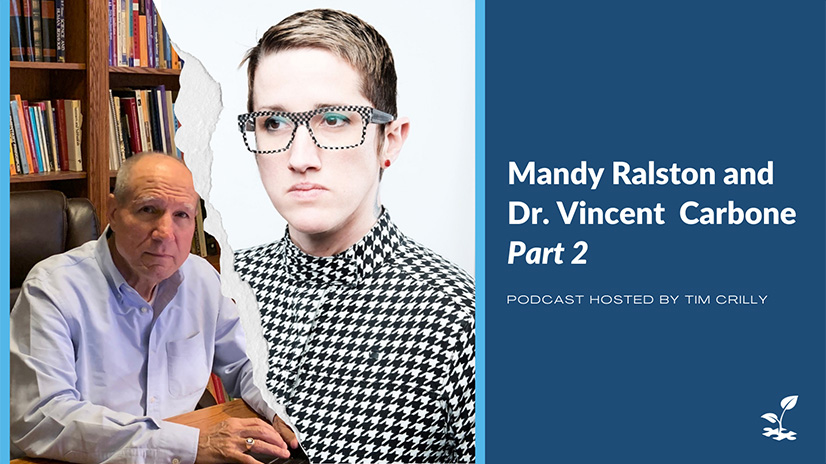
Hosted by Amanda "Mandy" Ralston MEd BCBA LBA, Dr. Vince Carbone EdD BCBA-D
March 21, 2024

Listen now:

or listen on your preferred platform:

Episode Description

ABA Unfiltered is honored to be joined by Mandy Ralston from the Cedar Group and her clinical mentor Dr. Vincent Carbone for a fascinating 2 part season finale. In part 2 of our conversation, Dr. Carbone, Mandy Ralston, and Tim discuss the current ABA landscape, the training of future BCBAs, as well as where the industry is headed moving forward. Please enjoy this fantastic conversation!

Listen now on Apple Podcasts, Spotify, YouTube, or Google Podcasts!

Full transcript

0:06 Tim Crilly: Hey, welcome back to ABA Unfiltered, part two of our fascinating conversation with Dr. Carbone. In part one, we we barely scratched the surface, but we got to learn a whole lot about uh how he came uh into this field, as well as uh his brief baseball career, which I actually found to be more of the fascinating thing. I think Mandy, Mandy found the other stuff a little bit more fascinating, but I I love the baseball stuff. So uh Dr. Carbone, thanks for agreeing to stick on. Uh again, it feels like kind of like a radio show where they’re like, ooh, we have to go to break, but could you just stay on for one more segment? So we’re back for segment two. Um when we left off, we were just sort of talking about the the growing numbers in the field and sort of the impact of what that has had on this industry. So I think the the next logical question for you would be, what are your thoughts on the fact that just about 50% of BCBAs practicing today are within a two-year window of receiving their um you know their certificate? Um what sort of impact do you feel like that has and and and what could we be doing as an industry to maybe better prepare that that workforce for the uh you know the challenges of this job?
1:27 Dr. Vince Carbone: Yeah, I think that’s a an interesting issue and a problem to to some degree. Um the type of training someone receives in order to become a board-certified behavior uh analyst that does not always include um aspects of the field that I think are necessary to make you the most effective. Um, for example, most of the courses pretty much teach to the knowledge, skills, and abilities, so to speak, that are outlined in the competencies uh for the uh BCBA. And there are other aspects of the field that get ignored because they are not necessary, they’re not on the test, and they’re not necessary in order to pass the test. And as a result, people miss out on some important aspects. Some of those important aspects are uh conceptual analysis, Skinner’s writings and Skinner’s conceptual analysis of behavior, which I think are critical, which does not get a heavy emphasis. Uh, and I think it’s critical for effective uh uh clinical practice. The experimental analysis of behavior, which is a crucial part of understanding how to treat children with autism. Very few people read JEAB, the Journal of the Experimental Analysis of Behavior, other than the researchers who are interested in those areas. But clinicians hardly ever read JEAB or have it as a subscribe subscribe to it when they receive their job, but you could also receive a uh a JEAB. I think it’s absolutely essential that those parts of the field be part of our training and our continuing education as we go forward as professionals working in the field of autism treatment. So I the third area is the level of mentorship may not be sufficient to produce a well-trained behavior analyst who, once they receive their certificate, are ready to hit the ground running and can be as effective as they need to be. Well, there’s always some difficulties in people’s trainings. There’s always holes in in training. Um so then what might be the solution to those sorts of things? I think the solution to those sorts of things is is number is number one uh that when someone receives their BCBA, they they should consider the fact that they’ve they’ve completed their their didactic and to some degree some practical training, maybe similar to an internship. But now it’s time for your residency. And that’s what people don’t get. They don’t get the residency part of training, which is three to five years under intense scrutiny and intense training, learning your craft as a physician does during their residency. For example, if you go into ophthalmology, for example, you’ve got a three to five year residency and a surgical residency uh in that particular area. Uh, internal medicine, the same sort of thing. Three to five year residency. Uh, before you basically say I’m an internist and now I’m prepared to uh to practice effectively. Well, we don’t have that component, and I think that component is absolutely necessary, and that’s what I have tried to build in to our clinical work and our uh and our clinics. All of our clinics require you to be board certified as quickly as you can, because I think it’s a worthwhile, worthwhile credential with some gaps in it, but nevertheless a worthwhile credential. And then we do the residency. We do the three to five years before you are a supervisor, before you are guiding programs for children with autism, you are working with children with autism, many different children across many different environments in for with many different skills, and are being trained before you ever become someone who’s a supervisor, now guiding those programs. What is lacking, and what what we try to fill in during that three to five year period, is it’s applied behavior analysis. It’s the analysis component that is missing. It isn’t just a bag of tricks where you have all these ideas about reinforcement, extinction, stimulus control, and you just kind of choose them. But how do you write treatment protocols that are based upon the controlling variables that you assume are in place for a typical child to learn that skill? That’s the analysis. You don’t just throw reinforcement at it, you just don’t throw basic principles at it. You do a very precise analysis of the controlling variables, a conceptual analysis that includes Skinner’s writings to guide you in that sort of way, that almost no one gets to have an opportunity to learn to do, either in their BCBA training, their university training, and once they are out with a BCBA, everybody is buying BCBAs because they they are opportunities to build insurance companies. They’re not being buying BCBAs because they think they’re wholly credentialed and perfect to uh begin supervising. They’re buying people’s board certification uh so that they can then bill insurance companies effectively, because that’s what it that’s what it requires. And that’s why that residency doesn’t occur as it does in medicine and other fields where that is a requirement in order to practice. So, what we do is many of our in our clinics, many of our staff who are providing direct care instruction are BCBAs, and they won’t be ready to supervise for three to five years. And we’ve kept that model going since 2003 when we started our clinic in New York, and all the way through our clinic in 2014 in Dubai, 2017 in London. That is the model that we use to train individuals, is that you must do your residency under strict supervision, competency-based, that prepares you with the analysis that you need.
7:38 Mandy Ralston: I I, of course, I of course totally agree with you. You know, I think I think that’s the best way to develop BCBAs. I don’t think anybody would stand in front of you and disagree that that’s the best way to groom them, right? Um, I think that our quandary uh as a field is that here we are, we have all these BCBAs, and we don’t have enough of the legacy BCBAs, if you will, the ones that have been certified and have had that proper type of training and grooming and residency experience to then usher the next set. You know, it’s it’s like the cicadas, right? There’s so many of them. There’s no way that we can actually uh take the time and do the jobs that we’ve all acquired in our first 20 years, and then also sit down and mentor this next group because they’re they’re twice the size of us as far as the population goes.
8:36 Dr. Vince Carbone: And so, you know, what but the but the cicadas but the cicadas know to delay, they’re coming out until things are warm.
8:47 Mandy Ralston: Yeah. Uh I I am eagerly aware of the cicadas here in Kentucky, so sorry that that’s the analogy that came to mind. It wasn’t my best.
8:57 Dr. Vince Carbone: Um well it’s but it’s true, but they but they know that it’s not time to come out yet.
9:03 Mandy Ralston: And yet here we are, carbon. So what I’m trying to figure out if we can do, or the most efficacious possible version of doing it, is designing clinical decision models, right? To not do the deciding, not do the conceptual analysis for somebody, to not do the molecular analysis for someone, but to hopefully guide them through the process alongside the actual literature that would support those types of decision making, right? So actually having the supporting literature base guide them through the process as they answer question by question in order to give this 50% of the field some of the bumper rails that they’re gonna need in the absence of having that bespoke hand groom mentorship that you have been able to offer your clinicians, right? What do you what do you think about technology that potentially, purportedly, could help support some of those types of clinical decisions in the absence of that type of mentorship model? What are your thoughts?
10:17 Dr. Vince Carbone: Well, it it first depends uh upon the assumptions that are built into the system. So somebody particularly well trained must build those systems and must put in the assumptions that that are necessary to have an outcome that will be tuned appropriate. Stay tuned.
10:38 Mandy Ralston: We’ll see if I’m uh appropriately skilled to to help make some of these models.
10:43 Dr. Vince Carbone: We’ll see. Yeah, it’s an empirical question. Um well, I think you know, artificial intelligence certainly, uh, and I think that’s kind of along the lines of what you’re talking about, it has some similarities at least to that, um, could produce uh some useful uh outcomes. Um I I I think rearranging the contingencies, the monetary contingencies within the field would be the better way to do it, frankly. Um that the monetary contingency says that you only have somebody who has documented evidence of going through that residency, whatever you want to call it, post BCBA, um before they can, in fact, act as a supervisor.
11:31 Mandy Ralston: Yeah.
11:32 Dr. Vince Carbone: Now the market is driving, the market is driving what’s going on now uh regarding the demand and the supply being limited is driving that. But uh so I don’t I don’t know how likely that is to occur, but yeah, I think decision models may be helpful, but I’d I’d rather see the economic contingencies that that govern the behavior of providers and insurance companies pretty much setting the contingencies right now.
12:02 Tim Crilly: Absolutely, and that’s that would be my next question. So if if an insurance company sort of says all BCBAs are created equal the day after they get that piece of paper in the mail, is there really ever going to be a change? Uh, you know, so if if ownership of ABA agencies aren’t going to sort of adjust, because it’s hard, because you do have that supply and demand and you do want to help as many people as you possibly can. Um, you know, so there’s there’s that that give and take. But I think if you looked at a structure from the sort of the funding sources, if they could help create a funding structure that created that internship model or that residency model through maybe you know, five years is probably way too long. But if you could build out something where they were able to sort of have that financial impact, but not have as much responsibility heaped upon them, do you feel like that’s something that could that could help?
13:06 Dr. Vince Carbone: Yeah, I do. I I think Mandy’s idea of of a decision-making process could could be helpful as well. But I do think some of the economic contingencies must change to go more in line with what you’re what what you’re talking about in in terms of requirements that people meet some additional training requirements, uh, and especially along the line of the analysis. Jack Michael in 1981, in his presidential address, basically laid that out. He was talking about a retreat from behavior analysis, a movement away from behavior analysis that was occurring in 1981. It’s a fabulous paper. Everybody should read it. It was published in the behavior analyst, where he he talked about the fact that we we weren’t producing practitioners, clinicians, and scientists who are making use of the analysis. Now that’s 40, that’s literally 40 years ago, where there were no economic contingencies bearing on people uh in that regard. But we just were drifting, and he was trying to call us back to don’t do anything, don’t develop a teaching protocol without a very good analysis of the controlling variables for that behavior in a typical four-year-old. So if you want to teach eye contact, don’t throw reinforcement at somebody when they suddenly make eye contact with you, but but analyze the contingency under which a two and a half-year-old child makes eye contact while talking. In other words, do the analysis and then develop those uh those contingencies within your treatment protocol. And that that’s kind of what I’m talking about, which doesn’t occur now. And some of our major journals even ignore that part of uh that part of our work. So I I think Jack had it right then, I think he has it right now. And the only thing that’s going to change that is some reorganization of the economic contingencies that currently drive the behavior that is troubling to all of us. And I don’t know if that will uh will ever happen. Um I currently operate in environments where I don’t take insurance dollars and I don’t um I can, I don’t have to do that, and I don’t um so I’m not under those economic contingencies, but I do understand why current businesses have to operate within those. I I I I get it completely. Yeah, I mean the uh I get it completely. But something to change, something to change the.
15:34 Mandy Ralston: I mean, again, I totally agree with you, and and of course, uh, you know, you and I have talked before about recognizing the need to uh have providers that do accept insurance. I mean, the fact that we again are in a situation where it’s no longer one in every 10,000 individuals with autism, it’s one in every 52, right? Um, you know, talk about supply and demand. I mean, the reason the field has exponentially grown as well is because the the diagnosis rate has exponentially grown. And in order to help people, um, you know, for better or for worse, we have increased this number of BCBAs out in the field, and and somehow we’re gonna have to bridge the gap in the spectrum between the personalized mentorship model that we got brought up with, and the, you know, as soon as you’ve got your piece of paper, you can go out and start billing and and start your own business uh end of the spectrum. Like there’s there’s gonna have to be a closing of that gap. And it’s it’s gonna have to be uh a policy level, it’s gonna have to be the decision models, it’s gonna have to be reinventing our expectations about what each and every BCBA should be able to do and do well. You know, maybe you don’t have to wear all the hats all the time. Maybe you can start to look at what is my specialty, what am I really good at, hone that skill. That’s right.
16:59 Tim Crilly: What should I be focused on?
17:01 Mandy Ralston: So yeah, we we we get some work to do. But sorry.
17:05 Tim Crilly: Yeah, I’m gonna go.
17:06 Dr. Vince Carbone: Well, let’s let me just say something. Go ahead, please. I I I admire a group of yours. I I frankly admire acknowledging that fact. There aren’t many many that even acknowledge that fact. Um, but I I admire the fact that you’re acknowledging that reality and attempting to do something within your sphere of influence to make a difference. I am interested, many, you and I have talked about this. I am interested in seeing what you actually produce in terms of those decision models and how someone can go to an expert, if you will, with some assumptions already built in to a decision-making model to see how that helps to uh increase our effectiveness. I’m interested in seeing that, and I think um uh I think it’s uh thanks.
17:55 Mandy Ralston: Yeah, I mean I I think you’ll find with my at least the first couple of models, uh, a lot of what the models are going to tell you is that you need more help. And and if if the models tell you that and you follow that advice rather than cavalierly gunning ahead with a plan that you’re not actually within your scope of practice or your skill set, if the model does at least that to tell somebody to go get more help, that’s already a worthy model. So as you said, the the data, the data will show. We’ll we’ll see how this experiment.
18:30 Dr. Vince Carbone: I agree.
18:32 Tim Crilly: You know, yeah, and I you guys are obviously very smart and have a lot of great ideas. Uh, you know, but I think unfortunately the toothpaste is out of the tube on on this one. And you know, I think if you can splice it up, and there’s you know three three different approaches that you could you could take. One is obviously taking tools and putting them in the hands of less inex, you know, less experienced BCBAs, that’s a that’s a win. Um, but also I think you’ve seen um you’ve seen some health plans start to ask questions, raise their hands around how do we make use of a three-tier model to help from a financial standpoint create a structure where this person can bill, maybe not billing at a rate uh as someone else, but it allows them to have a financial stake in the game while learning more and having less responsibility until you’re at a point. So I think we are seeing a little bit of that. And I think that’s great. Um, and then obviously from a policy standpoint, you know, how can we regulate this and create um, you know, things that that put better, maybe not national, but certainly, you know, that’d be great if possible, sort of better parameters around how do you become a BCBA. But I think one of the key problems is a lot of people don’t realize that this is out here and it’s an it’s something that they might be interested in until maybe they take a job as an RBT or something like that, and then they decide they want to go and do it. And then it’s like this pressure to take someone and sort of rush them through this process as well. So I don’t know if we’re doing as good of a job as an industry of letting people know that, hey, this is a worthwhile career when you’re younger to help them sort of be ready to go early on. I’m sure it’s better than it was five years ago, 10 years ago, whatever. But it is, it’s for some people, it’s a decision they make later on. And and that creates some of those challenges to say, okay, I’ve got to get through this because my God, it’s it’s I’m already, you know, fill in the blank years old. So, you know, to me, I I see it as sort of that that three-prong um problem that solutions do exist.
20:49 Mandy Ralston: Oh no, you’re good. You’re good.
20:51 Tim Crilly: So I’m not sure.
20:52 Mandy Ralston: No, you’re you’re you’re definitely I mean, it it’s it’s not a single solution, right? Uh we didn’t we didn’t get here by a single pathway, and and we’re not gonna get out of it by a single pathway, right? So I I do think uh a multi-tiered approach uh to to writing the ship again um is gonna be important.
21:14 Tim Crilly: Uh yeah, because I you know you you hope to think that the service is here to stay, um, you know, but if it you know if if if things don’t you know improve in terms of the way we you know service the the the members for for for health plans, you know, it it it it it runs the risk of of imploding a little bit. I I don’t see that happening. I think there’s enough good apples out there, but you know, you know, it it only takes a handful of people to sort of you know bring it all down. So that that’s always sort of my my worry. You can’t, you know, you can only control what you’re doing and and hope that you’re doing a little bit more than what’s the expectation. But you know that a lot of people out there are just. Sort of, well, this is what I this is all I have to do. So this is all I’m gonna do.
22:07 Dr. Vince Carbone: You know, it’s things like fraud that bring systems down. It’s fraudulent stuff. And we saw some of that in Florida and South Florida and uh other places. I just don’t see a large advocacy group that says this has to change. In other words, uh certainly the providers aren’t gonna ask for for change. The economic incentive isn’t for change. Um the parents would ask for it, but they’re not sure exactly. They run the risk of losing services, too. Right, exactly. And who’s good and and who’s not? It’s hard to tell, like it is with your own physicians. That’s impossible. Who’s got it right?
22:42 Tim Crilly: Yeah. So I mean it comes down to for parents, it probably comes down to personality and someone you just feel like you trust, as opposed to what they’re actually doing in a in a from a clinical standpoint. You know, who answers the phone first?
22:55 Dr. Vince Carbone: So I don’t know where the pressure is. Yeah, I just don’t know where the pressure is going to come from to make that if it doesn’t if it doesn’t come from within. And and you guys seem to acknowledge it at least and are moving in that direction. So I um I give you credit for that.
23:12 Tim Crilly: Yeah, I I I hope so. We have a lot of talented people on our team that that really want to look at things maybe from a different angle from from a way that maybe wasn’t previously previously done. Um, you know, but there’s still that people calling every day that need services. And if you don’t have the staff to take them, you have to turn them away. And I and I know that’s that’s heartbreaking for a lot of our people on the front lines that just want to help as many people in their their community uh as possible. Um, you know, but you if you’re gonna grow, you have to grow smart. You can’t just bring on anybody, it has to be someone that you know is going to live your mission and do things the way that you want to do it, right or wrong, wrong. You know, it it’s the way we’re we’re doing it. So if you’re not on board, it’s it’s not the right, the right place. And you know, so maybe that family ends up somewhere else. But you know, you want to try to help as many people as possible. So you’re right, it’s it’s it’s being pulled in in different directions, but it’s certainly not being pushed in in one at the moment. Okay, any any last thoughts, anything um you’d you’d like to just sort of leave our listeners with before we unfortunately have to sort of start to wrap this up?
24:32 Dr. Vince Carbone: Well, let me let me just say this we we have a we have an absolutely uh amazing science, a technology. I I I do think we we need to start thinking more about some of the ways that we get policymakers in positions in government to make a difference in our in our culture. In other words, we need we need government officials at high levels who are behavior analysts who think about the contingencies that manage behavior as a way of making changes within our institutions. And I I think that is going to be critical um ultimately to the well-being of our of our culture and our world. You can imagine people who who manage climate issues and um deal with climate issues, deal with issues of uh racial and other types of equities. All of we need policymakers, we need people at those levels who are driving this contingency management approach to these things, which is exactly what Skinner was talking about in Walden 2 and why we haven’t acted to save the world. So if I had any final thoughts, it would be to think about how we start moving in some of those directions and develop environments that support those people. I mean, it’s one thing to say go do it and not have the environmental supports. It’s all about what the environment will support and start to look at government agencies becoming driven by behavior analytic, um, behavior analytic thinking. Um just for example, just the whole notion of who gets the vaccine, who who’s willing to take the vaccine. I can think of dozens of incentive programs that would get people to take to take a vaccine that they’re hesitant about. Now, maybe the heavy no vax, no vax ever people, I’m not sure I will ever convince them, but there’s a large portion of people who are on that you could imagine. And and some states are trying to do some of those. Yeah, free beer, free donuts. But I think we need yeah, and uh a lottery. Um, I don’t know how effective in Ohio, I don’t know how effective they’ll be, but if we had policymakers at a level, I know there’s all kinds of civil rights issues involved in you know, documenting that you’ve been vaccinated versus not and all that. But we had policymakers who were thinking from a behavior analytic point of view, we might very well see um some changes that would be beneficial to all of us.
27:14 Mandy Ralston: I am by this younger generation and how active and involved and really selfless they are in terms of wanting to disseminate behavior analysis and really uh wanting to get involved in issues of social justice. Um, there’s been multiple behavior analyst groups that uh may or may not have started off within the field of autism that now have developed special interest groups related to some of these social justice issues, uh, especially in the light of the year of 2020 and the number of uh shootings that have involved people of color in America. Uh, I think there’s been a lot of very useful conversation about how behavior analysis can and should get involved in those types of conversations uh and how we might wield our powers for good. Uh so I I I think you’re you’re dead on, uh Carbone. And I I think it’s really um starting to be talked about more too, that behavior analysis is not just for the field of treating individuals with autism. There’s there’s all kinds of implications uh for that, and I think that that’s gonna grow exponentially in the next decade as well, because of that those types of movements.
28:32 Dr. Vince Carbone: Yeah. I I I hope uh at the policy level within government we start to see behavior analysts having influential and important roles. That’s what Skinner certainly had in mind, no question about it. And uh I I think um we’ve got areas.
28:53 Tim Crilly: Well, okay, yeah. Well okay, we don’t have time for a part three. Come on, Mandy. That’s for another day. Uh I am I’m truly honored that you you running after my grandson date. Well, that’s the best thing to run run for. Uh no, but I I’m I’m very honored that you took the time out to to join us and and impart some some wisdom and and like walk down memory memory lane with with Mandy. Um so you know, thank you everyone out there listening. And just before we sign off, I do want to congratulate um Lucas, who’s been the silent guy behind the behind the scenes helping me make sure that this thing actually happens um every couple weeks. He’s set to graduate um from the Washington University. Sorry, sorry, Lucas, uh, this this week. And you’ve been you’ve been an amazing contributor, even though I don’t think you’ve ever spoken a word on on the podcast. Uh so if you if you want to say something now, I I really appreciate your your time, energy, and knowledge that helped me make this possible.
29:57 Lucas: Well, thank you, Tim. I appreciate everything that you’ve done. It’s been it’s been an honor to listen to all these episodes, this being one of the best ones.
30:06 Tim Crilly: Yeah, this was amazing.
30:08 Lucas: Thank you. Thank you.
30:09 Tim Crilly: You know, Lucas, Lucas got into this uh about a year ago, and now look, he’s like best friends with Dr. Carbone. I mean, who what other college senior can say that? Lucas has got a lot to offer, it’s clear. Oh yeah, he’s he he’s a young, handsome guy. He’s he’s gonna do okay. He’s gonna do okay. Um, so thank you, Lucas, again, and and thank you both, Mandy and and Dr. Carbone for joining us. And thank you, everybody out there listening. This has been an amazing season. Uh, we’re gonna take a break uh here, but we’ll be back in uh late summer with with season three. So, you know, maybe maybe when you uh win that that first election, um Dr. Carbone, you could you could come on and talk to us about what your policies are going to be. So that that’d be great.
30:51 Dr. Vince Carbone: Yeah, I’ll be sure to do that.
30:53 Tim Crilly: Okay, and that’s it, guys. Uh, thanks again, and and we’ll talk soon.
30:57 Dr. Vince Carbone: Thank you, Governor. Thanks very much. Thank you. Thanks very much.
31:00 Tim Crilly: Bye bye.

Find a center near you.