Back
ABA Careers

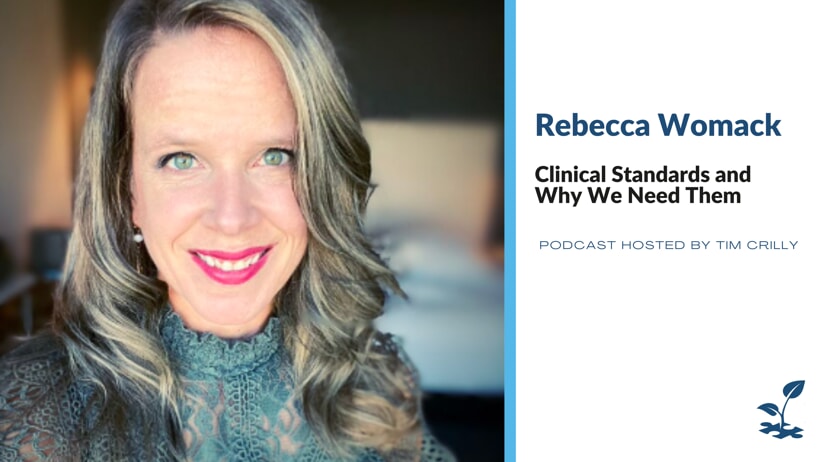
Season 4: Episode 4 – Clinical Standards and Why We Need Them

Hosted by Rebecca Womack, Tim Crilly
March 21, 2024

Listen now:

or listen on your preferred platform:

Episode Description

Tim discusses the need for clinical standards with Rebecca Womack, BCBA, who is the Associate Vice President of Clinical Standards for BlueSprig. During the conversation, Tim and Rebecca talk about her work and how she collaborates with the Clinical Team by ensuring all clinicians engage in clinical activities that align with industry standards, research, payor policy requirements, and best practice guidelines. Rebecca outlines why her team’s work is so important to BlueSprig leadership and how it sets BlueSprig apart. In addition to her role with BlueSprig, Rebecca also serves as the President-Elect for the Association of Professional Behavior Analysts (APBA), and is a member of the Council of Autism Service Providers (CASP) Public Policy Committee.  It’s a must listen-to episode for all BCBAs out there!

Full transcript

0:09 Tim Crilly: Hello and welcome to uh episode five of season four of ABA Unfiltered. I’m your host, Tim Crilly. It’s hard to believe that this is already the halfway point of our fourth season. Um, a little intimidated by our guest today. Um she’s pretty famous. Uh so I’m really excited about the conversation that we’re we’re gonna have. But it’s a name you probably know if you pay attention to what’s going on in our community. Um, Rebecca Womack. So right now um she’s worn a bunch of hats, and that’s part of why I’m excited to have her come on and talk today about all of the things that she’s been able to do here at Blue Sprague as well as out in the community. But her current role is Associate Vice President of Clinical Standards here at Blue Sprague. She is also president-elect of APBA, and we stopped listing things on her CASP CASP to-do list. So we just kind of said she does a lot of stuff for them, uh, free of charge. Uh, she’s out there, she’s doing a lot of great things, she’s talking to a lot of great people. So we’re really honored, Rebecca, that you’re gonna come and talk to us today. So, and the best thing about her is she’s also my friend. So that that also helps.
1:22 Rebecca Womack: You’re so gracious. I’m super embarrassed. I’m trying meat red right now, but that was a very kind introduction. So thank you. I’m really glad to meet you.
1:30 Tim Crilly: You can just post it right on your social media. It’s perfect. You know, and the funny thing about the best thing about Rebecca is sometimes you get a chance to talk on the phone while she’s on a walk and you get to feed turkeys and pigs, and you get baby sheep pictures sent to you. So try to get on one of those afternoon phone calls with Rebecca so you can get a taste of farm life, I guess.
1:50 Rebecca Womack: Yeah, that’s just true.
1:51 Tim Crilly: Yes, you’re the Zsa Zsa Gabor of um Blue Sprig.
1:54 Rebecca Womack: Thank you.
1:55 Tim Crilly: Uh two people listening to this understand that reference. One of them is my mom. So, okay. Um, VP of clinical standards, what does that mean?
2:07 Rebecca Womack: That means that Blue Sprig has prioritized taking our profession’s standards of care, all the different variables that impact clinical service, like payer regulations, state laws, um ethical considerations, and they’ve made it someone’s job to corral that, make sense of it, put it together through our Blue Sprig values into a process that is digestible for our clinicians to be able to implement systematically. So that’s kind of my job.
2:45 Tim Crilly: Okay, so as I indicated, you wore a lot of different hats during your time here. So you’re coming up probably about three years, almost four that you’ve been with Blue Spring?
2:54 Rebecca Womack: Three plus years, like almost three and a half years.
2:57 Tim Crilly: Okay.
2:57 Rebecca Womack: Yeah.
2:58 Tim Crilly: So give us a little bit of a rundown of the different areas that you’ve you’ve been able to have an impact and touched over the the course.
3:05 Rebecca Womack: So um when I first uh learned about Blue Spray, it was through connecting with Sarah Jenkins and um she introduced me to Amanda Fullbright, and I was able to work in a role um as an area clinical director. And um after maybe about a half a year in that position or so, um, I was gifted the opportunity to move into a position under compliance. And um the title was director of compliance or clinical compliance, but the role was to collaborate with both departments to ensure that um what we were doing was connecting with all the different requirements out there in the industry. And after about a year and a half, maybe two years in that role, um, the opportunity came to move into this position now. So um I’m thankful to have a lot of different hats and a lot of different activities under my belt.
4:03 Tim Crilly: Yeah, and I think that’s a really important part. You know, I think sometimes people, when you move up that that ladder, sometimes you get further away from the things that you that got you into this business.
4:14 Tim Crilly: So I know like Dr.
4:16 Tim Crilly: Kerr, um, our chief clinical and administrative officer, you know, deep down in her heart, she’s still an RBT. Yeah, that’s who she is. She wants to get in there, she wants to get on the floor, but she’s really good at a lot of things. So she knows she takes that that role. So for you, you know, I think you’ve had that ability to see different aspects. Um, and not to mention all the things that you sort of do from an uh sort of an industry advocacy uh process on the outside. So when you look at Blue Spray, when you started, it was probably a smaller organization and you’ve watched it grow. And obviously, through that growth, mistakes get made, lessons are learned. What’s your takeaway from some of those things that you’ve seen and how have we learned as an organization to make sure that we can, you know, make those necessary changes moving forward?
5:09 Rebecca Womack: That’s a really good question. Um so what I’ve seen ultimately is a reflection of a root cause analysis. So as we’ve grown, there’s been really great things that have happened and really um also a lot of other things that have created opportunities for learning. And in those opportunities for learning, um, when you kind of try to unpack the why behind maybe the quality isn’t what you wanted, or the documentation was missing the bar. To me, it comes back to the framework for how people become BCBAs in their verified course sequence. And you look at the requirements of what a BCBA eventually should know, and you look at what they need to know now, and there’s a huge disconnect. And so um, I know that you know the BACB and ABAI hope that those things get built into our practicum experience, but when it comes to Blue Spring, it’s created a way for um not only just me, but the other amazing people that work here to collaborate and create systems and supports and resources to start to fill in those gaps a little bit on the front lines.
6:20 Tim Crilly: Okay, so when we were kind of chatting and sort of outlining um what we wanted to talk about, you know, I the people that listen to the show, they know I make notes and then we never stick to the notes. But one sort of thing that jumps out is that that concept of clinical drift. Um it’s inevitable, I would say. You know, I don’t know if it’s necessarily, it’s probably something that happens across all organizations. Um, and part of that is because why? Is it a lack of standards as a whole, or is it a root of how you were trained and who where you worked prior, or are you brand new? Where do you see the biggest um sort of causality of that clinical drift? What’s what’s that root cause that you see people sort of operating independently within an organization than maybe the rest of the organization?
7:14 Rebecca Womack: So one of the major things is that um when people have a learning history, they create a learning history and their decision making doesn’t cause them to encounter contingencies that would change their behavior. Like if they document a certain way and it’s problematic, or they render outside the scope of a CPT code and they don’t ever get dinged for it. That supports their belief system, in my opinion. And so they take that and I think with very good intentions, teach others. And you can only see the ripple effect in our industry. And so um, I think for me it’s a lack of understanding or a lack of prioritizing, really, and this sounds dorky, but embracing what is written, clear and concrete, which are our standards of care. Um, and there’s a lot of different documents out there that I don’t I think a lot of great people don’t know about, and that would be an anchor for them so that they don’t drift going forward.
8:15 Tim Crilly: So I think a topic that we’ve had multiple people on, we’ve kind of, you know, we’ve never intended it to be the topic, but it sort of ends up being a topic within this industry. You know, we don’t really have a true mentorship. Um we have interns, we have, you know, you kind of get trained by multiple people, but we sort of lack that um sort of like the medical, you know, process, those rotations that, you know, sort of going through a residency, if you want to call it that. Do you think that there is an opportunity as as things start to evolve and we’re growing? You know, this is an industry that is still relatively new as it relates to sort of interacting with the medical and and health health world. Um, you know, what the BCBA itself is only 25, I you know, kind of mid-90s is when it sort of became a thing. So in the grand scheme of life, it is it is new.
9:15 Rebecca Womack: Yeah.
9:15 Tim Crilly: Um, you know, and uh it’s not like health plans woke up one day and said, you know what, we’re gonna offer an ABA plan, you know. This was things that was legislated and forced upon them. So over time, you know, now California, where I where I’m from, you know, we’re coming up on um 10 years of of that mandate, and and it’s amazing in the people that it’s helped. But I also see we’re in a point, a flex point with a lot of people where, okay, you guys have been doing it this way, and and and maybe we told our regulators how we do it, and therefore they’ve just sort of accepted that way. And now we’ve created a point where maybe it’s time to change, but we’re up against it. So I’ve kind of bridged into two topics that I get caught up on. So let’s start with the um sort of that residency model from a from a clinical standards point of view. How would you, what would your ideal sort of process of I want to be a BCBA to I am acting almost independently as a clinician be? What would what would your lifespan look like?
10:19 Rebecca Womack: Oh, that’s a great question. Um, I think it would encap so one of the elements that would be consistent in that lifespan, probably all the way through, is having someone who’s smarter than you, more skilled than you, to give you as close to real-time feedback as possible about all the things. Because I think that to me is one of the safeguards around having um drift enter into the picture of what you’re doing. The other thing is that there are elements, like I had mentioned before, that are most BCBAs encounter when they work in healthcare that they are not trained in. So those hallmarkers or those milestones in the person’s career would include a lot of experience with just learning how to lead by um serving other people as a manager, um, learning about business and laws and regulations and policies, and then getting into the nitty-gritty when it comes to when you’re a behavior analyst and you’re billing uh for your services, what is it that you’re doing? Like what happens when you leave the parents’ home and then the check arrives on your your doorstop for doorstep for whatever you were billing for. And it’s not that they have to embrace all those activities or understand them, but they have to get a sense of what happens because I don’t think they realize really the legalities associated with what they’re doing. And when it doesn’t match up the risk, that certainly is open to them, but it more importantly, it’s to the clients that they’re serving.
11:59 Tim Crilly: Yeah, you know, when I was at I was at Magellan, and um, you know, I when I was walking away from from there to go on to different things, I kind of realized that really we are we are all partners in a uh consumer protection sort of process. We have we have consumers and it’s our job, you know, it’s the health plan’s job to make sure that they’re finding the best, most appropriate people. But then it’s you know, as those the clinicians and those clinical teams, it’s our job to make sure that we’re doing the right things by those those clients. So going back to um sort of that that concept and um the compliance and what you were just touching on, it’s one thing to say, I know how to implement this treatment plan and go do all these things. What sort of things should people be asking of their organizations, um, not Blues Brig, but you know, or Blues Brig and outside? Yeah. If you’re a BCBA and you’re young and you’re new, and you just assume everyone has my best interest at heart and I’m just free to go out and and do these things, it’s probably not necessarily the case because there are so many changing rules and things. So, from a compliance standard, sort of you’re alluding to it with the filling and things like that. And but can you emphasize what that means to you as an individual clinician and what is at stake if the organization you’re working for is not maybe operating in the best practices?
13:30 Rebecca Womack: That’s a very thoughtful question. Um I think it starts with so if you’re a young clinician or you’re a seasoned clinician, no matter the size of your organization, getting a sense or learning about your company’s um oversight of the policies that you’re contracted with. So do we have a point of contact that knows all the policies, has read them, understands how to implement them and what that looks like for our service delivery? And then also, is there a group or a department of people or a single person that creates tools to evaluate the work products that are developed when we deliver services, whether it’s a plan or session notes or just entries into a medical record, is someone measuring what we’re doing and matching it against not just the policy requirements and health plan with health insurances, but also we have an obligation if we’re licensed within a state or certified with the BACB to uphold ethics or state laws. And if there isn’t a process that is in place that accounts for all of those and measures all of those, then your next question could be how can I help us get there? Because if you don’t have that, you certainly may be finding yourself in a situation where you’re going to have to answer to a health plan about some challenges that they discover within the work of your organization.
15:01 Tim Crilly: Yeah, you know, back in the old days, you know, we used to find stuff out, you know, oh, we didn’t know, you know, so I think a lot of the fraud that can occur, I don’t think it’s necessarily nefarious. It’s because there’s so many different rules, and this health plan does it this way, this state does it that way. So, you know, I think for the most part it’s done out of, I just didn’t know. But as time goes on, you can’t keep making that excuse. At some point it has to be, well, we we we found this out, so we have to pivot and we have to change. And I think that’s where I I really appreciate the fact that I work for an organization, Blues Brig, that invests in someone like you, because you don’t have to. Um, you know, you can go out and cut corners and do all those things, and you know, you can you can you can bill and you can do all the things that generate that revenue, but at some point it can catch up with you, and whether or not it’s a bit from a compliance and a through an audit or those things, or if it’s are we not even paying attention to the service that we’re providing and and making sure that it stands up to our clinical excellence. So that’s where it’s really nice that you exist, and I don’t have to worry about it as much because in my role, I’m not out there doing that, but I do it makes me feel good that we don’t we don’t skip those things, we don’t just you know cross our fingers and hope for the best. Like, you know, when you maybe you’re younger and you don’t know what’s in your bank account, you slide that card, it does it work, you know. That’s not how we should be operating as as someone that is sort of stewards for these families. You know, we have to make sure that you know, while it might be, we might think this is the better way to do it, if it doesn’t fall into the rules, then we have to we have to play it that way. So um that that’s where I really appreciate you and your team.
16:53 Rebecca Womack: You know, and that’s very kind of you, um, truly. Like what I think, as you were talking about this, you caused a thought to come to my mind about the impact. And um, maybe if there’s guidance I would give to a young clinician or just any clinician, is to think about what it is that we’re doing when we’re delivering services. On the flip side, the family is coming there, they’re probably paying copay, they’re taking time out of their schedule, they’re making arrangements for transportation, and then they’re also sending their child to you with the hope that whatever the reason was that they came to you in the first place is going to someday you remedy. And anything less than what they deserve for them is just for me, uh, it’s not fair, it’s a disservice. And and myself included, I’m not a perfect clinician by any means, but I still hope and demand of myself and our our science that they they get excellence every time. Because I think on the flip end, if you were on the flip side, if you were in a doctor’s office and you knew for certain that the doctor was giving you 50% of what you would deserve, I don’t think you would be like okay with that, right? And you get this bill and you take time out to get to the doctor’s appointment. And these are families that are doing this day after day after day. So um you’re talking about really important things today. So I’m really thankful.
18:16 Tim Crilly: Well, it’s because I had a really important personal. Um so getting to that, um, I you know you’re absolutely right. And I think you know, uh, you know, utilization is hard, you know, it’s an everyday service, multiple hours a day. 100% is is not a possibility, but you know, I think as an industry, there needs to be there needs to be an improvement there. Um, that’s probably a topic for for a different day. I just get myself in trouble. Anyway, um, so let’s let’s let’s talk about you know you out outside of of the bluespring walls a little bit. So, what does it mean to be president-elect of APBA? Oh, you know, like is there a coronation like when it becomes the real thing?
18:55 Rebecca Womack: That’s so funny. Um there’s definitely kind congratulations from the board members, and um, it means that you get to serve um with other like-minded people in our field who really care about protecting our science and also helping providers and making sure that providers have resources, information, um, advocacy. Now, I want to say, like, I, you know, I can’t speak on behalf of the ABBA, um, but I can describe our CEO’s efforts, and she is just a champion for public policy and working for um, making sure that all our different states eventually license the practice of um ABA, which I think is important. But then it also means that you get this really cool opportunity to learn from other people. There are so many people on the board, all of them have incredible gifts of intelligence in all these different areas, and it’s been such a learning experience to learn from them. I’m just grateful.
19:57 Tim Crilly: Cool. So it’s it’s you get to you get to sort of shadow the current president is how it works. You sort of learn the ropes and then you move in and then you’ll have a two-year term and then someone that will shadow you.
20:07 Rebecca Womack: Yes, the current president will shadow me.
20:09 Tim Crilly: I’m flattered, but I’m I it’s not for me. Maybe someone else that might might be a little bit better, but I I do appreciate the offer. Um so I would imagine it’s been a rough, it’s been a rough go for organizations like ABBA, where the conference is a big is a big deal, um, sort of for keeping you financially viable and all those things. So it must be nice to feel like, okay, we’re through that, and there’s actually going to be some events and all of that. So um when and where is it? It’s coming up, right?
20:43 Rebecca Womack: Yeah, it’s coming up. So registration is open on March um 17th through, I think it’s like the 21st, I believe, right? But it’s in New Orleans, Louisiana. And um it’s I’m excited because I’ve never been there before. And to Casp?
21:01 Tim Crilly: I mean to APBA?
21:03 Rebecca Womack: No, to New Orleans.
21:04 Tim Crilly: Oh, got it.
21:05 Rebecca Womack: No, I’ve been taking VA forward for sure. Yeah. But um no, I’m really pumped to be able to go down there this year and and we’re thankful. I’m so ready. We’re taking, you know, they’ll be safety precautions stuff. I’m so pumped to see people in person.
21:18 Tim Crilly: Yeah, I you know, I so we can we can then transition. So that’s exciting. Register, go. Um, I’m sure you’re giving some sort of presentation. What’s it on?
21:28 Rebecca Womack: I am doing a workshop on medical necessity with our current president, Alison Moore, and then I’m also doing a workshop on documentation and compliance with Michelle Silcox, and then I’ll be doing a panel with this is really cool. Um his name is Dr. Michael Cummings and his colleague Janelle Um Van Cleave. He’s a child and adolescent psychiatrist, and she’s a licensed mental health um therapist, I believe, or social worker. I’m sorry, Janelle, if you’re listening. But we’re gonna be talking about what to do in the times of crisis for. Um, you know, when you’re providing services and a child’s a family has a child that’s in crisis, how do you bridge like those moments where you’re in code red and you don’t know what comes in the next few days?
22:10 Tim Crilly: That’s cool. Yeah. So you’re you’re busy.
22:12 Rebecca Womack: Uh a little. It’ll be a very busy time, but I’m excited.
22:15 Tim Crilly: Put a bunch of granola bars in your bag and that’ll be fine. That’ll be fine.
22:19 Rebecca Womack: Perfect.
22:19 Tim Crilly: Or some turkey jerky and lay it on the farm.
22:22 Rebecca Womack: No.
22:23 Tim Crilly: Okay, so last thing. Um, you you do a lot of stuff with with CASP, and I and I know Blue Spring has a strong relationship with with them. So what what sort of initiatives do you have going on there that people should know about?
22:36 Rebecca Womack: So CASP has been tremendous in terms of the same thing. I don’t speak on behalf of CASP at all, but I can describe that they have been phenomenal in their public policy efforts. They cast the net wide. Um, so they certainly look at all types of issues, whether it’s um services in the schools or issues with Medicare or Medicaid, I’m sorry, or you know, Tri-Care support in the Tri-Care wing. Um, but then we also so at CAS, there are different special interest groups that meet consistently about different topics. And it’s been a great forum to learn from other organization owners across the country to learn about their wins and their struggles. Um, and they I believe have a conference coming up in May.
23:19 Tim Crilly: It’s in May, it’s in Portland.
23:21 Rebecca Womack: Portland, Oriental.
23:22 Tim Crilly: That’s the one I’m going to. Oh, I’m excited to see people that I haven’t seen in a long time. Yeah. And I know you’ll be there and about five other, six other people from Blue Spray. But yeah, um, CASP is probably one of my favorite conferences just because it is small and it’s not really um a getting run over in the hallway by people like racing to try to get to their their next CEU. Um, it’s a little bit more, a little bit more relaxed, and it’s it’s it’s a nice time. And and you know, I think in the past they they’ve done a great job. So, you know, um, you know, Lori came on and then boom, everything changed, you know, like almost immediately after you know the CASP 2020 was in January, and then everything stopped. So it’ll be good to to get a sense of you know what CASP is coming out of 2020 um and into 2022 now. So um I’m really excited about that one. And yeah, make sure you’re presenting there as well.
24:17 Rebecca Womack: I am so medical necessity. Um I’m trying to think. So a couple on documentation and um uh there’s a one on TRICARE and uh another one on a panel just about kind of similar topics at APBA. I’ve never been to CAS though before. Oh so I’m excited.
24:36 Tim Crilly: It’s really good, it’s a good one. Um, you know, and uh if you guys don’t if you you know if you’re out there listening, you don’t know much about CAS, but really take a look because they’re putting out a lot of great stuff, um, standards and things, a lot about what we’ve been talking about. So um, you know, we’re we’re just about at the end here. Uh I think my main takeaway is you know, listening to Rebecca talk is if you don’t know, raise your hand and ask if that person doesn’t know, ask somebody else. Because I, you know, what we’re trying to do here as a community um really needs to be as many people on the same page as possible. And it it’s you know, it’s it’s too complex of a of a process that we have to pretend like you know the answer. So that’s my takeaway from you. Just don’t pretend, find out because you’re gonna be better off. I think you know, and and people that you’re working with or working for are gonna be happy that you didn’t just sort of keep your head down and hope for the best. Ask questions. If you make a mistake, people make mistakes, learn from them, move on, because you know it’s a very important thing that we’re doing that has a lot of regulatory things that you might not really realize. So that’s what I heard. What did I miss?
25:52 Rebecca Womack: You didn’t miss anything about that. Well, I would maybe add if you have a question and you cannot find the answer through a trusted supervisor, go to the source. If it’s a topic, try to find the document to do your research. The other my takeaway from today, um, though, I will say, is that I continue to be so impressed by how thoughtful you are. I just want you to know that you’re truly one of the most thoughtful behavioralists I know. And I wish we don’t have time to describe the dimensions, but I hope your audience knows that.
26:25 Tim Crilly: Thank you. I appreciate it. Well, my mom knows, and she’s she’s a core listener. So that’s that’s perfect. Um so Claire, thank you. Um, you did a good job. That’s basically what uh Rebecca’s saying. So um thank you, Rebecca. Uh, you know, I you know, people, if you’re gonna be at those events, go go introduce yourself. She’s a great friend to have. Um, because you know, those people that don’t know the answers, she probably will. So, you know, just um I’ll give out her phone number right now. Give me a second to look it up. Um okay, so you know, thanks for tuning in. I hope you guys enjoyed this conversation. I know it was kind of high level, um, but I know I learned a lot. So, you know, thank you for your support and listening. Um, Rebecca, please come on anytime. Uh, we’d love to have you or any of your friends out there as well. So um another great episode of ABA Unfiltered. Um, tune in, um, share, subscribe, all those things. Thanks, everybody. Before we leave this episode, it has occurred to us that we actually made a misrepresentation within this conversation. And here at ABA Unfiltered, we take that very seriously. We really want to make sure that we’re providing you the most accurate uh and up-to-date information, especially on an episode geared towards clinical standards and with a guest such as Rebecca Womack. So when I referred to Rebecca as the Zsa Zsa Gabor of Blue Sprig, get based on her life on the farm, that was a mistake. Um, Zsa Zsa Gabor did not play the lead lead character in Greenacres. It was actually her sister, Eva. So, from all of us, Andrew, me, we really apologize for that misrepresentation during today’s episode. We really hope you enjoyed it. We really hope you share this. Thanks again, and talk soon.

Find a center near you.