Back
ABA Careers

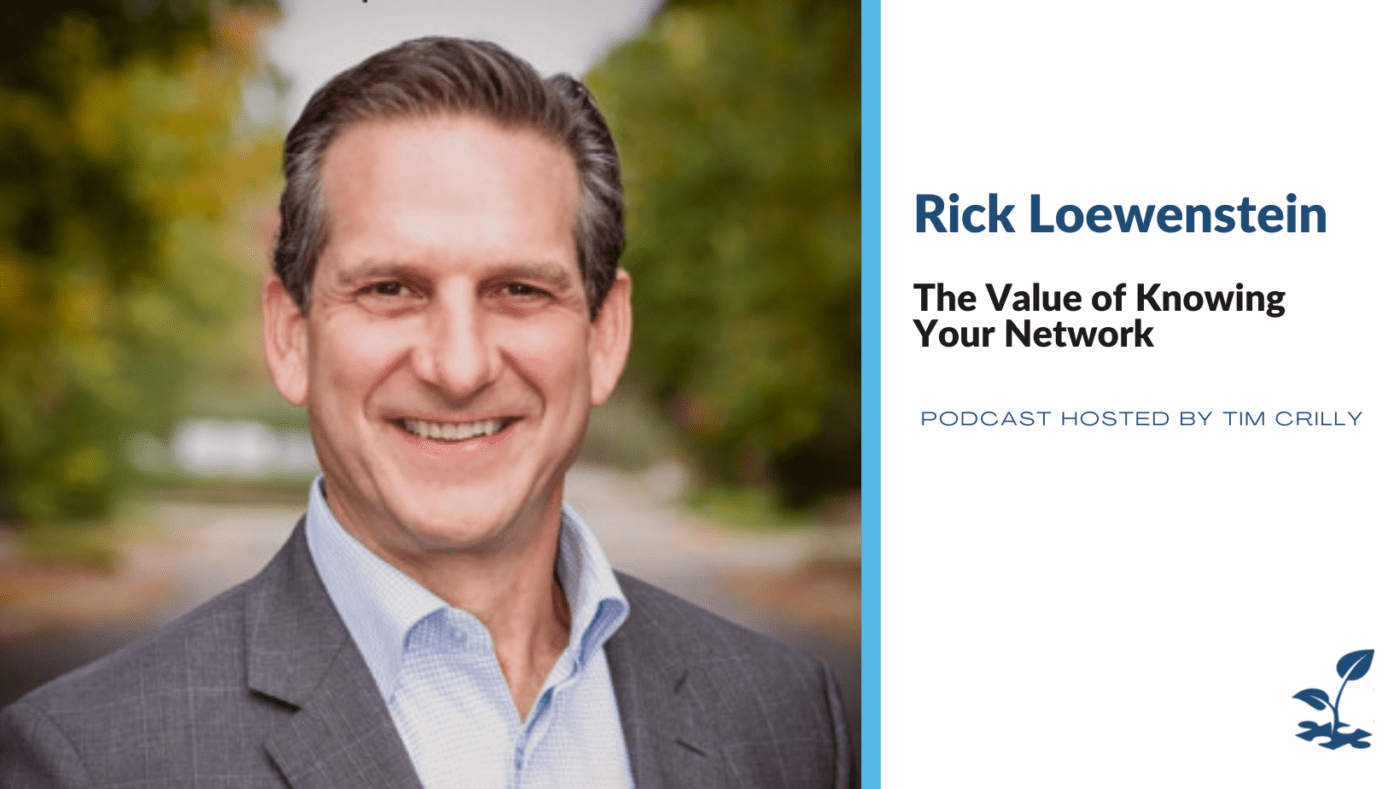
Season 4: Episode 2 – The Value of Knowing Your Network

Hosted by Rick Loewenstein, Tim Crilly
March 21, 2024

Listen now:

or listen on your preferred platform:

Episode Description

Tim is joined by an old friend, Rick Loewenstein and they discuss Rick’s journey through the ABA world, and how he approaches relationships. Tune in to hear a great conversation about relationships, and how to best leverage them to better serve your clients!

Full transcript

0:09 Tim Crilly: Hello and welcome to season four, episode two of ABA Unfiltered. Already getting laughed at by my next guest for some of the mistakes I’ve been making in the in the pregame here. He’s an old friend of mine. It’s Rick Loewenstein. He’s going to walk you through the way in which we met, gosh, almost 10 years ago at this point, coming up on 10 years. That seems unlikely, but it’s true. So that’s a great story. We’ll get to that. But I’m really excited to have Rick on. Rick is the CEO, co-founder of Team Game Advisors, and he’s going to talk a little bit about who they are and what they do and sort of the interaction they have with the ABA community at large. But the real reason I wanted to have Rick on, and you know, to full disclosure, when we first started this podcast uh a little bit ago, season one, I had him as a guest that I wanted to have, and we for some reason just it never came to be. And so here we are, season four. We’re way more polished. So Rick, you’re better off having waited to join us, you know, Andrew producing, all those things. Um so it’s it’s really nice to finally have Rick on. And I think the reason I wanted to have Rick on is he brings a really unique perspective. Uh, he’s an outsider from the ABA autism community. But once he stepped foot into it, you could tell he was in it for a while and really believes in the mission of what we’re trying to do as a community for this population, Rick. And I’m sure as he walks through some of his history, you’ll see that he’s a very mission-driven person. Uh, but he also brings a personality and tenacity uh with him that really, really I’ve seen firsthand get things done. Uh, and that’s a good thing. And those are the sorts of things we need. So we’re gonna talk a little bit about Rick, his past, how we came to be befriends, and hopefully, you know, what he sees as some of the next phases in this business and some of the things that that he’s excited to be a part of making those changes. So, Rick, thanks for coming on. Really appreciate it. You want to just give the audience a little taste of of who you are, and and that’d be great to kick it off.
2:17 Rick Loewenstein: Sure, I really appreciate it, Tim. Thank you so much. And uh the podcasts are uh they’re great. Um I’m really in awe of the people that you’ve had and the conversations that you’ve had. And uh just we’re scraping the bottom now.
2:31 Unidentified Speaker: So glad to be at right. I’m now on I’m in the fourth season lot, yeah, exactly. You know, which is good and bad. I think it’s all good.
2:39 Rick Loewenstein: Everything’s been endured for three seasons, and people are actually listening.
2:43 Tim Crilly: Yeah, they’ll they’ll people will look back on this episode and they’ll they’ll consider it our jump the shark episode. And for those of you who are too young to have watched Happy Days, look it up.
2:53 Rick Loewenstein: Yeah. So uh it’s I’m just real thanks again for for having me. Um, I I do believe strongly in mission-driven organizations. I’ve had half of my career in the nonprofit sector, and maybe that’s part of um that whole mission feel that I have. Um, just looking back, I was my first foray into the nonprofit sector was as the CEO of one of the oldest and largest food banks in the country in Detroit, and succeeded the founder that had been there 21 years. Uh, so I was the CEO there and uh also the CEO of an organization called JARC that works with people with developmental disabilities and uh uh housing, uh community-supported living for folks with uh intellectual and developmental disabilities. So I uh while I am somewhat relatively new to the autism space, I’m I’m not so new to the disability community. And so um during my tenure as CEO of JARC, uh started legislation was changing in Michigan, and uh autism therapy was then becoming a mandate, and uh the landscape changed, and we started to explore opportunities, and and that led me to my next role as uh chief strategy and growth officer back into the private sector with the national ABA provider, Centria Healthcare. And uh we subsequently grew uh over the course of my tenure into 10 states and uh and just an amazing experience in so many states that things were changing so fast at the time in 13, 14, 2015, in terms of legislation. So uh that’s when I first met you. And uh my life has never been the same since.
4:44 Tim Crilly: Yeah, I get that a lot. Uh okay. So, you know, obviously you you jumped into to the centria um sort of that’s that’s sort of jumping into the deep end of the pool. You know, you jumped right into a large organization that was looking to grow, looking to have an impact on a national basis. So you you really got that that firsthand experience of of what it is to be a large large provider. So now now that we’re together and we have a chance, I I I do think it’s kind of funny. So if we circle back to must have been 20 winter of 2014, does that sound right?
5:21 Rick Loewenstein: Uh yep, 20, uh, yeah, probably 20, yeah, 50, 14, 15. Must have been 14.
5:28 Tim Crilly: Uh so I was I was at Magellan, and so Magellan was managing the ABA uh offering for Blue Shield of California. So I was here out in California. I live down in the San Diego area, and um I’ll I’ll let you sort of go from there.
5:47 Rick Loewenstein: Okay, so this is a great story, and I’ve told this Tim so many times, and every time people just scratch their head, but this is this is like this is me.
5:57 Tim Crilly: Okay, this is why I this is how I from the start that I was should either be deathly afraid of you, yeah, or or try to make sure that I was your best friend.
6:05 Rick Loewenstein: So this is how I roll. So I you know, I’m gonna start by sharing it’s a story um of really how Centria entered the New Mexico market by way of California. So my cousin is a dog walker in the Bay Area, and when I shared with my family that uh my new role is chief strategy and growth officer for uh for a national ADA provider, um, you know, my cousin said, you know, uh he lives in the Bay Area in California. And he said, you know, um I play hockey, beer league hockey, with um the president of Blue Shield of California, Paul Markovich. And so uh he said, Would you like me to make an introduction? I’m like, Glenn, of course. You know, we’re we’re we’re uh exploring new opportunities. California is on our list, and so absolutely. So Paul was nice enough to take a meeting with me because of my dog walking cousin, who’s an amazing guy, excuse me. And um uh we had about 20 minutes, and and I told him a little bit about what we were hoping to do, and I had some questions, and he basically said, Look, you know, I’m not totally sure. Um, I I can’t help you the way that some other members on the team can help. So let me put you in touch with a couple of other people. And and after three or four meetings, I got to Tim.
7:31 Tim Crilly: And so Tim and I you got passed to Sherry Glaggo, who I think was our sort of liaison between Blue Shield and Magellan. She then passed you off to Michelle Brennan Cook, who was was my my boss at the time and who now works with us over here at Bluespring. For sure. But then she said, you know, hey, this is why I brought Tim on. I he could handle these kinds of things for me, get get Rick off my plate. And you ended up you ended up with me.
7:59 Rick Loewenstein: Right. And it was and it was fantastic. So we you know, we traded some emails back and forth, and and so all of and my wife and I were on vacation in San Diego, and I said, you know what, I’m just gonna call Tim and let me just see if we can if he’ll meet us. And so sure enough, he said yes. I feel like the bachelor or something, he said yes, I brought a rose. Came to breakfast, right? And uh, and we just talked and just hit it off like instantaneously. I don’t know how or why, but we just did. Sometimes that happens. So uh we hit it off and he said, Look, I’ll tell you really where we need help, and that’s New Mexico. Um, and New Mexico was really building out their ABA program. Uh Magellan was one working with Presbyterian as one of three or four managed care organizations, and he said, that’s really where we need help. I think at the time, Tim, correct me if I’m wrong, there were probably 19 BC. That’s about right. I was gonna guess 2021. So and half of them were in uh education, they weren’t even practicing clinicians. So sure enough, we we said we’re up for the challenge, and then, you know, as they say, the rest is history and just had a great relationship and built out New Mexico. And what was fantastic about it is is that um because of the mandate, because of the way that New Mexico built the system, it made it accessible for folks, both Medicaid recipients and also um commercial providers, to provide this therapy, ABA therapy, uh, for kids, any kid throughout New Mexico that needed it. Yeah. And um I often refer to New Mexico as really one of the shining stars in implementing. All the MCOs got together, they came up with a solid plan, and they presented it collectively to the community and to the provider community. And there was really good conversation um to develop, I think, a really solid program.
9:52 Tim Crilly: Yeah, and I totally agree with that, and it really plays into you know many aspects of why I always like to pick your brain. And, you know, when we talk, I think I come away sometimes, you know, with with more questions uh in a good way. Uh, but you I look back on that process and somehow I got involved. You know, I was able to sit in on those meetings and be the be the person with the most working knowledge, you know, whether that was a good thing or a bad thing. Uh, but I we you know, we got to put our stamp on what we think uh, you know, an ABA program, you know, sort of a mandate, you know, a managed care product as best as possible within the rules and all those things should look like. And I think it was a very collaborative uh process. Um, obviously it’s a smaller state, you know, there was only a handful of MCOs. I think there were four that sort of were involved. So it wasn’t like a lot of people uh fighting over various things. It was a group of people that wanted to provide a reasonable uh you know solution to as many people as possible. And when you think about New Mexico, the challenges just in geography alone, you know, and sort of all the things that they have to take into account. But it was an amazing time for me. And it really sort of rejuvenated my desire as it related to being at Magellan and trying to be an agent of change, you know, be one of the last things I was able to do before you know moving on to some other things. But that was one of those things that I look back on as my favorite part of well, meeting Michelle Vernon Cook, but um anywhile, uh I could somehow having had that opportunity to be part of that. So um, and I do remember you came out and I was there, and you were like, Oh, I’m going to see the governor tomorrow, or I, you know, I have a meeting at the governor’s office. And I was like, who is this guy? He’s here one day and he’s sitting at the you know, the the government, uh, the governor’s mansion having uh coffee.
11:50 Rick Loewenstein: Well, but that but that also goes to one of my philosophies is is sort of starting at the top, and as it relates to expansion and growth, which is something that we do a lot of at Team Game Advisors, you know, working with ABA providers, PE backed, VC backed, privately held providers grow and scale their business. Um, I’m a big believer in starting at the top. I mean, you know, um, who who are the influencers? And I think legislators um are sometimes a good place to start because I I can I will make an argument that says in every legislative district throughout the country, there are kids with autism and families working to help their children succeed. And um it should mean something to every one of them. And if they can’t help guide you through some process of uh understanding who to speak with, then you know, shame on them. But it doesn’t happen that often. A lot of times they will guide you along the way. So um again, going to Paul Markovich, good example. Start at the top and work your way down. Uh that’s my philosophy. You’ll get a lot of no’s along the way.
13:06 Tim Crilly: I can only imagine.
13:07 Tim Crilly: But you see, you can’t you can’t be afraid. And I I think, you know, when I think of you, that’s part of the thing that I um, you know, hopefully when you’re able to sort of interact with younger people coming up, you know, your ability to impart that that attitude and that wisdom to, you know, my dad always would say, Well, what’s the worst that can happen? They say no. Okay, you know, so I and I never really had that that personality all the time, but you know, he he did, and uh it, you know, worked well for him. So, you know, that ability to say, like, what are they gonna do? Get mad at you for asking, you know, no, of course not. But it’s it’s conversations and that ability to to to know who’s in your in your Rolodex, and you know, another reference for the for for young people. That’s something people used to keep phone numbers in.
13:54 Rick Loewenstein: Um I mean, that gets to another point that um you know I really believe strongly in is to develop your um your contact list. Okay, in my opinion, no one’s untouchable. And nowadays with Zoom, everyone is touchable, okay. And all it takes is getting an email or something. Hey, I saw you on a Zoom, I saw you on a podcast, I saw you on a conference, and I’d love to connect with you on LinkedIn, or you know, that that’s that’s your network. And that’s at the you know, I I kind of jokingly say at the end of our lives, what do we have? Amazing contacts and amazing life experiences and friends and your family along the way. All right, that’s it. And so this is part of who you are is building that network, and it just it comes cycles back so many times in your life of of connections and interconnections, and it’s amazing.
14:56 Tim Crilly: Yeah, I mean, you know, so if you’re ever at a conference and you see um, you know, Rick’s name on a name tag, go up, meet him. He’s actually dying to meet you, totally actually wants to talk to you. No, if you see me, I’d run for the hills. I’m gonna keep my head down and just keep going. Uh but yeah, definitely go say hi to Rick at a conference because he’s always looking for that next friend. Yeah. So okay. Never have too many. Yeah. So when when you look around today, you know, so obviously you you you left you left a giant organization. Um, so you have that perspective. And now you’ve had an opportunity, what is it, two years now that you hung up a shingle? Two and a half years. Two and a half, okay. So, you know, two and a half years, obviously a a weird two and a half with sort of, you know, sort of, you know, some things happening around the world and all that. But you know, now that you’ve had an opportunity to probably chat with all sorts of different um sized, you know, people in different points and and what they’re trying to do with their organization, what do you see on the landscape currently? What what are people, what’s sort of the the new buzz around town that that you’re picking up on?
16:07 Rick Loewenstein: Yeah, I would say a couple of things. One thing I’ve learned along the way is that one size is not fit all. There’s no way, and there’s no magic to any of it. Okay. Um, you know, we’ve seen, and and you know this, Tim, small centers, large centers, uh, home based, center-based, home, school, blended, um implementing telehealth, implementing um other support systems, uh, OT, speech. I mean, these are there’s so many combinations out there that there’s no one size that fits all to be a success. Okay, so that that’s one thing I’ve seen. The organizations that rule the day at the end of the day have the greatest clinical quality, okay? And you can take bells and whistles, it doesn’t matter, it does that stuff doesn’t matter at the if you’re given crappy service. Okay, and so the clinical quality rules the day. And when I say that, I mean that you have, you know, when you’re providing that great quality, your your clinical team is happy, the families are happy, the children are happy. And I’m gonna argue that most payers are happy because they’re seeing some good outcomes, and it’s indicative of a well-run organization, meaning uh they’re submitting clean claims, the documentation is is well prepared, and there’s a communication loop back to the payers. Okay, when you combine all that at the core of clinical quality, you’re unstoppable. And I think people want to work with an organization like that. So um that’s another thing that I’ve seen along the way, um, that clinical quality rules the day. Um, I would say that in most places around the country, there’s some level of need for great providers. And um and so I think that there’s opportunities in a whole lot of places, uh whether they’re primary markets like uh, I’m just gonna just picking like a Dallas or New York City or San Francisco, but there’s some really great tertiary markets, secondary and tertiary markets, that a lot of the national providers don’t want to go into, and that there’s a real opportunity to grow in those areas also. There’s a need, and so there’s a need for great providers. So I’ve seen that. Um, the other thing I’ve seen is I look down the horizon, is this opportunity to add support systems in support of the families that we that we all serve. Okay. You know, families are navigating some some tough situations here, and um, they need help. And to the extent that we can be, we as a provider, um be a resource for the families along this journey, the better off we’re gonna be and the better, the better off the families are gonna be. They need help and and we’re here to help them. So um some organizations have brought on a licensed clinical social worker, which I absolutely love. Um, what is it? How does that translate into better outcomes? Well, you’re gonna have lower staff turnover because the clinical social worker understands ABA and understands what the RBT is going through. Um, they’re getting the support from the the BCBA and they’re a resource for the family. You know, how many families are having issues with divorce or sibling, you know, work dealing with siblings? This is a whole level of support. And oh, by the way, it’s billable. So why isn’t every ABA provider have a social worker on staff to support their work? So um that’s that’s part of what I see coming down the horizon is the the ABA providers that are just single ABA providers are gonna be a dinosaur in five or 10 years.
20:42 Tim Crilly: I think you’re absolutely right, Rick. I think um, you know, the term case coordination is so important, or that you know, that the the concept of it, just that ability to have someone that understands more than just the one thing that’s going on, and that’s that ABA program, someone that really understands the nuance of uh perhaps mental health or you know, sort of that family stability, all those sorts of things. I think that’s a fantastic uh uh concept that for some reason is just having trouble gaining traction. And I don’t know why, because I think, you know, when you if you were to look back and say, wow, why didn’t we do this sooner after you’ve done it, you’re gonna see better results from a clinical standpoint. You’re gonna see you’re gonna keep parents, you know, maybe out of sort of an area of of um, you know, sort of that mental health breakdown or, you know, whatever those things are out of out of uh just your ability to be more perceptive and aware of what’s going on. So um not all health plans are getting on board with it. So I think that is something that if you want to talk about what’s that next phase, what do we as like partners in this? How do we go? About um bridging the gap between, you know, okay, we’ve been doing this for a while now. Here’s some of the lessons we’ve learned. How do we come together as um more of a team? Um, and what’s the next iteration of how we go about providing these services?
22:17 Rick Loewenstein: Yeah, one of the challenges is that in the payer system or in the insurance system, there’s carve outs or other organizations that are handling behavioral health and others that are handling physical health. And so even within a particular payer, they’re not necessarily talking to each other. And um, that at some point needs to change where there’s a collective, hey, we’re serving this family, and we need to know and we need to support them in every every way we can. 80, what is it, 80% of kids with autism have some gastrointestinal um issues numbers. I don’t know what it is.
23:04 Tim Crilly: It’s high. It’s high.
23:05 Rick Loewenstein: Okay, my point is why isn’t every AP ABA provider connected with a pediatric gastro in their community to be a referral source for families that come to them with GI issues with kids with autism and actually train train that discipline or train the gastro to work with kids with autism. Okay, pediatric dentist, another, you know, who has a specialty in working with kids with autism. Okay, it’s it’s it’s different, but why not have that in your suite of services to be able to share with the families that are coming to you? And guess what? A lot of it is just building a relationship.
23:52 Tim Crilly: Relationship, yeah.
23:53 Rick Loewenstein: That’s exactly it. Making a phone call. Hey, would you like to partner with us? We have kids coming our way. We want to direct them to a trusted source. And are you that trusted source? And then it goes both ways.
24:05 Tim Crilly: Yeah. You know, it’s it’s the same with sort of med management and things like that. You know, sometimes you don’t even know that a one of your clients has made a medication change. And I think, you know, someone that’s in tracking behavior on a very meticulous basis, that would be very helpful data for that doctor who is trying to, you know, sort of balance um new medication, new new dosage. But you know, you don’t really have that that communication there as well. So I mean, it it sort of cuts both ways, you know, for for some of these situations, we’re going to know the family better than just about any other doctor because we spend so much more time and more intimate time, I’d say, than than your average healthcare provider.
24:49 Rick Loewenstein: Absolutely. I mean, how many healthcare providers are in either a home or with a family, you know, 15 to 40 hours a week. Yeah, it’s just you don’t see that.
25:02 Tim Crilly: No, it’s just and I it’s just a shame because it does feel like there is a big hurdle um to to better case coordination. Uh, but it’s something that you know we’re talking about and and and working on, but I think it just seems so easy.
25:16 Rick Loewenstein: I think that the needle is moving. I think there’s, you know, uh the question always comes back is you know, standards, and I know the BHCOE is doing a great job of of developing these standards uh of care that can be consistent across, you know, uh, you know, uh clinical practices. There’s a few folks, probably others, yeah.
25:40 Tim Crilly: Casp, I think, probably is ICOM. But yeah, it’s but it’s you know, and that’s a great, great point to bring up because it’s not necessarily something that was in practice, it was always in in conversation. So it is good to see that there’s a handful of groups that are looking to take the brain power, the collective brain power of the folks they work with and try to put those um in in play to help, you know, sort of help everybody out as it relates to this industry. Because, you know, you know, you you look around and you you get these uh BCBA and you really ask people that are brand new to a position to be a jack of all trades, go out and be just good enough to stay out of trouble at everything rather than you know, focus various um uh skill sets in a direction of treatment that that make more sense to who that person is, where they are in their career, what experiences they have, what training they have. So, you know, I think there’s there’s a lot of different things that uh need to change as we look at this landscape because it we’re just sort of doing what we always did, because that’s how we started out. But I do feel like we are at a flex point uh where you’re starting to see a little bit of change. You know, why why do we submit 60-page reports? Well, because we always submitted 60 page reports. Do health plans really want to read 60 page reports? I doubt it. You know, so things like that. I think I’m starting to finally hear some conversations around just because we always did it that way, doesn’t necessarily mean it’s the way we should keep doing it.
27:14 Rick Loewenstein: Yeah, I you know, the other, the other pinch point for a lot of providers is uh is credentialing. Credentialing to me seems there there’s got to be a better solution than every BCBA having to credential with every payer and have that process go, you know, two, three, four months. Okay. You know, and maybe there’s I haven’t found yet a body, I know some are working on it, that becomes a clearinghouse where all the records they have all the records and they should just be credentialed with sure any provider they want to be. And and and why isn’t that happening?
27:53 Tim Crilly: Yeah. Or why if I decide to leave agency A to go to agency B, I have to wait again.
27:59 Rick Loewenstein: Yeah, and oh, by the way, it’s the same payer. That’s what I mean. It’s just a different provider, yeah.
28:05 Tim Crilly: It’s just a you know, a different tax ID or MPI or whatever the process is.
28:08 Rick Loewenstein: But when you think about it, for for all its warts, and again, it’s a it’s a young, uh, a young, youngish field, uh, for all its warts, uh, there have been some really great strides in the past eight, you know, eight to ten years, and they’re accelerating at a at a much quicker pace. You know, earlier diagnosis, earlier intervention, um, the the need for uh these other ancillary services, support networks, companies that are being built to support families that eight or 10 years ago had nowhere to go. So, you know, when you look back, it’s a lot has happened in a short period of time, but there’s still a lot more to go. And so, you know, again, the conversations about value-based care. You know, what exactly, you know, does that mean in in the ABA community? It’s been talked about for the last few years. Nobody’s uncracked the code, and there’s not been a payer that said this is what it means. I think that they’re waiting in some ways for providers to tell them what can be done. Yeah, I think so. And I think that there’s opportunities there, and there’s some really great providers out there that are having these much needed conversations to push this agenda along. Because in the end, who does it serve best? The people that we serve.
29:34 Tim Crilly: Yeah.
29:34 Rick Loewenstein: Okay. That’s every decision should be focused around that. Yeah, it’s it can’t always do that though.
29:41 Tim Crilly: No, it becomes the challenge. I mean, I guess if four or five of the larger uh players got got together and then started to go and talk with these health plans, then you you have a real thing. But you know, I think it’s it’s really a lot of one-offs having similar conversations, maybe not the same exact one. Um, you know, so I think our field is still at a point where there is some disjointedness to it. Um, you know, I would hope a group like CASP, who is really just designed to bring other people together, can start to get a little bit more of a cohesive feel. Uh, you know, I know there wasn’t CASP last year, um, but two years ago I was there, and you know, half the room was uh private equity is the devil, and the other half was this is the future. So we need to start to to work within that system. So I’d it’d be interesting to see like you know where where they are and things like that. Um, you know, but that’s always going to be the problem. And you know, I’m a BCBA, so I can I can talk. Uh, you know, you’re not, but you can just be an outside observer. But until we can come together a little bit better as as a group, it it presents those challenges where you know health plans are just sort of humming along because maybe it’s not quite as expensive as they thought it was going to be, you know, and that’s because you know, utilization isn’t what it should be, and you know, the length of credentialing and all those factors. So, you know, until there’s a real need for for change on their end, I I wonder, I wonder what road they’re willing to go down.
31:17 Rick Loewenstein: Yeah, I think I think another big change, just sort of talking about what’s on the horizon, is the use of technology. I think um, you know, we we’ve gone as a field from paper to uh data, you know, point of point of service data collection system, and and now we’re we’re in the electronic age. I don’t know that anybody does paper paper things, maybe something.
31:42 Tim Crilly: I think they still I think they still do because I used to ask some I used to ask guys at like Central Reach or you know, Data Finch or whatever and they would say their their bigger their biggest competitor was still paper and pencil.
31:54 Rick Loewenstein: Yeah. That’s that’s three or four years ago, but I I find it hard to believe nowadays, you know. I think you know, still sending things by fax is almost comical, but whatever. And uh, but I think I think um uh the use of assistive technology or technology uh to help support the the therapy, I think is on the horizon. Yeah uh we work with a great company called Angel Sense. It’s uh it’s a it’s a two-way, really started as a two-way voice communication uh assistive technology platform for kids with autism that elope. It was designed for that. And the analytics that come out of that are mind-boggling, just the ability to set up geofences, intelligent alerts, so that if a child breaks away, and it’s based on elopement. I mean, you know, half of the half of the kids with autism um study show will elope at some point in the next year. Okay. And so um, you know, you they can build geo fences around the different locations that the school, their home, family, have multiple caregivers using the app at any given time. But the analytics that are coming out of that are are astonishing. So, and and how do we incorporate that into ABA therapy so that we do see a reduction in elopement, see the reduction in maladaptive behaviors? It’s really amazing.
33:28 Tim Crilly: And there’s other huge reduction in tragedy, I think is another key factor.
33:34 Rick Loewenstein: And ultimately would reduce you know it it allows the people that we’re serving, I think, uh, greater independence at a much quicker rate. That’s exactly right. Yeah, much safer rate. So um, you know, that’s just one example. There’s other uh assistive technology, whether it’s um, you know, uh uh PAX board electronic in a home or whatever it might be. I think that we’re at the like beginning stages.
34:06 Tim Crilly: Yeah, I it’s a great point. I mean, because as as you and I get older, the you know, parents coming in, having you know, the toddlers and they’re getting younger, um, and the staff are you know getting younger as well. So you have you have families and you have a a workforce that if you say, no, let me all just write it down on this piece of paper, uh, you know, it’s a little bit like, what are you what are you talking about? You know, so I mean, when you can go to the gym and strap on uh, you know, something that’s gonna measure 45 different pieces of data every time you jump on a treadmill, yeah. You know, the expectation should be the same that we we should be able to go into a session and have real hard concrete uh razor sharp uh information coming out of that.
34:56 Rick Loewenstein: Are there biometrics that occur before meltdown? Wouldn’t you love to know that ahead of time?
35:01 Tim Crilly: Sure, there are.
35:02 Rick Loewenstein: I mean, that’d be uh that’d be phenomenal. Yeah. So um, yeah, you’re getting you’re getting older. I’m not getting older.
35:09 Tim Crilly: Oh, I know. You look fantastic. I know that about you.
35:12 Rick Loewenstein: Uh that’s why I’m glad there’s this isn’t being video.
35:17 Tim Crilly: Um okay, uh, we’re kind of getting short on time here. Uh when we were sort of in the the the pregame conversation, you mentioned um value-based relationships. And I I’ve I hadn’t heard that uh that term before. I know we probably I mean touched on it a little bit in our conversation, but you know, what do you mean by that? And then uh secondly, what can that do for us as a as an organization or an industry moving forward?
35:45 Rick Loewenstein: Yeah, so um I think at the core of it all, uh we’re in a human services business, okay? We’re we’re serving people, they’re people serving people, and at the end of the day, we’re humans, okay? Humans need interaction with one another, and it’s not interaction with a form, a uh a drop-down menu. We’re people, okay? And it’s very personal the work that we’re doing, and it’s really hard to. And what I mean by um value-based relationships is you know, there’s an opportunity in every every step along the way and every stakeholder that’s in our ecosystem to develop a key relationship with those stakeholders. And when I mean stake, when I mean relationship, I mean collaborative, I mean transparent, uh, honest. And when you start to build that type of relationship with your network, then great things happen. Okay, people will refer you to other people. Um they your level of trust um increases, and ultimately, I believe as a business person, translates to solid relationships, translates to great business moving ahead. So when I think of when I think of the when I think of uh who the stakeholders are, I think of payers as being one stakeholder. Okay. And and we, you know, at Team Game, we ask, we, we share with the people that we work with, the providers, to say you should know the payers, you should know four or five contacts at every payer. Utilization management, provider relations, CEO. Okay, you should know who that is. Okay, contract management, convention, and so forth. So building out these great solid relationships will help you as you grow. Okay. Um, and so again, advocacy organizations, referral sources, universities, um, legislators, these are the media, these are all key components of success and building for the future. And um, that’s what I mean by value-based relationships. They’re they’re they’re creating value for your organization and can be monetized as you grow.
38:28 Tim Crilly: You know, it’s a great point because I think when I went over to Magellan, it just I figured it was going to be super scary, super buttoned up. You know, if you make one mistake, you’re gonna get, you know, brutalized. And it’s really not, it’s really just people who care about doing a good job, trying to figure out the best way to serve the people they’re supposed to serve. You know, so when you do reach out and you start to build those relationships with those funding sources, just remember that they’re just moms and dads and they’re just doing all the same things that you’re doing. Absolutely. They just do this, and you know, it’s it’s that ability to to to find that that person that can then help you and you build that relationship, they’re gonna want to help you because deep down they know you’re trying to help them.
39:15 Rick Loewenstein: Yep. Yeah, I I agree with that. And and it there’s no shame in saying I don’t know. Okay, hey, how does it work here? Can you can you help me understand it so that I can be a great provider?
39:27 Tim Crilly: Yeah, and I think that’s one of the other things we we, you know, people are afraid to to say, I don’t, I don’t know that. Or, you know, you you you go through meeting after meeting pretending like you know what’s happening and that it uh you’re afraid to maybe raise your hand and ask a question with a health plan about well, what did those three initials mean? I’ve been pretending what the ASO like that I know what an ASO is this whole time. You know, don’t be afraid, you know, ask the questions.
39:54 Rick Loewenstein: Absolutely. And and most of the time they’ll help you.
39:57 Tim Crilly: Yeah, exactly. Um Rick, uh just before, you know, how can people learn a little bit more about you, get in contact with you? Um before you do that, I will say if you you reach out to Rick and you want to talk about a you know an issue or something that you maybe want to partner with, I guarantee you he’s gonna treat it like the most important thing in the world because he actually thinks it’s the most important thing of the world. It’s not an act.
40:20 Rick Loewenstein: Thanks, Tim.
40:21 Tim Crilly: Yeah, no, I really I I believe that wholeheartedly.
40:24 Rick Loewenstein: Yeah, I appreciate that. Um so uh best way is really our website is uh teamgameadvisors.com, O R S, Team GameAdvisors.com. I was actually shocked that Team Game Advisors wasn’t taken uh when I started two and a half years ago, and because my whole life has been a team. Uh, and so you know, we have a little tagline, it’s a little goofy, but you know, that success is a team game, and it totally, it totally is. Nobody got to where they are alone. I don’t care who you are, and anybody thinks that they can do it alone is fooling themselves. So that’s a great point. We work uh both in the nonprofit and private sector, and uh it’s been it’s been an amazing ride. And you know, doing it with my wife, Dana, you know, we’ll be married 40 years this year. It’s just been it’s a dream come true. I’m living living a dream, so it’s pretty cool.
41:21 Tim Crilly: Well, that’s great. And um, you know, I appreciate you coming on, and and hopefully I’ll see you in person real soon at one of these upcoming events or if you’re making a West Coast trip.
41:31 Rick Loewenstein: I need a I need a hug from Tim Crilly.
41:33 Tim Crilly: Yeah, hey, hey, I’m I’m all I’m all stocked up. I’ve I’ve been hoarding them for a few years now. So there you go. Um, so Rick, thanks again, and and and thanks to everybody out there listening. Um, you know, stay tuned for more great content. Please um subscribe, share, like, all those things. Um, and we’ll be talking to you guys real soon.

Find a center near you.