Episode Description
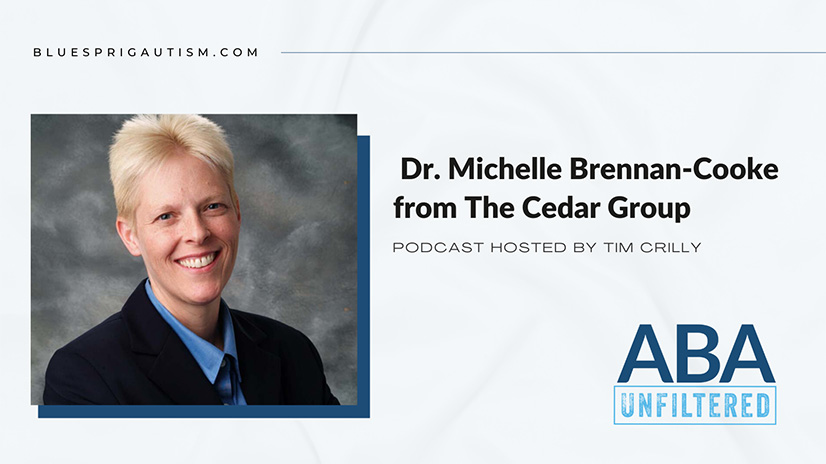
In this week’s episode, we are excited to welcome Dr. Michelle Brennan-Cooke, the EVP of Quality at The Cedar Group. Michelle joins Tim to talk about her experience working for Health Plans and the importance of quality services. During their conversation, Michelle highlights what the role of the Health Plan should be and how providers in their network should approach their relationship. Michelle’s institutional knowledge is second to none and we had a great time chatting. We hope you enjoy this fantastic conversation!
Full transcript
0:10 Tim Crilly:
Hello and welcome back to another episode of ABA Unfiltered. I’m your host, Tim Crilly, and today we are talking to one of my favorite people in the world, a personal mentor for me, both in my professional life and just sort of overall in helping me figure out what I should be doing with my life as things move forward. And it’s an old friend, Dr. Michelle Brennan-Cooke. She is currently the executive vice president of quality at The Cedar Group. For those of you who might be new to the show or maybe weren’t paying attention all the other times I mentioned it, but I did spend a little bit of time on the health plan side of things as it related to the management of ABA services. And Michelle is the person that plucked me from obscurity and brought me into that world. And from there we were able to sort of build a lasting relationship and friendship. So I’m really excited to get a chance to work with her a little bit more now in her role at The Cedar Group. But I’m really excited to have her come on today and talk a little bit about health plans. You know, really what is the role of a health plan and how can we as uh providers in the in the behavioral health environment interact in a way that is mutually beneficial for all parties involved. And also touch a little bit about what The Cedar Group is doing and some of the work that they’re really trying to uh pioneer and how that can really bring everything together. So, Michelle, thanks so much for coming on. I really appreciate you taking some time to talk with us. Um, if you don’t mind, could you give us a little bit of background about who you are, uh what you’ve done, um, and and how you ended up um here sitting today in this in this conversation.
2:02 Dr. Michelle Brennan-Cooke:
Uh Tim, thank you so much, first of all, for having me on, and secondly, for that uh really kind introduction. I feel like you plucked me from obscurity as well. So I think it’s mutual, my friend. Um really excited to you know have the opportunity to think about quality in the autism space. Um my background is not in autism. Uh I’m a clinical psychologist by training, so uh thought that I would spend my life in um in private practice and and uh help people kind of one at a time. And uh I went to UC Berkeley, so you get a little tiny flavor of public health when you go to UC Berkeley, right? I mean, everything that you do there is around you’re you’re you know, you’re gonna do math for what purpose, right? For for what betterment kind are you doing math or engineering or psychology? So, you know, I had a little bit of that, but I had a kind of a naive, you know, understanding of what it would mean to just hang up a shingle and and go into business. And so many, many, many years ago, and I won’t date myself, but it was forever ago, um, it looked like managed care was coming to the behavioral health space. So, you know, something that you saw in medical insurance companies and and provider groups and prior authorizations and those kinds of things. And it seemed like that was something that could also become, you know, fairly prevalent in the behavioral health space. So I joined United Healthcare. I was gonna learn a little bit about um managed care and what all that meant. And I’m a super slow learner because about uh 18 and a half years later, I was still at United Healthcare, uh, learning about behavioral health care. I was the um, I started in a clinical department and then uh very quickly kind of understood that we were telling people when they called in, you should see this clinician. This person is gonna be a great match for you, and they’re gonna help you with your depression and anxiety and you know your suicidal feelings. And then I thought when I hung up the phone, gosh, I sure hope that person helps them with those things, right? And I just uh felt like it was really important to move to the provider side of the house. So that’s where I spent the bulk of my career uh at United was in uh as the head of their provider services across the country. And I got to know autism a little bit in that space, right? It was something that, you know, was a boutique coverage kind of at that time. People would come and say, Oh, I want to, I want to offer a benefit. You know, I’m a Silicon Valley company and I I want to attract some and retain some better employees, and so I want to have a benefits package that makes it, you know, interesting to them. And we would say, Well, you can, you know, sure, you could provide coverage for that. I just want to let you know it’s experimental, but uh uh you can certainly do that. So uh right as I was leaving United, some of the laws were beginning to shift. Um, and I went over to Magellan Healthcare. So uh and there Magellan had a tiny little seed of an autism program, and they said, Hey, can you take a look at this and tell us what you think? And so I wrote a great paper on how it could be you know revamped and and strengthened, and and they said, Great, now it’s yours. So that’s how I uh they tricked you. Careful what you write up. Yeah, exactly. And and so I, you know, I did that and and then spent gosh, just over eight years uh at Magellan and ran the autism program. And Tim, as you know, it was not um, I think when it started, it wasn’t particularly sophisticated. We had, you know, people who were care managers, and and those people are, you know, folks who tend to be licensed mental health people. Um and so they were people who liked kids and were licensed mental health people. And we said, great, you can, you know, you’re gonna be our care manager and and work with providers who are offering autism services. And so uh very quickly realized we really needed experts in autism. It was different. Um, and so uh worked with the different regulatory bodies across the country that you know tell you who you can hire as care managers, and and we started to put BCBAs in those roles. And that’s how you and I met. Uh really exciting time for me to meet you and you know, to really think about how to bring um, you know, how to marry the business of insurance, uh, you know, with a customer’s need, with uh with the dollars that were going out the door for the care. Uh, and then to think through how do you make sure that that care is, you know, adequate for what a child needs. It changes the you know, child in ways that the family is hoping for, um, and to really think about the quality of service. So um something that I had done at United, right? I had uh I had been responsible for starting provider uh quality at United, both for hospitals and you know, outpatient mental health practices, to think about, you know, who does this well. Uh and then I think this is a space where you know I got really excited about who does this well because um doing it well is it’s essential, right? I mean, there’s hundreds of millions of dollars spent across the country uh around autism services, and and not everybody is going to get what they deserve out of that spend.
6:53 Tim Crilly:
Yeah, um, you know, I I I I appreciate that. And I think, you know, I I wanted to make sure you touched on, you know, why you got into into the managed care, because you know, someone that says, hey, I I should probably go learn this because it’s gonna make me better at this, and then sticks around saying, like, ooh, I should probably stick around to make sure this goes well. I I think that speaks volumes to to the way you think about things and and sort of what you can you bring to to a team of people that are trying to have a you know an impact on people across the country. So it’s really exciting. But I I remember exactly where I was sitting when you called me to say that you know you guys were gonna offer me that that role at Magellan and Um, you know, pride. I felt really proud of myself for for achieving that. Went home and celebrated with a couple beverages and then uh breathed into a paper bag, uh hyperventilated for about a week.
7:46 Dr. Michelle Brennan-Cooke:
So when did you what what you needed to do? When did you stop drinking?
7:50 Tim Crilly:
Was that uh you know, probably I don’t know, because it was early in the day, so I went home for a half day. So uh who knows? Oh, okay, that’s nothing.
7:58 Dr. Michelle Brennan-Cooke:
Then you heard what I was asking you to do, and you said, no, now I’m an alpha.
8:02 Tim Crilly:
This is really this is really scary, you know, but it’s it’s such an important part. Um, you know, and and I’m gonna skip ahead a little bit. I think, you know, as my my main takeaway, and I say this every once in a while, and I probably said it on on this this podcast before, is that when I when I was leaving, um, my main takeaway was, okay, this is a consumer protection uh uh role. The health plan and the people serving these people, that should be their one main focus. You know, how are we making sure that this family and that this individual is getting the the right the right things? So with that in mind, can you kind of you know walk our listeners through a little bit of how you see um the role of the health plan? Really, what is the that that core function that a that a health plan is supposed to be providing for their membership? Because I think it’ll help us understand how we then as providers should be viewing that.
9:03 Dr. Michelle Brennan-Cooke:
Yeah, thank you for that question. So I I I totally agree with you, and I probably wouldn’t have thought that when I first started, you know, in the insurance industry, right? I mean, it it’s it was a payment mechanism in my mind. You know, you you did a certain set of things and and people had that benefit and you got paid for them. Um and I have friends from graduate school who still believe that should be the equation, right? It’s like, well, you have a benefit and you’re entitled to do whatever you want with it. And and the truth is that you’re not, right? The truth is that you’re uh absolutely entitled to receive care that has um the potential to create a positive outcome for you, right? We want you to get better. Um, and we want you to get better quickly. I mean, there’s no doubt about that. Uh, and um we want that care to be safe, right? We don’t, you know, we don’t want you to receive medications that would kill you. Uh, we don’t want you to have procedures uh like in the behavioral health space that they did to people way back in the day that were, you know, uh dangerous, right? Deadly and and or you know, disabling for somebody’s life. I mean, think about way back in the day when they did lobotomies all the time as a you know solution to a mental health issue. Um, it’s not, right? Obviously. And so I think you have to think about that same mindset in the autism space. Um, this being a really young field is is you know has young field issues, right? We have, you know, issues in terms of our workforce. So I think as the law ran a little bit ahead of the science, um, and people said, okay, you’ve got to cover it, right? And I I remember when those laws passed and we sort of were all sitting around going, what’s it? Like when you say cover autism care, what exactly should be the core of that care? You know, who should provide it? What should it look like? What should the standards be around it? And and those things, um, given the newness of our profession, were not, you know, in place. So we would see things that were, you know, very troubling, right? I think in terms of trying to build a workforce, you would see an ad in Craigslist. You know, I don’t even know if that’s still around, but um did that on?
11:10 Tim Crilly:
I hope so, you know. I’ll ask Jeeves. Maybe Ask Jeeves can tell us.
11:13 Dr. Michelle Brennan-Cooke:
We should do that. Uh yeah.
11:15 Tim Crilly:
Right.
11:16 Dr. Michelle Brennan-Cooke:
We’ll find them both in the in the heap of uh dead technologies.
11:21 Tim Crilly:
Michelle, I just want to for for Lucas. Ask Jeeves was a failed um search engine on on the internet uh back back when you were in middle school. Just just for pr producer Lucas’s uh notification there.
11:34 Dr. Michelle Brennan-Cooke:
Yeah. Middle school, that hurts a lot. Ouch. Wow. That’s a thing. I guess I was gonna say, you know, Craigslist showed up on 60 minutes too much, but at least that’s still on.
11:44 Tim Crilly:
So that’s that’s still on.
11:46 Dr. Michelle Brennan-Cooke:
That’s still on. Okay.
11:47 Tim Crilly:
I’m not that old. You know, looking for uh looking for for behavior techs on.
11:53 Dr. Michelle Brennan-Cooke:
Yeah, and so you know, you would see these ads that say, you know, have a driver’s license like kids, we’ll train, right? Uh and you know, you’re thinking about these are people who at that point we didn’t do much clinic-based care, right? So it was pretty much in the home. Uh and and we were sending those people into people’s houses, you know, with with uh, first of all, just the thought of that for like whether it was safe for that technician or not is like makes my hair stand on end. But also whether it was safe for those those kids and families. And I think that we, you know, I think we lucked out as a profession. I think we um escaped a lot of potentially bad things that could have happened there. But as an insurance company, it it, you know, uh with employers who bought those benefits, right? They bought them for you to be sure that their members got, you know, good care, that would produce a good outcome and that was safe for them to have. You know, they weren’t gonna, they shouldn’t die in a procedure in a doctor’s office because the doctor was doing something that was not, you know, standard or authorized or you know, well trained on. Um, and so autism needed to be that same thing, right? We needed to take that, you know, mindset of all of the things in the medical world that go into making sure that, you know, a procedure that’s gonna be applied is reasonably safe, right? You have a reasonable assurance that you know this won’t harm you. It doesn’t mean it won’t harm any particular person, because it could. Um and there were some studies that were done even in the behavioral health world, you know, do people benefit from psychotherapy? And and they were kind of interesting studies, right? They were people who got worse. Uh, you know, uh well-intended clinicians, you know, well-intended interventions, and and people who worsened in that in their care. So we we were thinking a lot about that in the early days of this, you know, what could we do to be sure uh you were gonna be safe? Um and so some of those early interventions, they they seem like today no-brainers, right? But like, did you criminally background check your people?
13:55 Tim Crilly:
Yeah.
13:55 Dr. Michelle Brennan-Cooke:
You know, did you make sure somebody wasn’t a pedophile or a pornographer uh and you were sending them into a home? Um I think parents, had they known that we weren’t doing those things early on, probably would have been much more nervous uh than than they were.
14:11 Tim Crilly:
Yeah, I you know, and and I think I don’t want to, you know, go down this rabbit hole too far, but I think you know, part of the the issue was early on, this was a very, very, very loosely regulated industry. And it’s probably still a little, you know, need needs some work in in that regard as well. But you know, the problem became, you know, when you tried to enact any sort of a standard or regulation, you got pushback from so many different uh different directions that it made it, it made it real problematic to try and uh put those sort of network standards in place that should have been a no-brainer uh because they exist in basically every other practice, but you’re you were working with a group of people that were so used to sort of, well, I know what’s best, I know who’s good at this, you just need to trust me. And that’s just not a realistic expectation. I mean, the blowback that that we got, and I’ll, you know, I think we’re in undisclosed locations, so I think it’s fine to say that it’s our fault. The witness protection program. Yeah, I mean, the RBT was, I think Magellan was out in front of making the RBT a standard for participating in the network. While it wasn’t like the most, you know, amazing way to ensure that the best quality of care was being being provided, but it still represented something. And just the blowback from that, I think was pretty eye-opening for me. And I think, you know, to our credit, we’re way, way past that. And I think people have really come to understand that. But it’s it’s been a probably an uphill battle, and that’s just like a small example. So, you know, I think there are there are there’s there’s there’s some there’s been some change, and I think it’s a positive change. But what would you say is sort of that that next thing? What should ABA providers be thinking about as it relates to their relationship with the health plans and and how they can then be sort of playing within a system that that benefits both them, the family, and and obviously the the funding sources.
16:11 Dr. Michelle Brennan-Cooke:
Yeah, absolutely. Well, you still travel with protection, so that’s good to know. Uh absolutely.
16:15 Tim Crilly:
I got Lucas.
16:17 Dr. Michelle Brennan-Cooke:
There you go. Good, good. I’m glad you’re taking care of that way. But yeah, I think, Tim, you’re you’re right and you’re asking the right question, right? Because I think that if you think about any. So we sort of got to the place of, okay, now we’ve got, you know, now we’ve got the benefit, right? And insurance companies sort of did phase one. Phase one was, oh, crud, we got to cover this. I don’t exactly even know what this is or who’s doing it or you know what it looks like, but I’ve got to get a big network, right? I need to make sure that people can get this, you know, care anywhere. Uh, and that was phase one. And so then you’ve got companies that have big networks, you know. I mean, 400 different uh agencies that they work with and multiple sites from different agencies, and so, you know, and 10,000 kids in management. And so you you kind of get through that first kind of heart uh pounding phase of, okay, we you know, we’ve got it up and running. And we’ve got some standards around it. Um, and we’ve got some people that we think know what it is that we’ve hired to help us, you know, manage and put it together. Uh and now you have look at this big network and you say, I have this challenge of knowing who in this network is good. Like what is a good outcome?
17:26 Tim Crilly:
Yeah.
17:26 Dr. Michelle Brennan-Cooke:
Um, and so if you and this is a place where I don’t think we are uh misaligned as practitioners with the insurance companies. I think at the basis of it, I’m gonna assume everybody has positive intent, right? And everybody is in it to make sure that kids get better and families get what they need. So, you know, if you start from that place, the thing that the insurance company wants and the thing that the provider wants and the thing that the family went are all in alignment. You know, we we want this kid to have the interventions that he or she needs to be as functional uh and successful in living their lives as possible, right? You don’t want your kid to be in treatment forever. You want your kid to get, you know, you want them to have the broken leg set so that you can get back to, you know, playing a sport or dancing or, you know, sitting in the park and doing art or whatever that thing may be that makes your child happy, right? And so um, if that’s what you want as a parent and and you want to, you know, be able to go to church on Sunday and and the grocery store and you know, at some point universe willing will go back to restaurants and and more things in life as we knew it. Um that’s what families want. And so as a clinician, if you’re oriented around getting that child to a place where he or she is more independent and can do those things that are activities of daily living, right? Taking care of themselves, making sure that they’re safe and communicating and having relationships that are meaningful with others. So hopefully that’s your or go ahead.
18:57 Tim Crilly:
Yeah, and the parents are empowered to help facilitate that.
19:00 Dr. Michelle Brennan-Cooke:
Absolutely, right? And and and so hopefully you’re oriented to making that happen. And the insurance company is oriented to making that happen, right? They they want, you know, evidence-based intervention to get a child to that place that is um that is enough, right? Where they can get to their lives and do the things that, you know, families and individuals do. Uh that’s a place where I think we’re all aligned in goal. We start to get a little bit, you know, we start to have our own individualized um uh motives in each of those spaces. And so maybe those things are not entirely aligned, but if you go back to that assumption that we are all aligned around the outcome for this family and kid, um then it becomes a question of how do we get it, right? How do we make that happen for this family and child? Uh, and now you’re talking about quality, right? You’re talking about, you know, whether you can provide efficacious care and whether that care is any good. And I think that’s, you know, ultimately where I took things in my career was, you know, I sort of stopped talking about, well, let’s like negotiate rates for this and let’s, you know, make sure that we get X number of people on. Um, and and I got to the place of once we’ve got those, how do you know who’s good? Uh and you know, it’s a thorny kind of issue. I mean, I’d love to tell you everybody who does it today is good. And, you know, uh, even some people whose hearts are in the right place aren’t very good at it. Um and so, you know, and and the US healthcare industry is a bigger social issue, you know, spends billions of dollars, right? And and you want that money to be spent in outcomes. Because if you’re not going to get good outcomes in care, you sort of say, well, why spend the money, right? I mean, we could do housing, we can feed people, we could, you know, take on some other uh national priority, but making sure our population is healthy is a big thing.
20:50 Tim Crilly:
It’s a big one. And it helps, you know, obviously a healthy population results in less problems in in other areas as well. So healthy, healthy uh, you know, adults with with autism leads to less issues for for them as adults as well. So if you you get the services that you need at the at a in a manner in which you need them, it it pays off in in the long run. And I think that’s that’s everyone’s goal. It’s just are we all uh working towards that goal in the right way? So let’s segue uh to how The Cedar Group and the work they’re doing, um, you know, sort of your your your interactions with health plans as well as your interactions with providers around the country. You know, can you can you tell us a little bit about what it is that that The Cedar Group is doing to bridge that gap, to, to make sure that the the right things are happening at the right time by the right person?
21:46 Dr. Michelle Brennan-Cooke:
Yeah, that’s a it’s a fantastic group. I’m so lucky to get to work with uh folks in The Cedar Group. I mean, they’re so smart and um so thoughtful, really, about you know what should happen for kids and families. Right. And so at the end of the day, I don’t think as a profession we want insurance companies telling us what good care is. I think we have an obligation to define what that care is. And if we do that, you know, if we do that in a way that’s accountable, it’s kind of undeniable what you know what should happen. And so, you know, you could let somebody else define it or you can define it. And I think it’s important as professionals that we define it, that we hold ourselves accountable. And so, you know, The Cedar Group works on uh solutions that are all around that accountability for quality, right? Are we providing, you know, are we making decisions in terms of what we do with this child and family that are evidence-based? You know, are we making decisions that are, you know, we can find them in the literature, right? We can say, hey, this study in December of 2020 uh suggests that if you do X, Y, and Z, um, you know, people have a better outcome. So are we doing that? Uh and it’s it’s applying that lens to all of our services. You know, what’s evidence-based? How do other people define medical necessity that, you know, we we’ve got to work with? Uh, and then are we producing an outcome that is worth producing? So, you know, do you see a reduction in maladaptive behaviors? Do you see a child, you know, achieving those goals that the family came in and said, these are the things we would like to see, you know, happen? And and you measure yourself around have I helped the family to gain, you know, the locus of control to step back in to uh you know being there with their child and and getting the things that the family needs to get done done? Uh, you know, have I stood that person up with the right set of skills and I’ve you know addressed the stresses and strains that they’re going through. And so, you know, The Cedar Group uh makes software that helps in that kind of clinical decisioning uh process. So, you know, not just do I think somebody’s getting better, but can I actually prove it?
23:52 Tim Crilly:
Prove it.
23:53 Dr. Michelle Brennan-Cooke:
You know, can I can I see that those things are happening? And so when you take that back to an insurance company, you can say, look, you know, uh I I am producing an outcome that’s valuable. I’ve you know changed the quality of life for this child and this family, and I’ve reduced maladaptive behaviors and you know, I’ve helped improve skills and areas that this child needs to go on and and be as successful as he or she can be. So um I, you know, I think these clinical decisioning models are just so, so uh essential. Because you, you know, it’s really hard for us to keep up with all of the uh articles that come out and all of the changes that you know we see in the field, but um, we build those into this tools. So we we build it into your tests. Absolutely. So if you want to know what that article said, it’s there. Uh and you want to tie it back to Magellan’s criteria or TRICARE’s criteria or Cigna’s criteria, you know, you can do that, right? You can say, this is what Cigna’s looking for, and here’s what I think good care is in my practice, and here’s what the literature and the board says good care is, and you weave those things together into, you know, where are you gonna go with this child and family for services? Um, and so to me, clinical decision modeling is absolutely about, you know, accountability and producing high quality outcomes.
25:07 Tim Crilly:
Yeah, and it’s a complex thing that that you guys are doing. And I know we only were able to scratch the surface, but we did have um, you know, Mandy Ralston and Nathan Albright on a a few weeks back. So if you’re listening to this and that sounds really interesting to you, and you’ve missed that episode, you can kind of go back and find that and and Mandy Ralston and Nathan Albright really do a deep dive into what what your team is is up to. So that’s that’s definitely I’ll I’ll do a a plug there for that episode because I I didn’t understand most of what they were talking about. I sort of just was faking it as we went along. So uh, but it’s it’s some real some real heavy stuff that that the COVID.
25:43 Dr. Michelle Brennan-Cooke:
I’m still trying to understand their decision modeling around cereal or soup.
25:46 Tim Crilly:
It was pretty much yeah. So Michelle, thank you so much. And I again, you know, I uh you know, I think we’re forever in you know entwined in in this industry, and I can’t I I can’t thank you enough and and say how happy I am to be able to have this conversation with you and and see you a couple times a week a week now. It it’s really nice and uh it it’s it’s fun kind of listening to you talk about this industry. I I think you have such a unique per you know perspective on it, and it’s really been fun to learn from you and and it’s fun to watch you now learn um and then take that and and apply it. And it’s like, oh wow, why didn’t we think of that? So it it I’m really excited. So thank you for joining. I I really appreciate it.
26:33 Dr. Michelle Brennan-Cooke:
Yeah, thank you so much for having me. And you know, I would just say to folks, keep your heart in the right place, right? Keep keep your eye on what you do for these families. They deserve it. Um, you know, these kids deserve our intervention and they deserve to have as rich a life as we can help them achieve and you know, give them back to their families and get those families uh to a place where they have greater happiness and less stress. And, you know, I I think we are uniquely positioned to make that stuff happen. Yeah, it’s it’s an exciting place to be. And you know, I think uh I think I’m always in awe, right? I leave a room full of uh people who do this full time as providers, and I’m just like my mind is blown.
27:10 Tim Crilly:
So yeah, you forget how hard this job really is.
27:13 Dr. Michelle Brennan-Cooke:
So it is a hard job, absolutely when you’re out in the field.
27:16 Tim Crilly:
So that’s something I I don’t bring up enough.
27:18 Dr. Michelle Brennan-Cooke:
So uh thank you. Thank you so much for letting me come and visit with you today.
27:22 Tim Crilly:
You got it. Okay, and thanks everybody out there for listening. And I hope you enjoyed the conversation as much as I did, and you know, stay tuned for for more exciting conversations.