Episode Description
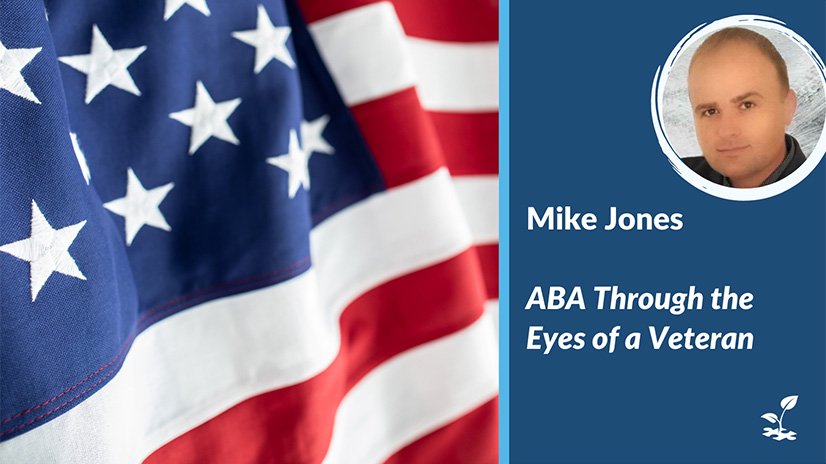
On this week’s episode, we are joined by Mike Jones, the BlueSprig Midwest Business Development Director. During our conversation, Mike details how he came to BlueSprig by way of the Army. Tim and Mike talk about how the ABA industry allows him to be a part of a service industry and work for a mission-driven organization. Mike talks about his passion for helping veterans and why working in the ABA world is a great opportunity for both military spouses as well as veterans looking for gratification in the next phase of their careers. We hope you enjoy listening to Mike and appreciate his passion for his work, his fellow veterans, and the community he serves!
Full transcript
0:08 Tim Crilly:
Hey everyone, welcome back to ABA Unfiltered. I’m your host, Tim Crilly, and today we are joined by Mike Jones. He is the Midwest Business Development Director here at BlueSprig. And today we’re actually going to have a little bit of a different type of conversation, still about the ABA industry and all that, but with someone who comes at it from a different point of view, a non-clinical person, but someone who has shown a clear passion for the work they’re doing to impact the lives of children with autism. And I’m going to be a little transparent here. The only reason I kind of was able to discover Mike was he posted something really nice about this podcast on LinkedIn. And he also talked about his passion for the work that we’re doing. And I said, well, this is a guy I gotta meet a little bit more. And then I come to find that Mike is a veteran, he served in the in the army and has a real passion for helping people like himself that are veterans or getting ready to leave the military and find a career after their time serving, serving the country. So I’m really excited to talk to Mike, let him introduce himself a little bit, and then we can we can get into the meat of what he did at his time in the army, how he came to be at BlueSprig, and what he thinks we can be doing as an industry uh to help folks like him move forward. So that’s kind of the framework of what we’re hoping to do. Uh Mike, thanks so much for for joining us. And if you don’t mind, introduce yourself and let everybody know what you do here at BlueSprig.
2:01 Mike Jones:
Yeah, thanks, Tim. And I’m I’m actually super honored and humbled to be here. Uh anytime I get to you know come on and speak about ABA or or talk about veterans, uh it just gets me excited. So thank you for the invite. Uh so yeah, I uh I joined BlueSprig in November of 2019, uh, shortly after I left the military. I actually came on as an operations manager for our Willoughby Hills Clinic uh here in Ohio. And I I just I don’t know what it was. Something just really drew me to this organization. Uh, I was working for a very large uh online retailer, actually the largest in the country, in the world, I think, and was doing uh operations management with them and just really didn’t feel like I was fulfilling my my purpose or you know, doing whatever my why is what I like to say. Simon Sinek is one of my heroes. So um, but it it just really drew me in. What we were doing for the for the children and what BlueSprig does, you know, they’re they’re very mission-driven. And I very much wanted to be a part of an organization like that. So fast forward to today, and I’m now in business development, which is absolutely what I love to do. I love to go out and talk to people and what you know, like to say, shout out from the rooftops that we’re here to change the world. So I’m excited to be here and um even more excited to continue to work with BlueSprig.
3:27 Tim Crilly:
Cool. So, business development, what does that mean? Who are you talking to? Who do you get to shout out about what we do here?
3:33 Mike Jones:
Yeah, I mean, the official title is business development, but I really I really like the term like community outreach because I feel like that’s what I do more than anything. And it’s just really going out and building those partnerships, making connections with others in the autism community, just letting you know, hey, BlueSprig’s here and we’re here to change the world. Um I think what I love and I think unfortunately about the pandemic is just going out and being able to talk to people face to face and just show them my excitement about BlueSprig and what we’re doing, and we’re opening up centers and all these locations. So my goal is to just go out, let everybody know that we’re here, and then get them to come join our family here at BlueSprig, which is really not a job at all, I don’t think. So I they call it a job title, but it’s more of just you know, I wake up every day and just like, oh, I get to go uh do what I love doing.
4:22 Tim Crilly:
So that’s the that’s really cool. So I, you know, I’m gonna ask, and I might be wrong, but I’m gonna make an assumption maybe you didn’t have a real connection with ABA, or is there a possibility you didn’t even know what ABA was prior prior to this role?
4:35 Mike Jones:
I did not. I I knew sort of what it was. My wife actually worked as an RBT when I was in the Army when I was stationed in Savannah, but that company was only open for a few months and then unfortunately ended up closing. So very little what I knew is is just what she did. Okay. And um, so yeah, just just just the base. I knew what it stood for, and I know that’s pretty much it before I joined.
4:58 Tim Crilly:
So well, that that’s that’s cool because you know, you a lot of people that that enter into this field, you know, especially from a clinical standpoint, you know, we’ve had conversations with people, they just sort of fall into it. Like I because sort of ended up being a BCBA, or you have people that say, Well, there was someone in my family or someone very close to me with autism, and it was something that I had a great passion for and wanted to go and do that. So I I guess you you sort of fall into that. I I fell into it category. Absolutely. Okay, same with me. Actually, I got more pushed into it, but that that’s a story for another day. Uh, so that that’s great. Um, so you know, obviously, you know, happy you’re here, and it and I’ve heard such great things about the work that you guys are doing up in that area. So that’s that’s really exciting that you’ve been able to have that ability to shovel that passion out and get it out into the community. That that really that really is a good thing for everybody. Um, can you take a couple steps back, tell us a little bit about your your your service and and what you did, maybe where you were and the things that you did while you were in the army?
6:00 Mike Jones:
Yeah, I’d love to. So I joined the army late, is what some people would like to say. I I actually enlisted right uh before my 25th birthday. Okay, so you were an old man at the time. Yeah, pretty much. I mean, in army or military service. That was pretty much it. I was an old man. I’d already had two children. I’d been married to my wife for gosh, she’s gonna beat me up if I mess this up now. Uh five years before I joined. And so, um, and everybody thought I was crazy. But you know, Tim, I come from a town that’s uh I come from Middletown, Ohio. And the only people that really know about that town now is a good friend of mine wrote a book called Hillbilly Elegy. Gotta plug that. Um, and they actually made a movie on Netflix about it. Uh, Ron Howard made that movie. So uh that’s really my how we grew up in a nutshell. Uh college was never really mentioned in my house. Uh, you know, careers in general were never really mentioned. Everybody in my family kind of just went to the steel industry. So I wanted to go to school and I wanted to serve my country and give back, you know, what it’s been gave to me. So got off work one morning at 7 a.m. I was on a off the third shift, went to the recruiter station, signed up, and the rest is kind of history. But uh in my time in the army, I served as a combat medic, um, which it it was a blessing. I call it a blessing and a curse at the same time. I love the patient care side of it. I love being able to, you know, uh all my battles are well, we have a term in the military called battle buddies, which is what you know, we all are. They always called me Doc, which was really cool because didn’t ever think that I would ever be called Doc. But um it was I when I first came on, I I was my first duty station was in Fort Hood, Texas. Um, did not join the army to see Fort Hood, Texas. I can imagine. Yeah, no sense to Fort Hood, Texas. Yeah, exactly. Not to knock Texas. I absolutely love it, beautiful weather, awesome people. I just uh I wanted to see the world. So I’d actually re-enlisted to go to Germany and spend uh some time in Germany, which was what I did after Texas, spent three years in Germany, and during my time there, I got to you know go on some missions and uh meet some wonderful people and travel the world, and that’s what really got me into uh finding my why, is what I like to tell people. And I realized at that point that servant leadership, uh, the idea about servant leadership, about serving others, was really what I felt like I was born to do. And so I started thinking career-wise, what do I want to do? And do I want to continue my path in the army? Do I want to do something else? Um, you know, I had uh been going to school, got my MBA while I was in the Army, and just did not know what in God’s name I wanted to do. So I ended up going back, end up getting a master’s in healthcare administration on top of it because I knew from my time in Germany, you know, working inside of a clinic and caring for patients and uh doing practice management, it was just I I fell in love with it. Got so tired of the trauma side, but I knew I wanted to help people continue to get the care that they needed. So I had re-enlisted to uh go ahead and finish out a couple years, get back to the States, and really try to figure out what was next. I knew that if I stayed in Germany, I would have to probably take a career in Germany, would take me on a whole other path. And so after my three years there, I came back to the States, spent some time in Hunter Army Airfield in Savannah, Georgia, and that’s when I really something kind of clicked and said, okay, it’s time for me to go. When people ask me about my time in service, I say, best decision I ever made, it probably would have been the worst for me to stay because my heart was just somewhere else. Um and so yeah, I I had uh you know decided at that point it’s time to go. And then I got a message on LinkedIn about another about a job opportunity and decided to leave. But you know, nine years in the army was, like I said, best decision I ever made. I met some of the greatest people. It really helped me find out who I was, it excelled me, it helped me kind of break that generational cycle of you know blue-collar work and you know, moving into more of a professional career. And I just uh I’ll be forever grateful for my time for sure.
10:19 Tim Crilly:
That that’s great. And you know, um, we can’t say enough about you know uh that’s that sacrifice, obviously, for you and your family. So uh thank you very much. And I and I know you probably people say that, but I I I I want you to know that you know people really feel it. Uh so that that brings us to an interesting point. And I think, you know, I always start off when we before we start recording, I say I have a list of things I want to talk about, but then somebody on the show will say something that takes us down another path. So you talked about that um sort of that mission-driven thing about you that um that you want to serve, but you want to serve in I’m paraphrasing something that that motivates you and and moves you. So obviously the military gave you that opportunity, and and it sounds like that this is the same opportunity for you. You’re feeling that here at BlueSprig, that ability to to do something you believe in and at the same time serve a large number of people. Does that feel about right?
11:22 Mike Jones:
Oh, 100%. And yeah, if I could just you know tell a quick story real quick about um, you know, what when I knew ABA was was it for me. Um I was actually just in my first week as an operations manager at Willoughby Hills. And to be honest, when I applied for the position, I had no idea what I was gonna be doing. I just knew I knew what to do, and I knew from my experience and education that I could really take that piece and help that clinic grow. But I had walked into uh one of the rooms where one of our clients were at, and uh this particular client was nonverbal for a very long time. And I had walked in and I every day I would say hi to this client, I would say hi, hi, hi, and it’s just nothing. And then then one day they just say, Hi, Mike. And so that for me, like I’m not a crier to him, but that for me, I just was like, Oh my god, like what we’re doing is just people just don’t understand. Like, you know, I know there’s always uh, you know, I guess the far you know, two sides of ABA, either you’re against it or you love it, and sometimes there’s an in between, but for me, just seeing that and just seeing you know the that client say my name and just knowing that they were non-verbal, and uh it just it it melted me right there. I said, okay, this is exactly what I need to be doing.
12:50 Tim Crilly:
So you’re absolutely right.
12:51 Mike Jones:
It was it was just uh not only serving, but knowing where I want to serve, what community I want to serve, and who who I want to serve, basically.
13:02 Tim Crilly:
That’s great. Um, so what would you sort of maybe this is uh you know a tough question, but what would you say is one of the bigger challenges for someone who was in your shoes that are ready to exit the military? What do you think is the hardest part about that transition in finding the next thing for you?
13:23 Mike Jones:
Oh gosh, I would say the hardest part, it’s especially for you know some of the younger soldiers who who may have joined at 18 and just don’t really know what they want to do. They may want to do four years to get some money for college or to you know really improve themselves. But I think the hardest part is is just really understanding your why. You know, we talk in BlueSprig a lot about you know, you know, our why and why it is we do what we do. And and they just uh the the the army in particular, and I can’t speak on other branches, has a decent, you know, soldier for life program. They help you transition, they help you kind of find your next job. But I think the piece is missing is really finding what makes you go, what makes you get up every morning. And I I think the hardest, you know, you know, the most difficult part of leaving is is is losing that kind of sense of community and losing uh you know that sense of a belonging. And you know, yeah, talking personally for for me, it was I I had used it, you know, getting up every day, you know, it was the same time every day, putting on the same uniform, kind of the same routine, people telling you, you know, what to wear, where to be, what time to be there. It was just always the same. And so uh leaving and finding that sense of community again, I think is what the toughest part was. And you know, someplace like ABA in the ABA field, I don’t, especially at BlueSprig, I’ve never seen a better community. You know, we talk about culture a lot, and we talk about uh, you know, being a family, and you hear that in other organizations, but I’m here to to truly say all the things I’ve done in my life, this has been the only organization where I’ve truly felt that.
14:58 Tim Crilly:
So it’s good to hear, right? You know, and I I think that’s a great, great point you just brought up. It’s the feeling like you’re a part of something, you know, and you can’t, you know, if if you’re determined to find it, you can find it. But for other people, it’s it needs to be more present. And I can imagine, you know, being a you know, in in a branch of the military, you’re gonna find a lot of commonality around the people that that you’re working with. But you come into an industry like this, for someone like you, uh, you know, you kind of stick out a little bit like a sore thumb because it is primarily younger, you know, women that are sort of the the driving force of this. But I I do I do get what you’re saying, and I do feel it as as well, that from from sort of the the top down, there is that feeling of we’re in this together, and it’s not always gonna be easy, and we’re gonna have to do things that uh you know sort of challenge us, uh, but we’re we’re we’re trying to work toward a common goal. And you’re right, I’ve worked for other uh other organizations, and you don’t always always always feel that. So I I think that’s great that you kind of put your your your your thumb on that. It and it is something that we should be, you know, sort of celebrating uh as we move forward with with some of the things that we’re trying to accomplish here. So that’s great. Um you know, I I do think that this is an interesting career path for people leaving the military. You know, obviously there’s there’s there’s two sides of the coin. You have a clinical side and then the operations coin. The clinical one is, you know, there’s a lot more opportunity because you know that we need more and more clinicians. Do you see a path where that is something that, you know, for you know, former, former military folks looking to transition, and you know, not just someone like you that comes from sort of that that medical side of the service, but do you think that if if people were more aware of just maybe you know, putting their toe in the RBT and then you know using some of those those uh resources to go back to school, do you think that there’s there’s some some um symbiotic relationships that could be formed within sort of those, you know, you said soldier for life or you know different programs. Could we be doing a better job of sort of working with some of those groups to help people understand what is out there? Because if you if you’re never never exposed to it, how would you ever know that you know being a BCBA or whatever it is um even exists?
17:30 Mike Jones:
Yeah, and that’s a great point. Uh I a lot of times, you know, just for example, when I was going through Soldier for Life, a lot of the organizations that were coming in and kind of speaking to soldiers were, you know, either uh, you know, mechanical jobs, like you know, wind turbine, the guys that fix wind turbines or border patrol or those types of things. And I didn’t see a lot of you know service industry, clinical, you know, from the clinical side. And I say service industry because I really think that we we kind of fall into that category. And I think if we could have, you know, and not only for soldiers, I and I brought this up a few times, is uh military spouses as well. They a lot of times it’s I know I seen it with my wife, it was really hard on her to kind of find a job because that employer knew, hey, in two years, I’m gonna be moving to another military base. And so BlueSprig, where we’re at, we have several you know, locations that are close to military bases. I feel like that’s kind of the perfect role for them because they can work in one place, and then if their their spouse uh goes to PCS is what they call it, or change duty stations, then they have an opportunity to kind of transfer to another BlueSprig and continue that path.
18:43 Tim Crilly:
But from you kind of read my mind, that was sort of the next direction I wanted to take this. So please, yeah, keep keep keep pulling on that string.
18:50 Mike Jones:
Yeah, awesome. But yeah, and so that’s that’s really what I’ve been seeing. And I I if I first noticed it when a family came to us and they said, Hey, um, you know, we came from from North Carolina, we just moved up here, we got out, and and I worked as an RBT down there. And so that’s when it really kind of clicked was hey, wait a second, let’s let’s really explore this and see how we can not only help the autism community, but let’s help everybody. Because you know, we we always are we love to preach, like we’re community first, and we love to you know be involved in the community as much as possible. And I think it’s a perfect opportunity for us to just educate um, you know, people involved in kind of the military side, not only soldiers, but spouses and everybody else in between, because uh the education piece is what we need. Like I said, we I think it’d be great if you know we could start when this pandemic’s over, if we could start to visit some of these military bases and just get the word out and just say, hey guys, you know, we’re here. This is this is an option for you uh because you’ve learned servant leadership in the military, you’ve learned uh this in the military, you’ve learned this, you can all those skills are transferable into ABA. And I don’t think they’re only transferable, I think that you can really thrive um in the ABA industry, whether you’re an RBT, whether you’re a BCBA, whether you’re an operations manager. Um it’s I think it’s something that if we were to get the word out and we were to really promote this and just kind of let people know, hey, we’re here, uh I think the results would be um overwhelming.
20:25 Tim Crilly:
I I think it would be receptive. It’s a great concept because you know TRICARE uh really was the first you know insurance provider to go out there and say, this is a service, this is a benefit that we are gonna provide for. And they really started the ball rolling as it related to you know other states than you know enacting um legislation to make it a mandate by by private insurance. So they were really the first ones out there, and I I I forget the number, uh, but there’s close to maybe um 13,000 you know, children in ABA programming nationally that are receiving their services from TRICARE. So there’s a very large amount. And you know, I think there’s there’s bases and places that you know you you indicated that don’t necessarily maybe have as many resources for those families because oftentimes you know military bases are a little bit more isolated and and and things like that. So, you know, the ability for us as a as a group to go into their actual community and say, not only are we going to be able to work and help with the families that need the help, but we can also, to your point, provide you know, job training, jobs for spouses. And you know, oftentimes if you’re a military spouse, you’re displaced from you know where you where you grew up, where your family is. So you know, you’re a little bit more isolated in a new community, but an ability to kind of come on, learn a new uh career and you know, make some work friends is is kind. Going to be a great benefit. But then, you know, thirdly, start helping prep folks like you who are ready to exit the service and say, hey, there’s this big world out here that you maybe didn’t know about. And maybe it’s not ABA. Maybe it’s, you know, in hospital systems or different things as it relates to, you know, not just, you know, like you said, go border patrol or go work in a, you know, sort of that mechanical uh factory sort of world. So I think there’s a lot of things we can we can be doing. And it would be really fun to sort of get a, you know, like you said, when this is sort of behind us a little bit more, be a little bit more proactive. And how do we get out in front and how do we leverage our relationships with military bases, with, you know, Humana, who manages the Tricare East, um, you know, who really has an interactive, you know, you know, relationship with those families. I think there’s a lot of leverage that could be could be put out there. And I’m I’m just gonna nominate you to be in charge of that, if that’s okay.
23:01 Mike Jones:
That’s I that’s a job that I would never turn down, I promise you. So and that’s a great point, Tim. And, you know, just to just to kind of piggyball back off that a little bit, you know, when I was stationed in Germany, a lot of families really wanted to come, you know, they had the opportunity to actually come to Germany and be stationed there, but there’s simply not those ABA services available. So what happens in the military is if you have a family member or a spouse who needs, you know, sort of some special care, uh, they oftentimes won’t send you to that location because it’s just so hard to get that. And so, you know, not only the advocacy the advocacy piece for our veterans, but just for you know, our military children who um who just can’t get the care and you know, are missing out on opportunities, is what I like to call it to go see, you know, some pretty outstanding places. So I you know, I would love to be involved in the future just you know, trying to get ABA overseas and get them more receptive to it in places like Germany or Italy or you know, Japan or those places that may not necessarily have them on post.
24:04 Tim Crilly:
So yeah, it’s a great point because I think you know, we you know the military talks about being mission ready. And if you feel like you’re not able to get the help for your child, are you really able to have your your mind in a place that has you ready to do the things that you need to do? Um, or hey, I need to go here, I need to be stationed here because this is a certain plane I have to learn how to fly, or whatever it is in terms of career advancement, but they don’t offer those services for your family. You have a choice to make. Do I go alone or do I go? And now my my my family isn’t getting the care that they need. So I think it is a bigger issue, um, you know, as it relates to not every base being an available place for for folks to get this this treatment. And um, you know, I think that’s another sort of thing we can add to the list. How do you how do you bring these services to places where they don’t currently exist so you can sort of maximize the ability for for TRICARE, DHA, whatever it is, you know, to sort of provide that the help and and support that that all these families you know deserve?
25:14 Mike Jones:
Yeah, absolutely. I mean it if it if I could kind of see the future, I would love to see, you know, you know, for example, they’re building a very large hospital in Germany now that’s um going to have some amazing services. And I would love to see, you know, an ABA center in that hospital or you know, even small, smaller bases, even in the United States. It’s not just overseas. It’s um, you know, you mentioned having to go someplace to learn a new skill. I’ve seen it a dozen times as a medic. Um a family could come in and say, hey, is there any way at all I can go? And I’m just have to tell them no. I’m like, yeah, I’m sorry, like there’s just no way that you can go because you can’t get the care. And you know, it’s heartbreaking on both ends because the client can’t get the care they need when and or they have to stay behind, and this separates families. So, you know, I could go down a rabbit hole and and talk about all that, but it’s it’s you know, that’s really the way I see advocacy moving forward on the military side, just just encompassing it holistically and uh you know, getting them involved, getting them to understand ABA and uh getting soldiers involved, getting spouses involved, anything I can do.
26:22 Tim Crilly:
So that’s that’s great. You know, um we’re we’re kind of up against the the clock here, Mike. So uh I really appreciate um A obviously coming on and sharing your story with us, you know, and and everything that that you’ve done leading up to this conversation today. And and I’m really excited to to maybe you know talk offline and see what we can be doing um moving forward as you know as an organization, as you know, as we want to build that relationship with with the this community and really help support that. So I think there could be some some really interesting uh conversations that that we can start to have. And I’m I’m really excited you’re on our team. And once again, thanks for thanks for jumping on and and and and joining us today.
27:07 Mike Jones:
Yeah, Tim, really thank you. Like I said, I’m humbled to be here, um, excited to be here. And if there’s any veterans out there listening right now to this podcast where you’re kind of on the fence and you’re you’re thinking about what to do, find me on LinkedIn. You can find me under Mike Jones search BlueSprig. Uh also you can email me, [email protected], and I will definitely get back to you. And uh if you’re looking for a career, let’s talk this through and that’s great. See that we can we can get you on board.
27:34 Tim Crilly:
Perfect. So uh thanks again and and thanks to everybody out there for tuning in to another episode of ABA Unfiltered. Hope you enjoyed it, and we will talk soon.