Back
ABA Careers

Season 1: Episode 9 – The importance of mentorship programs

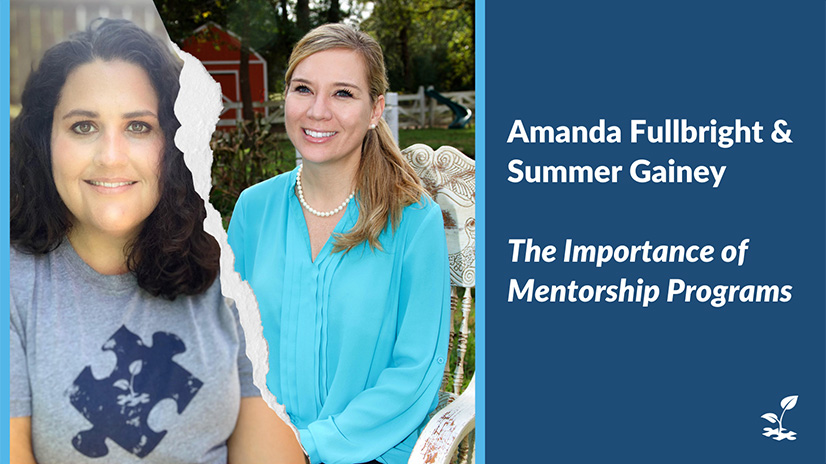
Hosted by Amanda Fullbright, MEd, BCBA, LBA, BCBA, Dr. Summer Adami, LBA, MEd
March 20, 2024

Listen now:

or listen on your preferred platform:

Episode Description

Amanda Fullbright, VP of Learning and Development at BlueSprig and returning guest, Summer Adami, VP of Research and Clinical Outcomes at BlueSprig, give some advice to BCBAs early in their careers. They discuss the existing benefits and challenges that exist within the process of training clinicians and the implementation of the BlueSprig internship program.

Full transcript

0:06 Tim Crilly: Hello and welcome to ABA Unfiltered. I’m your host, Tim Crilly, and today we are joined by Dr. Summer Adami and Amanda Fullbright, who happen to be two of my favorite people at BlueSprig. They’re here to talk some shop and offer some sage-like advice. So that’s the hope here, to any new BCBAs out there as they begin their careers in the ABA world. So Amanda Summer, welcome. Thank you for uh taking time out of your busy schedules to join us and chat a little bit.
0:30 Dr. Summer Adami: Thank you so much. Thank you for having us.
0:33 Tim Crilly: Yes. Amanda, since you’re you’re new to the show, I will let Summer, who I believe is making her 15th appearance or so on here. So, Summer, I know we’ve met you in the past and you’ve introduced yourself, but for any first-time listeners, could you maybe just give us a quick rundown on who you are and what you do for BlueSprig?
0:52 Dr. Summer Adami: Thanks so much. Uh yeah. So my name is Dr. Summer Adami. I’m currently serving as VP for clinical outcomes and research at BlueSprig. Thanks for having me. And part of that role, naturally looking specifically at the quality of services that our clients are receiving, as well as hopefully providing supports for our clinicians through research as well as through mentorship.
1:12 Tim Crilly: Great. Thank you, Ms. Fullbright.
1:14 Amanda Fullbright: Hey guys, I’m Amanda Fullbright and I am the vice president of learning and development at BlueSprig. And it’s really cool to be on here with Summer because Summer is the reason I uh decided to come to BlueSprig officially after chatting with her. Wanted to work with her, and here we are.
1:33 Dr. Summer Adami: Yeah, I’m really excited to do this together. We’ll talk a lot about um when you’re BCBA looking for jobs. And one of my favorite parts of this job truly is creating friendships with Amanda, but also with Tim. I think even for years and years to come, we’re we’re all gonna be good friends.
1:47 Tim Crilly: Sure. So, guys, two VPs in the organization, but true VPs in life as well. So thank you for being here. What drew you guys? So, real quick, just the 30,000-foot view, what got you into this industry and what has made you stick it out?
2:01 Amanda Fullbright: Me first. Okay. Mine’s kind of a funny story. I was at University of North Texas, and I was a psych major, as many people are in undergrad. I had a friend who was taking a course and she was telling me about some of the cool things that she was learning, like, you know, why people, you know, slot machines can be, you know, addicting or gambling can be addicting to people. Uh, and this little concept about how you don’t answer the phone every time your boyfriend calls. Like sometimes you need to let it go to voicemail and don’t call him back. And that that might make him call back more. And I was like, what’s this doo-doo? So I was like, what is this cool magic you’re talking about? Like, this sounds really neat. And she took the class because it was like in the same building as her class before and the class after. And so it was out of kind of laziness that she took this class. But anywho, I set up a meeting with Dr. Janet Ellis, rest in peace, from the behavior analysis department at UNT, and signed up for the class for the next semester, the intro to behavior analysis class as an undergrad. And I think I changed my major within a week of the first class because it just had me hooked.
3:11 Tim Crilly: Well, side note, real quick, even though I’m live in Southern California and a few biscuits older than Amanda, we were both probably at the same events at UNT on multiple occasions because of a previous life I had. So we never knew it, but we’ve known each other a long, long time, but only have recently become friends in the last three years.
3:31 Dr. Summer Adami: Yeah.
3:32 Tim Crilly: Summer, what about you? What got you into this crazy business?
3:34 Dr. Summer Adami: So mine is uh a little different. I actually had a niece who was born with uh severe developmental delays. Uh she had a trach and she had a G tube and she had no volitional movement whatsoever. She was, I was 14 years old when she was born. And so um I had an opportunity to see her work with her therapist. Really often, my sister and her family lived next to us. So I really had a chance to go over and watch um firsthand what therapy looked like with a child with severe disabilities. And she was able to do things that you wouldn’t have expected a child that had her challenges to be able to do. So I actually was fortunate that I knew really early on that I wanted to work in some capacity with kids that had disabilities. She passed away my senior year of high school, but um that that was we had her for almost four years, and she was supposed to be with us for about uh two weeks, I think was what was predicted. Really, I like I say, I knew really early on that I wanted to work with kids with disabilities. Fast forward a little bit, I was an undergrad at Meredith College, which is a Lovaas replication site, and they had an autism lab downstairs, and they came into one of my introductory psych classes and said, Hey, we need folks. It would have been the equivalent of an RBT role, but we need folks to work with these lovely little children down in the autism lab. Anybody that’s interested, come on downstairs after class and we’re gonna have this orientation. And so that was it. And that was in 90, 90, late 97, 98, yeah, 22 years later, I’m I’m still here. And I feel like I can empathize a lot. I think the epitome of perseveration is a PhD in one, what used to be considered rare-incidence disability. So that’s really all I’ve done is um is work with folks with developmental disabilities and autism, all the way from brand new diagnoses, which I’m here today in a diagnostic center, all the way through um geriatric population.
5:24 Tim Crilly: Wow, that’s great. Thinking back, part of what we wanted to talk about today is, you know, what sort of advice or or thoughts do you think folks should be keeping front of mind as they enter into the field? What do you wish you had known back when you were getting your start? What is something that maybe kind of surprised you about how it all works, whether it’s from a business standpoint, a regulatory standpoint, or just purely from a clinical knowledge base?
5:50 Amanda Fullbright: I think for me, I mean, don’t get me started on the business or the regulations or anything, because I knew so little about any of that when I was starting out. But speaking clinically, I wish I could kind of go back and tell my younger self that it’s okay and also not realistic to know everything or to be an expert in all things. It’s also you should spend time looking outside of ABA too. Look at other disciplines that are much more established than us. Look outside of our literature, look to see what has been done in the medical field with, you know, speech or nursing or, you know, any of those other fields that kind of can be similar to our field at times, psychology, you know, really work to collaborate and to incorporate those approaches and kind of treat your problems, whether they’re a business, you know, problem or you’re working on a tough case or whatever it is, whatever you’re facing, approach it holistically and that you can still incorporate other disciplines and things like that into your interventions and still maintain, you know, a level of scientific control. Just because you incorporated a practice that’s maybe not into the ABA and like you’re collaborating with speech and things like that, doesn’t mean that you lose control of your case. Sure. Um, definitely drop that ego is what I would say to younger Amanda.
7:12 Tim Crilly: Some before you jump in, I I’ll wholeheartedly agree on the concept of don’t pretend like you know everything. Raise your hand. I think that’s something that I wish I had known more and not just in this endeavor, but just in general, when anytime you’re starting out in a new career, it’s always important to be able to show people that you can ask for help when you know you need it rather than trying to fake it. I think a lot of people make that mistake and it can be pretty detrimental.
7:38 Amanda Fullbright: Even if you’ve got a good idea and you know what you’re doing, man, somebody else might have a perspective that you didn’t think about. And that’s really important, I think, to incorporate different perspectives, different experiences. And yeah, so even if you know what you’re doing, it doesn’t hurt to ask a trusted peer or a mentor what their thoughts are, what their two cents are on something.
8:02 Tim Crilly: Yeah. Summer, anything to expand on?
8:04 Dr. Summer Adami: Yeah, and I agree with all of those points. I, you know, totally think that we should raise our hands even after you’ve been in the field for a long time, raise your hand and raise it often. Even like you say, whenever you are, when you think you have it all buttoned up, still, you know, look for someone else’s perspective. I would add to that that I really wish that I had been encouraged earlier on in my career to visit a day habilitation center, to visit an adult center, to visit Yeah, I really wish I would have. Um, I didn’t have that experience until I was probably nine or ten years into my career to actually work specifically with adults. And I think that I hope that my clinical skills have sharpened as a result of those experiences working with adults that have autism and adults that maybe had never had services, or adults that had limited services. It really makes me rethink what are the goals and objectives that are really going to matter long term? Does it really matter if we’re able to point to 50 things in the environment, if we’re not able to act with any type of independence whatsoever for what will be the majority phase of our life, which is adulthood? So I really wish that early, early on, someone had taken me, even during undergrad, to see this is what it looks like whenever goals and objectives are not prioritized, whenever we’re teaching to a specific assessment tool, whenever we’re not working on working towards independence and learning and truly learning in the natural environment. But I would say also to that, my first experience with going into some of the adult centers where these folks had never had access to services, that’s what actually energized my interest in advocacy. And I wish that I had had that interest even earlier on.
9:43 Tim Crilly: That’s a fantastic point. And it kind of segues into something I was thinking about when, you know, thinking about what we were going to talk about. Do you feel like that’s a product of the system, the current system for becoming a BA? Do you think that’s a failure in the way we train future BCBAs, or is it something that people should be trying to do on their own? I I guess what I’m asking is, do you feel like we should revamp the way we do this to expose future clinicians to a wider range of individuals, populations, however you want to look at it, do you think that’s something that that should be looked at, or would it not really have the same effect?
10:19 Dr. Summer Adami: I think it would absolutely have the same effect. And to be honest, I think the drivers for increased opportunities is directly tied to funding. There is just simply an unparalleled amount of funding that’s poured into early intervention, as it should be. I’m certainly not discounting that, but because there aren’t a lot of funding opportunities for the adult population, there aren’t naturally going to be a lot of clinical opportunities there either. So I you really do have to seek those opportunities out and then go from there. But because funding is so limited, because there’s an assumption that we start to lose our ability to learn as adults, but if you think about it, there’s very little opportunity for direct instruction as an adult. We’ve absolutely seen adults make massive gains just simply from a model very similar to early intervention when they never received that before. But the funding’s just simply not there. Most adults are likely part of a Medicaid waiver program and they may receive 30 hours a year of behavioral support. And so given that it’s not often a competitive job market for behavior analysts to um work with adults simply because there’s going to be yeah, exactly.
11:24 Amanda Fullbright: Yeah. And to add to that, that’s you know, the particular funding sources many times are only paying for behavior analysts. They’re not paying for an RBT.
11:33 Tim Crilly: Sure.
11:33 Amanda Fullbright: Um, therefore, there’s not a lot of opportunities, many fewer opportunities for you to learn how to work. Sure, the internship.
11:41 Tim Crilly: Uh the internship sort of process. Yeah.
11:45 Amanda Fullbright: Right. I mean, Alan had many people that wanted to do their grants hours when he was in the adult populate working with the adult population. And uh he he couldn’t do it because they couldn’t they couldn’t fund those positions. And those individuals missed out on learning to serve a huge population that needs our help.
12:05 Tim Crilly: Real quick summer, just for my mom, for my mom who’s who’s listening right now. Alan is closely related to Amanda, and he’s also a BCBA who really has a passion for adolescent and adult services, who we we hope to have on here to talk sometime in the future. So just a little clarity. Sorry about that for my mom. Yeah. No, we’re not in the Marriott lobby right now in uh Houston, the West Jade stuff. No.
12:32 Dr. Summer Adami: I think people will know who Alan is. I think we’re covered. We are we’re just fine. We’re just fine.
12:36 Tim Crilly: I’m sorry, you were gonna say something, so I apologize.
12:38 Dr. Summer Adami: Yeah, it just kind of leading into that. I um fortunately have had an opportunity to teach at several universities as an adjunct professor. And if we do have any professors listening or if we have students listening that um could potentially pose this as an opportunity, whenever I do teach a class as part of my coursework, I do require the students that I work with to go to a day habilitation center, to go to an adult services center and just go in. And it was really easy at one point in time. Um, that’s all we serve was adults for another company that I worked with. But now we are serving more and more adults. But um, but I think the services that we offer adults is very different than the services that most adults are receiving. So I would encourage any professors that could be listening or any students that are listening to potentially ask, can my special project be this? Um, because we have lots of students that decided to go into working specifically with adults based on those lab experiences, um, with the requirement being go into the day habilitation centers.
13:33 Tim Crilly: Obviously, from the time, certainly Summer, you became a BCBA, I became a BCBA. I think we got a couple years on Amanda, but not too many. You know, obviously there we have seen a lot of changes in the process, but like everything else, it is still a work in progress. If we want to be taken more seriously as a discipline, there probably are some additional things that need to be added into this process just to make sure we really are producing well-rounded or more well-rounded uh clinicians on the other end. So, you know, I don’t know if there’s anything else you guys would want to expand on, your thoughts on the current model of going to school, field work, supervision, if there’s anything that you feel that we were lacking, or are we there? Are we doing a good job on that part of this process?
14:16 Dr. Summer Adami: Well, I would probably the only other thing that I’d add um would be medical necessity. I don’t know that we have curriculum. I actually I feel like we I know we don’t have curriculum designed around specifically programming to medical necessity. There has been a shift from in payment structure from the onset of our careers to now, and I think that a lot of our clinicians are at a disadvantage when they go to work for ABA company and potentially have been trained to program in one particular way, but that’s not going to meet medical necessity. And so that would probably be the other piece. Raise your hand and ask, hey, how can I get experience with working with medical necessity? Because unless you’re going to, you know, a tier one research university and you know continuing along that career path, you’re likely going to come across funding that requires documentation and programming to medical necessity for the treatment of autism.
15:06 Tim Crilly: Yeah.
15:07 Amanda Fullbright: I have a lot of thoughts in in this area, as you guys could probably guess, given uh my department runs our internship program.
15:14 Tim Crilly: But um Oh my gosh, that was next on my list. Thank you.
15:18 Amanda Fullbright: So lots of thoughts. I mean, the first thing I I think that that first of all the BACB has made is definitely going in the right direction. And I and I really applaud what they’ve done as far as you know increasing the number of hours and and making some stipulations around restricted and unrestricted hours. So for anyone that doesn’t truly understand what that means, like kind of like focusing on like you’re doing direct RBT work versus you’re doing stuff that BCBAs would do. And and so somebody can’t finish all their hours, you know, working as RBT and really great test taker, you know, they study, they they know the material, they pass the test, and then but they’ve never been a you know done BCBA work in their life. I think that they’re making great strides. But I would say, you know, this is gonna be unpopular, but I think that some of the hours should be done post-degree. That way you’re not shoving all of your experience hours and your coursework all in a 12 to 18 month period. And that gives you just some breathing room to learn the material and then and then learn to apply it. Or you have to have finished the first two introduction courses before you can start. Something along those lines, I think would be important. And again, that might create an access to care issue, but I think the bigger issue is access to quality care, right? Not just access to care.
16:44 Tim Crilly: For those of you who didn’t listen to the uh introductory portion of this podcast, but I spent a little bit of time on the managed care side of the equation. And I think the biggest takeaway I had for my time in that world was really we’re all responsible for the consumer protection aspect of this process. So it’s up to the health plan to ensure that the right people are doing the right things, but it’s also incumbent upon those providers to make sure that it’s the highest quality of care. And to your point, Amanda, access to care, wait lists, all these things force providers, more often than not, to throw people in to situations that they’re technically credentialed for or they have the right whatever, but they might not have the skill set or the proper training. So, given that idea, do you feel like it is more incumbent upon these ABA providers to be changing that narrative, to be ensuring that they are providing the correct level of mentorship, even if it’s for someone that has already jumped through all the hoops, done all the things they need to do? Or is it really up to that individual clinician to be able to say, I need you to give me this? What do you think about that?
17:57 Amanda Fullbright: I think it’s both. I think that the individual employee should ideally be self-aware and recognize that they still have things to learn that they might not have have received in their education or or previous employment. But I think that the employers need to recognize that somebody’s got to do it. And ultimately you’re the one with the clients and you’re the ones with that burden to bear, I guess. You know, you want to make sure that your clients are well taken care of. You then have to assume that role as teacher at that point. And even if, again, they might have a BCBA behind their name or they might be done with their experience hours, but as a provider, you need to make sure that they’re qualified to provide that service. And that oftentimes is more than the items on the task list. There’s in our internship program and maybe 30 additional items that we add on top of the task list because we feel that that’s something that they need to know. And if someone comes in with their experience hours done, uh, we still run through and check off and make sure that they have these, you know, 30 some odd items before we need really contrast them with our clients.
19:17 Tim Crilly: Yeah, I think this is a whole separate topic that you know I’d love to have you guys back on to talk about. How do you take the health plan to create or help us create a true internship model, a three-tier model where you have people in a mid-tier that meet a certain level of standards, can then operate with some level of independence, you know, not a full BCBA, but help create, help truly mentor in an internship model. I’d love to sort of explore that and really dig a little deeper into what your team’s doing, Amanda, with that internship model. And then, you know, from summer from a research and an advocacy standpoint, like how does that impact? How do we then deliver more care, especially as states are going to be hopefully starting to offer more Medicaid services and all those things, the impact on this industry is we need to grow, but we can’t just grow. We need to grow responsibly and ethically, clinically sound, you know, fill in the blank. So I think that’s a great topic for a follow-up discussion. So before we jump off, uh any thoughts on the CEU process and how maybe newer BCBAs should be looking at that to really enhance their ability to be more impactful as a clinician.
20:34 Dr. Summer Adami: You know, I think it honestly goes back to exactly the conversation that we were just having and uh speaks to Amanda’s point very eloquently. If you have a strong mentorship program in place, your mentor should be helping you with early on identifying areas that you should reach out and obtain more CEUs. And it’s not just a check in the box, I need this many of these, but you truly are creating an intervention package for yourself that will fill in the holes for where you need more help. And you know, just to kind of um tag along to what’s already been said, if you don’t know what you don’t know, then that’s really where you have to have a strong mentor to help you with those. I think uh recently I was having a conversation with a BCaBA and we were talking about the delivery of you know potential diagnosis or or non-diagnosis. And what I said to her is, I don’t want you to have a learning experience that’s going to have a negative impact on you for years to come. So that even a decade from now, you’re like, oh man, if I had one thing to do over, it would have been this. I don’t want, you know, you to have that. I wish I could have a do over there. And it takes, you know, having that buy-in from vested seasoned clinicians to want to see the field grow in a responsible way that shows the efficacy of ABA, which is something that you know we’re struggling with right now, with making sure there are enough mentors because most BCBAs are less than five years into their practice. So there’s there’s only a few of us old farts around that um can that can provide that that type of mentorship.
22:00 Tim Crilly: To that point, a lot of folks that have been around for a long time have sort of moved further away from the day-to-day clinical and aren’t in the trenches anymore. So it’s it’s a great point.
22:10 Amanda Fullbright: I think that you’ve got to also open yourself up kind of to my point earlier about looking outside of ABA. You absolutely need a mentor who is a behavior analyst and can help you with those things, but look beyond that. And there are some really great mentors that you might find yourself around that are not BCBAs. My mentor is not a BCBA right now, and she’s amazing and has taught me just as much as my BCBA mentors. So do that. And then on the CEUs, I say kind of make buckets for yourself. Go find some CEUs that are gonna help you with what you’re working on today. But find some stuff, still look for things that you’re passionate about. And it might not affect your work today, but it might affect your work later on. And so just always kind of keep your aggressive curiosity and just keep looking for something that you never know is gonna spark a really cool idea or your next chapter in life.
23:08 Tim Crilly: Yeah, that’s a great point. And I know producer Lucas is probably watching the clock. So I just have a couple little little things, Lucas. So hold on. Amanda, could you share with us your scariest driving with Summer story that pops into your head? Because we all have a few.
23:28 Amanda Fullbright: Yeah, I think the scariest one, and if we ever have Nicole on here, I definitely have a real scary Nicole one. Summer, we were driving, and this was like the first time we have met Dr. Michael Cameron. Michael’s in the front seat, and Summer’s driving. And I believe it was Mandy and Rebecca and myself in the back seat. I knew you were gonna knew this is a good one.
23:49 Tim Crilly: And so he had jet black hair before this story. Now it’s dark lighting.
23:55 Amanda Fullbright: Yes, yes. Now his hair is completely white. It it happens between red lights, I think. We uh so we’re driving, and Summer doesn’t know where she’s going, even though I think she lives in Houston, she’ll say she doesn’t. Um, and I think she should know where she’s going. I know my way around Houston better than she does. And so we go and we find this restaurant. Finally, I’m trying to navigate from the back all this time. You know, Summer’s not even paying attention to me. She’s talking to Michael because you know, she’s trying to impress our future boss here, and I get that, but um, I’m worried about my safety at the moment. So she, I think you ran a couple of like hard yellow lights, changed some lanes, did some illegal U-turns or two or three, and then we finally we like you know, pull into the driveway of the restaurant. We all go in and we’re at the wrong restaurant. And so we went to the wrong location, and so then the drive from that restaurant to the other restaurant was twice as scary. I considered taking an Uber back to the hotel.
24:56 Dr. Summer Adami: I I did as well. I would have happily hopped in the Uber with you. Yes, yes, it’s a rite of passage.
25:02 Tim Crilly: I apologize, that’s what I was gonna say. If you can’t survive the car with Summer, then you’re not cut out for BlueSprig anyway. So it is a good litmus test for people’s um guts, I’ll call it maybe, or I don’t know, stupidity could be the other bucket we could throw that into.
25:15 Dr. Summer Adami: Bravery. Bravery is fine. There you go. There you go.
25:18 Tim Crilly: So, Amanda, one last thing, and Summer has already answered. She’s on the record. Put on your BCBA hat for a second. Yes or no question. I need an operational definition based on your answer, yes or no. Is a hot dog a sandwich?
25:31 Amanda Fullbright: Yes.
25:32 Tim Crilly: Why?
25:34 Amanda Fullbright: Because it involves a carb, like you know, uh some sort of wrap wrapped carb around a filling. Thank you.
25:47 Dr. Summer Adami: Thank you.
25:48 Tim Crilly: Okay, okay. Um, you know what I think we’re gonna have to do? We’re gonna have to seriously like write a definition and then show people pictures and then because what you just described was a burrito, so I don’t know. Uh but yes, I appreciate that. And guys, I I think this was a very meaningful conversation. I I appreciate it. And I I do think I would like to revisit the idea of what mentorship should look like, what an internship model could be, and and how we can really change the way maybe a health plan looks at things from a network standpoint and really create a more impactful experience for both families and those clients. So I appreciate your time. And as always, I appreciate everyone tuning in to ABA Unfiltered. And I look forward to uh talking to you guys again soon.
26:34 Amanda Fullbright: Thanks again.
26:35 Tim Crilly: Okay. Thanks, guys.

Find a center near you.