Back
ABA Careers

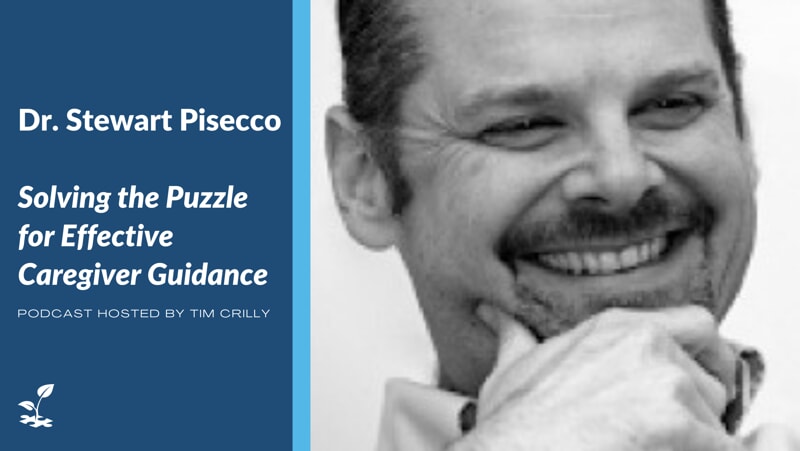
Season 4: Episode 3 – Solving the Puzzle for Effective Caregiver Guidance

Hosted by Dr. Stewart Pisecco, Tim Crilly
March 21, 2024

Listen now:

or listen on your preferred platform:

Episode Description

The ABA Unfiltered team is joined by Dr. Stewart Pisecco. Stewart is the founder and CEO of Attend Behavior, a mobile technology solution designed to support the delivery of caregiver guidance services for children with Autism, ADHD, and other types of behavioral conditions. Attend is currently being used by clinicians across the country who work in a variety of settings including behavioral health practices, pediatric health systems, and school districts.  Frequent listeners of ABA Unfiltered know that caregiver guidance is a passionate topic for us, and Tim and Stewart have a fantastic conversation about the challenges and the tools that Attend can put in the hands of families and clinicians!

Full transcript

0:10 Tim Crilly: Hello and welcome back to another episode of ABA Unfiltered. I’m your host, as usual, Tim Crilly. And today we are joined by a new friend of ours, someone that I was introduced by some mutual friends. And I think it’s the second guest that Mr. Alan Fullbright has lined up for us. So he’s he’s been a great help this season, introducing us to some folks we didn’t know before. But it’s Dr. Stewart Pisecco, and he is based in Houston. He is the founder, CEO of Attend Behavior. And he’s going to tell us a lot about that endeavor today and what impact that it’s having on our industry as it relates specifically to caregiver guidance and our interaction as clinicians with families. And it’s something, if you’ve listened to this show, uh you’ve heard us touch on a little bit. It’s something that I like to talk about a lot. So it’s really exciting for me to talk to Stewart today to really get a sense for what they’re doing and someone that’s really elbow deep in this topic. So Stewart comes from a background where he’s got a little bit of technology in his background as well as um psychology, that that human behavior stuff. So, Stewart, my first question to you before you kind of give an introduction, do you feel like that passion for both the technology and that that sort of that studying of the human behavior can be tied back to your um role as an extra in the movie Robocop? I kind of think those two things combined sort of feel like they they are who you are now.
1:49 Stewart Pisecco: Oh, that’s that’s a keen observation, Tim.
1:53 Tim Crilly: I do deep deep dives on my guests.
1:57 Stewart Pisecco: Yeah, I was I was on the set of RoboCop and I had just been arrested. And that’s when I had the idea of the interface between technology and behavioral health.
2:07 Tim Crilly: So you got arrested by Robocop.
2:09 Stewart Pisecco: Actually, I was not arrested by RoboCop. I was arrested by someone else.
2:14 Tim Crilly: Okay.
2:14 Stewart Pisecco: It was a, you know, yeah, it was a disappointment in my career for sure. But you know, what can I say?
2:20 Tim Crilly: Okay. Um, no, but all kidding aside, I I I I appreciate that. Um, but I you know, it just seems so funny. You know, it’s like he is sort of the walking embodiment of uh human behavior means technology back before that was really like AI didn’t exist back then, you know.
2:36 Stewart Pisecco: So that’s right.
2:39 Tim Crilly: But um, if you don’t mind, could you just you know give us a little bit of a background on who you are and what your journey to this point has been?
2:46 Stewart Pisecco: Sure, sure. That completely caught me off guard. That was a good one. Well, so many years after Robocup, I decided that I really kind of wanted to pursue a career in psychology. So I a child psychologist by training. And um uh I’ve worked in a variety of different settings, you know, school districts, pediatric health systems. I I spent some time working in prisons outside of RoboCop, but uh working in prisons as well.
3:15 Tim Crilly: It’s all tied together.
3:16 Stewart Pisecco: It is all tied together, yeah. So after I finished my graduate school, um I took a faculty position at the University of Houston. So I was a faculty member there for about 12 years in the College of Education in the EdSec department. And so in my research area has always been kids with behavioral issues, you know. So worked with kids with behavioral issues pretty much my whole career. And um, you know, one of the one of the things that I ended up focusing on was I think we have a pretty good idea from the research literature about what types of interventions produce the best outcomes for kids. The challenge I’ve always seen is how do we get what we know works implemented? Right. And so, you know, it’s one thing to talk about how we can improve behavior. It’s another design interventions that are actually practical enough for people to implement in a way to get the results we hope to get. So that’s you know, that’s what actually I focused on. Um, and I did a lot of work in the schools at that time and looked at you know, teacher acceptability and thoughts about different types of interventions, things like that. And um, and that’s that’s really kind of when I drew on my early experience in Robocop and decided how can we take what we know works and create a technology solution that would do two things. One is help teachers understand how to go about implementing those interventions, uh, make it easy for them, and then allow the districts to get better insights into which kids were doing well, which kids were struggling, which teachers needed more support, things like that. So, yeah, so that’s kind of, you know, I before the Robocop thing, I used to refer to it as TurboTax for behavior for teachers. But uh, but that’s kind of the way we thought about it. And um, and we worked with school districts all over the country and um really had a lot of fun doing that and and making an impact in that way. And then um that company ended up getting acquired by Pearson and uh joined Pearson for a while and and always wanted to take what we had done in the schools and create a solution for parents and in the healthcare world. So that’s kind of how how Attend got launched.
5:29 Tim Crilly: So a tend sort of morphed out of okay, we’ve been doing this successfully with with teachers. Why don’t we transition that and bring it into the home? And yeah, that makes a lot of sense. Yeah, so you know, tell us a little bit about you know what attend is and um you know how it how it works, I I think is is is really like where I’d like to start because I do want to make sure we we touch on sort of those those touch points in in this community where attend uh you know is is interacting. But I think understanding how the how the how it works is is is a key element to it.
6:04 Stewart Pisecco: Absolutely. When when we were designing a tent, we I first thing I did was I talked to a lot of parents. So we collected data from about 900 parents or so around what worked for them and what didn’t work. And you know, what was their biggest pain point when it came to you know taking what people were telling them to do and put it into use? And there was really kind of a couple things were that were striking from those conversations. One is that, you know, obviously parents wanted good content, you know, they wanted good content that could help them become more proficient in responding to problem behaviors. Um the second thing uh, you know, that they did resonate with them was finding ways to make it easy. So with Attend, there’s really kind of three components to it. One is the content, you know, as an evidence-based uh set of courses that parents go through. The content in attend is based on the Ruby Parent Training Program for Disruptive Behavior. So we we ended up uh licensing the content from for Ruby from Oxford University Press. And Dr. Karen Bears is the lead author of Ruby, which you may know. And so Karen and I worked, our team worked together on transforming what you would normally do in a caregiver training session into a technology solution. And then what we wanted to do was to build tools that would support the skill building process for parents. And what I mean by that is if you talk to a parent about the concept of reinforcement, it makes a lot of sense. For a parent to put that into practice in the moment when they need it, you know, requires some fluidity, right? Requires some muscle building. And so we uh so it tend includes coaching tips and reminders for parents that they kind of set when they think they would need them to help support their implementation process. And then there’s obviously, you know, wouldn’t be a behavior output without data collection, right? So there’s a data collection component to it that checks in with the parents to see how the kids are doing, makes it easy to collect ABC data, things like that. Does that make sense, Tim?
8:13 Tim Crilly: It absolutely does. And and you know, and this is where it becomes real interesting to me because you know, um we all mean well in this in this field, you know, and I think the average BCBA doesn’t probably get into this line of work with the thought of I want to work with the adults in the equation. It’s about the children and and the you know, sort of being able to make that that impact. But one of the big key components to what we what we say we we need to do is is get those parents ready to take on care. You know, I think one thing I was always taught early on in my career as a as a you know, BCBA was your goal is to work yourself out of a job because you’re not going to be long for having another family to come in and work with. So that idea of yes, we want to make that impact with that client, that child, but more importantly, and maybe not more importantly, but equally as important, that family needs to be empowered. They need to be ready to take on those challenges when we’re not there or when eventually we’re not there at all. And I think that’s something that we don’t necessarily, as an industry, do the best job of preparing um young BCBAs. It’s there’s no real, you know, sort of model for it. Some people have a knack for it, some people don’t. And my worry is that, you know, if you’re not providing effective caregiver guidance, that family obviously isn’t benefiting from it. So that family is not really placing value on that next caregiver guidance appointment. And that BCBA is just as equally happy, maybe when that session gets canceled, because now they can go do the things that they’re you know more comfortable with or those sorts of things. So it’s becomes this this cycle where you’ve both both parties are maybe crossing their fingers that this doesn’t occur because it’s not uh it’s not a rewarding experience for both. And that’s where I’m really excited about what you guys are doing. So with that, so you know, from a uh a clinician perspective, like what do you see this tool? How does that impact maybe a younger or someone who hasn’t really been sort of exposed or trained in quality caregiver guidance?
10:25 Stewart Pisecco: Well, you know, I think it’s a great question. And it’s a it’s a really good observation. It’s pretty consistent with what I hear when I talk to practices across the country, you know, is that only about 50% have at best of the caregiver hours that are being authorized or being delivered. And then the question is, well, why is that? You know, for a lot of the reasons you talked about. Um, we know that the field as as a field is is is relatively young. And um, when you have a lot of growth in a field, there’s a lot of pressure on training programs to get students out. Coming from my training school page, you know, I understand that. Plus, you only have so many hours in your curriculum that you can dedicate to different types of skill sets. Here’s where there’s a parallel between what uh we’re doing today and what I’ve seen in education. Only 15% of the college educations across the country provide any sort of training for teachers in behavior.
11:18 Tim Crilly: So, what that means like classroom management sort of stuff. Is that what you mean? Yeah, yeah.
11:22 Stewart Pisecco: Behavior in general, right? Or mental health. So that means that the vast majority of the teachers get their training on the job. And there’s such a parallel in terms of what I’m seeing out in the field as well, from the clinician’s perspective. Most of the people go on the field because they want to work with the kids, there’s not really time focused on helping them learn understand how to work with the with you know the big people in the room. And so one of the things that I think why Ruby as a curriculum has been so widely adopted by so many different practices and why people are responsive to attend is because one, it’s evidence-based. You know, Ruby’s gone through several uh a series of uh clinical trials to show that it works. So it’s effective. The second is it really provides some structure for clinicians, and that’s what we do with the tend, provide some structure on what it is you need to focus your parent or trainer or caregiver training efforts on and walks them through in kind of a stepwise fashion. I think a lot of times, you know, people think, well, I need to train the parent how to kind of be like an RBT. Yeah, and that’s not what the parent wants.
12:33 Tim Crilly: Wants, yeah. They don’t want to have to be the therapist all day long.
12:36 Stewart Pisecco: No, I mean, at the end of the day, parents said it best. They said, look, for me, I want to take my kid to Walmart and hope he doesn’t have a meltdown. And if he does know how to have a meltdown, to know what to do. And so that’s what we focus on is creating good foundational skills for parents. Because I think as when we put our professional hat on, sometimes we we overestimate what parents might be doing and might know about behavior. Because for us, the idea that the ABC model for behavior, you know, and to understand the function, the importance of reinforcement, it seems so fundamental that sometimes we forget parents don’t have any exposure to it. So we skip over that and we go right to the meat of trying to do skill development. And it’s overwhelming for a parent. And that’s that’s with the 10. We’re trying to say, wait a minute, let’s level set where everyone’s at, give parents good content, you know, foundational content, and let’s walk them through the process. And in return, let’s make it easier for our clinicians to focus on what’s the most important to get them where they want to go with the parents.
13:42 Tim Crilly: Yeah, so you touched on sort of, you know, obviously there’s I I don’t, yeah, it’s a curriculum, you know. So the for from a family standpoint, is it is it the same starting point for everybody, or is it kind of dependent on where you are in your journey through this?
13:58 Stewart Pisecco: Well, that’s a good question. And yeah, the content side of this, yeah, there are 10 courses, so to say, for a parent to go through a course, it takes about 30 minutes from start to finish. And and typically the way they use attend is the the parent will read the course in between session and then they’ll use her in session time to see what made sense to the parent and what didn’t make sense. They’ll talk about implementation. But to your point, you know, it’s certainly fine. And and I’ve used attend with families that I work with who have gone through it before. With those families, maybe we’re just reviewing the content to make sure they understand it. So I think you know, the parents’ experience with this dictates maybe how fast you go through the content. Um, and so so yeah, it is meant to go through the content in a specific sequence.
14:52 Tim Crilly: Yeah, and I and I think that’s important because, you know, and I think that’s sometimes where we kind of get in in trouble in these situations. We don’t always, you know, it you sometimes you’re afraid to to to go backwards, you know, and sometimes it’s important to go backwards before you can go forward, you know, and we’re we’re so comfortable to do it with a client we might bring in because we see splintered skills and all those things. But it is a delicate thing, uh, you know, and I get it. If you’re a 26-year-old uh BCBA, maybe you don’t have children or things like that. It is, you know, you have there’s a there’s a the the process of putting yourself into that family shoes can be can be problematic. Um, you know, and I think we do run into a situation where it’s like, well, this worked for family A, so I’m gonna try to push it on family B, but maybe family B isn’t in a situation where that’s gonna work. So, and I think you know, sometimes we have trouble coming up with a another plan, a plan that will actually work, because the plan that will work, even if it might take longer or or be different, is ultimately obviously gonna be the best plan. So I like the idea of these types of let me give you, let me empower you as a BCBA to be a little bit more confident in what you’re trying to do with this family, rather than sort of winging it.
16:14 Stewart Pisecco: Yeah, yeah. And I think, you know, I think it’s also, I mean, the research around, you know, when we were doing our research around attend and um looking at the different program options out there, you know, the the meta-analysis I’ve been done really clearly point to what are the six to seven skills that tend to be most associated with positive outcomes from caregiver training. And so just kind of making, making sure, let’s start by making sure parents understand what they are, understand how to to adapt them for their kids’ needs, um, you know, really is kind of where we wanted to start with this. And and it’s you know, it’s paid off the the parents who go through it, you know, the things that the two things they like the most. Um, one is the content’s easy for them to understand, which is, you know, obviously what our goal was. And the second, and that it was helpful. And the second is these kind of coaching reminders they get from the app, because it’s a mobile application. So, you know, so they’ll get a little, those are the two things that they they tend to really kind of gravitate towards the most. And you know, I will say that I think there’s a there’s a difference in terms of within fields and between fields rather, um, and what constitutes parent trainer or caregiver training. You know, I think in in certain areas they focus more on the skill development, which is sometimes where parents get lost, as opposed to kind of building foundational skills and then using that as the point to stepwise your way into skill development. And so yeah, I think there’s different models out there. Um and the one we’ve adopted in collaboration with the with the Ruby group, you know, I think works well for parents.
18:02 Tim Crilly: So I have to imagine, you know, when I think of groups like us or, you know, the other larger um ABA companies and and obviously companies of of all sizes, but this this seems like it would be a well-suited tool for larger or you know, sort of ABA uh groups in general to to work with, put in the hands of their their um their their clinical teams. I think one of the biggest, biggest things you have to you know sort of wrap your head around is you have so many people out there interacting with so many different people. Can you really truly understand who’s doing what and when? So the ability to put these tools must give you know sort of those those clinical leadership types a little bit more peace of mind that you know there there is a strong clinical relationship being being built out there. Are you finding um you know interest in that sort of um uh usage from from groups out there?
19:00 Stewart Pisecco: Yeah, yeah, we are. You know, several of the practices that we’ve been working with report that they’ve seen a 50% increase in utilization of the clear giver training hours, which is a great from an RI perspective, from a business perspective, right? But but the other piece around this speaks to exactly what you say is that you have to give some thought to kind of the operational model. And so, so, you know, when the very first customers I worked with with my last startup, which was in the education world, was Houston ISD, you know, Clark County ISD outside of um Las Vegas. And I didn’t know it at the time because I was just some university guy who had an idea for software. I didn’t realize, oh wow, we’re implementing a major school district, right?
19:47 Tim Crilly: Uh yeah, I would imagine Houston is a pretty big school district.
19:52 Stewart Pisecco: Yeah, they’re a huge school district. And what we saw very quickly, and we’ve tried to apply this with attempt, is a lot of times the forward thinking organizations, you know, like you guys, can look at this tool and say, okay, this is how we can implement it. And then they think of like three things they can use the application with that I don’t even think about, right? But what but what you have to plan for is organizations where there’s lots of stuff going on, competing priorities, you have to make it very simple to implement, right? And that means putting in processes and with attend, being able to see, you know, are we getting our hours delivered in the way we want? You know, how how is the progress going, you know, for folks? So kind of really thinking through the organizational implementation, I think is critical. Um, uh, if we want to get the results we you know, we want.
20:49 Tim Crilly: So is it designed? I mean, it it it obviously, I think the, I mean, in my opinion, and from what I’m listening, uh, the optimal way for this to be implemented is in a partnership, a clinical team and a family kind of collaborating on working on this. But are there instances where families uh sort of maybe kind of going it alone or don’t have access to care? Do you find that this is something that could be used in that direction?
21:15 Stewart Pisecco: Well, you know, that’s a good question because I was just looking at the data this weekend.
21:18 Tim Crilly: And so we do I was I was at the beach not thinking about you, but apparently I was. I I was thinking about that.
21:25 Stewart Pisecco: These questions are just kind of coming through your head. But yeah, we that is actually something we looked at. Um, we do 75% of the parents that are using attend are working with a clinician. Okay. So 25% are using on their own. Okay. That it is a lot. And so attend includes the app for parents, right? So they went to Apple, you know, the Apple Store place where you could download the app. That’s for parents. It’s in English and Spanish. Um, there’s a clinician portal for the clinicians so they can kind of monitor the implementation to make sure things are going well and answer questions. So what we find is that if you’re working with a clinician, you know, you tend the you see probably I think it was like a 50% increase in engagement. Parents just get further in the application. And if they’re as opposed to working by themselves. So when I looked at, you know, when we look at online types of parent training resources, the engagement rates in some studies are abysmal, like nine, 10%. Right. And so with ours, we have a much higher um uh engagement implementation rates. And I think it’s I mean, I think it’s all because we have a clinician who’s helping guide that process. So that, you know, we we we did, you know, and some of the payers we’ve been talking with um are grab are leaning towards models where you pair attend with a clinician. Um and for certain populations who can’t get access to resources and things like that, it’s even more important.
23:06 Tim Crilly: Yeah, you know, and I I’m glad you brought up the the payer side of this because I do, you know, I I I was at Magellan for a number of years and responsible for however many clients in however many states, it’s too far away to remember anymore. But it’s a lot. Um, you know, and you have you have a network you’re managing, and you kind of think everyone out there is doing it the way you were taught, you know, at my time leading up to to join Magellan, and you start to quickly realize that that maybe not, you know, and I think um, you know, we would hear that some parents would call and you know, sort of the message from that ABA provider was you take a break, step back, we got this, you know, you you need you need this time away, you know, and where others were, you know, I know this is hard, but we need you in here. This is not this is might get a little harder before it gets easier, yeah, but we really need you to be working together, you know, and sort of that disconnect alone just used to drive me insane. Um, and then you’d have other other people that would call us and say, hey, you know, we cannot get this family to engage with us. We don’t think we’re the right fit. We need to sort of transition that family to a different um a different provider. So I’m I’m getting to my point. So I, you know, I could see from a health plan perspective, putting something like this in place at the front end, maybe not, you know, the you know, as a requirement to start services, but something that you you do um have in place where a family needs to go through a few of those models to really understand um what they are going to be you know required to do it and how this is going to be the most optimal use of their time and and and dollars. Um and I think it would allow health plans to control the narrative a little bit better and and get a better understanding of of who is actually in their network and and what they’re doing. So are you are you finding sort of um success in those conversations with with health plans? Is this something that they they find in intriguing? Because I would imagine they do.
25:16 Stewart Pisecco: Yeah, yeah, actually we we’ve gotten really good responses from almost all the major payer groups that we’ve talked to about what we’re doing with the tent. And you know, when before we launched, those were conversations we had as well with the payers. And and from their perspective, what role do they see parents playing? And it was pretty clear for me that there were the role of having more parent outcomes as part of the evaluation process was coming. And I think it’s you know, it’s here in a lot of ways. And they’re kind of keenly aware of the importance of parents, and and they’re also kind of aware the struggles in trying to get um support for caregivers and parents done. So we’ve had good responses and and a lot, and several of them are looking at kind of rolling out different models of care with a TED. And uh yeah, so we’ll hopefully more to report on that soon.
26:10 Tim Crilly: Yeah, that’s great. Cause you know, I it’s that family is really just sort of at the mercy of who answers the phone first, and it doesn’t always mean it’s the best fit. It just happened to be someone that had the first availability.
26:24 Stewart Pisecco: Yeah.
26:24 Tim Crilly: Um, you know, and it’s it’s a real different sort of service, you know. And I think, you know, when I first started there, that was gosh, 2013. You know, it was it was a new thing in California, you know, the mandate. So, you know, I think for health plans back at the beginning, it was sort of round peg, square hole sort of situation. And in that time, they have come to better understand what ABA is, what sort of that structure and how it should look. Um, but it is a different kind of therapy where, you know, obviously the authorization and the treatment is going towards the child, but there is a huge family component. And, you know, TRICARE, you know, and just this sort of latest iteration of their sort of mandates, they’re really looking at tracking that and and how important that is, and what sort of penalty can be applied for sort of a lack of compliance within caregiver guidance. And I I, you know, you hate to you hate to say that that’s a good thing because it, you know, it is a good thing, but sort of that, you know, just looking at bare minimum and numbers doesn’t necessarily mean it’s quality caregiver guidance, but it at least it’s something to say, no, you absolutely have to be doing this. Yeah, you know, so that’s where I see you guys as a real key factor in this because we have to be doing it. We say we’re doing it, but are we really doing it? Or if we are doing it, are we doing it well?
27:48 Stewart Pisecco: Yeah, and and I appreciate that, Tim. And that’s what we’re trying to do is just kind of make it more manageable for people to implement, you know, what we know produces positive outcomes for for families, and and also being able to support those efforts towards, you know meeting the requirements for the payers. And so it’s a delicate balance. Yeah, so yeah, we’re we’re excited about where the future holds for us in the field in general, um, but in particular, you know, being able to form those partnerships between the families, the clinicians, and the payers. Because when we can kind of connect those dots, you know, that’s when we get everyone synchronized, moving in the same direction. And ultimately, at the end of the day, we’re all here because, you know, we want mom to be able to take the kid to Walmart and not have a meltdown, right? Or to know what to do if it happens. So, so I think we’re all trying to get to the same class.
28:46 Tim Crilly: Yeah, and I know we we talk about outcome, outcome, outcome, outcome, and no one really knows what what to do. But to me, the biggest, you know, the biggest outcome that we could put um, you know, put on a piece of paper is a quality of life measure for a family to say, wow, I couldn’t do that six months, 10 months, eight months, whatever. Now I can do it. You know, is everything perfect? Is no, but we’re doing things now as a family or whatever that we couldn’t do, you know. And I think if we could just say this family is less stressed, this family is more empowered, this family is less likely to have a mental health sort of crisis with within their, you know, the the family structure, all those things should be just marked down as a win. Um, you know, but I think as an industry, we want like more hard hardcore data to, you know, to say everything’s everything’s better. But if you could just say that, like, you know, what what a powerful statement about the the services that we provide as as a as an industry.
29:43 Stewart Pisecco: Yeah, yeah, I agree, I agree. Yeah, sometimes, you know, it’s it’s those little steps that help us walk before we can run that are sometimes most important.
29:53 Tim Crilly: Yeah. How can people uh find out more about you guys?
29:56 Stewart Pisecco: Well, they can uh go to our website, which is one of those www. Yeah, attendbehavior.com. You know, we’re on we’re on Facebook and and uh but yeah, they go to our website or look us up, attend behavior on Facebook, and uh they can follow us there and or we’re on LinkedIn as well. So we’re kind of easy to find.
30:16 Tim Crilly: Okay, great. Um, I mean, I found you by accident, you know, so that that’s always that’s always good. And you know, and he he did want me to point out that um you are a Fulbright scholar, apparently, and now you have a Fulbright on your team. So you know, life does come full circle.
30:33 Stewart Pisecco: It does come full circle, that’s true.
30:35 Tim Crilly: Yeah, the Fulbrights are some of my favorite people. So I you know I you’re you’re in you’re in a good crowd with them. I like Amanda, his wife, a little bit better, but yeah, and that’s why everybody says that. Uh yeah, well, and if you ever get a chance, um he really is a master with uh smoke and and barbecue, you know.
30:54 Stewart Pisecco: I’ve heard that as well.
30:55 Tim Crilly: Yeah, you you know, two days later I’m sitting on an airplane flying home, and there’s still just like smoke out of my body. I feel so bad for the people sitting around me. It’s just he’s he’s really got it down to a science. So um Stewart, uh yeah, he’s he’s he’s he’s he’s a good cat. Um, I really appreciate you coming on and chairing a little bit about what you guys do. And you know, I I we can’t talk about this topic enough. Um, it’s just to me, it’s the next phase in what we do as an industry um because there’s not enough BCBAs to go around. Um, so the more we can train and get parents better suited to the challenges faster, but the more people we can impact and help. So I I really do appreciate it.
31:39 Stewart Pisecco: Uh well, yeah, I feel the same way. And next time I’m on, I’ll tell you about the movie where I was a bearded nun.
31:44 Tim Crilly: Okay. I’ll have to come up with some sort of topic that I could tie into that. Um, okay, just real quick, how many times were you an extra?
31:54 Stewart Pisecco: Oh uh, I don’t know. I mean, I was in several. I did I I was uh in a number of different, you know, movies and stuff like that. Never, never anywhere where you would see me, obviously.
32:05 Tim Crilly: Okay. Um, and for those those of you at home listening, the younger crowd, Robocop was a movie from like the 80s. You can you can probably look it up. It’s it’s a classic. Um and it’s the late 80s, too. The late 80s. Sorry, sorry, sorry, sorry. It’s it’s worth the watch. Uh it’s probably the only time Robocop is being mentioned on an ABA podcast. So I mean, maybe even on a podcast in general. Okay, Stewart, I I hope uh to get to meet you in person at some point when my travels bring me to Houston. Um, it’s really been great chatting with you.
32:40 Stewart Pisecco: So I really appreciate it. Thanks. Thank you for the invitation.
32:44 Tim Crilly: You got it. Um, and thank you everybody out there for listening. And you know, if you enjoyed this, please don’t hesitate to subscribe and share with with anyone, especially families out there that you think would would find value in this conversation. So tune in later for uh more fascinating conversations.

Find a center near you.