Episode Description
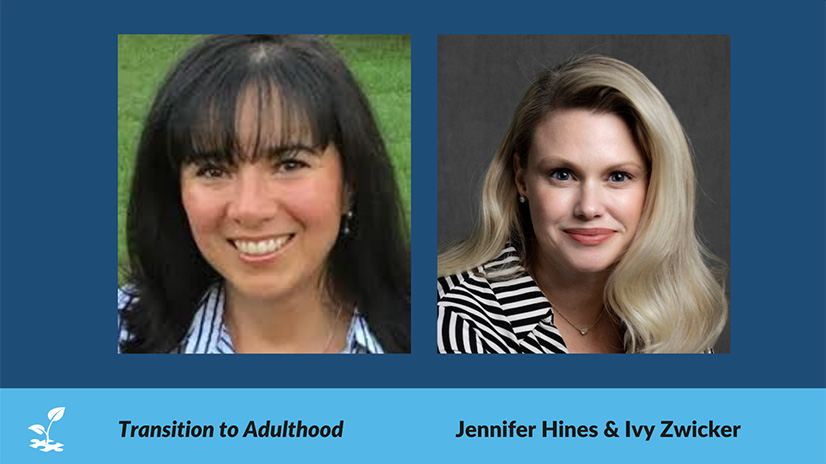
To kick off Autism Acceptance Month, Jennifer Hines M.Ed, BCBA and Ivy Zwicker, the BlueSprig Texas area VP of Operations join Tim on ABA Unfiltered to talk about how families should be thinking about the process of transitioning into adulthood when families should start asking questions, what those questions should be, and who they need to be asking. While both Ivy and Jennifer are experts in the field who were able to impart great wisdom and advice, Jennifer is also a parent of an adult son with ASD and shares her firsthand knowledge of her family’s journey. Please enjoy this fantastic insightful conversation.
with Jennifer Hines MEd BCBA, Ivy Swicker MBA
Full transcript
0:07 Tim Crilly:
Hello and welcome back to another episode of ABA Unfiltered. I am your host, Tim Crilly, and today I’m having a very, very strong case of deja vu as we sit here ready to record this episode. Full disclosure, it’s been one that we’ve been trying to do for quite a while now, and we’ve run into a lot of technical issues along the way that have interrupted our ability to do that. So here we are, once again, um, you know, here to chat. And it’s a friend of mine from BlueSprig, Ivy Zwicker, and one of her friends that she was kind enough to introduce me to and bring into our little world, Jennifer Hines. So today they’re here to chat again, but for the first time for you guys, about sort of advice that they think about talking with families, maybe that are that are beginning their journey, um, you know, sort of post-diagnosis, getting into the the process of getting into therapy and and and and that sort of thing, but how they should be planning for the future, what sort of things from a parent standpoint should they be thinking about? And then also, you know, from a from a resources to you know, what are the types of things out there that that people should be should be looking towards? So I’m really excited because it was a really great conversation that was that was lost for all time. So this is sort of my white whale of um interviews here, finally, finally getting to make it happen. So I Jennifer, will you you take a minute and introduce yourself and give us um all a taste of who you who you are and what you do?
1:42 Jennifer Hines:
Absolutely. So I’m Jennifer Hines, I’m a board certified behavior analyst. I’ve been in the field with uh neurodevelopmental disorders for over 25 years. Um I’m currently the state neurodevelopmental specialist for vocational rehabilitation in the state of Texas. We worked under the Texas Workforce Commission. And more importantly, I am a mama of a 26-year-old with autism. And so I can share some of my own experiences of getting him to transition to adulthood.
2:12 Tim Crilly:
Ivy, how about you? Thank you, Jennifer.
2:14 Ivy Zwicker:
Thanks, Jennifer. Yes, and third times the charm. I believe this is this is gold, Jerry. Third time. So I am Ivy Zwicker.
2:22 Tim Crilly:
I one one quick, one quick um that’s a reference uh uh for you, Lucas. That’s another Seinfeld reference. I think that might be the third that has occurred on uh ABA Unfiltered that you were unaware of. So producer Lucas, I like to translate anything from the 90s for him.
2:40 Ivy Zwicker:
Well, uh speaking of the 90s, I started in this field um about 23 years ago. Um and uh and it it was it was a very it’s a beautiful program. It still exists, it’s autism treatment center, and uh it’s specifically geared for children and adults with autism. So in in the topic of transition, when I started uh in ’98, there was a little boy that started as well and he was eight years old. And over those 20 years, you can imagine I was able to see him go through his early adulthood, his teenage years, early adulthood, and know him as the adult uh he is today. So uh very excited to um participate in this topic and share some of the experiences and uh resources that we have.
3:32 Tim Crilly:
That’s great. And like I said, I I’ve known Ivy for just over three years now. It’s kind of crazy how time has flown by. Unfortunately, I haven’t seen her in over a year, other than you know, via the computer. But Ivy’s one of my real true work friends. So it’s really fun to have you on here, Ivy. And you know, you brought some some real expertise to our team. And you know, so I I know I know your insight is really important. And obviously, you know a lot of people in the community, just like Jennifer. So it’s really it’s really nice that you’re able to sort of bring your world into ours because I think that’s one of the things that makes all of this possible that we’re trying to do here is how many talented people can we get working on things collaboratively. So we’re making sure that we’re really giving these families the best possible information. So let’s start there. You know, so Jennifer, in in sort of your, you know, it’s up to you how however you want to sort of approach this conversation, whether it’s more in your professional capacity, you as your put on your parent hat, or or a little combination of both. But I think you obviously bring a very unique perspective to to these questions. So when you kind of work with families and and you know, the the interaction you have, what what’s the the the the most sound advice you try to give people as it relates to what they should be thinking about, uh, what questions should they be asking?
4:58 Jennifer Hines:
Well, the first thing I would say is to be real, is that there is no perfect way to transition to adulthood. You’re going to mess up, you’re going to mess up, period. And that’s okay. There, so if you think that you have to have some kind of certain pass, some there’s a magic, you know, magic pill that’s going to get you to, you know, to X, Y, Z, there isn’t. And so that’s the beauty of it, is that you need to take one step at a time. If you have an eight-year-old, um, where do you want to be in the next year or two? You know, is communication the key? Is you know, having moving from parallel play to, oh, we actually initiate some play skills here, right? That’s a huge step. When they’re 15, don’t judge that they’re 15 because it’s a developmental disorder. They’re really 11 or 12. When they’re 18, 19 years old, they are not 18, 19, they are 14, 15. And so you have to keep that in mind. And developmental disorders, you know, they they always grow. And I don’t like when I hear, oh, they just matured. Well, yeah, a little bit, but it’s also a lot of work to get them. And they mature in chunks. So, you know, it’s like they’re, you know, they’re thinking, they’re thinking, and then suddenly they leap up. So their progress is in these big chunks. So at 16, you might not see anything, 17, and then you look around and you go, holy cow, at 18, you have made so much progress. And that’s what people parents need to keep in mind. Um, small steps, little changes. You don’t have to take it all in one chunk. I mean, it’s overwhelming as a parent to think, I have an I have this 18-year-old. What am I gonna do now? School’s gonna end. I all this all the resources I feel like I’ve had in place for all these years are gonna end now. What do I do? And it can be panicky, right? But it’s also when they’re 18, 19 years old, you’re tired. It’s been a long journey.
6:43 Tim Crilly:
Sure.
6:43 Jennifer Hines:
You’ve been fighting for a long time, and then emotionally and physically, there’s an exhaustion there. And so, um, but there’s a way to get through it. I’m on the other side, you know, it’s it wasn’t perfect. It wasn’t sometimes it was messy, um, but he’s successful.
6:59 Tim Crilly:
Sure.
7:00 Jennifer Hines:
I can do it.
7:02 Tim Crilly:
So, Ivy, what do you think is the one of the sort of lacking resources out there, sort of in a in a general sense? Like what are what what’s a hole in this process? What are we missing as it relates to preparing um, you know, even just early teens, adolescents to what do you think is that missing, missing piece? Like what could we as an industry be doing a little bit better as it relates to sort of preparation, whether it’s for families or whether it’s for that individual or combination?
7:34 Ivy Zwicker:
Yeah, that’s a great question. Um just to Jennifer’s point, transition, you know, we all go through it. And so I just kind of slowing slowing this down and being realistic um on what what we all have to go through. I mean, we have to think about, you know, just ourselves. Are we gonna go to school? Are we gonna get a job? How are we gonna get places? Um, am I gonna rely on transportation or you know, how how is this gonna look for us? And so when you’re uh you have a child on the spectrum, it it’s a little bit more complicated and it can be even more overwhelming. So I think really uh slowing down and finding and discovering the resources in the community along with your public school system because they’re really um designed to talk about this uh through the IEP process. So something that I think uh we underutilize, and Jennifer, you can let me know here, is a functional vocational assessment. I think it’s important to slow down and discover what is this person, what is my child really enjoy doing? What is my child um, you know, uh trying to tell me? There’s when you’re talking about the spectrum, you have, you know, the spectrum. So some some people are going to need um some support. And some people, you know, you’re really gonna focus on having them be their own guardian when they turn 18 and their own self-advocate. Or is this somebody who’s gonna need support? So I need to start thinking about who’s gonna be their legal appointed guardian or um, and then what are they going to do? How are they gonna have a meaningful life? And so to Jennifer’s point, what a child looks like at 13, 14, which is when schools are starting to talk about this, um, hopefully not for the first time, but generally it is around that time. That was my next question.
9:32 Tim Crilly:
So I’m quite a bit.
9:34 Ivy Zwicker:
It can absolutely be sooner, but it tends to be around that time and definitely better formed by the time they’re 16. But right around then, you know, you can you can start to have these thoughts around what is it, what is it that they’re how’s their life going to be meaningful? How is it gonna how are they gonna be happy and safe? So that could look totally different by the time they’re 18, though, like exponential chunks, like Jennifer said. So I would say slowing down and exhausting all possibilities and um really learning who’s in the community. There’s an incredible resources in the compute community, parent-led, uh, advocacy-led, families that have been there and are there to help people through their journey as they go through it, families that are going through it at the very same time you are. So that can have such a lift, just being a part of uh who’s out there. And then as your child develops, really starting to um link to those resources.
10:35 Tim Crilly:
Jennifer, is that too late? Should should school districts start these conversations earlier? Or is it too scary for parents and it might put them in a place where they’re not really ready to process that?
10:48 Jennifer Hines:
I think you should start processing when you know you find out your child has a disability because it evolves, right? What are they gonna need next year? What are they gonna need in you know the following year? Do I think they need to decide their career vocational? No. They’re way too young. And I do want to bring the point up that they typically give them a spectrum, have they struggle the most in high school, but the end of middle school, none of us like high school, none of us like middle school, right? But their hormones typically will make any anxiety they have, underlying anxiety explode. So sometimes what you’re you’re looking at 16, 17 year old bond, there’s no way, oh my gosh, they didn’t get to be to group home because they’re having daily panic attacks, or they can’t even, you know, transition to their other class without a teacher helping them or having a five-minute break, or and and I felt the same way when when my kid was 16, 17, we’re having panic attacks because we it was a brand new school, we didn’t have all the expectations, and threatening to break a limb if I made him go to something new.
11:45 Tim Crilly:
Yeah.
11:46 Jennifer Hines:
Fast 14 years later, this kid says, I want a job where I talk to people because I get bored. And you’re like, What? Where would you come from? And so you you but his anxiety was at a level that was not normal. It was hormones plus you know, the autism plus you know, the newness of just transitioning from a middle school to a high school. So we have to also remember that they’re kids and that you know they’re gonna have that thing if they have anxiety, which I haven’t met, there’s not one person on the spectrum I haven’t met who doesn’t have anxiety, and then you add hormones to it. So just being careful to not judge what that teenager looks like right then and think that’s what I’m gonna deal with as an adult, because that’s not the case. And to let them get through each year, yeah. And and we talk about resources, so I’m vocational rehabilitation, so I have to mention that every state has a vocational rehabilitation department, it’s federal and state. Um, how it’s run is definitely different state by state, but it is um because there was a federal law that came down called WIOA, it really changed transition and put an importance on on uh transition age students. It used to be when I first started 10 years ago, it was kind of like when I graduated, they got a card. Oh, here’s this agency that can help you out find a job, right? Well, that’s too late. You have to have the bridge, the bridge has got to be there. So now this um federal law says uh, you know, state agency, you’ve got to pay 15% of all the funds we give you, you have to do pre-employment things. That means we’re getting them prepared for employment. So now, um Ivy, as you’re talking about getting your resources together and talking about that vocational. Well, this stuff for agency can now go in in high school and give them work experiences. Just let them experience stuff. I mean, if they’ve been video game designers and they all think they want to be video games, you know, they want to go to video games, but they haven’t experienced it. So they need to experience work, they need to get their first job, a summer job, you know, even if it’s a few hours a week, they need to do these things.
13:43 Ivy Zwicker:
Yeah, I love that change of the I love that change of the career exploration element to what you’re talking about. Um they you can get support through guidance um to look at different career opportunities, and there’s work-based learning programs too, where they can explore potential work in real work settings. So I love that add-on, Jen.
14:06 Tim Crilly:
How much success do you do you guys see with sort of outside organizations offering employment opportunities? Is there is there enough sort of corporations out there that say, hey, we could probably create X amount of positions or in different departments, things like that, that would be sort of a way to bridge the gap and introduce people to you know a whole new sector of work opportunities? Or is it is it a limited, is it a limited amount of of sort of options that sort of are presented to these to these guys?
14:43 Jennifer Hines:
I’m gonna say right now it’s still limited, but it is expanding very fast. So, but it’s expanding sometimes for a certain part of the spectrum. So Google and Dell, SAP, Ernst & Young, they all have specialized programs where they have trainings and internships, and then that can evolve into full-time positions, but they are for the kiddos that have certain skills. So there is a deficit in the probably the middle ground, like not going to go to college, so really’s got some great employment skills. Um, and then the more impacted, we still have some of those jobs that we can fill through, you know, maybe the more repetitive positions, those are a little easier to find. There’s still kind of a gap. But what’s great is that just eight years ago we didn’t have any of that.
15:28 Tim Crilly:
Yeah.
15:29 Jennifer Hines:
So I think they’re finding the validity of these kids, of they are so loyal, they, you know, and I hate when I hear this, they all like repetitive work. No, they don’t.
15:37 Tim Crilly:
Yeah, no one does.
15:40 Jennifer Hines:
You know, some like repetitive work, some some want a rarity, some are very gregarious and have personalities and want to be customer facing, you know, and some don’t. And so, you know, they’re all you know, there needs to be jobs for the whole spectrum. And I think we are, I think we are getting closer and closer um because people are also you’re seeing in a film, you’re seeing in movies, you’re seeing autism speaks has been doing things, you guys have been doing things. It’s like they’re starting to get out that employment is such an important and key part of transitioning to adulthood. And you’re you know, what you do for a living is your identity.
16:14 Tim Crilly:
Yeah.
16:15 Jennifer Hines:
It’s also your social circle.
16:17 Tim Crilly:
Sure. That’s I mean, I have one friend, her name’s Ivy. I mean, that’s just kind of how my life is now. You know, you have you have your work friends the older you get. Uh, so that’s that’s a great point.
16:28 Ivy Zwicker:
I’m grateful for my work friend and Tim. Thank you, Tim.
16:31 Tim Crilly:
Thank you. Um, but you bring up a great point. Uh, I think I read um Netflix is dedicating a hundred million dollars to increasing sort of neurodiverse characters or shows based on neurodiversity over the next, I don’t know how many years they’re planning on doing this. You know, so it’s it’s not just a, hey, here’s a show about autism, or hey, here’s just a show that has this one, you know, nephew that has autism, but it’s it’s expanding it beyond that. And I think that’s a great, that that’s a great thing for you know the community because the the more you see things on TV, the more sort of, hey, yeah, okay, I’ve seen that before. I know all about this now. I mean, not you know, all about it, but you have better exposure to then in the real world say, okay, yes, this is someone that I can bring into my organization or or whatever the case may be. So is there a way for for people to to for you know companies to be more uh connected with whatever sort of government um systems are are out there? Do you have an idea about how that works, or am I sort of going down a path that’s a little too complicated?
17:44 Jennifer Hines:
No, I mean that’s actually something I’m seeing more and more. They’re coming to you know, health and human services and partnering. I know they’re coming to um VR um and partnering with us. Um I have lots of corporations that come and because we, you know, we train the kiddos, we provide um job coaching support. We we we also provide uh AVA treatment and a lot of clinical things for them. And so it behooves them to come to us because we make sure they’re ready to go on the job, and then they don’t feel so intimidated, like, well, what do I do if you know he freaks out? What do I do if he doesn’t know how to, you know, we have a new manager and he doesn’t know how to handle the change. Well, we can step in and help them. And then it also takes that fear factor out, and then they fall in love with them and they realize what a great job they are because we do not want this is not a charity case. We do not accept our kids because they’re cute. We want to accept them because it makes good business test. And um, and I think that’s important. Um, I do want to step back at some point and talk with some very specific, you know, strategies on helping parents step by step that make a huge difference in how they transition. And I know Ivy is gonna, we’ve had this discussion before.
18:56 Tim Crilly:
How about it?
18:57 Jennifer Hines:
Well, I think it’s because it’s scary when you think of oh god, how do I get them up to adult? Like you’re thinking, hmm, I think they could move out. I don’t, but you don’t know how to do it. I think they could have a job, but I can’t fathom them right now. What do I do? Well, so like the example for what I used for for my kiddo, Kevin, when he was 18, I was like, okay, I can see him moving out about 20. Like I had that in my head. And you need to tell them, you kind of you need to start with energy.
19:21 Tim Crilly:
Start talking about it.
19:22 Jennifer Hines:
Start talking about it because then they know, okay, I am gonna move out. And they know I’m not, I always used to say, I’m not gonna push you out the door unless you’re ready. Like I may, you may be uncomfortable, but I know you’re gonna be ready. I’m not gonna just throw you outside. And so he had that in his head and you know how they’re very rule-based, and they need to prepare themselves and get that transition going. So he had it, but then we started doing things like he got his first paid job at 18. And so he worked on that and didn’t do any other skills but like learn how to work because it’s gonna do autistic things, like, you know, like you’re gonna, you know, we have to kind of get through that. Then at eight 18 and a half, I’m like, okay, well, you know, you’re kind of a roommate now. You know, you’re over 18, you you know, and he didn’t need 18 plus. That wasn’t what he needed at the time because he was working, and I said, So you’re gonna pay me rent and bills, and then I’m gonna give you some money, and you’re gonna do all your breakfast and lunch, and I’ll do dinners, but you need to learn how to what does that money get you? And then, you know, the five dollars of popped air that they buy stopped happening because he started like, oh God, I have no money if I don’t so it’s these little responsibilities, and then um we start increasing work hours, and then like at 19, he we said, okay, we’re gonna try to drive. So we drove a little bit, and then by the time he was 20, I moved him a mile away that I can still parent, right? And then let him settle into, you know, taught him some different, just like two or three different dinners that were easy, like hamburger helper, you know, spaghetti, little at a time so that he can do it. I mean, what 20, you know, year old male cooks?
20:53 Tim Crilly:
I mean, Lucas, Lucas can can jump on, but he’s uh he’s a college student, but I think you’re right. I mean, it’s you know, you eat the same four things anyway until you get a little older. So that’s not even right, that that you know, sort of limiting of a of a of a diet.
21:09 Jennifer Hines:
So I just get him things that he can microwave. I make sure he can’t be able to, you know, I think you it’d be great if you could eat some veggies, but again, I didn’t push it because he’s talking a year old and and how many college kids are eating a lot of veggies.
21:21 Tim Crilly:
Yeah.
21:22 Jennifer Hines:
But they do things they’re still gonna do. I got calm, they do autistic things. And like one thing he did is I found out he sent $200 um to somebody in California who present who was um who promised to send him energy through his computer.
21:38 Tim Crilly:
Wasn’t me. I know I’m in California, but it wasn’t me.
21:42 Jennifer Hines:
So I had to, I had to intervene. And you know, he was researching and getting himself engrossed on the internet, and they fall prey to these scams, right? And so, you know, parents didn’t understand they’re gonna mess up. It’s oh but but that’s okay. All kids mess up. You you know, you you let your college kid go and mess up, you know. You’re neurotypical, but why wouldn’t you? Your your autism. I kept him still within arm’s reach, but it’s good.
22:05 Ivy Zwicker:
I really love, I really love Jennifer how you uh allowed the opportunity to really focus and practice on making um you know his own choices and taking responsibility uh for decisions and treating him like an adult.
22:21 Tim Crilly:
I think that’s also like a key thing that always jumps out when we talk. You’re an adult, I’m gonna treat you like an adult because it’s probably real easy to just keep it safe and sound and not do those things because it’s less less work for you in the short term, but probably a lot more work in the long term. But you you thought it through. So sorry, Ivy.
22:41 Ivy Zwicker:
No, well, there is definitely an element of risk, but like in life, you have to take some risks to to uh to develop and grow and be um, you know, be the person you’re meant to be in this world. So um I I I would probably um ask parents that are listening to think about how they could safely um start designing opportunities for um early on to practice making choices and practice talk talking about communicating and and whatever um whatever mode is best for them and their needs and wants. Because that goes a very, very long way um in adulthood.
23:26 Tim Crilly:
Sure. And don’t try to boil the ocean, don’t try to do everything at once. Here’s your new apartment, go make it work. You stag you staggered it and you staged it and it went, you know, obviously you you know, if you one step forward, two steps back, probably here and there, uh, but you learn from it and and you move on, you know, and and obviously there’s not everyone has that ability to be that level of independence. So, you know, obviously there’s there’s different avenues, but you can start. How do you train your, you know, your son or daughter who might be headed more for a group living situation? You can start to work with them to be a part of a community like like that as well. So it’s not just about gaining independence, it’s about where do you, and I think you’ve sort of touched on this, where do you see the most realistic and you know, sort of landing, landing spot and then building your expectations?
24:21 Jennifer Hines:
And adjusting, and adjusting your expectations because I mean I where he was at 1415, he was gonna go to a group home. I mean, he was that level, right? There was it was I I didn’t know how independent he could be. So it was like the shaping and like, okay, I think we can do this, I think we can do this. And I had no problem if he needed to go to a group home. Um, honestly, it’s really difficult to get them to their own apartment because they’re isolated. I mean, that’s that’s the good and the bad. I mean, at least in a in a facility group, and you know, that’s why it’s wonderful when parents get together. I honestly think it’s better when parents get together and and you know, can do a house, can do an apartment, but they’re isolated. They may be neurotypical, but he’s isolated because he’s not gonna go out and just find friends. How is he gonna do that through his work? It’s it’s difficult. And then also don’t don’t um say they don’t, you know, they’re not gonna be able to drive. Think about driving is that you don’t they don’t have to be on highways. I taught him to drive across the street and back, and and I lost a lot of hair if I drink a lot of wine because it was really scary because he was so literal. And but I mean, I he I moved him across the street from his work so that he could driving is something that’s very difficult for him, but we at least you know he could do it across the street and back, street and back. And then if it rained, I was freaking out because that was something different and I know it caused him anxiety. Um, he doesn’t drive anymore because he really just cannot handle more than very simple driving that. He rides a scooter, electric scooter. He lives a mile away from his work now, and and um he loves it. He used to take the bus when COVID hit. I was like, only want you on a bus, and you’re only a mile away. So uh one of his um stimulus checks he used and a nice electric scooter takes him 15 minutes to get to work and he’s independent. So kind of you have to alter your what is independence, right? And what is transportation and not knock everything out, you know?
26:13 Tim Crilly:
Yeah. That’s that you know, that’s that’s a huge thing going on in my house right now because I have a 15-year-old and just your the the losing hair, I’m so anxious about it with my 15-year-old. Um, you know, so yeah, it’s I’m sure that’s a universal across the board parental thing. But obviously, knowing that my son will, you know, sort of either be brave enough to do it or not. But the this, you know, sort of the this the skill set and everything should should make it a lot a lot easier for him. But it is it’s a nerve-wracking thing when you have to give up the things that you’ve always had control over to not be allowed to have control because you know it’s in the best interest of their growth and development, even if you want to kind of keep them, keep them close and and and shelter them. So that’s great. You know, I think you did mention um, you know, that that changing your expectation. And I think it’s it’s something that I stressed to you that I wanted you to bring up because you did such a good job of talking about it in our in our fake conversation a few months ago that that was never never to be heard from again. But I think it’s one of the the biggest takeaways is you know, you changed your perception in the other direction. Ah, this might not go where I want it to go. And suddenly something changed and you were able to, but you had to adjust. But obviously, the opposite can can be true as well. And and as hard as that is to sort of conceptualize and deal with, it’s really important that you do sort of have a realistic expectation of of where things are headed, and then adjust your plan as as you move forward. So I think that’s fantastic, fantastic advice. Um I really want to for all parents.
27:53 Jennifer Hines:
Definitely for all parents, but I think we we as a society, we we mute 18. Okay, 18. You’re out, you’re uh, you’re going to college or you’re going to work, you’re doing this.
28:02 Tim Crilly:
Okay, well, go buy a lottery ticket and enlist in the army. You’re all set.
28:05 Jennifer Hines:
Right. At 18, this is a magical thing that happens, right? Okay, I feel like we have to let that go. I don’t care if they’re 18. I’m not saying not to hold the expectations, but to go, maybe at 20 or 21, they’re actually now ready to go take a couple classes at the community college or go through a vocational program. But just understand that it’s it’s do not rush. There’s no rush to be at 18, they have to be fixed, that they have to be independent, that they have to have all these skills. And then also don’t rush the school system. There’s too many of our districts that are pushing them out, and they don’t have to be these life-skilled kids who can do um extended, you know, you know, 18 plus programs. They legally have the right if they’ve had modifications in their program, and it and it says, at least in Texas, they’re to graduate them, that you have to show employability skills that have little supports, that you don’t need a lot of supports. And if you can’t, then why not take an extra year or two to explore while you’re you’re in school, you can be exploring those vocations, working on these social skills. That is the number one reason you’ll lose a job with the social skills. And the ones that uh we struggle the most in the agency to get a job are the ones that have two or three degrees because they have flown under that radar and they didn’t really get a lot of treatment and they were able to just do what they were good at, which is academics. For academics, work on. Yeah, but not work on that social skills that is gonna get you fired.
29:28 Tim Crilly:
Yeah.
29:28 Jennifer Hines:
You know?
29:30 Tim Crilly:
You know, and I think it goes back to Ivy’s point. Uh, you know, in Ivy in our little world, you know, when you work with insurance and you’re writing treatment plans, you’re, you know, you’ve you’re supposed to be producing a sort of an exit strategy, you know, and maybe that’s something that that families, I know there’s like, you know, you know, all that built into an IEP, but maybe families should be starting to like form their own little, what’s my plan? How do I start planning this? And what when and who do I start asking the these questions to?
29:57 Ivy Zwicker:
I think it goes to your point, Tim, earlier when you said what’s missing. And this is a perfect example of kind of rushing through the process, like let’s like 18 is this magical time and graduate, and everything’s gonna be whatever it’s gonna be. But the there are times, you know, the 14 and 16 and times before that to really slow it down and focus on what’s important and social skills, soft skills, extraordinarily important. So, um, what’s in place for that? I know we have transition and employment um designees, I think they’re called TEDs. And so, do you have one of those people? Do you know uh this can involve like the um soft skills aspect? And yeah, I think we need to do a lot more of that and a lot more of uh realistic um career expectations, and if we can hit those a little bit harder versus just only looking at academics, I think we’d be uh fully taking advantage of someone’s development opportunity.
31:07 Tim Crilly:
So I know we’re probably getting short on time, but I’m thinking about like so the school district that my kids are in. So if I it’s it goes K to six and then they switch school districts and it’s seventh through 12th. So if I had a fifth grader, would they even with the fifth grade IEP team really even be able to talk about this stuff? Or would it all start as they transition to middle school and high school? Like, are they educated enough to know uh how the whole system works, or do you sort of have to wait as you hit different levels?
31:41 Jennifer Hines:
I think a teacher would be really important to know at that age, you can say what subjects do you like? Because you start to kind of pick electives, right? What are you you’re good at science? Well, let’s make sure that you’re in, you know, the your favorite kinds of science. And then maybe you can volunteer, you know, maybe they they say, Hey, did you know that we have a lab assistance that we allow to come in, you know, or they like computers. So there’s always, you know, computer tech people. I know Kevin was one of his first little jobs, like I think in ninth grade or something, they let him be the assistant guy who brought in the paper. He said nothing to nobody. He walked in, walked out. But it was it was something. And so just developing their interest.
32:19 Tim Crilly:
Okay.
32:20 Jennifer Hines:
You know, because that’s that’s important. What am I good at? And the stop always focusing on the label, you know, a lot of times that’s becomes I’m autistic, that’s my identity. And that’s fine if that’s what they choose to do when they’re when they’re an adult to say that’s my identity. But as a child, I I caution that because I always would say, We talked, he knew he had autism, but I would always say, What are your strengths and what are your struggles? Because everybody has them. Like I don’t care what label you have, what is your strengths and what are your struggles? And let’s be realistic about them. Let’s work on your your struggles, but let’s you know focus on your strengths. And I think that’s important. We we don’t sometimes we focus on all the negative, I think, with these things.
32:59 Tim Crilly:
Yeah, you know, yeah, the limitations. You focus on that rather than the possibilities sometimes, and that’s that that’s a little bit more than tragic, I guess. You know, I’d love to, I know we’re kind of we’re running out of time here, but I would love to have also like a sort of a separate conversation around the social socialization aspect of your, you know, an adult child. Uh, what are those avenues? How do you outside of work or you know, maybe work plus, um, you know, dating, you know, it’s just go into bars, uh, you know, those sorts of things, like, you know, what what are those options and and how can can parents help their their kids find find those avenues as well without sort of creating all you know anxiety or or situations where they they’re they’re in over their head or you know, whatever that the case may be. So that would be an interesting conversation.
33:56 Jennifer Hines:
I’ve got some stories, Ken.
33:57 Tim Crilly:
Okay, you know, we can just do story time with Jennifer.
34:02 Jennifer Hines:
There’s some things he’s confessed that he’s done that I went, oh, oh, oh, I did not know you would do that, and I didn’t prepare you for that. And so, um, but that’s what happens and that’s best life. But I think that was that’s a very good conversation because um it is a very different world when they graduate and they don’t have that school buddies, and then if they have work buddies, and even if they’re included, like you know, my kid works for my agency, he’s a mail clerk, and he is and he’s in the downtown office and he’s hobnobbing with commissioners and they love him and he’s talking, but those are his friends, so there’s that unintended consequence of being fully included is that those are not gonna be the people he calls up, they’re not gonna be an ID in town, you know, sure don’t have it a beer, they’re just not so there’s there’s there is some things that should be talked about.
34:48 Tim Crilly:
Yeah, yeah, that’s a really good point. You know, not all not all work relationships are created equal. You know, there’s some things you just you’ll say to some people, but you wouldn’t say to others, or you trust this person more because you’ve gotten to know them better. Um, but it doesn’t mean you’re necessarily friends once the you know the the clock hits five o’clock or whatever, and that can be a confusing sort of dynamic at times. Any last thoughts? Okay.
35:17 Ivy Zwicker:
I think that’s an excellent topic. I think we can, I think we easily talked about like 30 different ways you could actually just focus on and help, you know, it’s there’s so much out there, and I love that topic. Um so we’ll see if we can make that happen.
35:33 Tim Crilly:
Well, um, we have gone way over our scheduled time, and I I hope that doesn’t mean that uh we we lost anybody because this was a really fascinating conversation. I could actually keep going. Um, but we usually try to shoot for about 25 minutes. I think we’re we’re well well over that. So um I do want to have you guys back and I do want to have this conversation. And you know, I don’t know if Kevin’s open to jumping on and sharing some of his experiences as well, because I think that could be really fun, fun as well. Maybe not with you in the room. Uh we could, you know, get you out. Oh, yeah, with me.
36:09 Jennifer Hines:
He we got new secrets. And he that he actually comes with those speaking um uh gigs with me.
36:15 Tim Crilly:
So that’s that sounds really fun. I would I would love I would love to do that in the coming weeks um and and and get that get that uh information out there because I think those sorts of those topics are really important. But thank you so much, guys. That the the wisdom and the and the insight was amazing today. Um so thank you for jumping on and I appreciate your patience with us actually getting this finally set and recorded. So um thanks again and thanks to everybody out there listening. I I really appreciate you guys and the attention you give to uh our little podcast over here. So thanks and have a great day.