Back
ABA Careers

Season 2: Episode 13.1 – The Great Dr. Carbone

Hosted by Amanda "Mandy" Ralston MEd BCBA LBA, Dr. Vince Carbone EdD BCBA-D, Tim Crilly
March 21, 2024

Listen now:

or listen on your preferred platform:

Episode Description

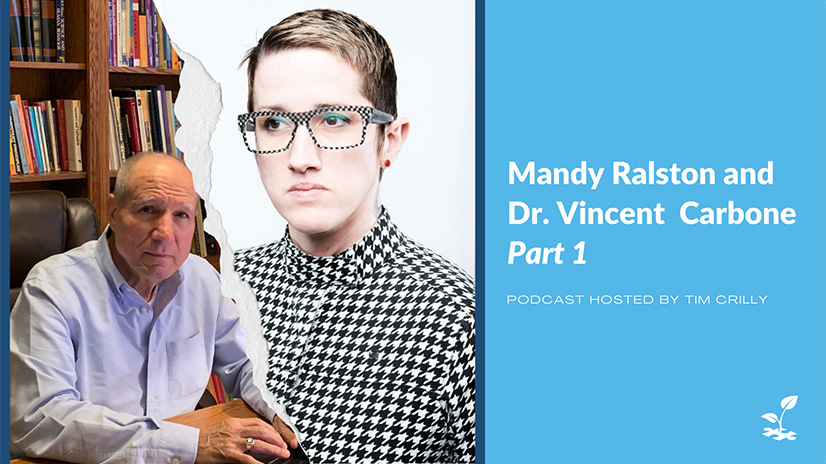
ABA Unfiltered is honored to be joined by Mandy Ralston from the Cedar Group and her clinical mentor Dr. Vincent Carbone for a fascinating 2 part season finale. In part of our conversation, Dr. Carbone talks about his early formative years in the ABA field and his many influences including B.F. Skinner. Please enjoy this must listen to episode of ABA Unfiltered.

Full transcript

0:08 Tim Crilly: Hello and welcome to the season finale of season two of ABA Unfiltered. I’m your host, uh Tim Crilly, and today somehow, some for some reason, um Dr. Vincent Carbone uh agreed to come on, and we’re very fortunate here at ABA Unfiltered to have friends who know famous people. So um Mandy Ralston or Mandy to her friends uh is also joining us. She’s one of our returning champions to the show. Uh she and Dr. Carbone go way back, and uh really is the only reason uh we’re fortunate enough to have him come on today and talk about, in my opinion, whatever he wants to talk about. I do have a list as usual, but we’ll see where the conversation goes. Uh, talk a little bit about you know the current state of ABA, his thoughts on that, um, and and and some other things that that might be pressing uh topics for us to discuss. So um I’ll step aside for a second and Mandy, if you want to give a quick introduction to yourself and just how you were fortunate enough to become connected with Dr. Carbone.
1:10 Mandy Ralston: Thanks, Tim. Yeah, um I’m Mandy Ralston. I am the director of clinical intelligence at the Cedar Group. Um, I came to the Cedar Group by way of BlueSprig as one of their acquisitions from 2019. So my company, which was named Verbal Behavior Consulting, um, is now the Lexington Clinic and also now includes the Georgetown Clinic uh through BlueSprig. So that’s how I got here to the Cedar Group. And that’s about 21 years after I first probably learned about Dr. Vincent Carbone. So in 1999, I was graduating from Centre College here in Danville, Kentucky, and wrote a paper about autism. And in my abnormal quote-unquote psychology textbook, it told me that one in every 10,000 individuals were going to be diagnosed with autism. And uh it gave me exactly two paragraphs about what autism was, and I decided to do some research. And um I had a friend in Lexington that was doing quote unquote ABA therapy by way of having a consultant fly out from California once a quarter to tell her and a few other college students um, here’s day one assessment, here’s day two, here’s all your programs that you’re gonna do with these seven children for the next uh three months. And good luck, and I’ll see you then. And so uh quickly, after you know, spending a few months working with these individuals and these families, uh, I got you know sort of a crash course in autism, the the actual things that you needed to know about autism and not those two paragraphs and what families needed and what they were trying to accomplish through this therapy, and became uh very aware that uh what we were currently doing was severely lacking in quality, um, that we weren’t getting the kind of outcomes uh that these families were looking for. And we didn’t have a lot of guidance or training or anything. So uh there’s this guy that’s you know traveling across the country and providing some uh information, three-day workshops about verbal behavior and applied behavior analysis. And so we start going to some of his workshops, and from that point forward, I decided to start stalking him lightly um and following him all over the country to his various workshops to try to learn better what I was doing wrong, and that possibly there were better ways of actually teaching individuals with autism and getting them to a place that they actually wanted to come to the table and work with me rather than uh working basically as a giant aversive stimulus that the only reason they would do anything for me was just to get away from me, right? So uh that was my my first introduction to Carbone. And after that, um he was he was involved early on with BACB and the certification process and was able to uh start a grandfathering program for individuals that were involved in the field and were willing to come do a very intensive, rigorous 90-hour coursework boot camp in Jacksonville, Florida. And so I signed up to go down there and got a fire hose of information and homework every night and you know, multiple four-inch ring binders that had journals and journals and journals to read and absorb and try to, you know, uh to put back out there in the world, which has an understanding. And then uh he uh he agreed, to my surprise, to also be my mentor for the next year in the process of completing the requirements so that I could sit for an exam as a BCaBA in 2001. Uh so Carbone and I spent a year, me in Kentucky and him in New York, uh sending VHS tapes back and forth in the mail, talking on a phone that actually included a wire to a wall. Um, and then I subsequently got to take my test in Nashville, Tennessee with a number two pencil and a um Scantron, you know. So that’s that’s how I got to be a behavior analyst. And I I think it was one of the first 500 and first 1,000 certificates uh in the world as a process of just listening to this guy. And and you know, I’ve I’ve jokingly called him the the Billy Graham of ABA uh because it’s really like going to church uh on some level when you get to hear him talk about these things. And uh I was inspired and continue to be. And so I’ve been lucky enough to have him as a mentor for over 20 years.
5:46 Tim Crilly: So well, thank you, Mandy. That was that was uh that was a very good introduction. And unfortunately, it used up all of our time. So uh Dr. Carbone, I appreciate you joining us, but I guess we’ll have to do that. It was very nice to be with him. Yeah, well, you know, you know, I just uh you sound like a great guy, but uh unfortunately we’ve we’ve run out of time. No, um Mandy, thank you. That was that was great. Um so just maybe uh, you know, I I don’t think you really need an introduction, but maybe just for for people that might not know, what attracted you to this world? What what about behavior and analyzing behavior? Really, what what what was the interesting thing to you and and and how did it spark a career for you?
6:30 Dr. Vince Carbone: Yeah, sure. Well, first of all, thanks thanks very much, uh Mandy, for uh all those kind uh those kind words. And I’m I’m proud to uh to be Mandy’s uh mentor. She’s done a lot of great things and will continue to do it. So thank you. Uh thank you very much. I’m honored. Um what got me interested in the field of behavior analysis is that I uh went to Marietta College for my undergraduate uh degree. And unbeknownst to me, there was a uh professor on faculty in the psychology department. I decided to study psychology, seemed interesting and worthwhile. And uh he happened to be uh uh at least an acquaintance, if not friend, of B. F. Skinner. Um but let me tell you first, I I went to Marietta College mainly to play baseball. I was uh I was recruited to play to play baseball there. Um it only took me two years to realize that I was not competitive at that level. Um but during the I I played I played shortstop and uh and it was a it was a major Division III team. Marietta College has a wonderful team as won the Division III World Series for many years. And I I just was not up to the task. But nevertheless, I was glad that I stumbled into this opportunity to meet Dr. Al Prince, who was my advisor in the psychology department, who happened to have an acquaintance with Skinner uh through American Psychological Association meetings uh that they both attended. Uh, and Al would invite B.F. Skinner to our fac to our uh campus and to meet with the faculty uh and students on a regular basis. Skinner was willing to do that because I think he liked Al, but also because it was en route to his daughter Julie, who was at West Virginia University, not far from Marietta, Ohio. So he would stop over um in Marietta, and I was chosen to be his uh uh student sponsor, his student um uh person who would show him around campus and and be his uh his guide, uh, which was quite quite an honor. So I got quite a bit of time to spend with Skinner. I would pick him up at the airport, um, I would take him back to the airport, and in between I would uh arrange for all his uh all his happening. So here I was at 18, 19 years old, interacting with B.F. Skinner in the psychology department that was focused on Skinnerian psychology, as we called it then, because of Al Prince being the um uh the head of the department. Uh it was just a thrill. And you know, I was starstruck uh and needless to say, um indoctrinated into uh Skinner’s thinking through the department as well as through my interactions with him. So that’s what really got me interested in applied uh behavior analysis.
9:28 Tim Crilly: Well, I mean, it’s kind of an unfair advantage you had over the rest of the world. And I think if if people could see Mandy, her head, her head is is is exploding, you know, with jealousy, I would imagine. So you know, that might be the best. We’ve asked that question a lot to a lot of people. Like, you know, most people said, oh, I kind of fell into it, you know. But you know, chauffeuring Skinner around town is is not a not a bad reason either. So um I I I appreciate I appreciate that story. And I love the fact that you went there to go play baseball and and now and now you’re here. I that’s just stuff like that is is always fascinating to learn. So college shortstop, Dr. Vincent Carbone. That’s that’s what I’m gonna think of you moving forward.
10:13 Dr. Vince Carbone: Um okay, so not a very good one, I’m looking at, but nevertheless, it was good.
10:19 Tim Crilly: Hey, uh I didn’t get no one asked me to play shortstop in college, so you know.
10:23 Mandy Ralston: Well, I mean, lucky for us. Lucky for us, Vince, that you weren’t a very good shortstop, otherwise you maybe may not have made all the impact of people’s lives with uh verbal behavior, right?
10:34 Dr. Vince Carbone: So well, I I thought I was gonna be the you know the next Yankee shortstop or the next Dodger shortstop, but but it was clear to me once uh I pursued my academic interests and the involvement with Skinner, and the department was mainly focused on behavior analytic uh approach, despite the fact that an undergraduate degree at a small liberal arts college ought to give you a much broader view of the field of psychology. This was pretty well focused, and so I really didn’t have a chance. Yeah. And I’m and I’m glad that uh that was the case.
11:09 Tim Crilly: Was it was the hitting or was it hold on, many? I gotta know. Was it hitting or fielding? What was your what was like the wake-up call? Was it just the the the pitching got a little too too hard to do?
11:20 Dr. Vince Carbone: No, it was uh no, it was it was it was uh clearly fill fielding. I I I could hit, maybe not as competitive as some of those guys. Once once we get out of high school, it gets really competitive. Yeah, and especially a team that wins the division three world series every year. That’s a pretty competitive group. Uh, but my fielding, I I had a strong arm, but every first baseman would wish that I was not playing shortstop because my arm was just erratic, and my hands sometimes weren’t as good as they should have been. So I I couldn’t compete any longer at that level.
11:53 Tim Crilly: Okay, okay. Well, that’s that’s amazing. I mean, it’s it’s cool.
11:58 Mandy Ralston: I would say I wish it had gone better for you, but our uh our CEO, uh uh our CEO Keith Jones will appreciate the baseball connection in this call.
12:08 Tim Crilly: He’s a giant baseball nerd, grew up in England, but is just obsessed with baseball.
12:14 Dr. Vince Carbone: Really?
12:15 Tim Crilly: So yeah, you’d you’d you you guys would he’d love to pick your brain a little bit and not ask you one question about ABA.
12:22 Mandy Ralston: So yeah, I was gonna say too. The other thing that I was gonna jump on here, uh Tim, is that okay, so Carbone starts off with chauffeuring around B.F. Skinner and then makes his way to his grad program where he’s got Jack Michael as his mentor. So I mean it’s like one two punch of some of the biggest influences in applied behavior analysis right off the bat, right?
12:52 Dr. Vince Carbone: Yeah, and and and Jack was there often. Actually, my mentor was a student of Jack’s, but it might as well have been Jack. Uh uh W. Scott Wood was my mentor at at Drake University. Uh Scott was influential in beginning the Association for Behavior Analyst International. He he started the journal, The Behavior Analyst, which has recently changed names, and I wish it hadn’t, but he started the journal, the uh The Behavior Analyst. Um Scott didn’t publish a lot, but he was very influential. He was a good friend of Skinner’s. So any relationship with Skinner was again fostered uh for me through um through Scott after after um Marietta. And of course, Scott was a student of um of Jack Michael, and as a result, um uh I I got that kind of influence, uh, which I um you know the the notion of a of a radical behavior as someone who makes use of skinners analysis, a molecular analysis of uh of behavior, and all what I think are the important aspects of our field. Uh I was um I had the opportunity to uh to partake in as a as a student, and I uh I was lucky uh to be there at the right time around those people to be able to learn. Uh it’s it was um I never regret the the the course I took.
14:15 Mandy Ralston: Right. So yeah, I’m gonna go.
14:17 Dr. Vince Carbone: When you finished when you sorry, Maddie.
14:19 Mandy Ralston: No, uh you don’t mind me continuing just to talk back and forth here with Carbone. It’s uh I remember in Jacksonville you telling the story of Jack Michael explaining to his uh Western Michigan group, is that right? Or was it Drake? Which group was it? When he when he first started, I think it was Drake. If you’re talking about this the establishing operation, right? And the the the and the the example that you gave to us that Jack Michael gave to his class at that point was you know uh the screwdriver, right? What what is the the what is the establishing operation? Because those establishing operations that we talked about that time, not just motivating operations, right? That would cause the behavior of can you hand me that screwdriver? And and gave the analysis of what the discriminative stimuli versus what the actual establishing operation was. And I memorized that, like I I absolutely committed that, and then from there it was me, you know, coming up with different examples in my head, and you know, your alarm clock goes off. And what is the establishing operation versus the discriminative stimuli in that? And what happens when you go to get your car keys and the doors lock to your car and all those kind of examples. So uh yeah, I I I love thinking about sort of the succession of how this technology got passed down, both in an academic sense, but also in a in a social sense. Uh, that that I can I can sit here today and be on a podcast uh talking about Jack Michael explaining an establishing operation to his students.
15:56 Dr. Vince Carbone: Yeah, yeah, that was a that was a colloquium he did at Drake University in 1977. And as you know, his seminal paper on the establishing operation wasn’t published until 82. So here it was, 77, and he had been given in his courses at Western, he had been talking about this stuff. But he came to Drake to do a colloquium, invited by Scott, uh his student, um, and he described this establishing operation concept and gave the example of the of the screwdriver. And all all of our class were, you know, we acted as though we we were very interested in hearing him speak, but we acted as though we understood what he had just said. And after the after the colloquial had all said to him, what was he talking about? We have no idea. Now, what is this about the screwdriver and the difference between a determined stimulus? We thought we uh we had no idea what what he was talking about, and but we quickly we soon we soon did understand it as more examples became available, uh, and Jack spoke a little bit more about it and wrote a little bit more uh more about it. But it was always uh it was always fun to hear him talking about some of the things that were soon, and it was five years later, was soon going to come out in in publication that he had been spending his time thinking about uh as conceptual issues that would ultimately guide our practical application.
17:16 Mandy Ralston: Amazing. Yeah. All right, Tim, I’ll let you go now.
17:20 Tim Crilly: No, it’s fine. I uh, you know, you know, I I I I feel a little bad, you know, kind of like it’s a it’s a a ruse that you are on talking with me because while I am a BCBA, my uh I sort of joke that I play one on a podcast at this point. I’m I’m very much removed from the practical nature of the industry. So just watching Mandy be able to geek out is is enough, is enough for me because Mandy is one of my more favorite people in this world. So to know that all those things that you just talked about have been passed down to a large group of people like Mandy and know what they’ve been able to do with that information, it’s a really I mean I’m sure you’ve thought about it, but it must be a really cool feeling to know I really had a giant impact, not only on uh a group of professionals, but also the millions of families that that group of professionals has had an impact on. Do you do you ever take a moment to kind of think about things like that? Uh, you know, because I’m sure once you finished school and jumped into this, you know, professional world, it was nothing like it is now. So, you know, so from that point of when you first sort of maybe started, you know, actually working for a living once once you were done with the school stuff, to to where this industry is now, like where do you how how do you see that that transition?
18:47 Dr. Vince Carbone: You know, it was always Skinner’s intent to not just write things to make for uh uh interesting cocktail chatter and academic activities. He always had his eye on a practical outcome. Um that’s why he wrote Walden 2, uh, of course. And that was uh you know, back in 1948, he was thinking about those things and even um even earlier about cultural impact and then beyond freedom and dignity, of course, in 1971, where he kind of laid out that whole issue um of culture and how cultures change and how we can change cultures and and other papers on why we haven’t acted, why we haven’t acted to save the world. He was always interested in a practical outcome, and that was that was given to us as students that the benefit of this science was going to be at the applied level and was going to make a difference in people’s lives. So I always adopted that notion that that was the purpose of what we were doing, and tried to make use of that idea throughout our work in terms of turning all of that great information into practical outcomes for people. And of course, not only in the field of autism treatment has that been the case, but in many other areas as well, um, that has been uh that has been true. Not as much, maybe of an impact as in autism treatment, but it’s growing. Organizational behavior management issues are all driven by uh a radical behavioral uh approach. Um so I I think that that idea that Skinner had, some of us really adopted and have adopted. Um, also the idea that it was our job to train other people to carry on the legacy, to carry on Skinner’s work, to carry on Jack Michael’s work. There’s now a foundation set up at Western Michigan University uh in order to give scholarships to young people who want to, who are doctoral students, who want to continue Jack’s approach um to research and writings in this area. And we just recently were able to give the uh the first award. I sit on the the the Jack Michael uh Foundation board there at Western, we were just able to give the first uh uh scholarship uh to a young doctoral student who will carry on Jack’s work uh of applying the science. In his 1981, in his in his 1981 um uh paper, which was his um uh which was his uh uh presidential address at ABAI, he talked about the the need for the practical outcome. That’s always what he thought. Changing the culture, changing people, making life uh better. Jack always talked about it, and that was driven clearly uh by Skinner’s as well. So as a result of that, I’ve I’ve tried to carry that that legacy along and pass it on to students and others that we work with. And to the extent that we have, I’m I’m pleased to be a small part of that opportunity to continue Skinner’s work uh beyond just science for science’s purpose, but science for for good uh and making making it a better world and a better culture.

Find a center near you.