Episode Description
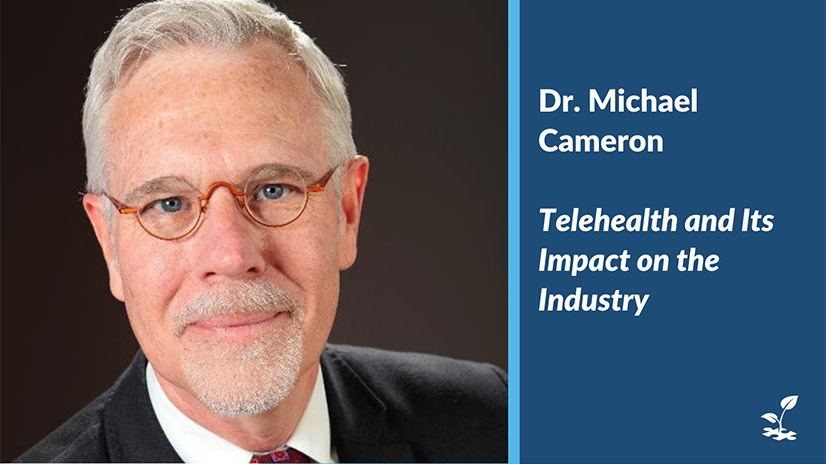
In our first episode, our host Tim Crilly talks with Dr. Michael Cameron, Chief Clinical Officer at BlueSprig about his most recent study, Telehealth for Family Guidance.
With COVID-19 affecting the way all healthcare providers deliver services, technology has emerged as a critical component in order to deliver care via telehealth. Telehealth has changed the landscape of ABA making it possible for families to receive valuable services when they cannot be physically near their behavior therapist.
Dr. Cameron expands on the study he and his team performed and published and he goes deeper into examining how to best approach telehealth and what the future can look like with technology in health care.
Full transcript
0:06 Tim Crilly:
Hello and welcome back to ABA Unfiltered. I’m your host, Tim Crilly, and today we will be joined by Dr. Michael Cameron to discuss a recent publication of his on the pressing topic of telehealth services. The title of that article is Telehealth for Family Guidance, Acceptance and Commitment Therapy, Parent Focused Preference Assessment, and Activity-Based Instruction for the Support of Children with Autism Spectrum Disorder and their families. Michael Cameron is a PhD BCBA-D. He’s also the Chief Clinical Officer for BlueSprig Pediatrics. Dr. Cameron is an adjunct faculty member for the program in applied behavior analysis at the University of Southern California. Dr. Cameron received his doctorate in experimental psychology at Northeastern University, Boston. He was founding chair of the Department for Behavioral Analysis at Simmons College, an all-women’s college in Boston, Massachusetts. Dr. Cameron’s research and publications are in the area of behavior analysis, clinical decision support systems, behavioral medicine, and behavioral interventions. As a side note, he’s also an old friend of mine who I’ve often sought insight from on the current status of the ABA world and more importantly, where he sees it all going. So I’m really excited to chat with him today about his recent publication he and his team collaborated on. Michael, welcome to ABA Unfiltered, and thank you for joining us.
1:23 Dr. Michael Cameron:
Thank you for the introduction, Tim, and I look forward to talking about that article too.
1:27 Tim Crilly:
That’s great. That’s great. 2020 has been a very challenging year to date. The state shutdowns forced ABA community to drastically change the way we approach care. However, as often the case when faced with a challenge, it provides an opportunity to adapt and innovate. COVID-19 has necessitated an in-depth look at telehealth options. You and your team were quick to act on these services. Can you expand on those early days of the pandemic response and how BlueSprig mobilized to treat via telehealth?
1:55 Dr. Michael Cameron:
One of the things that quickly occurred to us as a clinical team is that you can have really good technology that enables you to make contact with the family. So the telehealth technology is available to us. It allows us to make entry into a family’s home to provide various levels of support. And one of the things that was really clear from the beginning is that despite the fact that you have really good technology, it does not necessarily mean that you can create a really good family experience. So this entire research line and that publication in particular was really centered on how do we make a really good experience and create an experience for an individual, for a family and a child that will really give credibility to the entire telehealth format. So that was a motivation for uh for the publication was to work with a specialized team, clinical team, design a format that would have a high level of credibility and acceptability for uh for families, and then demonstrate just exactly how that could work and produce outcomes that uh that we desired as a clinical.
3:09 Tim Crilly:
So, you know, I think what we saw from an industry standpoint were a lot of people that just sort of jumped in with two feet. And I, you know, I know BlueSprig didn’t take that approach. Can you outline a little bit how we looked at what would be the most appropriate way to conduct those telehealth services and didn’t just make, you know, sort of broad stroke unilateral decisions on everybody gets this because it’s a way to bill or you know, whatever other folks might have been looking at it as?
3:37 Dr. Michael Cameron:
Yeah, I think one of the things I’ll do is connect it to BlueSprig values. One of our values is that we are compassionate and passionate. So one of the very first things that we did was to evaluate a child’s eligibility for telehealth services. So we designed essentially an assessment which allowed us to make a determination as to whether the child that we had in mind and the family that we had in mind was actually whether they were actually good candidates for uh for telehealth. So some of the things that we looked at was the child’s capability for engagement in video-based instruction, the child’s level of attention to uh to video in the context of telehealth, and also the child’s tolerance for uh for sitting in front of a screen for uh for any length of time. The other thing that we looked at was whether or not the goals and objectives that we had for a child were actually conducive to addressing within the telehealth context. Because if we didn’t get good alignment along all those areas I just described, then the person was not a good candidate for the telehealth platform. And one of the things that we did at BlueSprig was to make the determination that just because a family had a level of willingness to engage did not necessarily mean that they were good candidates. Because if we could not provide a quality experience as a result of meeting all those criteria I just outlined, then we put services on hold. If they were a good candidate as a result of meeting criteria, then we engaged in service delivery. So it was a very thoughtful process, and it’s one of the things I appreciate about BlueSprig is the thoughtfulness that goes into everything, its adherence with the values that are espoused by BlueSprig.
5:27 Tim Crilly:
I agree with that. And I, you know, sitting on the sidelines watching that, I was proud to see the way that that was approached because I was hearing stories about other folks just you know doing it a little bit differently, which you know can sometimes not be the most comfortable thing to hear. At what point in the process do you feel like there was an opportunity to publish on this? And can you walk us through what that looked like, how your team approached the subject and the process of gathering the research and putting it to paper?
5:53 Dr. Michael Cameron:
One of the things that we decided early on was that in the area of acceptance and commitment therapy, ACT, that the entire process of working with an individual begins with what’s referred to as values clarification. So we have to understand just exactly what an individual’s values are. So we knew as a result of the pandemic and people being sequestered at home and people living under circumstances that were just not common. You know, for example, the uh the person’s partner being home full-time while they’re home full-time, children being out of school. And uh, we’re not just talking about a child in a home, you know, with a mom and dad, or mom and mom, or dad and dad. We’re talking about all siblings in the home as well. Sure. We understood really clearly that this was uh a different set of circumstances. So one of the things that we did was that we brought the families through what we refer to as a values clarification process, meaning we asked the question given this point in time, what is important to you? What is it that we can do to support you? What is what is critical for you at this juncture? And how can we adjust ourselves to ensure that whatever we’re doing is aligned with your values, whatever we’re doing is aligned with your expectations. So we had to ask that question anew. So just because an individual may have been in service at BlueSprig and attending clinic-based services, for example, did not necessarily mean what the family valued in that context was going to be the same thing that they valued in this home-based situation given the pandemic. So, to answer your question, Tim, it was at that juncture that we knew that we were on to something different. That by starting with values clarification, we knew that we were entering into a process of providing telehealth support that was probably different from the way other people were approaching it. And it was at that point that we knew that we really had to turn this into a framework that ultimately would be submitted for publication in the Journal of Behavior Analysis in Practice.
8:12 Tim Crilly:
That’s great. Can you highlight some of the findings that you found to be maybe the most interesting throughout the process?
8:19 Dr. Michael Cameron:
Yeah, we found some really cool things. First and foremost, the values clarification process was uh was really important. But then this was really an interesting shift for us. In the field of behavior analysis, one of the things that we’re accustomed to doing is what’s referred to as a preference assessment for uh for individuals, meaning that we take a child and we make a determination by exposing themselves to different activities and different events, for example, we get information regarding what their preferences are. The preferences could take the form of things that they like to eat, things they like to listen to from an auditory standpoint, things that they like to look at from a visual standpoint. So you get the idea. It’s a preference assessment, and it’s something that is uh a necessary part and a very fundamental part of work that we do with children. But here’s the shift. When we first started doing the telehealth format with families, it occurred to us that we need to do a preference assessment with parents. We need to find out what they like.
9:27 Tim Crilly:
Yeah.
9:28 Dr. Michael Cameron:
And we looked into different formats and different journals in terms of possible preference assessments that uh that we could use. And curiously, we found one in a journal for adult development. And it was a preference assessment to make a determination as to what kind of activities people enjoyed the most. And at this point, I’m talking about the parents. We decided that we would use that preference assessment format so we could identify preferred activities from families and then to use that as the medium for them supporting their child. Because the thinking was that if we can identify what is of interest to a family member, like woodworking, like cooking, like going for walks, like pet care, for example, if we could identify the preferences of the family and then link that preference that the mom and dad had, then we could integrate the goals and objectives of the child in the context of that preference. So, Tim, that was a major finding for us. A values clarification and then preference assessment for families was kind of a launching point for us.
10:36 Tim Crilly:
Just to expand on that a little bit, you know, I think obviously telehealth, you know, this is what this was born out of, but do you feel like that’s something that can be applied just in general as it relates to therapy moving forward? Do you feel like that is a core thing that might be included in the way clinicians approach care?
10:53 Dr. Michael Cameron:
Yeah, you know, Tim, many people have mentioned this that, you know, the pandemic, you know, certainly imposed on everybody, you know, circumstances that have been quite uncomfortable. But one of the things that we did find is that it forced us into a different way of thinking. It forced us to consider formats and methodologies that had not necessarily occurred to us before. So, to your point, Tim, yes, coming out the other side of this, we’re going to now have a protocol that we will use for families, independent of telehealth. These are things that we can do in home-based care, home-based settings, clinic-based settings as well. We emerge from this with a new line of methodologies that had not occurred to us before, but will be serviceable as we move forward with families. So good things have come, you know, as a result of the pandemic, and being forced to think differently and uh and more creatively.
11:50 Tim Crilly:
Was there anything that surprised you about it that you guys stumbled upon? Anything that sort of jumps out at you as like you did not expect that to be the case as it relates to the way maybe telehealth um either worked or didn’t work?
12:02 Dr. Michael Cameron:
The absolute willingness of families to engage. That honestly surprised me. You know, what I did expect was kind of a lukewarm acceptance and kind of a view that this would be tolerated because it’s necessary and it’s the only option that we have given the pandemic. But then we started getting feedback from one family in particular regarding the meaningfulness of all this. One family in particular out of uh Oklahoma said, I can’t believe that you cared enough to ask me what I value. And then as a result of us going through the process in terms of the preference assessments with the family, with mom specifically, she said, these are things that I love doing. This is fun. I can’t wait, you know, to pull my child into this process and to be addressing what their needs are, you know, while I’m doing things that I absolutely enjoy. And I’m really looking forward to getting this off the ground. So honestly, Tim, that surprised me. You know, I I thought that you know, families would be receptive, they they would understand that this is maybe a bridge plan, this telehealth format would be a bridge plan. But the way they threw their arms around it, and uh, this family in Oklahoma in particular was really a surprise to me. It was very refreshing and encouraging for the clinicians involved with this space.
13:25 Tim Crilly:
That’s great. And I know from your aspect of you know the leadership role within BlueSprig and the ability to impact all our clinicians, new clinicians we have coming on board. So obviously, there will be sort of an approach that we have as an organization as it relates to telehealth, when and how it can be used, those sorts of things. But what would you say to anyone on the outside that is really kind of looking to jump into more telehealth services? What are some of the things that they should be considering before they just really just try to get the ball rolling on that? You know, what are some of the pitfalls that might be sitting out there for them?
14:01 Dr. Michael Cameron:
I think the you know, one of the things that really has to be considered is the perceived value of telehealth and the services being delivered. So if I had any advice for people out there, it’d be this is to ask the question. Ask the question to the family after they’ve come in contact with telehealth services. Am I focusing on the right thing? Am I meeting expectations? Am I delivering services that are of value to you? Tim, you know this better than anybody, but in the field of behavior analysis, we refer to as this to this as social validity. Is there a validity to what I’m doing? So being brave enough to ask that question, because it’s real easy to get agreement and for families to sign up and then get engagement, and then you’re running telehealth services and you’re doing that reliably. It’s quite something else to allow an individual to sample those services and then to stop and ask the question: Do I got this right? Am I meeting your needs? Am I addressing what you need to have addressed? Do you see value in what we’re delivering? That would be my first piece of advice. And within that construct as well, Tim, there’s plenty of individuals who are the recipients. I’m talking about our clients. And as everybody knows, individuals with autism spectrum disorder follow along a spectrum, a continuum, uh, from being individuals with challenges regarding verbal capabilities to individuals that are quite gifted, quite frankly. So here’s the other piece of advice: caring enough to ask them the question. Sure. What is your experience with this? Is this of value? You see that we’re addressing things that are meaningful to you. Despite the fact that a child is not their own guardian, that they have a guardian, they’re really relying on their mom and dad, or mom and mom and dad and dad, to what to really make decisions about their lives, caring enough to ask that question.
16:08 Tim Crilly:
Sure. Yeah, I mean, you know, obviously we’ve seen an influx in telehealth across many, many fields in the medical world. My wife had a telehealth appointment about migraines last week, and she thought it was the greatest thing that’s ever happened because of the convenience, and it worked, and you move on with your day. At the beginning of all this, it seemed real scary to think that ABA could be done via telehealth because it was just such a different mindset than what we’re used to with a hands-on approach. And so it’s really exciting to sort of see it evolve and not just see it evolve within the clinical world, but also from a health plan standpoint, you know, we’ve had some conversations where they are excited to see where this could go because how can it expand their network capacity? How can it get families into care sooner, less wait times, diagnostic services, assessment services? There’s a lot of things that are sitting out there in front of us. What do you think are maybe the next phases of this? What sort of things should we be thinking about as we look to evolve the telehealth services within our industry?
17:13 Dr. Michael Cameron:
What’s curious, Tim, is I listened to you talk about telehealth. And telehealth has been around since the early 1900s. It started telephonically, sure. You know, where physicians were making phone calls. And then shortly after, one of the first demonstrations of telehealth was using telephone lines to share X-ray results. You know, so the medical community has had this figured out for a long time. So it doesn’t surprise me your wife had a really good experience with her doc for the migraines. I think what’s important right now is that we take a really good look at what the medical community has established in terms of practice parameters. And this is something that’s necessary for the field of behavior analysis to do is look to see what’s been established in terms of practice parameters, what has been successful, what are some of the pitfalls, and how to avoid those pitfalls. There’s a really good literature base from the field of medicine on telehealth. So it’s going to be important for us moving forward. And if there’s an expression that just came to my mind that you want to move forward, sometimes you’ve got to take a step back. And the step back that I think we need to take is back in time in terms of the literature base and what exists in terms of practice parameters and taking a clear look at that. To answer your question more directly, moving forward, one of the things that we have to demonstrate is the effectiveness of telehealth because we do have a vulnerability there. There’s no evidence base. Telehealth services for autism spectrum disorder are not yet an evidence-based practice. There’s no accumulated body of research that supports the uh the format. You know, we’ve got a number of really good demonstrations, but it’s yet to emerge into a category of evidence-based practice. So I think, Tim, moving forward as a collective of individuals and professionals in the field of behavior analysis, we need to begin generating the research and then demonstrating proof of concept in terms of telehealth being an effective outlet for our individuals. And then really establishing and forging credible protocols for us to follow and use to make sure that we get the outcomes that uh that we’re looking for. And that would be another recommendation is identifying a clinical outcome data set and making it really clear in terms of what we’re trying to accomplish, what outcomes we’re trying to achieve when we’re delivering this mode of treatment.
19:49 Tim Crilly:
What about from a technology standpoint? I know we we’ve chatted a little bit about it, but do you feel like the existing tools are enough, or is there some sort of evolution that needs to happen there as well?
20:00 Dr. Michael Cameron:
The connectivity piece is good, you know, and especially as we move in this world from 4G to 5G, the connectivity is going to get even better. And that’s gonna have implications for the telehealth piece as well. But one area, Tim, that I see is needing exploration is that historically, back to the medical field, the format is one where a patient sits in front of a camera and they’re stationary, and the doc or physical therapist or an occupational therapist interacts with that individual and the person’s stationary. And that’s all acceptable, it’s quite acceptable. For physical therapists, there’s software now where the, as a result of the use of smart clothing, the individual can demonstrate range of motion, for example, but they’re still relatively stationary during that entire process. In behavior analysis, it is anything but stationary. So, Tim, in the medical community, the telehealth platform typically involves a doc, you know, doing consultation to a patient, and that patient is stationary and on the computer screen, and that’s all quite acceptable. Um, but even for other therapists, like a physical therapist, for example, or an occupational therapist, patients today will wear smart clothing. That smart clothing, which has nanotechnology, will be interfaced with the computer, and a physical therapist can look at range of motion. So there’s some movement, but by and large, it’s still pretty stationary. Our challenge in behavior analysis is this the individual that we’re trying to observe, a child, is not stationary. They are moving and moving in their environment, and they may have a person that is supporting them, a registered behavior technician, for example, that’s moving along with them. So, to answer your question, what’s going to be critical from a technology standpoint is that we identify technology that is more mobile, that we’re able To move with the child, but still simultaneously capture the ecology, everything that’s going on in the environment, and capturing the behavior of the technician, for example, with that child as they are moving. Now, this is not unique because it’s done in athletics all the time, it’s done in the military all the time. So I think one of the things that we need to do is identify the technology that’s been proven to be effective and useful in athletics and the military, and then bring that into the telehealth model that we’re trying to create so that we can provide a better view of circumstances in a way that uh that we’re accustomed to. That is why we are watching people move.
22:48 Tim Crilly:
Sure. And obviously, as more and more acceptance through health plans and funding services are created, we’ll probably see more of that innovation come about because there are a shortage of clinicians out there and there’s new cases coming every day. So I can see where some of these things will sort of evolve because just out of necessity, which is really an exciting thing to think about. Before we sign off, any last thoughts on this topic that you’d you’d like to share with the listeners out there?
23:16 Dr. Michael Cameron:
Yeah, I think at this point, Tim, you know, we’ve you and I speak to a lot of people on a routine basis, and we’ve heard many people say that telehealth is here to stay. That’s accurate. But with telehealth here now, I think we need to really master the technology, generate the research, demonstrate proof of concept, build the evidence that it’s a viable and effective outlet and an option for families. And that’s going to be really important for us, especially since, and I’ll give one other thought here. Especially since many individuals that have a child with an autism spectrum disorder may be in a rural community, and this may be their only option because they just don’t have registered behavior technicians or board-certified behavior analysts in surplus around them. But even if they did, Tim, one of the other things I encourage people to think about is that the telehealth platform will allow families, for example, to tap into an expertise that may not be geographically convenient. So maybe a person is living in Washington state that really needs consultation and you know, for their child with an anxiety disorder, let’s say it’s trichotillomania, which is plucking out the hair strand by strand, you know, on the scalp or in the eyebrows. Maybe that person with the expertise is in Houston, Texas. Maybe now, as a result of telehealth, that person in Washington State can tap into the expertise of the person in Houston, Texas, and get services that they otherwise would not have prior to the pandemic and prior to the acceptance of the telehealth platform. So the availability of service, you know, to individuals who are rural, the availability to tap into expertise that may not be geographically convenient, I think, are things that we really need to take seriously. And uh, whatever we can do as a community at BlueSprig, we need to promote it. And um, it’s really important work.
25:21 Tim Crilly:
That’s great. Okay, I do have one question that I ask all my listeners. And can we just establish that you’re a pretty well-known clinician? Is that a true fact? You can you can be honest. I’ll say yes, you are. So I want you to think about this and then answer yes or no. But based on your answer, can you provide an operational definition of why you chose yes or no? Does that make sense? Okay. Okay. So the question is so answered with an operational definition, is a hot dog a sandwich?
25:56 Dr. Michael Cameron:
As you ask the vegetarian. Well, curiously, curiously, Tim, um, that is the only thing I crave. You know, I’ve been a vegetarian for 18 years. The only thing I still crave is a hot dog. And no, it is not a sandwich, because a sandwich has to have two separate slices of bread, okay, and they’re they’re not conjoined in any way. And then whatever preference you have between those, that bread gets stacked, and then you get your condiment that’s slathered on top of it. But a hot dog is a very unique thing. It’s one piece of bread called a roll. What you put in that roll is uh very unique in terms of its uh geometrical shape, and there are very interesting things that you do on a hot dog that you wouldn’t necessarily do on a sandwich. So now you’ve got me craving again, and uh it’s been a long time, but no, I think a hot dog deserves its own category and its own pedestal because it’s a it holds a special place in American culture, and it’s separate and distinct from a sandwich.
27:09 Tim Crilly:
I’m not gonna say whether or not I agree with you, but I can’t argue with your definition. So, Michael, thank you so much for joining and chatting with us and sharing some of the findings from you and your team. You know, I hope we can have you on again for a litany of other topics. It’d be really fun to continue. So thank you everybody for tuning in and listening to ABA Unfiltered. Stay tuned for future episodes.
27:30 Dr. Michael Cameron:
It’s a pleasure. Thank you, Tim.
27:33 Tim Crilly:
Thanks, guys.