
Back
About ABA Therapy

Season 2: Episode 4 – Clinical Outcomes

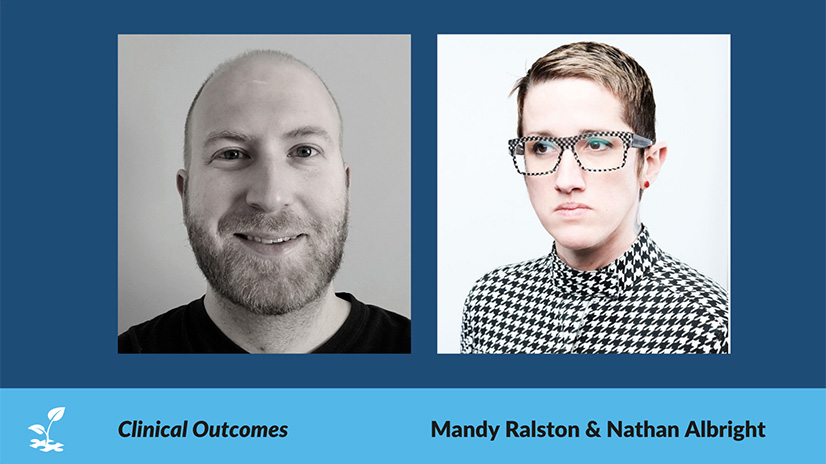
Hosted by Mandy Ralston, Nathan Albright
March 20, 2024

Listen now:

or listen on your preferred platform:

Episode Description

Welcome to the pod Mandy Ralston and Nathan Albright of The Cedar Group! Our first working title for this episode was “Outcomes Shmoutcomes,” but Mandy, Nathan, and Tim dive deep into discussing the significance of addressing the important yet elusive topic of clinical outcomes, why clinicians shouldn’t be afraid to ask about them, and how they are ultimately different for each family, and how data can speak to the positive effects on quality of life.

Full transcript

0:09 Tim Crilly: Hello and welcome to ABA Unfiltered, and I’m your host, Tim Crilly. Today we are joined by two of my uh work BCBA cousins. Uh they are um joining us from the Cedar Group today, uh Nathan Albright and Mandy Ralston sometimes goes by Amanda. I forgot to ask pregame what she prefers, but I’m going with Mandy because if I try to do Amanda, it’ll never work. So today we’re we’re here to talk about um outcomes. And when I threw out the idea of this topic, with the the working title of the podcast was going to be outcome, shmout comes. And maybe that’ll get changed in the the post-game process, but it’s a topic that is uh a giant puzzle. It’s something that we’ve been talking about as an industry for a very long time. And it’s not really anything that I’ve been able to put my finger on. Uh, I’ve had a chance to listen to these two folks talk about it at a recent conference we had with a bunch of us internally and some external folks, and they have a lot of great ideas about it. So I’m really excited to hear their their thoughts on outcomes and what we as an industry can be doing to really move that that conversation forward. So before we jump in, I’d like uh to take a moment for you guys to introduce yourself. So, Mandy, I’ve known you the longest. Why don’t you you kick it off? Tell us a little bit about who you are, um how you got here, and what your role at the uh Cedar Group is.
1:40 Mandy Ralston: Hey, thanks, Tim. Um, I’m Mandy Ralston. I have been uh board certified in one version or another since night or excuse me, uh since 2001. So I was originally a BCaBA uh and then uh upped my my game to a BCBA later on in my career. So I’m a recovering entrepreneur. Uh I was one of the acquisitions from BlueSprig in 2019, um, was really, really happy to find my family in that organization, and then was later given the opportunity to move to the Cedar Group, which is uh the sort of technological arm of applied behavior analysis and and the family of uh the different providers uh through BlueSprig and some of the other acquisitions that we’ve had. So um my current title is director of clinical intelligence, uh, which sounds way cooler than it actually is. Uh but yeah, uh we are a small but mighty team of four right now over at the Cedar Group and uh have really hit the ground running with big ideas and big hopes to make big impact in the industry and really elevate the outcomes uh for the industry of ABA.
2:50 Tim Crilly: Okay, we’ll get there. Hold on. We’re gonna get to that. Uh Nathan, a little bit about you, buddy. Because you I I just met recently, so this will be new information to me as well.
3:00 Nathan Albright: Yeah, I’m Nathan Albright. Um, I have not been practicing as a BCBA nearly as long as Mandy. I’m about eight years in myself. Um so my my background kind of stemmed from education. So I was in the field of education and special education prior to you know finding this world of ABA and really took it to um you know looking for opportunities where ABA wasn’t used in a conventional sense. So my my first position wasn’t in a clinic setting or working with individuals with autism. I was on a crisis management team for the Department of Human Services in Illinois. So it was um everything under the umbrella of developmental disabilities and really got my feet wet to just where, you know, where opportunities are going to be, but also all these different perspectives where we don’t necessarily get to see on a day-to-day basis. And you know, going from there to doing some regional work, I’ve had kind of my hand in regional operations and behavior management, organizational behavior management for about six states worth of centers now. And that got me into meeting Dr. Cameron, which then got me into understanding what the Cedar Group was all about. And you know, a little while back I got a friendly call from Dr. Cameron, and I wasn’t too far behind Mandy in joining the uh the small but mighty Cedar Group team.
4:25 Tim Crilly: Uh that’s that’s great. You know, and I I think you know Michael Cameron uh was a guest in in season one, and you know, he has he has quite an influence over uh a large group of folks, and it’s great to see a lot of us being able to come together. So, you know, I joke that you guys are my my work cousins. Uh can you give just a little tiny little piece of uh really what the the overall uh impact that the Cedar Group has within the BlueSprig family, as well as how it is separate at the same time and what it’s doing, you know, sort of as an outside influencer as well, uh, before we really jump into it.
5:06 Nathan Albright: Mandy, you want to start or do you want me to go?
5:08 Mandy Ralston: Go ahead. I’ll let you try it out.
5:11 Nathan Albright: All right, I’ll take a stab at this. Um so Mandy’d referenced the Cedar Group being kind of like the technological arm of all of these acquisitions. And it’s not center-based, it’s not home-based. We don’t work directly with um families or clients. Um, we kind of look to find systems and technological support to make you know those circumstances um more available to families or um working with clinicians, making sure that the right decisions are being made at the right time. Um, you know, our field is relatively new, but the amount of BCBAs in the last several years is just skyrocketed. And I might butcher the percentage on here, but within the last couple of years, about 50% of everybody that is BCBA certified is still within their first two-year certification cycle. So, you know, coming out of school, obviously what I knew then versus what I know now is is vastly different. You know, so considering how quickly things are growing, you know, we really want to make sure, you know, in conjunction with the size of BlueSprig and FAC and a lot of organizations out there, we want to make sure that the clinical decisions that we’re making for some of these kids and these families early on are good decisions and that have evidence-based backing behind them. You know, and if Cedar Group can find a way to kind of bridge that gap with some of the technology that we have, um, you know, that’s the goal that we have is to make sure that we’re putting families, clients, clinicians in positions to succeed and feel supported when they’re making tough calls. Okay.
6:46 Tim Crilly: So, Mandy, I, you know, that that means basically a lot of different organizations might benefit from the tools. Can you maybe just describe that a little bit and then we can we can move on?
7:00 Mandy Ralston: Yeah, uh I think total uh board certified behavior analysts worldwide right now is probably in the neighborhood of 36,000 individuals. So if 50% of those individuals are less than two years old professionally, um we don’t have enough people with experience that have the ability to mentor that volume of individuals that are entering the field. And so what we’re trying to do, what we’re able to do at the Cedar Group is to design clinical decision models that will bring the resources, the literature, the best data that we have available about how to make clinical decisions and uh, you know, basically provide bumper rails for these kinds of decisions uh for young clinicians that may not have gotten the actual real world experience and can’t take up, you know, hours upon hours of their supervisors’ times to pick their brain about how’s the best way to deal with this particular clinical issue. Um so we’re really able to draw on the literature that’s available, look at the ethical uh considerations involved, and bring all of that data to the central question and help people make decisions that are really evidence-based.
8:09 Tim Crilly: That’s fantastic. And, you know, I think we we talked about it a little bit in a conversation we had last season around the whole concept of an internship model and how we really lack that in our in our industry as a whole at the moment. And people are getting hired left and right as soon as they pass the test and are just pushed out into the into the real world without, you know, and I think it’s a perfect way to describe it, without those guardrails, to not to really not have the the uh the mechanism in place to know if what they’re deciding to implement is the thing they should be implementing. And by the time you figure out, wow, that wasn’t the right way to go, how much time is lost or how much damage could have been, you know, trying to put upon that that family or that individual in the meanwhile.
8:56 Mandy Ralston: So yeah, I mean, I think uh the industry’s got an issue with getting all these young professionals coming out of the gate. You know, they’ve demonstrated the minimum level of competence in order to become certified. They pass the test, right? Um, and that goes for most medical fields. Exactly. That goes for most medical fields, right? It’s a C equals MD, right? Even if you got a C in your class, you still could be a medical professional.
9:21 Tim Crilly: The guy that graduates last still practicing medicine. Yes. Exactly.
9:25 Mandy Ralston: So, you know, it you’ve got young professionals coming into the field, and these are high-stakes issues. I mean, these are children uh and families that have significant problem behavior. You’re you’re capturing a window of time potentially with early intervention that you have only so much um room to really make an impact before that person gets into a school age situation, so on and so forth. So it’s really high stakes uh play that we’re working with here. And from the from the young professional side too, it’s like, well, my supervisor has thrust me into these things, and I I need to basically acquiesce to the idea that I know what I’m doing. And so I may not want to ask certain questions. And if I’m given these types of tools that are uh digital and I can use on my computer, I I don’t really have to worry about feeling embarrassed that I’m asking a question that somebody has purported that I should already know the answer to. And that’s just not realistic for all the information that’s out there right now.
10:22 Tim Crilly: Yeah. Nathan, any uh follow-up on that?
10:26 Nathan Albright: I I wouldn’t disagree. I mean, Mandy mentioned early intervention as that window of opportunity. Um, you know, what I what I appreciate about you know the field of ABA is our opportunity to support in a in a way that you know there are right now no other no other fields that are supporting the way that we can and we do, um, especially with the science behind what we have over the course of you know Skinner to now. I don’t want to take that for granted. And I don’t want you know new clinicians coming into the field to forget how impactful that time can potentially be. So I I want us to be in a position where we can set a high bar that does at you know at face value feel and look scary. Um, but in saying you’re gonna make it, you’re gonna do the right thing, you’re gonna make the right decisions because you’ve got these things now available to you. You’re like when we were coming out of school, I didn’t have a system. I had a I had a white book that I lived by religiously to learn my fundamental values. I had an ethics book, and then I had this kid that had several diagnoses with medical comorbidities and medications that I didn’t know half-lives or dosages for, and a neurologist that they see twice a year. And now this white book means something, but I don’t know how it fits into everything that I’m gonna be doing and programming for on a regular basis. So to compartmentalize what I know and to address that alongside all of the other life issues and barriers that these families are going through on a regular basis is tough for anybody, no matter how long you’ve been in the field for.
12:01 Mandy Ralston: Well, and we we we need all these young professionals. There’s a reason that this field is growing exponentially, and it’s because of the rate of autism, right? The families, the individuals with autism, they need our services and we need more help. Um, but it’s incumbent upon those of us that have been in the field for a while to design uh, you know, be the architects of certain systems that’s going to help support these individuals to be as successful as they possibly can be.
12:28 Tim Crilly: Absolutely. You know, uh when I first started thinking about this topic, I really I you know, you think about all the the shareholders we have in this. You have obviously the actual client themselves, you have the family unit, you have the the payers, but you also have the clinicians. And I I kind of, you know, they’re often the forgotten element when we when we think about these things. And you guys just brought up a lot of great points about how their inability to be 100% or even 80% sure of what they’re doing is the right thing to be doing, how that impacts everybody else on that list. So uh it’s it’s really something that if those guardrails and those practices and those those procedures can be outlined and can be totally data-driven, what an impact that has on that clinician’s ability to then impact those other groups of stakeholders in this in this process.
13:23 Mandy Ralston: So yeah, and it’s it’s it’s not it’s it’s got multiple layers in it. Actually, we’re talking about the field of applied behavior analysis, you know, to Nathan’s point, it’s like there’s a lot of people who’ve done a lot of work before us to allow us to be in a position to have this as a pro profession in the first place. Um, and so we have a duty to uh those that came before us to to really have the data that shows that we’re being effective.
13:47 Tim Crilly: Sure. And now we have technology and and all these things, and other other healthcare you know uh sectors are embracing those sorts of things. So, you know, why shouldn’t we be involved in that? Okay, so obviously it’s all solved. You guys are set, ready to go. So I really thank you for joining us. And that was uh a little bit shorter than I had planned. No, so why is this so hard? Why is the concept of outcomes? It’s almost like a secret word you have to whisper at like a speakeasy or like the you know the door slides open with a little people. We’ve been at this a while. I’ve been hearing about it since basically the the day I step foot in the industry. What why is the concept of having concrete outcomes a such a challenge? And what are you guys thinking about and how are you thinking about it? And where do we take it to to make it less of a challenge and really be able to put concrete definitions around it?
14:47 Nathan Albright: Um there’s two big variables that come to mind right away for me. It’s you know, the the concept of ABA as a science, right? As single case design, right? Um, in conjunction with the diagnosis of autism and some of the unknowns with that. But, you know, there’s that, what’s that famous saying? If you’ve you met an individual with autism, you’ve met one individual with autism. So the individualization of the diagnosis itself, coupled with single case design science behind ABA, makes for a very unique situation, right? I know. So I’ve got a lot of family that’s in you know the medical field, it’s very different there in comparison to this look at every situation as an individual way. So when we’re talking about outcomes and we’re talking about every case that I have as a clinician being different from each other, those don’t really go well together, you know, water and oil type of conversation there. So trying to find a way to allow my clinicians the creativity to find some avenues for success for each individual client while building and collecting data in an accurate and reliable way to make sure that we can use that at a higher level to make macro level changes. Um, you know, trying to do both of those things with the same types of data make for a really difficult conversation and a solution.
16:19 Mandy Ralston: Yeah, I mean, we’ve talked um a lot about the notion that I think uh the heterogeneous um nature of autism itself, the the concept of neurodiversity, um, the no the concept that there is no such thing as normal, there is only common and rare, right? Um really being able to talk about outcomes is being able to talk about the best possible outcome within that individual. And that is very nuanced. Um and that’s not just at an individual level, that’s also at a family level, right? Uh culturally, what do people value about their lives and how they want to interact with individuals and what level of independence and what is actually happiness? Those are outcomes, right? But how to quantify those has been sort of the existential crisis that ABA has been in, right? So we’ve got lots of different tools. Obviously, we’re we’re completely buried in data, but the data isn’t telling the story that we needed to tell. Like we’ve got this uh, you know, oral history of look what ABA has done to my sh done for my child or my family, but we don’t necessarily have data that is walking along that same path. And so we’ve got to really look at how do we get from that macro level, what is the impact of all the intervention that we’re doing to change the core diagnostic properties of an autism diagnosis down to how does that relate to the programs that we’ve been working on for this past week, where it might be something as simple as can you sit in a chair for two minutes and attend to somebody that’s giving instruction, right? Um, so you know, a lot of the conversation that we’re having in the Cedar Group revolves around quality of life and just trying to determine is there a way to start this process of treatment by really talking to the caregivers and the client when possible and ask them how do these areas affect your quality of life, and knowing that we can pick out the things that are actually going to impact the family and the client the most to bring down their stress levels, to increase independence, and to be happier.
18:29 Tim Crilly: That’s that’s the really the hard part. It it’s easy to say, like, oh, you know, look at all these things reduced or these things increased. Uh but that doesn’t always tell the story. So from a from a parent standpoint, uh what do you guys see as as their role in this process and and what can they be doing to um help maybe sort of set the standard of of what it should be? And does that mean it’s this is what’s I need in my life, or should I expect something more uh than than is than is possible? Like where do we where do we start that conversation and how does it work with the family unit?
19:18 Nathan Albright: It depends, probably. Um, I’ve met a lot of families at intake when we’ve done initial assessments that, you know, and you ask them about their experience or history with ABA in general, a lot of them are there because, you know, their referring physician recommended that this was a treatment that they would, you know, find beneficial. And this is the first time that they’re learning about something. So a lot of times where we’re at as clinicians is not the same starting point as families whatsoever. And I think that’s why, you know, at the Cedar Group, when we’re talking about these macro changes and what outcomes really should look like, it is very family focused. And that’s why quality of life is a vernacular that we use probably on a daily basis in terms of how are we going to be measuring these things, right? It’s not the number of mands or requests a client does per day. It’s not what their scores look like on a skills assessment. You know, those are great, but you know, at some point I’m never gonna see you again, right? Our time at clinical therapy is over. And my job is to make sure that when that time comes, you’re on the right track for habituation and autonomy and family success and happiness, and your stress index levels are down. All of those tight of quality of life pieces that a clinician we don’t necessarily address on a regular basis because you know, traditionally a BCBA is building their program off of skills assessments that we’re more familiar with. We really want to shift that focus to say if is what I’m doing inside my center or at my home therapy, is this valuable to the client? And then is it valuable to the caregivers? And is it valuable to their home environment or community living arrangements? Those are important pieces that I feel like, you know, as a clinician, I should be trying to remember on a day-to-day basis when I’m making my clinically based decisions.
21:09 Mandy Ralston: Yeah, we we talked during the summit about the the notion of a life cycle of a goal or the pathway of a goal, you know, and understanding how being able to sit quietly for 30 seconds might relate to something like being independent in toilet training, right? Um, that on its own, sit still for 30 seconds doesn’t look like a particularly useful skill. But when you understand that that’s a prerequisite to all the other different types of components related to being able to go into a public restroom and sit still on the toilet by yourself, it’s a it’s a pretty big deal. So to your question about you know families involvement, it’s it’s these these micro level goals, excuse me, these micro level goals and these macro level quality of life um outcomes. Have a cascading and a foundational relationship, right? The macro flows down all the way down to the micro level goal that we’re working on. Likewise, the relationship between families and clinicians and what we’re doing in treatment for a client that also affects the family, that’s a very synergistic and symbiotic relationship. If the more we have involvement with the family and we can align ourselves with their values and understand what’s going to be important to them as an outcome, the more they’re going to have buy-in, they’re going to want to actually participate in what we’re doing and follow through.
22:35 Tim Crilly: So I love that. You know, you talk about micro success. So the toileting, the independence, all those things. Those mean the world to a family. So all those little micro things that improve that overall quality of life. How do you take those micro successes and make them the macro expectation when you’re trying to convince health plans or sort of funding sources? You guys might not have the answer to this because it’s a tough one. But how do you take, how do you take the micro success and turn it into the macro expectation to then ensure that these services remain available? Part two. And when you don’t have necessarily great alignment as an industry amongst the clinical world as it relates to these sort of things, it does that add an extra obstacle to the challenge of communicating with a health plan to say, no, you got to give it this amount of time. You have to do these things because you’re going to see the success when other people are maybe telling a different narrative. Have you guys kind of kind of started to peek into that yet? Or is that down the road a little bit? And if it is, great, you know, we can talk about it in a later episode.
23:55 Mandy Ralston: Well, I mean, I think we’re we’re working on building the technology to give us the real-time feedback on how our programs are going in the field and giving clinicians dashboards to look at and where they instantly understand the trend of their data again on that micro level. But what we should then be able to do with that instant information is look at longer-term assessments, skill assessments, the standardized assessments such as the ADOS or the ADI-R, and be able to say, I can now predict that if somebody’s rate of learning is this or their percentage of non-overlapping data points is this, that it then will impact this particular type of individual in this way. And I expect to see their skill assessment change to this degree in six months, 12 months, two years, so on and so forth. So I think we’re starting to peel back the layers to understand how we’re going to be able to use our day-to-day data to better predict what types of trajectory we’re going to have with the individuals in treatment.
25:03 Tim Crilly: Wow. Okay. That actually makes a lot of sense, even though uh it sounds really hard.
25:09 Nathan Albright: You know, it’s it’s an interesting position to be in, especially uh at the Cedar Group, because we’re kind of at a unique place where we, you know, we can see a little bit behind the scenes with the providers that are supported, um, that have been using these models for two plus years in some instances. And now being able to kind of review and from our unique perspectives of having that clinical background to say, you know, where you know, where’s the gap? Where’s the bridge the gap? And I think Cedar Group can do uh a couple of things with with our position. I think one of those things is perspective. Um you know, when when I’m a clinician, I’m not writing this goal just to write the next goal, right? And we want to make sure that our clinicians are making good clinically based decisions with outcomes in mind at the start and not at the end when they’re reviewing things. So purpose to perspective, I think, is really important. And, you know, if I’m writing my treatment plan, I do have to remember that I need to be making clinical decisions that not only have an outcome that’s valuable for the client, um, that I need to be thinking of that outcome even before I’m creating the goal in the first place, right? I should be able to be asked, what does this goal ultimately mean for the person that you’re supporting? If I’m writing a goal and I don’t have that answer, it’s not a good goal. And I should be able to put that into a treatment plan and be able to explain that to a provider. And I think that’s what providers are looking for, is a little consistency from the field to say, what does all this actually mean in terms of clinical support and success for the future of this family? Um, and I think if you can do that, there’s a bridge the gap moment there that I think the technology that we are building is going to assist in doing. Um I really do feel confident with that.
27:02 Mandy Ralston: Yeah, what’s uh what’s um our colleague’s great quote, Nathan? Dr. Kristen Bayro says that uh the road to hell is paved with data that you never look at.
27:13 Tim Crilly: That’s the nerdiest thing I’ve ever heard, but okay. And I would say that to her face, so don’t worry. Um, you know, I I really appreciate you guys taking a couple minutes out of your day to to chat about this. This is this is something that I, you know, we talked about at the beginning. It’s it’s been out there, it’s just been floating around and it’s you know the great unknown. So I have such confidence in your guys’ ability after sitting through that three-day um summit and maybe understanding about 12% of what was being said in the room. It’s just some really heavy thinking, a lot of heavy lifting, uh, but a lot of talented people working on on this project. So I can’t wait to see where it goes and and the impact that it has on the industry. And when you guys start making the rounds and presenting on certain things, it’s gonna be fascinating to sit in the back and and you know, hoot and holler for you. So I really appreciate you coming on. Uh, before we go, I do have one question uh that we ask all our guests. Um, and I want you to hear it for the first time individually. So, Mandy, since you’re wearing a visible uh headset, I’d like you to take it off. I’ll give you a thumbs up when we’re ready because I don’t trust Nathan to not cheat. So I’m gonna have him go first. Okay, thanks. Okay, so Nathan, this is um it’s a it’s a yes or no question, and then I need an operational definition to support your answer. Okay. Is cereal soup. He has a pained look on his face at the moment for those of you at home.
28:53 Nathan Albright: Gosh, I uh I need to give a little bit of a backstory before I answer this because I love it. Last week I I just had these same, I just had these same questions, not this one. This was never been posed to me. I asked my wife if a hot dog is a taco.
29:12 Tim Crilly: Okay, I’ve heard that one. Yeah.
29:14 Nathan Albright: And we we got into that. Um, and I never got these, the cereal, the soup. You know, I can certainly see the side of things because you know, you’ve got that broth, milk, right? With you know, components and ingredients inside of it. You know, I don’t know if I would write a definition for vegetable soup any different than I would for cereal. Gosh, you know, just because I felt so strongly about the taco hot dog thing, yeah. I’m gonna say I’m gonna say yes because I’m gonna write a definition for what soup is and for what cereal is, they’re probably not that far off. Okay. Um, so I’m gonna say reluctantly yes. Okay, fair enough. Um, but if you give me some time to learn a little bit more about it, I’m probably gonna be a huge advocate for the yes answer.
30:03 Tim Crilly: Okay, fair enough. Well, by the end of season two, we’ll have it completely, completely uh answered. So you’ll be you’ll be either in the winning column or the the losing column.
30:13 Nathan Albright: Like you can even go into like is is steak a salad, right? You like all of those types of things. You bring me back on for a whole podcast of that. Okay, fine. We’ll have you on every season. Okay, all right.
30:24 Tim Crilly: We’ll have you every season. Okay, Mandy looks bored. Okay, she’s coming back. And this is fascinating for the listeners at home.
30:32 Mandy Ralston: All right, I’m worried.
30:34 Tim Crilly: Okay. Um, so it’s a yes or no question, and I need an operational definition to support your answer. Okay. Is cereal soup? Here’s an answer from ultimately.
30:51 Mandy Ralston: What was that?
30:52 Tim Crilly: Uh Siri tried to answer the question for us on my phone. Hilarious.
30:57 Mandy Ralston: Okay. Is cereal soup? No. Um you have an operational definition of soup?
31:10 Tim Crilly: Why? No, just why it’s not soup.
31:12 Mandy Ralston: Why is it not? What is my argument to why it’s not soup?
31:15 Tim Crilly: Okay. Yes, basically.
31:16 Mandy Ralston: Um well, milk is a single ingredient of its own. Uh that that’s one supposition, right? Uh, and so it’s not a broth. A broth would typically be multiple liquid elements that are put together as a base. Um, and so you’re adding something uh crunchy to a single food, milk. Um, so that would disqualify it from soup. Uh, you know, obviously vichyssoise or um what’s the other chilled soup, gazpacho, those are cold and yet they’re still soups. Uh they’re multiple ingredients. But again, I think uh the the base for each of them is is multiple. And then of course you can also add oyster crackers and whatnot, a crunchy substance to a soup such as a chowder. Um, but again, those are those are multiple uh ingredient base items underneath.
32:11 Tim Crilly: So that’s what I’m doing. So it’s a it’s a broth milk situation.
32:14 Mandy Ralston: It’s a broth milk situation.
32:16 Tim Crilly: You’re making me change my answer. No, you’re not allowed. You’re not allowed. You’re gonna have to talk all you’re gonna have to talk offline about it.
32:22 Mandy Ralston: Okay, all right.
32:24 Nathan Albright: You’re making me rethink my answer now.
32:26 Mandy Ralston: Yeah, because it’s it’s like if I add celery to a base of ketchup, is that soup? Right?
32:37 Tim Crilly: So if it’s a just it’s not a good soup, but maybe it’s definitely not a good soup, yeah.
32:42 Mandy Ralston: But yeah, it’s just a single ingredient as a base that then gets something else added to it. That’s it’s like adding crackers to water or adding crackers to orange juice, that’s not soup.
32:53 Nathan Albright: Okay, probably. But then your answer is how you probably depends on how you define cereal, right? If you’re if you’re identifying cereal as you know, the box of stuff in it, or cereal as the meal cereal, that’s right.
33:07 Tim Crilly: Combination of things, okay. So if if in your in that definition, if a box of cereal came with milk already in it and you poured it into a bowl, that’s more likely to be a soup, like getting a can of soup out of the uh out of the pantry.
33:23 Nathan Albright: You know, we make we make these decision models and coding and having all of these outcome conversations. And honestly, this might be the hardest question I’ve been asked in the last year.
33:34 Mandy Ralston: And I think we’re definitely gonna make this decision model.
33:37 Tim Crilly: Okay, so I broke the secret. Okay, well, hey guys, I really appreciate you coming on, and I really hope to have you guys back. It was a lot of fun chatting. Um, my brain hurts a little bit, and that’s always that’s always a good sign that we talked about some good stuff. So I’d like to thank everybody for taking a couple minutes out of their day to join us on ABA Unfiltered. Please join us again in the future and have uh a great day.
34:03 Mandy Ralston: It’s been a great pleasure, Tim. Thank you so much.
34:06 Tim Crilly: Thanks, guys.

Find a center near you.