Full transcript
0:09 Tim Crilly:
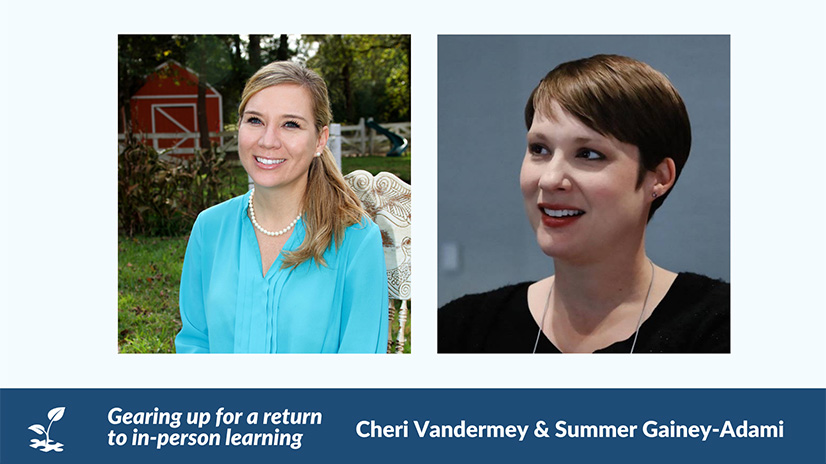
Hello and welcome back to ABA Unfiltered. I’m your host, Tim Crilly, and today we are joined by Dr. Summer Atomy and Sherry Vandermey. Sherry is our first outside return guest. So, Sherry, for whatever it’s worth, we had you back. I don’t know if that’s a good thing or a bad thing for you, but it’s a very good thing for us. Some of you may remember back in season one, we had a chance to talk to Summer and Sherry about getting back to school and what that was going to mean in a in a post-pandemic world. But you know, in actuality, we were still very much living it and unfortunately still feeling the lingering effects of it today as we speak. And we had a really good opportunity to talk about the challenges that you know children not back at school that are on IEPs and really what that means for their overall programming and you know the sort of the process for them within that school, non-school setting. So today we’re really excited to just chat a little bit about that, what it’s been like, you know, what Sherry has seen in her daily life as a BCBA for a school district out here in California, as well as what you know, Summer has been able to sort of pick up on as she’s been traveling around Texas doing her thing and uh really interacting with a lot of the BlueSprig families who may be receiving services but aren’t quite back into their normal, the normal swing of things at school. So both of you, thank you so much for joining us again. Um I will ask you to do a just a brief intro for anyone who might be tuning in for the first time and get a chance to to know who you are and and what you’re all about. So, Sherry, why don’t you kick it off?
1:47 Sherry Vandermey:
All right, thank you. Thank you for having me back. I’m very excited to be here. Um, so as I mentioned in season one, I actually started out as a special education teacher. So I have a background in education. I definitely view behavior and some of the challenges from a very kind of educator-based view, which I think has been helpful to me in my career as a behavior analyst. My most of my time was spent working with students with emotional and behavioral disorders. I worked in non-public schools with students with really severe problem behaviors, as well as the public school system. And so I think I’ve learned a lot from that and hopefully bring some of that to my approach working in public schools now. And I truly love my job. I think that schools are an exciting, fun place to work. And if you’ve never worked in a school before as a behavior analyst, I think you need to go out and try it out because it’s it’s certainly something that will challenge you and stretch you in ways you have never imagined. So thank you again for having me here.
2:45 Tim Crilly:
Sure. And those of you who are just listening, I can actually see Sherry and you can literally see the joy in her face talking about going to work for a school. I would say no, come work for an ABA company like like us. But if you’re not gonna give the school thing a try, I I’ll I’ll I’ll admit that. So, Summer, go ahead. Could you just give us a little piece of of you? I know you’ve you’ve been on a few times, and you know, people people already know you out there, but it’s always good for any first time, first-time listeners.
3:14 Dr. Summer Atomy:
Yeah, absolutely. First, thank you so much, Sherry, for coming back. This is an awesome opportunity to get to chat with you again and see what changes are in place and what developments have been made. Um, I am Summer Atomy. I am the VP for clinical standards for BlueSprig Pediatrics. And under clinical standards, I am responsible for the oversight of outcomes for our company as well as research initiatives and also family guidance. So all of those things fall underneath clinical standards, and our ultimate goal is to get kids into a position where they’re going back to school, they’re going back to the next most appropriate environment. And so it’s really great to kind of get an idea of what’s going on within school districts across the country. Um, but I work here in Texas, but I do pay very close attention to what’s going on, um, like I say, in all of the states that BlueSprig serves.
4:08 Tim Crilly:
Sure. Thank you. Uh Summer, I I think every time you’ve been on, you’ve had a different uh role. I think you you you you comp you accomplished one thing and they’ve moved you into something new. So uh it’s the ever the ever-changing target of of your skill set. It’s it’s been fun to watch.
4:26 Dr. Summer Atomy:
Yeah, yeah, it’s been it’s actually been really cool to see uh my role develop and uh to kind of as we grow as a company see what that looks like um from month to month, week to week. Sometimes it feels like day to day. Um but at any rate, I I tend to like to be a chameleon and um like the opportunity to have um free rein in the company.
4:45 Tim Crilly:
Sure. I mean you’re you’re one of the the charter members, and you know, I think at the beginning everyone got to wear a lot of hats. And you know, you and me uh have maybe been the biggest beneficiaries of that, sort of getting a taste of a lot of things and really having that ability to settle in and and find where your passion truly gets to come alive. So I think uh that the being a part of that caregiver uh training or you know, caregiver guidance group is it’s gonna be such a great spot for you to be able to impart your wisdom on an area of programming that oftentimes gets overlooked. And I know from an outcomes measure that focus on that that family unit and the caregivers is going to be a really, really big intersection for you. So the work you guys are gonna be doing is gonna be really, really fun to see what what comes out of that. So um, you know, thanks for for doing everything that you do. And I’ll I’ll stop gushing and we can move on a little bit.
5:40 Dr. Summer Atomy:
So no, go on.
5:41 Tim Crilly:
Okay, okay, but towards the end, I’ll think of some other things. Uh so Sherry, you know, when when we last talked, we were we were anxious about what it was gonna look like. How is it gonna work? So what did it look like and how’s it working?
5:57 Sherry Vandermey:
Well, um, yeah, I I don’t know. I I think it looks very different depending on kind of what district you are involved in. Um, I think one of the hugest changes for me, and I’m part of a collaborative group of BCBAs out here too, that from all different districts, we get together and try and just help each other out. And a big piece is the piece of parental support that has been a constant theme. I feel like you know, school districts are always trying to draw the line in the sand between educationally related services and home services, right? We’re very clear on that boundary, I think. And we’re always saying, oh, that’s an educationally related service, that’s something that we can do. But the other things, for example, get support from your ABA provider, from your regional center if you have one, from your insurance. And I feel like that line has gotten a little bit blurred. We are providing more and more support to parents. The person implementing the behavior plan frequently is the parent or the daycare provider or the babysitter or the grandma or the nana or whoever’s home. And um, and so I think that’s been a big change. We’ve gone from saying, no, if it’s a parental thing, that’s all on you, to okay, well, now you’re the provider. Now you’re the one who needs the support. Now I’m gonna work collaboratively with you in teaching you how to do these things and trying to support you. So I think that’s been a the probably the biggest change for very specifically like school-based behavior analysts is to say, okay, we can’t have that line anymore. I spend most of my time probably working with parents and other providers in the home on teaching them what to do, even if it’s making online tutorials on you know, creating structure and routine or building motivation using token boards or first-thens, or one-on-one with them. And that’s been, for me, I think the biggest change and something that I’m certainly hearing as a really common theme for our school-based behavior analysts.
7:49 Tim Crilly:
What how’s the level of engagement? Do you feel that you know most of the your families are are doing everything they can to make sure that you know that online learning is occurring, or is it a hit or miss depending on on some of the you know the family dynamics, perhaps?
8:07 Sherry Vandermey:
Yeah, I think it’s definitely a hit or miss. I think that you know, a big part of our job is to get those students engaged. But sometimes, again, because we have kind of a clear line, I think sometimes those walls are coming down and we’re starting to see a little bit more into the families. And so we can start to see why, for example, they can’t get their students to attend. Um, a colleague of mine just told me that she was trying to work on getting a student to attend, a young guy, and uh she called his dad and said, We really need him here. How can I support you? I’m here for you. And the dad just pretty much went off on her, yelling, screaming. Um, she was shocked by his response, and she just kind of let him vent and he burst into tears. And he said, I’m so sorry, but I haven’t been paying rent all of these months. I’ve been paying a teeny bit, but now I don’t have any money. And I’m worried that me and my four other children, so we had five kids, four that she didn’t even know about, we’re gonna end up homeless on the street. So I don’t care about my kid attending school. That’s just not a priority to me. And I think that’s so eye-opening for us, again, school-based professionals, where we create that line to say, man, there’s so much out there that we don’t know about, and as a behavior analyst, so many other motivating operations and things going on and environmental influences that we don’t even know about that are impacting the behavior of the students we work with.
9:32 Tim Crilly:
Yeah, you know, that’s that’s you know, you there’s so many things to think about that just you don’t want to, but they’re out there. You know, in summer we had a recently a sort of an all-company plus some outside uh voices to talk about outcomes and that parental um I forget how we were framing it, but sort of like the overall mentality that supporting pathway, that um, you know, really breaking down some of the barriers that our families are facing right now.
10:00 Dr. Summer Atomy:
Um it’s interesting that you bring up that some of the lines are becoming a bit blurred, right? I mean, they are for us as professionals as well. Um, for a large part of my career, I provided only in-home services. And when you’re in a family’s home and you’re with them from the for the day to day, you’re with them for that moment. They’re, you know, dad’s coming home, he’s lost his job, the other kids are there, you know, there’s stressors that just simply can’t be overlooked. Um, there are things going on with the child, and it’s really where you have that human connection start to happen with the families that you work with. And so you bring up some really interesting points. Um, as it relates to your experience with families getting into the swing of this new normal, um, what would you say have been some of the greatest, I guess, support for families in this space so that their children can be even more successful with this distance learning? Um, because I I’m seeing both, I’m seeing both ends of the spectrum. I’m seeing some kids that originally really weren’t able to attend but are excelling now, and then some of the novelty wore off. And so it’s becoming more challenging to keep them engaged. So, what types of supports have you seen, Sherry, for teachers that you work with be successful for our families?
11:21 Sherry Vandermey:
I think the biggest thing is just creating that structure, creating that space and setting up the environment. I think parents don’t even they don’t have the same lens as we do as behavior analysts to look at all the potential distractors in the environment or how to set things up, for example, to decrease the response effort of accessing the textbooks and so forth. And so that’s been something I’ve really talked to a lot of our teachers about. If you’re having students have difficulty showing up on time, if they can never find their materials, those kind of things, those are the kind of quick fixes that we can provide a parent that goes a really long way. We can say, can you show us your environment? Can you talk to us about how you have the desk set up, where the desk is, um, and and what are the other distractions in place? And if we can make some of those tweaks sometimes, that greatly increases our the focus that we see in our students. Um, it decreases the response effort that they have to start. Even things like the morning routine. I mean, that’s one I talk to parents a lot about. What does the morning routine look like? If your child is always coming late to class, there’s a reason for that. Let’s tighten up that morning routine, let’s get that a little bit firmer. And those might be things that maybe an in-home ABA agency typically might work on. Um, out here, right now, we still have a lot of ABA agencies that are not providing face-to-face support. And um, you know, just again due to due to protective issues and so forth. And so we are kind of filling in some of those things as well. Um, I I I will say too, you know, and just reflecting on this, the idea of those unconditioned motivating operations, things like sleep, food, exercise, or lack thereof, those things have such a huge impact on our students’ performance. And those have been kind of thrown, right? I’m even looking at things like the use of exercise our kids on a daily basis on campus are running all over the place and they’re playing. Now they’re a lot more sedentary. What does that do? And how does that impact their sleep? And how does then sleep become an unconditioned motivating operation for specific behaviors? And it’s it’s definitely a I don’t know, you have to look at the entire environment and look at all these pieces. And so I think creating that structure and that routine for the parents has been something that’s been really important.
13:33 Tim Crilly:
Sure, and the stress that, you know, the the father that you brought up, just the environmental stress of the family and the you know, maybe it’s not directly influencing uh that child, but the overall, you know, environment of the home can create uh, you know, sort of an adverse learning environment as as well for them. So that’s you know, that just to be able to get them to sit and and and and attend, okay, that’s a challenge of and in itself, but you know, where’s their focus at, or or you know, did they sleep enough? It’s all all things that you you kind of forget about, you know, and this could be more you can have a bad day here and there, but it can start to stack up when you you lose the routine of coming to school and doing all the things that you normally do. And I think a lot of people’s bedtimes have sort of, I know it’s silly to say, but they’ve really been blurred throughout this because you don’t have, you know, you just sort of, oh yeah, we gotta get up and you just kind of roll out of bed and you sit at a computer and you’re ready to go. So you really do start to lose some of those fundamental routines that that keep you in a in a positive sort of momentum throughout your week.
14:40 Dr. Summer Atomy:
Yeah, it’s like having a newborn again, right? Your base just kind of roll right into the next one.
14:45 Sherry Vandermey:
It’s like Las Vegas, where you can’t tell when it’s night or day.
14:48 Tim Crilly:
Exactly. All the clocks are missing, there’s no windows. Yeah, exactly.
14:54 Sherry Vandermey:
And but our we know that our students really need that structure, but sometimes our parents just don’t know how to implement that. And so, and so constantly just kind of going back to that. And and I think we’re gonna see that, you know, if if school districts are coming back as well, that’s gonna be an incredible transition for our students who right now are staying up super late and maybe they’re just logging in a little bit late because things are a little loosey-goosey. It’s just Zoom. Um, you know, they’re gonna have to be there on time now. And and what kind of havoc is that gonna wreak on the entire family, right?
15:25 Tim Crilly:
Sure. And being logged on doesn’t necessarily mean you’re engaged either. You know, I think we, you know, we were having a pregame chat, and producer Lucas brought up a story about a professor of his made everyone turn their cameras on, and one guy was at the gym, and that’s just the way it goes. You know, hey, I’m in class, you know, you didn’t tell me I had to do anything. And then summer, you you you were saying you you do the opposite. You you’re teaching a course and you don’t want to see what’s going on, you’d rather not know.
15:52 Dr. Summer Atomy:
I don’t, but I’ll tell you a funny story actually. Um, so the class that I’m teaching, it’s an elective outside of department elective. And these folks are going to go on to become psychologists and um other professionals that are related in our field, but not behavior analysts. And so what was interesting is I noticed, because I don’t have a requirement for video on, um, that when I’m gonna ask a question, there sometimes was a bit of um latency before there’s a response. And so I was like, you know what? I know how to decrease latency to responding. So each time there was a shortened latency, I took off some of the time at the end of the class. And so finally, there is no more latency to response because I let them in on my little secret. I said, I want to just tell you what I was doing with you guys, and I’m so sorry I didn’t obtain consent first, but I like for there to be dialogue back and forth, and I also don’t want to have a requirement to turn your camera on. And two, I feel like these are adults, this is their home space, and it feels a bit uh uneasy for me to make that requirement of another grown-up. So uh I let them in on the little secret, and they said, We we could tell that you know you’re waiting for a long period of time for you know for some type of interaction. And then exactly on those days where there’s an increased latency, we’re gonna we’re gonna stay that full three hours, you know, whether we’re gonna start talking about tiddly winks or what. But it at any rate, it’s but it’s those types of things, those teaching maneuvers, whenever you’re working with the classroom, what can you do um to get that engagement up? What can you figure out on your end as the instructor to increase motivation for participation in an activity? I guess a question that I have too, because um hopefully we have some parents listening and some teachers listening, um, from a creative standpoint. I know you were saying earlier about how the teachers are really, really ingenious at coming up with teaching strategies. What have you seen have been some of the most interesting or the most creative ways that your teachers are capturing student attention?
17:52 Sherry Vandermey:
Um I’ve seen really fun motivators happening. Like, you know, they’ll have the whole group, if people keep their camera on for X amount of days or X amount of sessions, they’ve been doing really fun things. I just saw this, I logged in and I didn’t really know it was going on because I just kind of pop into people’s Zoom and everyone had this like crazy hair and the teacher was all nuts, and you know, they had all this. And I was going, what is happening in here? Um, and then I realized, oh, this was this was one of their reinforcers. This is obviously something that was going on, and the kids were having an absolute blast. I’ve seen like Share Your Pet Day, I’ve seen um Outside Day, where the teacher encourages everyone, if they can, to go outside and have classes outside. And so they’re just trying to kind of use what they can. Um, I have another teacher who does themed breakout rooms as rewards. And so if specific students reach specific behavioral goals, they’re allowed to go into like a breakout room on Zoom and discuss, and she’ll set up different ones. Like one is like a Minecraft breakout room, and another one is this, and you kind of join in on the themes and you just get to talk and you get to show each other the Minecraft. Or um, and so I really think people are finding ways as best as possible to motivate um these students with what we have, right? Because we can’t actually be there, we can’t give them things tangibly. So, how can we find other ways to provide these things to them?
19:12 Tim Crilly:
Yeah, you know, it’s funny, my I have an 11-year-old, so he’s in sixth grade and they’re using some product. I, you know, I don’t uh, you know, that’s keeping them, you know, here’s where you click, here’s where you log in, and here’s all your assignments, and you know, and it’s like, wow, this is so much more like the real world and helpful, you know, sort of as a skill acquisition process of how to turn yourself into a more organized student. It’s like, why don’t we use those all the time? Like, why don’t we have, you know, so I guess the point is, what sort of uh benefits do you think we’re gonna be able to pull out of this from a learning standpoint? Like, what have we learned about ourselves as as educators or not, you know, sort of in the therapy realm, but also as just as students? Like what are we gonna pull out of that? And I’ll sort of look at both of you on that one because I don’t know.
20:06 Dr. Summer Atomy:
You know, I I would say some of the things that Sherry was mentioning earlier about this family connection piece. I know that, you know, one of our um biggest, biggest benefits from going through this pandemic is really getting to know our families, really getting to understand the needs of the family. And I would say that as a result of those types of relationships really building, we are changing our clinical approach in a lot of our areas. We really are deconstructing barriers that are in place for families so that we can write goals that truly are making an impact on the interactions that the family’s having with their child so that they’re safer, so that they’re more successful. And the safety piece has been massively huge given some of the reasons that we talked about before. But just to briefly touch on, our kids are at home and homes aren’t necessarily set up the same way schools are with multiple layers of protection before a child gets to the street. And mom or dad, just like all of us on this call, we’re all parents and we have to multitask at times. And you know, it the safety piece has been a huge initiative for us as well.
21:14 Sherry Vandermey:
I think, you know, as you were talking to, I was just thinking about, you know, again, building kind of that community um with our parents. And it just made me think of the word transparency. And I feel like this is something that sometimes is lacking in our school districts. We’re kind of like the people behind the curtains. Um, and they’re we’re kind of like, okay, you do your parenting, we’re gonna do our teaching, but we’re not necessarily gonna tell you exactly what it is. And if you want to come visit, you’re only gonna come visit for 15 minutes. And and there are very there are specific reasons for that. And I actually support a lot of those policies for a lot of different reasons. But but man, what are we hiding from? And now we can’t hide anymore, can we? I mean, these parents are seeing our teachers on a daily basis, they see even their profess their personal life and things going on, like they’re seeing. them at home. And so there’s, I think, a transparency that’s being built that I kind of like. You know, I like that that we’re we’re no longer two separate worlds. Like we’re kind of invading each other’s worlds. And I think hopefully it’s building a better understanding, Tim, if you’re saying what are we taking away from this, hopefully it’s building not only compassion on both sides parts, right? Because I think that everyone needs a little more compassion for what our parents go through, especially if they have students with um special needs. But you know just the just an understanding and an openness to to what everyone’s kind of dealing with. And so just kind of transparency, I think.
22:37 Tim Crilly:
I I I love that I I love the idea of assigning a level of um understanding compassion towards that that educator and to know that you know they’re do they’re really trying and this is really hard whether you’re talking about general ed you know seniors in high school down through kindergartners it’s not easy to try to completely redo the way you’ve done your job for X amount of years and for for parents to maybe put themselves a little bit more in in the shoes of those those teachers to say wow this is really hard. I don’t think I can do it or wow I’m trying to do it. I’m trying to do this math lesson at my kitchen table. Wow this is really hard I really I really hope that that families uh across the board are really able to take that away and and a newfound appreciation for just how hard it is to to be a teacher and to bring the level of energy and passion that you need to on a day in and day out basis. That that would be for me that would be a great great takeaway of and in itself and and maybe just a little bit less complaining about this that or the other that that goes on with with various teachers.
23:47 Sherry Vandermey:
So but I maybe won’t but I would also say as an educator less complaining about parents as well. Like I think I think it goes both ways, right?
23:54 Tim Crilly:
I think we each are well no one’s ever complained about me. So let’s just get that out there.
23:59 Sherry Vandermey:
If people do the thing is if only the parent would fill in the blank and we don’t know because we don’t have that transparency as to just how difficult this is for the parent and what the parent is dealing with. And so we place these demands on parents who are just expectations that we have on the parent that we don’t even discuss with them. You know, our ideas that they should if they only we have no idea that there’s all these other family members in the house that they’re dealing with poverty that they’re dealing with these things and and and so I I think it’s I think it kind of goes both ways. Like everyone should just maybe not complain and just reach out and I’ll sing kumbaya or something. I don’t know.
24:33 Dr. Summer Atomy:
But I think you’re right and I think that it affords us the opportunity to extend a lot more grace towards each other because just as you’re saying we’re developing more trust we’re getting to know each other in ways that we really hadn’t um signed up to get to know each other as closely as we are now but I think that um whenever you can see yourselves as more human and you can really understand what’s going on on the other side it it just it really gives you the opportunity to give someone a break and you know Tim like you’re saying just kind of even things out if you will and you know if you’re both being a bit vulnerable then that’s going to offer opportunities for trust for sure. I’ve seen that with a a lot of other parents that um that are my friends that are parents but then also with the families that we work with because again you’re um when you’re in someone’s home it’s not only you going into their space they’re going they’re watching your entire session exactly as you’re saying Sherry they know exactly how you’re working with their child and we have received so much more positive messaging from parents really really singing the praises of our folks that are on those front lines saying I’ve never seen someone so patient with my child whenever they were engaging in ex behavior and and we just love that as you know as clinicians that are helping to support our folks in the field.
25:52 Tim Crilly:
And I know this isn’t behind us yet and we are in some places getting closer and closer to it being you know all the way behind us you know so hopefully hopefully there’s some level of normalcy by the time the end of the school year rolls around because you know ultimately that social interaction and just getting back to what what we’re what we’re more accustomed to is really going to have a greater um impact on the overall mental health of of everybody in involved in these these conversations. Okay so cherry thank you so much and I know you know the the last time you were on we we talked about hot dogs and and sandwiches and and things so um we we are currently putting together the definitive research paper on on that so I don’t know Lucas has been calling around to mostly like uh you know cooking magazines to see if they’ll publish I don’t think there’s any respectable ABA journal that’s gonna gonna take our our research but we hope to have that out soon.
26:57 Sherry Vandermey:
But the this well I feel like it was a learn it was a learning experience for me I think I I listened to some other of your wonderful podcasts and um I heard a lot of different perspectives that really got me to think. So again you know just opening the dialogue about whether it is or isn’t a sandwich I think is is a worthy cause there I think it was a hot topic.
27:16 Tim Crilly:
I mean I may have lost a friendship or two and gained a friendship or two over that topic I have to battle lines were drawn yes so we’re drawn clearly so um summer since this is the first time you’re you’re on I’m gonna force you into this question as as well and since you’re wearing headphones and I can trust that you’re not um cheating I’m gonna ask you to take those off and I’ll let Sherry go go first and then we can then you can jump on and and Sherry you can listen to to summer it’s a it’s it’s okay it’s maybe a little less controversial but we’ll we’ll see.
27:55 Sherry Vandermey:
Okay.
27:56 Tim Crilly:
Go ahead and I’ll give you the thumbs up all right our headphones are off just to let the audience know they’re off okay so uh once again it’s a yes or no question and then just sort of a rationale as to why you chose either yes or no okay okay is cereal soup.
28:19 Sherry Vandermey:
No it is not soup because it is not prepared together with the liquid and the solid of like the crunchies and stuff.
28:28 Tim Crilly:
It’s not prepared together you actually just put two items together in soup they’ve already been put together and so if you’re eating it it’s already combined there’s nothing that the that the consumer who is consuming actually has to do so that’s that’s that was a tough one it’s it’s it’s it’s leaning one side but it’s it’s early we’ll we’ll we’ll find out okay summer go ahead yeah okay so once again it’s a yes or no with a rationale as to to why um you you chose yes and or no okay is is cereal soup no here’s what I found from home but why right Siri was trying to answer again that’s the second time she’s recording I was interested to know what Siri says that would that would be cheating.
29:21 Dr. Summer Atomy:
Okay so sorry you you say no right because to me a soup is whether it’s cold or hot a soup is something that you combine the ingredients together in order to have a product that has to blend for a cereal milk is simply the catalyst for breaking down the texture of the cereal so that you can more easily swallow it.
29:47 Tim Crilly:
Okay. Okay you guys might have summer you put my answer you put my answer to shape it was the same answer she just expanded a little bit but yeah she did it I mean she used the word catalyst I mean that’s excellent um well done okay so funny I often describe my vegetables as a catalyst for the ranch so that’s where oh okay okay it’s a delivery method uh okay well I I appreciate you guys humoring me and uh you know obviously coming on and joining us to talk about this topic it’s I think it’s uh of interest to just about everybody out there whether or not you have kids or not just the the thought of getting back to school and getting will send a message that there’s there’s more normalcy coming down the road. So I appreciate the the work you’re doing and the and the time you took to to come join us and for everybody out there listening thanks again for tuning in to uh ABA Unfiltered and you know please please come back for for for more educational guests just as just like these two. So thanks again guys thank you so much for having us