Episode Description
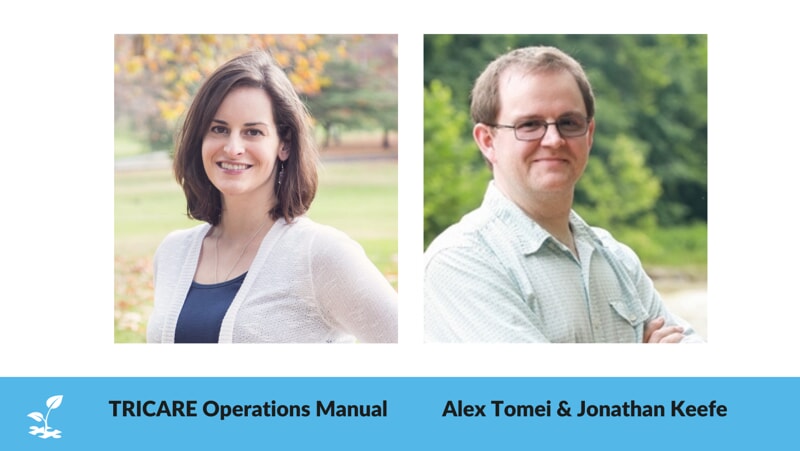
In the latest episode of ABA Unfiltered Tim is joined by BlueSprig BCBAs Alex Tomei and Jonathan Keefe to discuss the recent changes in the TRICARE Operations Manual – otherwise known as the TOM. Alex is the Director of Clinical Standards at BlueSprig, and Johnathan serves as the Associate Vice President of Clinical Compliance and QAPI. Throughout the discussion, Alex and Johnathan offer insight for both families accessing ABA services through TRICARE as well as providers working with them. This is a must-listening episode for both families and clinicians alike.
Full transcript
0:00 Narrator:
The commentary and information expressed during this podcast episode are the speaker’s own and do not necessarily represent the views of Tricare or Blue Sprague Pediatrics. Listeners should not rely on the information in this podcast episode as a substitute for professional legal advice, and they should always refer to the policy documents provided by the relevant funding sources.
0:37 Tim Crilly:
This happens to be our penultimate episode of season four. I get in trouble when I say that, but I had to throw it in for Ashley, our VP of marketing. She’ll be annoyed when she hears that. But it is our second to last episode of this season, and it’s really hard to imagine that it’s gone by this fast. Today I’m joined by some in-house friends, um Alex Tomei and Jonathan Keefe, both fantastic BCBAs. I’m going to let them introduce themselves in a moment because I really technically don’t know what they do for us. I know they do a lot of good stuff. Um, but specifically, they have been locked in a basement together or separately, I’m not sure, for the last few months, really just going over all the changes with things with related to TriCare and sort of what the future holds with with TriCare. And we finally let them out and they’re here to sort of deliver some of that expertise that they have around um the Tom and sort of where things are going with with TriCare. So I’m really excited to have a conversation with these two about a topic that I think is really important. Uh you know, if I might pontificate for a moment, you know, TriCare has been out in front of you know providing these services uh really before anybody else. And they’ve really set the tone and the standard, you know, and we’ve all been able to learn and adapt and change, but you know, TriCare has been a consistent um advocate for this um for this service. And it’s really important to the families that you know are out there serving our country and their ability to have that type of care. So, you know, at Blue Spray, we we really we really pride ourselves in working with TriCare and our TriCare family. So just having people like you guys here internally to be able to keep us up to date and help us educate the public is is really important. So this might be a little bit more of a complex uh conversation and one that I um I really have leaned heavily on other people to help me prep for because it’s not easy and it’s and it’s it is a challenging topic. So I’ll I’ll stop for a second. And so, Alex, if you don’t mind, just introduce yourself, um, you know, who you are, um, what you do for Blue Sprig and sort of what your journey was to get here.
2:53 Alex Tomei:
Yeah, absolutely. So I’m Alex. I um am a BCBA, currently serve as the director of clinical standards in our standards department. Um, it’s a new department within Blue Sprig, which is very exciting because I’m still figuring out for myself what we do in this department. Um, but I think my favorite thing about my role is getting to interact with just all of our amazing providers, all of our amazing staff across multiple departments and really elevate the quality of care that we’re providing to the staff, to the families, to the and ultimately those kids. Um I have been a TRICAR provider since, gosh, maybe 2012 as a behavior analyst. So TriCare is near and dear to my heart. It’s also very near and dear to my heart because I’m a military spouse and I’m a Tri-Care beneficiary. Um, and while I don’t, my children don’t uh receive the ABA benefits under TRICARE. I feel very strongly about what TRICARE is able to provide for the military families across the nation and truly across the world as well. So um really making TRICARE services work well in supporting our families and our and our clinicians and utilizing the services that they provide is a huge passion of mine.
4:00 Tim Crilly:
Yeah, and if you I know you guys can’t see it. So for the listeners at home, she is wearing her her um purple up for military kids t-shirt. So unfortunately, we’re just a we’re just a listening podcast. I know some of those fancier ones out there have uh some other venues where you can see, but uh that passion and I think you know the ability to live inside that world is such a such a benefit to to us and the families we serve to have you know folks. I know we have OMs and stuff around the um the country, you know, at our at our centers who are also military spouses and and their ability to sort of like communicate, speak the same language is is a huge bonus um for us. So thank you. Uh welcome and I appreciate you you coming on. So um Jonathan, same same set of questions.
4:46 Jonathan Keefe:
I’m Jonathan Keefe. I’m also a BCBA. Um my current title is the Associate VP of Clinical Compliance and Quappi. Um does that fit on a business card or it definitely does, and and a nice little magnetic name tag. Um yeah, it all it all fits. Um so that’s my current title. Um in my time with Blue Sprig, I’ve served in a couple of different roles. Previously, I was uh a member just of the uh the clinical team. And now my role is really representing the clinical community on the compliance department um and um really bringing the perspective of a a BCBA to a lot of the decision making and a lot of the um the processes related to compliance. And so um that’s something that I really enjoy. Like Alex, one of the things that I really love about my job is the idea that I get to influence um how as an organization we really are moving the needle for quality services. Um so I have a lot of direct interaction with the um with the clinical team, um, in addition to also being involved in things like payer relations and HR and um serving on like the ethics committee and things like that. So um lots of other um sort of collateral things that go along with being uh the BCBA on the compliance team.
6:08 Tim Crilly:
Yeah. Uh you know, I think before we dig into the real content, I I’ve we have sort of had similar um conversations around why roles like you guys are so important. And it’s really um it’s it’s such a benefit to our organization that we support a compliance department, we comp we support that clinical standards department because not everybody does that. And I think it’s as you grow and you become a larger organization, the the you know, the the not knowing what the left hand and right hands are are doing becomes a real problem. And you know, the the work you guys do. I I sit in on you know, sort of a weekly clinical meeting and I hear the updates and the things you’re working on, and it like makes my brain hurt, just sort of thinking about what you guys are digging through. And I’m very thankful it’s not me. So I want to take a moment, and we should all be thankful it’s not me. I want to take a moment to just thank you for that work you do because it is important and and it keeps not only us, the the clinical folks in the in the company, you know, a little bit safer, but it also ensures that we’re providing that level of consumer protection to the people that that we’re working with. And you know, I I’ve said this a few times, but I think when I was at Magellan, I was on the you know, the um the MCO side of things, my main takeaway was, well, we are really just in the consumer protection business because you don’t really know who’s knocking on the front door, you don’t really know who these providers are. You know, it’s you hope and the the best thing is are happening, but it’s really impossible to know. So it’s really up to organizations like us and and and others to make sure that we are looking at it as well to make sure that we’re in compliance with everything we do, because if we’re not, it can all unravel really quickly and that would just be devastating for these families. So, okay, I I I’ll get off my soapbox, but I appreciate it. Okay. So um let me look at some of my my my pre scripted questions here, which I’m not accustomed to. So forgive me. Uh so I’m I’m assuming most people listening know what TriCare is, but I think it is important. Let’s take a step back and let let’s talk. What is TRICARE? Who is it for? Um, and if you let’s just start there. What is TriCare and really who who is TriCare serving?
8:33 Jonathan Keefe:
Jonathan, I’m looking right at you. Um I I think as an actual TriCare beneficiary, I think it means. Okay, fair, fair. Go ahead, Alex.
8:41 Alex Tomei:
I could feel Jonathan’s eyes burning at me actually hearing that one. Um yeah, I mean, TRICARE is in summary, the whole of TriCare is the the health plan for the entire military anyone who’s a military affiliated, whether you are active duty, reservist, um, whether you are retired and you have TriCare for life because you served our country for many, many years and now you’re, you know, a longtime veteran, it’s the benefit that gets you access to your health care within the military community. So that’s a high-level summary. Um in part of that where we as Blue Spring get involved with Tri-Care is through the autism care demonstration program, which um is somewhat different than the actual health plan portion of TRICARE. Um, it is actually a pilot study to provide APA services to um TRICARE beneficiaries who are diagnosed with autism. So I think it’s important to um to just make sure we know that TRICARE overall is the mechanism through which healthcare is provided to military families, but the autism care demonstration program isn’t necessarily a health plan benefit the way some of the other health plans um do provide these medically necessary services. So I think that’s very important to um to uh state, for lack of a better way of putting it.
10:06 Jonathan Keefe:
Yeah, Alex, one thing that I will um add on to that is a question that I’ve heard a few times, which is that TRICARE and the autism care demonstration are not, they don’t fall under the umbrella of most states autism industries. So that’s just a sort of an additional wrinkle in terms of the way that we as Blue Sprig um and as an industry we interact with TriCare um as AVA providers.
10:31 Tim Crilly:
So does that mean that you don’t necessarily have to follow the same state rules? Like TriCare trumps the state rule. Is that sort of what you’re saying?
10:39 Jonathan Keefe:
They operate independently. Uh yeah. They’re not bound by the same uh parameters of the state land.
10:45 Alex Tomei:
No, and that allows, I mean, I would argue that allows TriCare to do some really fun, cool things in in autism programming as well, that um when they’re not limited by some of the state parameters that are there.
10:55 Jonathan Keefe:
So yeah, the fact that it’s actually a research pilot study, like Alex described, is essentially a function of the fact that they operate independently of those insurance mandates. Okay, so things I didn’t think we would be talking about.
11:11 Tim Crilly:
Oh, that’s what happens. That’s that’s the that’s the river rafting uh adventure of ABA unfiltered, I guess. Uh so okay, so if someone is a provider, how do they know what to do as an ABA supervisor? So, sort of what are those, you know, what are those rules? What are the parameters? How does it all work?
11:29 Alex Tomei:
Tricare operations manual. Um the Tom. Yep. So you you’ll hear it referred to as the Tom. It’s not a person, it is a document that has pages upon pages of do this, do this, do this. This is how you become credentialed, this is what is allowed within the plan. It I mean, every single detail is outlined within the Tom. And any questions you have about how to become a tried care provider, or even just once you are a tried care provider, how to provide services under the autism care demonstration are within that document. And um truly, just like any provider is under any insurance, should know the policy and the plan of the uh the provider. So whether it’s Blue Cross Blue Shield or it is a Medicaid plan, you need to know the parameters of that plan and how you’re gonna provide services. The providers need to understand the Tom as well. And that document is readily available. It’s it’s not that hard to find on the websites for Humana and Health Netfederal Services. Um and you can download a copy and save it and screenshot it and reference it every day if you like. But that’s where you find that information.
12:34 Tim Crilly:
Okay. Um, yeah, I I I read it once, I don’t know which version, but it was a couple of years ago. So, you know, and I I think the good thing about it is the language is pretty clear. It’s not, you can, you know, you can run into things where it’s like, I don’t understand anything that they’re trying to say. So, you know, there is a pretty clear, um, you know, consumable uh sort of set of information that’s contained in there. So, okay, so while we’re on the Tom, um, what is the current state of the policy? So, can we talk about where we are with it? What have been some changes, and what does that all mean for us?
13:13 Jonathan Keefe:
Sure. So the the most recent round of revisions to the Tom were published in March of 2021. So uh as of the date of this recording, uh just over a year ago, um, and the the updates were outlined in such a way so that changes to Tom policy were staggered for implementation over the course of 2021. Um so there were certain changes that went into effect in May 2021, some that went into effect in August, some that went into effect um October 1st, 2021, and then some additional requirements that went into effect January 1st of this year, 2022. Um, so there were fairly comprehensive changes. Um, they had a lot of different buckets that they sort of fell into. Um, there were a lot of things procedurally um related to service utilization. So there were some metrics that have been put in place regarding delivery of 97155 protocol modification. Um, there were some parameters put around um the cadence and delivery of family guidance service, so uh the 97156 code. Um so there were some changes related to those kinds of things. Um, there were some new benefits announced that were really intended to make the autism care demonstration a little bit more user-friendly for the beneficiaries. Um, development of a new autism services navigator position or an ASN, um, who in a lot of ways would function sort of like a case manager in um other service models. Um, so that’s a new benefit that went into effect 10-1 last year. Um, and then some additional um language and some additional changes around um uh uh how TriCare was going to apply the language of the specific CPT codes when it comes to delivery of some of the specific services that we as ABA providers um would be rendering. Um, and then uh some additional um limitations and uh some new language around the types of things that you’re allowed to um uh to request as goals as part of your treatment plan, um, specifically some things around um adaptive um or self-help type goals. So there were some new um language and some limitations on approval for those types of things.
15:29 Tim Crilly:
Okay.
15:29 Tim Crilly:
Um when you say that the navigator uh part, is that something that then the MCO is required to build out? Or is that is that a so each each MCO is is putting that team together?
15:41 Jonathan Keefe:
Right. So the the two different contractors um who manage uh TriCare East and TriCare West, they are responsible for employing those uh autism services navigators. So the ASNs are employees of um of those contractors. They uh have very detailed job job descriptions, which are outlined in the top, um, and specific requirements that you can look at um and reference to see what the qualifications are for the people who are going to be uh serving in that role. But yeah, the contractors um are responsible for actually employing those people.
16:12 Tim Crilly:
That’s good. I mean, I I I I think that that is a a segment that um is is lacking a little bit when we look at other um health plans is that that person that is really focused on care coordination for these these families because it’s not just ABA, it’s uh it’s complex. And you know, especially when you get into um the military and you can be stationed at places that don’t necessarily have you know services right down the road. I mean, I’m out here in California, so like Camp Pendleton is you know really close to me. So you’re you know, you’re a place like Camp Pendleton, you have high access to a lot of things, but you could be out at like 29 palms, which and if you’ve ever driven out the 10 through the Coachella Valley, you know, Palm Springs is over here and a bunch of miles the other direction is basically the surface of the moon is 29 palms and it’s a giant base with a lot of people, but it doesn’t mean that you know you have that access to care. So to have that ability to have someone that can help you sort of navigate that a little bit better. Um, and let’s just, you know, fingers crossed, it’s you know, sort of this the saying goes, as Tri-Care goes, so does everybody else. So maybe we will see a little bit of that sort of creep into some of these other uh health plans as they look to sort of help manage this population. So I think that’s cool. And that’s that’s um I’m it’s good to hear. And I didn’t know that that was news to me because as I said, I haven’t read the the newest time. I’m just yeah, I think it’s working off my notes.
17:39 Jonathan Keefe:
That’s yeah, I think that’s it’s definitely a positive change. I think that um, and to be clear, the the ASN is um available to new beneficiaries um after the the 10.121 rollover. So um not every client that we work with who um is a tri care beneficiary has an ASN. It’s only clients who were newly diagnosed and who knew who came into the autism care demonstration after October 1st last year, um, have access to that ASN. Individuals who were beneficiaries prior to that have a, I believe Alex correct me with it’s a care coordinator or a care manager. Um so they had a similar position, um, but the update to the Tom, I think really fleshes out the responsibilities of that ASN. And I agree with you, Tim. I think that um, especially when you consider that the the military population relocates very frequently, um, and access to care can be um a real challenge when you are uh bouncing. And I yes, there’s a train uh not far in case the Oh I didn’t even hear it.
18:45 Tim Crilly:
Perfect, but yeah. Oh, we’ve had helicopters, we’ve had dogs. My mother-in-law came in the front door one time. We’ve had lots of lots of surprise guests.
18:54 Jonathan Keefe:
So just get around it. Um yeah, so the um, you know, the that’s a population that moves around a lot, and so continuity of care can potentially be uh a challenge for that population, having someone like an ASN who is going to be available to help families navigate um access to care, I think is really uh a great addition to to what TriCare is doing now.
19:17 Tim Crilly:
That’s cool. So, Alex, um thinking about the provider and you know these changes, what are what are the things that you would want to outline? And maybe it’s you know, you know, you know, you can highlight anything that Jonathan has said if it’s it’s the same. But I think just from a provided provider perspective, what are some of the things that you think that that people should be on the lookout for?
19:36 Alex Tomei:
Yeah, I think outside of being familiar with the Tom, as I said before, like being familiar with the laws, regulations, the guidelines, and with any funding source is of utmost importance for a provider. Um but for TriCare specifically, I I thought about this um in advance of recording this, and I I kind of came up with three that I think are gonna make the most difference. Um, one is those timelines. What is due, when it is due, and who needs to do it. Um, I feel like a lot of times we get caught up in I mean, we love the kids. BCBAs and RBTs don’t get into this job because just to like write reports. They want to be in the in the therapy room with the children. And so it’s easy to get caught up in look at all this amazing stuff this kid is doing and forget, oh, I have to do the vinyland um in advance of the treatment plan report. Or um, okay, so making sure you know what is due, when it is due, and then know also your your state laws and regulations, because there are certain states where certain of the certain of those outcome measures, like the vinyland or the SRS, have to be completed by an outside provider. So being aware of what’s going on in your state and making sure you’re working with the parents to get those referrals ahead of time so that you don’t miss that window. Um, TriCare uh really wants the reports between 60 and 30 days out from the end of the authorization, which gives you 30 days to do all of this work to create a beautiful treatment plan. But if you’re not on top of that timeline, it can get very stressful very quickly. So make sure you’re aware of what’s due when and by whom. Um, I think the other big piece is number two for me is the exclusions and the understanding of core symptoms of autism. Um, so know the DSM, review the Tom sections on exclusions, and always tie your goals back to assessment, the ASD symptomatology and medical necessity. Um, we need to make sure we are we are clear that we are treating the core symptoms of autism when we’re providing these ABA services. And so while ABA is a wonderful science and we can teach so many wonderful things, um, there are we need to make sure we’re tying it back to um what what Tricare really views is the autism. No, sorry, not what Tricare views, um, what Tricare has um deemed medically necessary. So, you know, toothbrushing is not a core symptom of autism. We can teach it, but it’s not a core symptom of autism. However, challenging behavior related to um being asked to follow a direction, um, then the challenging Behavior may be something we can tackle. We’re not going to teach toothbrushing, but we can work on the challenging behavior. We can work on social emotional skills due to social emotional deficits related to autism, but we need to be very careful that we’re tying everything back to the symptomatology and medical necessity and then know those exclusions. We as a provider have entered into an agreement with the with the um with Tricare to provide services and they’re going to pay us for certain services. We need to know what we can and cannot bill for. So we need to make sure that we are aware of what’s excluded and that we’re not um billing for things that we shouldn’t. And then the third one is the CPT codes. Um Jonathan alluded to this a little bit as well that TRICARE has um outlined in the Tom what is and is not villable to them as a funding source. So make sure you know what you can bill for under 5.6, 5.5, the medical uh team conference codes, document well and bill accordingly.
23:02 Tim Crilly:
Okay. Uh just one quick follow-up. When you said an outside provider as it relates to the vinyland and everything, what’s an outside provider? Just so we’re we’re clear on that.
23:12 Alex Tomei:
Yeah, absolutely. Um, in some states, I’m thinking specifically of North Carolina, although I do believe the laws have recently changed. So please update per you know when you’re listening to this podcast to most recent legislation. Um, certain tests can only be provided by a licensed psychologist. And so we need to, whereas in Colorado, where I’m at, I am allowed to per regulation provide uh SS using the vinyl with appropriate training and appropriate um scope of competence um per the BACB. I’m allowed to administer the vineland. In other states, a BCBA may not be able to administer the vineland. It’s still a required assessment per TRICARE, but it it may not be something the BCBA and the KC provisor can do. So you need to make sure you’re supporting the family and getting that referral out to get it done by the licensed providers.
23:55 Tim Crilly:
It’s still our sort of responsibility to help make sure that those parents are finding that that correct provider to get that done.
24:04 Alex Tomei:
Yes. I mean, we don’t make the direct referral, but we need to support the parents in finding act uh in finding access to those providers in the community, which I think in general honestly is a responsibility of an ABA provider is to know what resources are available out in the community, whether it is a licensed psychologist or an OT, um a counselor, an amazing social skills program after school in the their school district, things like that.
24:26 Tim Crilly:
Now, quick sidebar, do you guys know why it’s called the Vineland?
24:30 Alex Tomei:
No.
24:31 Tim Crilly:
I don’t. It’s because it was developed in Vineland, New Jersey.
24:38 Alex Tomei:
Okay.
24:38 Tim Crilly:
It’s also the hometown of Mike Trout, center fielder for the Angels. There you go. Little little uh fun fact for uh for you guys out there. Vineland, New Jersey.
24:48 Alex Tomei:
Yeah, I’m that that’s news to me. That I’m gonna go into my weekend.
24:52 Tim Crilly:
Um if you’re ever on Jeopardy and that comes up, you can send me $20.
24:59 Alex Tomei:
Oh, goodness gracious.
25:00 Tim Crilly:
Okay, so um thank you. I I appreciate you guys letting me show up a little bit. Um so for parents, uh Alex, you know, what what should they what what should they be thinking about? How what’s the preparation and you know, sort of what sort of advice do you have for them as it relates to not just starting, but also the the sort of the ongoing process of of being involved in the ABA programming?
25:24 Alex Tomei:
Yeah, I think um I think we’ve touched on it a couple times here and there, but um, you know, there it it’s very it’s very well known, I think, that the military lifestyle is really stressful um on families, and there’s a lot of um uh impact on the parents and the kids and just all the different things. You don’t have to have, you know, a service member in your family who’s deployed to a dangerous location to have a lot of stress in your family. Um your life is truly not controlled by yourself. You don’t get to say no, they they go wherever they go and train wherever they train at any time. You add autism on top of that, and it is an incremental stressor for these families. So, first and foremost, before I speak to what parents need, I’m speaking to providers. Know that these families that we are serving are stressed, they’re going through a lot, and we are coming into their world and asking them to do things and change things sometimes in their day-to-day life. And we just need to love on them. We need to do that with so much love, care, and respect and understand that the military world is a completely different culture than maybe the generic working parent home. Um, so I would just want to say that knowing and acknowledge the stress that these families are going through. Um, for parents, I think um really understanding the whole entire process, and that falls a lot on the providers of when you when you take that and you accept that client going through these are the assessments we are going to do. These are the assessments that are required by TRICARE. So we’re going, we’re going to have to do the PSI or the step where we’re going to do the vinyland and this is the timeline on which we’re going to do them. And then this is the skills assessment we’re going to do. Every two years, you’re going to have to go through this review process and have it’s not a rediagnosis, but it’s a review of the diagnosis with a medical provider and making sure that the families are aware of that. They know that they can call the AVA Tri-Care line and get access to those dates and who can they refer to, which doctors in town are able to do that for them because maybe they’re new to town and it’s due in six months and they have no connections anywhere. Um have some real honest conversations on family guidance and participation in care. Tri-Care has um made it a requirement to participate in family guidance six times over the six-month period at a minimum. Family guidance is wonderful, it does so much to support the overall treatment and progress of that client, but it can be a shock for parents who are already stressed and worn out to be like, oh my gosh, I have to do another thing. So making sure parents are aware of that requirement and also fully engaged in what that requirement is going to ask of them. Um, and then in addition to that, some goals, because of these exclusions, like ADLs, are going to fall under the family guidance act, where I might not be able to work on certain things in the 5-3 session with the RBT and the tiered model, but I can coach the parents on how to work with their child on toothbrushing, doing family guidance skills. So making sure that the parents know that if we want to target this, we might not be able to do it in the direct therapy. But I am here, I am with you, and we can do it together under our family guidance goals.
28:26 Tim Crilly:
Yeah. That’s great. And I think just to piggyback a little bit, you know, you talk about family being deployed or, you know, sort of the stresses of being a military parent. Also, you know, it’s not like your hometown is the base you’re stationed at. You know, you are you are moved, you are isolated, you don’t have maybe that family support, you know. So there’s also that extra layer that that makes this this family a little bit different than than the other families that that you might be working with during.
28:52 Alex Tomei:
There’s no grandma who’s gonna drop off at the clinic when mom gets called in to work late or you know, something like that. That’s not um that’s not a system that is generally in place. Um I I will say military families are extremely resilient. We can make friends anywhere. Everywhere. But but you might have a family who’s new to the duty station and has no has not made that uh connection yet, or families who are just so stressed that they don’t have the time to make that connection. Um, you know, there’s there’s some wonderful Facebook groups out there. Um, you know, for whatever you feel about Facebook, there are some amazing social media groups that will get those families connected to the supports they need so that they can do this participation in care as well. And then just as a provider, be flexible. If the family can’t come to the clinic, go to their home, figure out a way to go to their home and support the family guidance participation there.
29:39 Tim Crilly:
That’s great. It’s heavy stuff, but yeah, it’s it’s important, you know, and that whole mission-ready uh, you know, philosophy and and and how groups like us and you know, kind of can we help those those families, you know, be better at their job because you’re able to remove some of that stress and how important our jobs are to everybody involved. So perfect. I I appreciate that is really good information. Um, so back to Jonathan. Um, from an organizational standpoint, aside from going out and stealing you or or or you know Alex here, what can organizations uh out there do to sort of make sure that they’re doing these things? They’re staying up to date on all this.
30:21 Jonathan Keefe:
You know, I think the the easy answer is making sure that there are designated individuals who are um sort of taking point on regularly checking uh the TriCare website, which is updated very uh very regularly whenever there are new announcements or um or updates, and making sure that um those individuals have their ear to the ground and are well um well connected with other organizations within the industry, whether that’s CASP, whether that’s uh APBA, whether that’s ABAI, different professional organizations where you know we can sort of crowdsource um trends and um uh industry-wide feedback that people are hearing um in in terms of the way the Tom may be implemented or interpreted by the different contractors who are um reviewing plans, who are giving those different authorizations. So I think having that um that sort of spirit of collaboration and camaraderie that’s you know, we all want to get this right and want to be able to say, yeah, TriCare is looking at this through the lens of a demonstration of service efficacy, how can we all as a field make sure that we are embracing the guidelines that uh TriCare has established via the TOM and ensuring that we’re all working together to meet those standards? So I think that that’s that’s step one. I think the other thing that’s really critical is that as organizations are developing templates, as they’re developing SOPs, uh, as they’re developing trainings to make sure that they are actively referencing the language of the TOM when they’re creating all of those things as they’re being done. So if you are creating a session note template for the delivery of 97155, does the template itself promote the rendering of that service in accordance to TRICARE’s interpretation of how it’s how it’s being rendered? So TRICARE says that the RBT facing activity during a 97155 session is limited to the BCBA demonstrating protocols for the RBT. It’s not about giving supervision to the RBT, it’s not about giving feedback to the RBT, but the BCBA can demonstrate specific protocols for the RBT during that 97155 time. Does your session note template prompt that for the clinician, just as an additional way of I’m a big errorless learning person, so is it giving them the right answer from the very beginning to be able to say, here’s your here’s a text prompt of the types of things that you as a clinician need to be mindful of when you’re providing the service? Those are the things that I think are really the most critical. And then from an auditing perspective, if you are um in an organization that does um engage in pre-billing auditing activities, which I strongly encourage uh everyone to do, making sure that you have systems in place that are checking for those requirements, those really key elements before those claims even go out. So making sure that things are clean uh before they go out the door, I think is really critical from an organizational perspective. It’s it’s for the protection of the individual providers, it’s for the protection of the beneficiary’s ability to continue to access those services over time, and it’s for the protection of the organization.
33:54 Tim Crilly:
Um okay, so along those lines, so from an authorization sort of request, you know, sort of that process. Um what’s your advice for for groups out there if they’re if they if they want to make changes or they’re getting denials? What do you guys, what’s your recommendation from a provider standpoint and sort of working with those MCOs around some of those more challenging situations you might come across from like an administrative clerical standpoint?
34:23 Jonathan Keefe:
You know, I mean it’s like Alex has said a couple of times uh already, it the the main theme here is always going to be go back to the language of the Tom. So if you have proposed a particular goal that you feel like meets TriCare’s medical necessity criteria and a reviewer for one of the contractors didn’t authorize that goal, look very closely at the actual language of the Tom in your communication back to that reviewer when you’re respectfully asking for feedback on a specific goal, why something wasn’t approved the way that it was written. Cite that language from the Tom and how your goal was was, in your view, aligned to that, uh to that expectation for medical necessity. It could just be a matter of the way a particular goal was framed, it could be a matter of um needing to incorporate different aspects of the actual diagnostic criteria into the uh the overall long-term outcome for that goal in a way that’s going to make something allowable. And it’s just a matter of being open to that feedback and being flexible in your own practices to be able to say, okay, I I can I can take this feedback and I can incorporate it into my own clinical practice in order to be able to provide the services that I feel like are medically necessary for my client in a way that TriCare also agrees meets their definitions of medical necessity.
35:51 Alex Tomei:
Yeah.
35:51 Tim Crilly:
Okay.
35:52 Jonathan Keefe:
Solid place.
35:53 Alex Tomei:
I was gonna say, if I can add um on the West, the uh the reviewers actually often leave their phone numbers when they’re giving you feedback, and you can get on the phone and have conversations with them. So don’t be afraid to um have conversations with the reviewers. Um they have a job to do just as much as you have a job to do. And there’s actually a lot of information you can glean from having a direct phone call conversation saying, why is why in your interpretation is this excluded? Because this is my interpretation of the Tom. And I’ve learned so much about what goes on in that review process. Um, again, like Jonathan said, be respectful. They have a job to do just as much as we do. But if you’re open to having that conversation with them and learning from them, I’ve actually been able to write goals that still achieve the same result for the client, but that comply with the TRICARE Tom requirements because I now better understand the Tom requirements. So don’t be afraid to have that phone call or send that email in a respectful way and say, help me as the provider understand. Because when you have that dialogue, the kid is the one who wins. That client is the one who wins.
36:56 Jonathan Keefe:
It’s absolutely right. And being able to say, I may not have understood this aspect of the Tom exactly the way that it was intended. Let’s learn something today. Let’s actually go in and say, all right, TriCare is their expectation for medical necessity is X, Y, or Z. How do I make sure that my goals are meeting that standard? Whatever it is, like that, that’s that’s my big takeaway for today is everything needs to come back to the Tom. So whether it is something that the contractor has done, whether it is something that you saw on a Facebook group, everything always needs to go back to the Tom.
37:36 Tim Crilly:
Yeah.
37:36 Tim Crilly:
Yeah, I, you know, as someone who sat in a similar chair as those folks, you know, I had a little team of care managers at Magellan. And you’re right, they they want to have those conversations. And as a provider, you shouldn’t be afraid to ask questions. I think we get caught up in this, oh no, what if they think we don’t know what we’re doing? But they’re learning at the same rate as us as well. And they want to, they want to have those conversations. And, you know, the more time you spend on the phone with someone like that, the more they’re going to understand what you’re doing out in the community and get a little bit better sense of who you are. And you’re not just like, you know, represented by a piece of paper or a giant stack of papers that you’re you’re faxing in into them. So it’s it’s a really good thing. And I don’t think we do enough of that where we we get a little nervous, like, you know, it’s like the big bet scary insurance people. Like, no, they’re just they’re just people. They’re just trying to do what’s best and playing within a set of rules that they have to play in. So they’re actually really pleasant on the phone.
38:35 Alex Tomei:
I’ve had a good couple of laughs with them on the phone. Um, you know, hey, it’s you again. I we’re talking to you again. How’s your day? How’s your dog? Because I heard a parking in the last couple. Like, they’re really wonderful people.
38:45 Tim Crilly:
Yeah. Um there was a lady, uh, her name was Ellen. And uh her the nickname for her at Michellen was auth at Ellen because she just if you got on the phone with her and you just like told her, she was off Oth at Ellen. You know, she was, you know, uh, I won’t say her last name because I’ll probably get in trouble. But uh, you know, that was just the way it was. And but I know it’s a little different when you get into like the Medicaid world and the Tri-Care world, it’s a little bit different than private insurance. You know, I think there’s there’s a lot more wiggle room when you look at you know what authit Ellen was doing as compared to what, you know, sort of the those parameters around sort of that different sort of bucket of of funding. So um, okay, I’ll leave it at that. This was fantastic. I I didn’t know what to expect out of this conversation. Um, I learned a whole lot. Uh I really appreciate it. You guys did a lot of prep, um, not only for getting us up to speed, but I, you know, you guys really came ready, ready to uh to inform the listeners. So it’s really, really appreciative. Um, you know, and I think as as these changes occur and new updates are coming, it it’d be great to have you guys on moving forward as well, just to sort of keep us in the loop. Because, you know, I think TRICARE is a very important um uh partner in in this. And it’s not always the you know the most clear-cut thing. So, but it’s it’s really important for us to be to be partnered with them moving forward to make sure that we are providing this this this needed care for these this this vulnerable population. So uh, you know, I appreciate it and I thank you guys, um, you know, everybody out there listening. I I hope you enjoyed it and please share. Um, as you know, if you have TRICARE families that you work with, you know, pass it along to them as well, because I think, you know, there’s a lot of great advice for families as well as you know, sort of the clinical folks, you know, out there working. So thanks again. Um, and tune in next week for uh season finale of season four.
40:37 Alex Tomei:
Thank you.