Episode Description
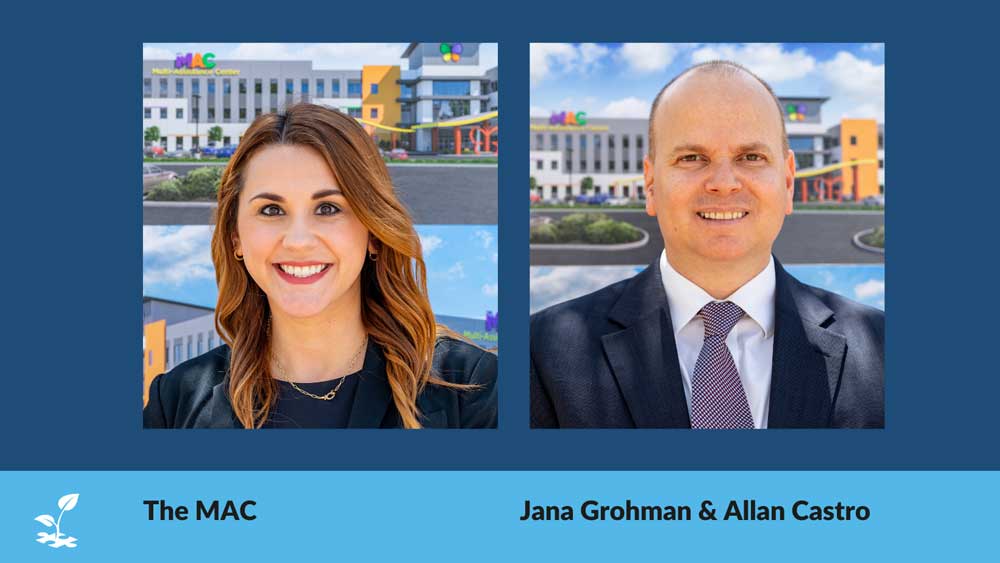
Tune in to the Season 3 premiere of ABA Unfiltered for a fascinating conversation with Allan Castro and Jana Grohman from the MAC to learn more about this groundbreaking project they are undertaking in San Antonio Texas. Set to open its doors in Summer 2022, The MAC (Multi-Access Center) will be a first-of-its-kind facility offering one location for families with children with disabilities to receive all their needed care. BlueSprig is honored to be one of the future partners at the MAC and can’t wait for the doors to open.
Listen now on Apple Podcasts, Spotify, YouTube, or Google Podcasts!
Full transcript
0:07 Tim Crilly:
Hello and welcome to season three of ABA Unfiltered. I am your host, um renewed for a third season somehow. Don’t know how we’re doing it. Uh, Tim Crilly. I should probably mention that. Um, so thank you to anyone who’s who’s back and listening. I’m really excited about today’s episode. Um, it’s been something that I think has been on our possible guest list for all three seasons. So it’s really exciting to get these folks on to kick off season three. Um, so our guests today are from the MAC, and they’re gonna really give us a detailed look into what the MAC is and and what sort of fascinating, um, I would say groundbreaking work that that they’re trying to pull off that uh BlueSprig’s really excited to be a partner with. So today we have Jana Grohman and Allan Castro from the MAC. Um, I will step aside for one second and maybe Jana, if you want to take a crack at doing a quick introduction on on who you are and how you ended up at the MAC, and then we’ll let we’ll let Allan see if he can can match you.
1:09 Jana Grohman:
Oh, okay. Well, Jana Grohman, um, I am a licensed uh master social worker, and I have been in the nonprofit community here in San Antonio and the surrounding counties for about 12 years. I came from um uh a nonprofit here and um Allan in 2018 when him and Gordon convened all the nonprofits in the community to talk about the MAC and their idea. I was a part of that meeting and joined the uh navigation committee and has been a part of the navigation committee since then. And then last year, I guess about this time last year, Allan reached out about doing some contract work because it was just him and him and Gordon trying to get this off the ground. And so I started doing contract work with them. And then in um April of this year, I came on full time as his first employee. So we are here now trying to get the Multi-Assistance Center up and running to um to open up next summer.
2:07 Allan Castro:
Yes. And um, I’m Allan Castro, I’m the CEO of the MAC. It’s good to be here uh with you, Tim, and with BlueSprig. And um, as Jana mentioned, we’ve been working on the MAC for three and a half years now. Um, it started off as an idea to see if uh this would work and it’s grown beyond our expectations, and and we have uh a lot of dreams for the MAC. Um, but the idea is to have a one-stop shop, and we’ll get to that in in just a second. And it started um as a way to make uh life better for individuals with special needs. Um I come from a healthcare management background. I’ve been doing this for 20 years, and the way I got involved is I got to meet Gordon Hartman um in previous years and um was inspired by Morgan’s Wonderland and the vision that Gordon had to grow Morgan’s Wonderland, not just into the theme park uh business within the theme park business, but to become a cause, so to speak, for uh individuals with special needs and their families. So um we’ve been doing this for three and a half years and we’re just getting started.
3:20 Tim Crilly:
That’s great. So I think uh before we sort of dive into the to the MAC, I think it’s important to note that there’s at least 12 people outside of Texas that might be listening to this episode. So I would say um, you know, my mom who likes to listen, you know, let’s let’s talk to those folks for a couple minutes and really explain what Morgan’s Wonderland is. Because when I was first approached by um, you know, someone that you guys were working with about the possibility of partnering with the MAC, I’m an outsider. I I you know, I’m not from San Antonio, I didn’t know what Morgan’s Wonderland was, but when I started asking some of my local colleagues, like their heads exploded about the idea of being able to work with you guys. So could could you take a few steps back and really let us like fill in fill in the blanks on what Morgan’s Wonderland is? Because I think it plays a real pivotal part about why the MAC is here, it is here and coming.
4:13 Allan Castro:
Sure. So we’re as as you mentioned, Jen and I know uh Morgan’s Wonderland well because we’re from San Antonio, but Morgan’s Wonderland started off um as as an experiment, so similar to the MAC. Uh it’s an experiment to see if if individuals uh with with special needs and individuals with non-special needs would come together and play, right? Um the it started off uh stemming from an incident that uh Gordon Hartman and Maggie Hartman had with their daughter Morgan. Uh Gordon and Maggie are blessed with with having uh um a daughter with special needs by the name of Morgan, and she’s the inspiration behind everything we do. And um back in the middle 2000s, they were uh vacationing at a resort somewhere, and Morgan wanted to play with some kids um that didn’t have special needs. And very quickly, the kids with uh the the typically the neurotypical kids um kind of got got their ball and and went away. Uh they didn’t want to play with Morgan. And Morgan was just looking around saying, what’s going on? What, you know, why don’t they want to play? And right right off the bat, uh Gordon and Maggie realized, you know, why is that? Right. And they started looking for places where they can take Morgan to play and to socialize and interact with others. And they found out there wasn’t a place like that. So they decided to build one. And that’s what Morgan’s Wonderland is. It’s and it became a theme park and it became this national uh thing, an international thing. Uh, we’ve gotten visitors from uh 50 states, all 50 states and 77 countries, uh, you know, millions of people from from around the world and and all over the country. So um the idea was let’s let’s build a theme park where people with special needs come in and people with non-special with without special needs come in. And it’s worked beyond our expectations. And the beautiful thing about that is it it’s not only a place where they can come together and play, uh, where but it’s a place where everybody feels welcome. Gordon and Maggie will be the first to tell you Morgan’s Wonderland is not a theme park for people with special needs. It’s a theme park period where everybody can come together and play. Um to the point that uh it’s raising awareness. Uh it’s Morgan’s Wonderland has grown beyond being a theme park and a place to go have fun. Where well now we’re involved in schools and in City Hall, and for example, City Hall for All to make adjustments to City Hall uh airports now are uh because of Morgan’s Wonderland are becoming ultra accessible. That’s a phrase that we use, that is our stamp of accessibility. There’s ADA and then there’s ultra accessibility. Here where we’re located at Morgan’s Wonderland Camp, where our temporary offices are, um you see examples of that. And uh to go back to the original part of Morgan’s Wonderland, um it’s it’s nowadays, uh it started off as being mostly individuals with special needs, but nowadays it’s grown to only uh a quarter uh or or a quarter or a third of people that go there have special needs. The rest of them do not. So it succeeded in that experiment in bringing everybody together. Nobody is shunned, everybody’s included, and and that’s a beautiful story. And based out of that, uh there’s new initiatives that sprung forward. For example, Inspiration Island, Morgan’s Inspiration Island got started. It’s basically the same concept as Morgan’s Wonderland, but just add water to it, right? It’s a water park. And that that water park won one of the best 100 destinations in 2020, um, in 2019, I think it was, um, by Time Magazine, one top 100 destinations on planet Earth, right? And then recently, the last and three years ago, Gordon and Maggie started this initiative to expand uh to open a sports complex that is already operational. It’s a three-acre sports complex for people with special needs and non-special needs to come in and do um sports activities. Um, a 102-acre camp, which is where we’re located. And then the MAC is the last one that uh is going to open next year. So it’s become uh a cause and it’s it’s just growing as as the months and years uh go by.
8:38 Tim Crilly:
Uh I think that’s a very relatable story for a lot of parents that are probably listening when you go back to that, you know, that that that socialization and that those challenges for interaction. So I think it is, you said blessed, and I think you’re right to say that because not every family can go ahead and then do this and then have that that impact. So it is amazing that you know, someone like the Hartman’s, they set their mind to something and look what they’ve been able to achieve. And I think, you know, that the ramifications are are amazing. So if you’re listening, you know, Google it, look it up. I think you know, the more you can learn about Morgan’s Wonderland, um, the the more inspired you’ll feel about you know, sort of what you might be able to do in your community as well. So thank you, uh uh Allan. That was a very, very strong um endorsement for what’s going on over there. Um, so that sort of brings us to the MAC. Um, you know, why the MAC? You know, I I’ve heard you guys talk about why the MAC, and and I think it it really speaks to um, you know, a lot of stories that you hear a lot from from families about the confusion of navigating the healthcare world. So what what sort of prompted the MAC and what is the hope for what the MAC could be for not only families in in San Antonio, but you know, perhaps in in sort of the surrounding, you know, geographic area, I guess, you know, people probably willing to travel in to get services. So why why the MAC, I guess, is what I’m the long way around of asking.
10:10 Allan Castro:
Sure. Well, um it uh the Macs uh you know sprung up from uh the experiences we were having at Morgan’s Wonderland, precisely. So when families go to Morgan’s Wonderland, um they it’s heaven on earth them. It’s really a place that is truly special. And I’m glad you’re inviting all the listeners to to Google us and research us. Um just the other day, we were having families from Missouri and Pennsylvania and and and whatnot. But once you once families come to Morgan’s Wonderland, families with special needs, you know what they do? They start networking, they start talking to each other about, hey, uh, what doctor do you go to for this, or where do you get this uh other service or therapists or things of that nature? And then very quickly you realize that they’re going through a lot of issues due to fragmentation or due to lack of information or lack of awareness. Um that’s something that uh um we’ve experienced. And then uh uh the the Hartmans, they have their own uh foundation called the Gordon Hartman Family Foundation. And they’ve also heard from families directly dealing with fragmentation, but not just from family, but from providers that they also fund in our community coming to them and saying, you know what, there’s a lot of issues in service delivery, there’s a lot of issues in fragmentation. So throughout the years, we keep on kept on keep kept on hearing that same um uh theme. And we just increasingly came up to the realization that there has to be a better way for families with special needs to access services, to be informed of services. Um, and that’s what the MAC is trying to solve, right? Um, so it started off as an idea that we said, hey, why don’t we apply first principles here and put ourselves in the in the in the shoes of these families? Because you know what, those of us who are blessed to not have a special need, we face fragmentation issues in the healthcare industry and social service industry, and anything that we want to do. Families with special needs face that tenfold, right? So then applying first principles thinking to see what they would need, we came up with a solution that’s become what is now known as a MAC care model. So, for example, there’s a lot of great services out there, there’s a lot of great uh uh organizations doing wonderful things, but they all not talking to each other, they’re all not uh communicating, they’re all not coordinating. And the ones that have to do that are the families. And as it is, families with special needs are burdened with a lot of things, right? And they can only take off from work one day a week or one day a month or one day every other month. So they can only tackle some things and they cannot see the full spectrum of things available to them. So when we started thinking about how we can serve these families, we came up with what is now known as a MAC care model, which is based on uh a navigation system. And what we discovered, Tim, was um that in our research and our due diligence, we found out that your health and well-being, 70% of it is due to factors outside of the healthcare system. Okay, 70%, 40% of it is social determinants of health, and 30% is uh behavioral factors. The remaining 30%, 20% of that is the healthcare system, and 10% genetics. So we just had a uh an aha moment when we said, okay, if 70% is is dealt is is covered outside of the healthcare system, why don’t we build a model that focuses on that 70%? And then we build a healthcare, a medical um uh anchor around that, then a therapy anchor around that, and a social service anchor around that. And that’s how we came up with the with the with the MAC care model. So the the nucleus or the kernel of our care model is navigation, is basically you get assigned a human being partner for life, right? Or partner to deal with things in your life that can that can link you with all the services, with all the case managers, with all the doctors, with all the therapists. And and then within that um navigator assigned to you, addressing all of your social determinants and behavioral issues, linking you to hospitals and clinics and healthcare and other providers and therapy services. And then within that system, we you do things like case management, care coordination, advocacy, and things of that nature. So that’s how um we came up with that concept.
14:52 Tim Crilly:
That’s great. No, now, Jana, you mentioned you you started on the outside looking in, but were invited to be part of the um the team. So can you touch a little bit about how, you know, so it’s not just um you guys building a model and then hiring and bringing in teams. Can you can you uh expand a little bit on how this really is a community effort, sort of bringing people in the community together to be a part of one big thing?
15:20 Jana Grohman:
Right. So when Allan and Gordon convened all of uh all of these agencies in 2018, that was the that was the purpose, right? We want to we want to build a center where all of these community-based organizations that are already doing their best work come together. So we’re not duplicating that work. So um we are bringing in community agencies, medical community agencies. So we have CommuniCare who um here is in, they are they’re here in San Antonio, and they’ll be coming in and building a medical home facility where that um their focus is primary care for individuals with special needs. So uh there’s no but there’s nowhere in Texas or even the country that that’s their only focus. Most uh PCPs, you know, they sure they’ll see their uh the individual special needs, but most of the time those individuals are going to their their specialist, right? They go see their neurologist. And when you ask them if they’ve seen their PCP, most of them say, well, no, I just go to my neurologist. And those neurologists aren’t really focusing on the person as a whole. And so thinking about, okay, we want to make sure that uh in the medical home that we’re looking at uh not just PCP, but we’re also looking at specialty, specialist, uh specialty clinics there. We’re also looking at uh dental and audiology, we’re looking for pharmacy. So again, it’s that one-stop shop they’re coming in, um, they’re getting their medical needs met, but then they’re also um being able to then get their therapy needs met. You know, do they need ABA therapy? Do they need PTOT speech? Um, and then also pulling in those community-based organizations too. So if you’re receiving case management from a community agency from the ARC, we we don’t want to we don’t want to duplicate that, but we want to help coordinate. So to make sure that your case manager with the ARC is in communications with your doctors, is in communication with your therapists and all of your special, your specialists, your specialty uh clinics as well too. Um, again, it’s making sure that you’re coordinating services. And that is the gap that we’ve seen in the community for so long. You know, I was a case manager uh for many years, and going in and helping families trying to complete applications is over an overwhelming task. Um, most of them, I would have to go into their home and sit with them for hours and go through the applications and help them complete it because they have children running around, they’re trying to get the services that they need, but that takes time. And when you have a child with special needs and they’re at home and you’re you’re their one person that does everything for them, it gets overwhelming and you get and you do, you let things drop because at that point in time, that’s not a priority. Yes, I need this application done to get on the Medicaid waiver list, but I don’t have an hour to complete that. So it’s our jobs in the community and these nonprofit agencies to go in and say, okay, how can we help you and and get this done? And so moving it to the MAC, yes, you have all of that, but you also have this navigator now. You’re gonna have this one person that knows your story, the ins and outs, knows who you’re connected to. So if you call your navigator and you’re struggling, they, okay, let me follow up with your case manager at the ARC because this is this is where they could really help us. Or let me let me go ahead and let me contact your PCP doctor at CommuniCare because this is something we need to get taken care of. But it’s gonna be that one person, that navigator, that’s going to know your story and that’s gonna be able to guide you through all of that. And so um, our care model, like Allan said, is based on medical therapy, community-based uh services, and then that navigation. And so our hope is that we continue to be able to build on that um here at the MAC partnership and um is is key. And so we want to make sure that we’re meeting the needs of our families. And as we open the MAC, I’m sure there’s going to be like, oh my gosh, we didn’t think of this. Why didn’t we think of this? We need to bring a partner on that can take care of this one area. Um, but we think right now we have about 32 partners that are going to be there when we open our doors next year. So I think that’s a definitely a great start to get us on our way.
19:31 Tim Crilly:
Yeah, that’s a that’s a quite a list. And just to sit around and come up with those 32 is probably, you know, it’s an exhaustive, exhaustive process. But what, you know, I’ve been to a few of the meetings and it’s nice to see that it’s not just about um the the the healthcare. There’s also other resources built into this for for these families that you guys were very, you know, like the salon. I mean, I know it sounds a little silly, but maybe could you talk about that a little bit? Because I find it fascinating.
20:00 Jana Grohman:
Yes. So um I don’t and I don’t know, a lot of people might know, but people with special needs, it’s hard for them to do a lot of things that we take for granted. We go get a haircut. Well, I do Allan.
20:12 Tim Crilly:
Allan doesn’t get as many as other people.
20:14 Jana Grohman:
I can do them myself in the butt to get a haircut with somebody um on the spectrum, right? To hear the buzz of the clippers or to have somebody touching them, it can be overwhelming for them. And so thinking about that as we um as we started to to think about what else needs to be at the MAC, well, hey, salon, we also want to be able to for people to be able to get haircuts, but what about like your family members, right? You know, so many times they’re busy going to taking those individuals to appointments and they miss out on a lot of things too. So if we can kind of bring some of those things together in one place, the MAC is going to be their home and not just their medical home or their therapy home, but it’s also going to be a place where they are going to build lots of natural supports as well, too. And so the spa was kind of the or the salon was built to, okay, we want to be able to get them their hair done, maybe get a massage, maybe get their nails done. So a lot of those, those things that we like to do to take care of ourselves, you know, they would love to do that, those kind of things as well, too. And so um our goal is to make sure that as we’re bringing in those salons, that we’re training those individuals as well, too. Many of our community agencies, that’s something that they do. They go out onto the community and they train and they bring awareness about. Um, so you can know how to work with somebody on the spectrum. You know that, hey, talking to them maybe for that first appointment is the most that you’re going to get done. You’re gonna you’re gonna show them how to sit in a chair and you’re gonna show them all of the tools that you use. And you might not even touch them, their hair that time that time, but next time they’ll be a little bit more comfortable. And maybe next time you can turn on the uh the clippers and you can do a small little trim or something. So it’s gonna be really building those relationships um in all those aspects along. we’ll also have a cafe there um where we’ll have a um cafe uh coffee and and food and so just another uh another another area where they can be social they can socialize and and again building those natural supports and those natural friendships um is a another hope of ours at the MAC as well.
22:20 Allan Castro:
Yeah and Tim just to follow up on that um the what Jana just talked about is is it is very intentional. Like if you notice the name is not the medical assistance center or the therapy is a multi-assistance center and that’s intentional because we want it to be a community center too. This is where you come in to get your haircuts and go socialize and at the at the cafe um but we will have a conference center that’s going to be used for peer support uh entity uh organizations that offer peer support uh sessions we we will have uh a legal home we’ll have actual court cases at the MAC judges that have committed to this we will have job training programs we will have the food bank come in to do cooking lessons so that that that’s that that it it’s it’s a it’s a community center as well it’s a multi-assistance center one of the mandates we got is don’t make it look like a hospital or a social service center or government make it look like Morgan’s Wonderland and that’s what we’ve done.
23:18 Jana Grohman:
We have the bright colors you’re going to go in and it’s going to be a place that you enjoy coming and that’s our hope is that all of our our MAC members that are coming in, they want to be there and they feel comfortable there and they feel like it’s another another home for them.
23:33 Tim Crilly:
Yes. Yeah I I think that that’s an amazing point to bring up because I think part of what you know we always try to say to our families that we’re working for you know parents or caregivers can get so caught up in the direct care of that child that that needs those services they oftentimes forget to take care of themselves. And if you’re not taking care of yourself eventually you’re not able to be that that the caregiver that you need to be so the fact you guys are you know sort of creating an environment where maybe you do feel relaxed for 40 minutes a week or you know whatever it might be that’s that’s just a step in the right direction. So kudos to you guys you know you you I you you probably didn’t think of everything but if it’s you’re darn you’re darn close and and the cool thing is I I know you’ll you’ll learn and you’ll adapt and it’ll keep getting better and and and better as as it moves along.
24:23 Jana Grohman:
And the and the good thing is we we still aren’t utilizing all of the space yet at the MAC. So this MAC the MAC is going to be 165000 square feet. And so we still have some available real estate for phase two when we start when we are opening our doors and we start seeing okay hey we’re missing this we’re missing that we have space to to build on that.
24:41 Tim Crilly:
That’s great. Learning you but you built in learning experience. Yeah so we we are getting a little little short on time here um but we we have to talk about um the navigation because obviously you know Allan you touched on it a little bit but it is the it’s probably the core core thing about this and not only about how it’s going to help the this group of the people that are that are coming in at the uh at the onset but what it could possibly mean for um you know the the MAC’s ability to to to replicate in in other places so could you just give a little overview of of how the navigation process or system is going to work.
25:18 Jana Grohman:
Oh definitely so um that the navigation is really going to be key to the MAC it’s it’s really what’s different than just a real estate a venue right it’s going to be comprehensive and coordinated services and so um we will have 50 navigators that will um be housed at the MAC they will be employees of the MAC and these navigators will be assigned to each MAC member. So as each MAC member comes into the into the MAC um an intake will be conducted and part of that intake will be again all your basic demographic information but then there’ll also be a component of your social determinants of health assessment. So what Allan talked about those that 70% of that individual’s life where we’ll be able to identify needs. That social determinants of health assessment will actually give them a score and so depending on their score that will determine the level of navigator that they need. Because we know that some families that come in they’re those families that I got it you know you you show me what how I need to navigate you show me the system and the app and I’ll be able to come in and check in and I’ll be able to get to my appointments. But then there’ll be those other individuals that are going to be coming in and they’re going to be coming in with caregivers or they might be coming in with medical equipment. And that’s going to take a little bit more time and they’re going to need a little bit more hand holding. And so determining what level of navigator you need then that’s going to determine how much time you get to spend with that navigator as well too. So um you come in, you tell your story once all of that data goes into our MAC nav system and all of the 32 partners there at the MAC have access to this system. This system will house your demographic information it’ll house your assessments but then I’m most of the time when you go to appointments they also need documentation. They need a copy of your insurance card and your diagnosis and maybe your your copy of your tax incomes any of that kind of backup documentation that navigator will take all of that that that initial appointment uploaded into the system and then from the assessment we’ll we’re then able to identify the needs of these families and so okay do we need to connect you with a medical provider do we need to connect you with therapy or community-based organizations and so through this system the navigator can then start sending referrals to all of our partners through this system. So then BlueSprigs you’ll receive a referral from a navigator you open that referral up and you’ll see what that family is needing. But now you’ll also already have all of their information so as soon as that family gets to BlueSprigs you can really skip that basic intake part of y’all of what BlueSprig needs and go to directly what is specific to BlueSprigs. And you’ll already been uh your team will already have access so they could have already read that story on on Joey and what Joey needs and what that’s uh look what that looks like. And then it’s going to be a communication between the nav between the navigator the MAC member and then all of the MACers. And so it’s that communication it’s developing long-term interaction and relationships with each other. It’s gonna have a scheduling component of it as well too so if Joey’s coming into the MAC everybody that Joey’s going to see that day it’s on that calendar they already know they’re able to coordinate so that way Joey’s only coming that one day to the MAC and it might be spending um a full day there but now hey I only have to take off one day a week and I get all of my needs met in that one day. And so really hoping to increase that quality of life not just for that child but the whole entire family. When you have a child with special needs it it’s not just affecting that person. It’s the whole entire family. And so our goal is that the MAC is there to support everybody not just that individual with special needs but mom and dad or siblings or caregivers uh aunts and uncles whoever’s involved in their life that we’re there to support them as well.
29:19 Allan Castro:
And Tim this is basically covering the gaps I talked about in uh earlier and being the glue between all the providers right um I I I would invite uh the you listeners to go to our website, https://morgansmac.org/. There’s a four minute video uh an animated video that talks about how navigation is going to to work but it’s just a recognition that um it we’re thinking about what we call the prototype of who we’re going to serve Joey. So thinking about Joey because a lot of sometimes a lot of uh a lot of times actually people don’t think about Joey they think about their own processes and systems and organizations and what we’re trying to do is you know we’re doing this because of Joey because of the people we will serve what will be the best thing for for Joey right and I think this system we’re putting together where partners do what they’re good at and then we just link everything through our navigation system and our navigator is the way to go and and and doing the the detailed things that Jana talked about.
30:18 Jana Grohman:
And that navigator is going to serve as that essential essential link between the family uh the MACers and the MAC members. And so that navigator is always going to know what’s going on with that with that individual and will be that touch point for everybody. So even if a referral gets sent to an agency and that agency says hey this is not gonna this is not a good fit then okay well I then it gets back to the navigator. So the navigator knows okay we still have to find a solution for this. So really trying to take out any of those barriers that those families have that one person that they can always rely on that will be with them through it you know as long as they’re a part of the MAC, they’ll have a navigator there.
30:58 Tim Crilly:
Yeah that’s great. I think just just eliminating the need to retell your story 20 times is a huge a huge help for for families. I know that that that’s a problem we face you know they have to the pediatrician then it’s a they have to go through a diagnosis and then they do an intake with us and you know so sometimes by the time families get to that that last step they’ve just told the same story so many times it’s you know so just sort of taking that and and putting into that one spot is such a big big step. So um you’re gonna have a lot of information a lot of data um you know maybe you can come on um you know when we’re a little bit deeper into the MAC being open and we can start talking a little bit about you know what you guys are seeing and and sort of what impact you you feel it it it is having on the the community because I think that could be a whole separate conversation that that we could have down the road you know sort of the lessons learned and what you guys are finding because I think it’s gonna be amazing. And I think you’re gonna catch things with families that never would have been been caught and even if it’s just one like just think about what an amazing impact that is for that family. But it’s not going to be just one it’s going to be a lot when you get that many eyeballs on on families people are going to notice things that are going to be a help um you know help steer people in the right direction and the the more informed the better informed families are you know the better care that they’re they’re gonna have so uh I’m really I’m really proud to be a part of this I’m really excited um you know it seems so far away but you know um I think uh Allan you put it the last time we were all in the room it’s only 11 more meetings you know so uh 11 more hours yeah 11 more hours that’s what you said 11 uh we’re opening in in 10 hours now so um you know i i i really appreciate you guys coming on and and and sharing uh your story and we’re really excited to sort of follow up and and see where it’s at but so hopefully you’ll agree to come come back on of course hopefully I was nice enough and you know we didn’t we we didn’t ruin that that uh first podcast experience for you Jana so oh I know I told him I was a little nervous um and before we go I do want to um introduce Andrew to our listeners he’s the new producer so you’re gonna be hearing me make fun of Andrew or talk about Andrew a lot as we move forward. So Andrew welcome to ABA Unfiltered uh thank you for all your help uh I can’t do it without someone like Andrew behind the scenes so um I’m really excited to get to work with Andrew on on this season and and and moving forward. Thank you Tim thanks for having me okay uh that’s more than um Lucas our old producer said in two full seasons so you’re already winning in the word count um but um to all our listeners out there go check out all those references we made about Morgan’s Wonderland and the MAC and you know take a look at some BlueSprig stuff while you’re while you’re on the internet as well but um thanks again guys and I I look forward to future episodes this season. All right thanks thank you Tim thanks see you guys