Episode Description
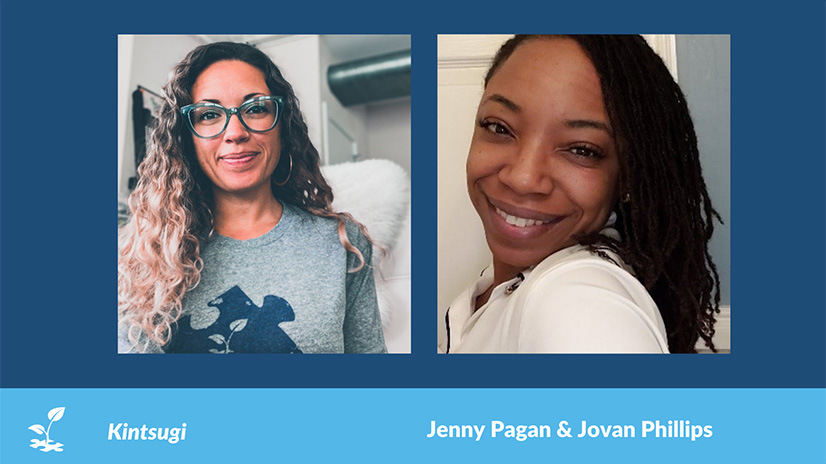
In response to conversations with BlueSprig employees focused on social justice issues that were honest, difficult, and eye-opening, Keith Jones, CEO of BlueSprig, formed Kintsugi. Kintsugi is a diversity, equity, and inclusion mission within BlueSprig that looks at every aspect of the BlueSprig employment experience to ensure that we are living to our value of a level playing field for all. Co-chairs Jenny Pagan, clinical Integration Manager, and Jovan Philips, Center Optimization Director, join our host, Tim Crilly to discuss how Kintsugi was founded and how their roles are focused on leading this mission.
Full transcript
0:06 Tim Crilly:
Hello and welcome to ABA Unfiltered. I’m your host, Tim Crilly, and today we are joined by Jovan Phillips and Jenny Pagan to talk about diversity and equity and how BlueSprig can be models in driving change. Jenny Jovan, I’m really happy to have you guys here to chat a little bit today and some of the things you’ve been up to as it relates to that topic. If you don’t mind, Jenny, would you go ahead and introduce yourself? And I only pick you first because I’ve known you longer. And so just playing favorites a little bit, to be honest. So just tell the audience when we say audience, we’re pretty sure it’s just my mom listening at this point. But so if you don’t mind introducing yourself and a little bit about what you’re up to at BlueSprig and your your role there, and then we’ll get to you, Jovan.
0:46 Jenny Pagan:
All right. Yeah, thanks for having us. Tim, my name is Jenny Pagan. I am a clinical integration manager with BlueSprig. I had been working previously as a clinical director in the Bellevue Washington Clinic. And now I’m going to be supporting as BlueSprig creates partnerships in the ABA community. I’m going to be supporting in the smooth clinical transition with those organizations as they join the BlueSprig family.
1:15 Tim Crilly:
So did you receive any awards recently through BlueSprig?
1:21 Jenny Pagan:
Yeah, actually, Tim, funny you should ask. At the leadership conference in Houston, our clinic, the Bellevue Clinic, got the award of clinical excellence. So we’re pretty proud of that in Bellevue.
1:36 Tim Crilly:
Okay. Sorry, I didn’t mean to embarrass you, but I just wanted the audience to know that you know what you’re talking about. Jovan, go ahead. Thank you.
1:45 Jovan Phillips:
Okay. Well, Tim, I hope after this that uh that I’m a favorite too.
1:51 Tim Crilly:
Well, I mean, of course.
1:52 Jovan Phillips:
Um, but I’m willing to work for it. Okay, fair enough. I am I’m the clinic optimization director for BlueSprig here in Houston, Texas. So my job and the job of my team is we are deployed out to clinics to assist them in basically meeting company standards. So that may look like providing additional training, helping with pipelines, helping with making that connection with community resources. It’s basically just coming in and helping the centers just meet those standards and build up the centers in any way we can.
2:29 Tim Crilly:
Great. So you have a small team that you use in that process. Great. Okay, well, I I appreciate it. And you know, like I said, uh, we’re here to talk about diversity and equality and some of the things that you two have been involved in as it relates internally to BlueSprig. So obviously 2020 has been a very interesting year for us as an organization. In early March, we were forced to re-look at the way we approach care, taking our services outside of the clinic and moving them into the home and the challenges that that brought. You know, and we’ve had some conversations with folks on this podcast to really discuss what that looked like and what it’s meant to us as an organization. And then something else happened, you know, a giant movement within the United States about social justice. And I know it was something that really leapt out to Keith as he started to have some conversations with folks around the organization. He was traveling around a little bit as we were starting to open up some of those clinics. And, you know, Keith was out there. And some of the stories he was hearing obviously led him to start thinking about different things as it relates to diversity, equality. And it sounds like that’s where you two came into the process. So could you give me a little bit of background about how that came to be? And then, you know, more importantly, how you two ended up being the leaders on this initiative.
3:46 Jovan Phillips:
After Keith sent out the email in response to one of our team members speaking to him and wanting to know BlueSprig’s stance on what was occurring in our community at the time, I just responded to his email. I thought at the time I was having a lot of conversations with other colleagues and other BCBAs just uh across the US that were trying to see what their companies were going to do in terms of what was happening in our communities. And when Keith made his response, I felt it was necessary for me to respond to him. And I didn’t feel like I said anything profound. I’m hoping that what he’s seen was my passion on this particular topic and being a part of something larger and being a part of moving BlueSprig forward in terms of diversity, equity, and looking at those things in our entire organization.
4:36 Tim Crilly:
How about you, Jenny? How did you get involved?
4:39 Jenny Pagan:
Yeah, I kind of had a similar experience. I was connecting with some of my staff at a local level and talking to other people of color in the Bellevue Clinic. And we have a really diverse group that we’re really proud of, all ages of really strong women from different backgrounds. And we’ve kind of established that as one of our strong points at the Bellevue Clinic. So frequently in the past, had really realistic conversations about world events and how that impacts our practice. And I was having a conversation with Ashley Nero about the unrest that’s been happening for a really long time in communities of people of color. And I felt also like Jovan said, pretty compelled to respond to Keith’s email. And then he scheduled a follow-up call at the end of the call after we’d spoken for some time. He requested that I be a co-chair and he said he had somebody else in mind. So I think Jovan, if we’re talking favorites, I think you were picked first for sure.
5:47 Tim Crilly:
Okay.
5:52 Jenny Pagan:
But yeah, I was I didn’t know what I was in for. I was kind of surprised. And then when he started talking about time commitments and how serious he was about the investment of Jovan and my time personally, how much we would be investing into this project, I knew that he was pretty serious about creating some big change internally. So that’s the story.
6:16 Tim Crilly:
Okay, and this group has a special name. Could you expand on that a little bit and what the meaning behind it is?
6:22 Jovan Phillips:
Yes, of course. Um, so our group is called Kintsugi. And Kintsugi is this Japanese art in which they rejoin pottery pieces. So the idea isn’t that we hide all these cracks and all these broken pieces. The idea is that we bring them together and make something more beautiful. And so that was the idea behind what we were trying to do. It wasn’t that we were trying to hide our deficits or our limitations.
6:52 Tim Crilly:
That’s a really interesting concept. And, you know, and I think it speaks to sort of the creativity around a lot of the people that work in this organization. I have confidence that the right questions are being asked and honest answers are being provided. So I’m really excited to hear a little bit more about what your guys’ process is and you know what you’re hoping to get out of this. You know, I know this is obviously the very beginning. It’s probably not a quick and easy process, but I think, you know, what what are your expectations around this work group, as well as some of the processes that you think you’re going to be able to put into place?
7:28 Jenny Pagan:
One thing that’s been really important that we’ve had discussions with Keith about and discussions within our committee or within this group about is making sure that what we think is important is representative of what our organizations, individuals also think is important. So we view this as a dynamic project that’s going to shift and change directions dependent on social validity. Basically, if we’re talking behavior analysis, we’re talking about what’s important to people. I think that some of the beauty of the work that we’re doing right now is that we don’t necessarily know what our immediate goals are. We’re kind of just starting to evaluate what that’s going to look like, what people want, what people need, what makes people feel welcome and safe, and what, you know, frankly, gives people opportunity that they haven’t had historically, that they haven’t had before we started having this conversation at BlueSprig.
8:33 Tim Crilly:
Are you starting at a smaller scale with just some some sample folks, or is this something that is going throughout the entirety of our organization?
8:41 Jovan Phillips:
Well, the goal is definitely for it to go out to the entirety of our organization, but we did start with those people who initially expressed interest in doing more and being a part of Kintsugi.
8:54 Tim Crilly:
That makes sense, you know. And I think, you know, the the more you can learn from people that are the braver side of things, willing to talk about things, I think it makes it a lot easier for you to build a message. And then when you’re delivering that to a larger group, you probably bring some of that validity that you’re talking about. It’s like, oh wow, yeah, I have been thinking that. I’m glad someone was able to say it because, you know, I wasn’t ready to say it for myself. So, you know, I think that’s a great way to go about this. So could you touch a little bit more about, you know, what types of things are you guys talking about and what’s the manner in which you’re gathering this information? Is it more incidental or is it organized process, face-to-face conversations, those sorts of things?
9:33 Jenny Pagan:
Yeah, we talked about that actually this morning. We have kind of enlisted the support of our HR department. Franny has been really supportive in kind of being a resource, but not necessarily planning to lead this in any way or shape the outcome of it, but just being a resource for us. I think that the conversation that we had with her is that our initial information gathering is probably going to be providing a platform for people to feel comfortable to just give us some subjective information about how things stand now and looking at that as our baseline and then seeing how can we, with the information we receive from our employees from our BlueSprig family, how can we work together in our committee, in our group to be able to support that change. That’s kind of the initial information gathering, is going to be kind of in the form of what people feel like they want or need right now.
10:38 Tim Crilly:
I’m sorry, there’s a little bit of construction going on across the street. I don’t know how much you guys were picking up on that the buzzsaw noise. Okay, so I apologize. Jenny, that’s fantastic. You know, I think a platform, just something to start, is gonna be a very helpful process for you guys. Is this something that do you feel could be extended outside of the employee group, but also into some of the family dynamics that you know we’re involved in on it day in and day out? Is that part of the conversation yet? Or is that something that maybe would be looked at down the road?
11:08 Jovan Phillips:
No, I think that it’s definitely a part of our conversation now. We think about it obviously as a group, but we do have people who are honing in on that particular area, but we’re looking at how do we build these resources for our families in the community, whether that be talking about ABA or talking about getting diagnoses and evaluations, or whether that is thinking about how we’re programming and thinking about things that we want our clients to have access to and to learn. I think that we’re thinking a lot about that and making those connections with the families as well. That’s definitely a part of what we’re focusing on.
11:42 Tim Crilly:
Sure. And I it’s, you know, it’s it’s not an easy thing. It’s it’s families that are in a very fragile state oftentimes to begin with. So bringing in the right families, you know, that have probably a little bit more footing in their programming will probably be a helpful path for you guys. But I bet you there’s a lot of stories that they’ll be able to share that can help guide some of those future decisions and processes that we make moving forward. I think that’ll be a fascinating element to this conversation. Do you have a sense? Have you sort of thought about a metric of what, you know, get put on our BCBA hats a little bit, but a metric that would signify some level of success? Have you guys talked in that regard yet? Or is that too far down the road and it’s hard to know how to quantify that at this point?
12:26 Jenny Pagan:
You know, one of the things that was kind of made to be like a big reality to me this morning was really kind of the subjectivity of the measures that we’re going to be exploring. And so I think we can all agree as behavior analysts that when we start talking about subjective measures, it kind of becomes maybe a little bit uncomfortable sometimes to think about. So I think from my perspective, I don’t think we have enough information yet, even about our baseline, about what information we’re looking for in baseline. I think we’ll we’ll discover that as we reach out to our employees and understand what’s important to them. And then we can develop measures from there. But I do anticipate that our measures are going to be maybe more subjective than what we have been maybe comfortable with as behavior analysts, which is a good thing, I think.
13:19 Tim Crilly:
We often look for better or for worse. A lot of the things we look at are very concrete. It’s either they did it or they didn’t, or they needed this level of support or they didn’t, you know. So getting into a little bit more of the social science aspect of these questions and these processes probably putting you a little bit outside your comfort zone, which I think is a fantastic thing. It’d probably help us relate a little bit more to, you know, future people coming in as we look at care and the way things are changing in this world. It’s going to be a real impactful document or chart or whatever it is that you plan on rolling out moving forward. I’m really excited to hear what it looks like on the other end. So, with that in mind, as we get deeper into this process and you guys have more data at your fingertips, you know, we’d love to revisit that conversation and come back and see what you’ve learned and see what it’s taught you, you know, not only as just, you know, employees, behavior analysts, but more importantly, probably as people. And, you know, some of the stories you might be able to share with us could be real interesting. They’re nodding for those of you at home. I can see them, but I can’t hear them. The nods are silent nods of approval, I believe.
14:25 Jovan Phillips:
I do uh to add a little bit, I do think that I agree with Jenny and in terms of that subjective data. And we also are taking more objective data and looking at diversity amongst all levels of BlueSprig and FAC. Are we seeing that we have representation across across the board? Do we have diversity amongst leadership? Because these things are also very important when we think about um it’s a great point. Even making those connections with the families, like going back to your point about that. Do we have that ability to take those different perspectives? Because our team at BlueSprig is very diverse.
15:03 Tim Crilly:
Yeah, and that’s a great point. You know, it’s not just about every clinic, it’s really about how does it move up and down and side to side within the organization. Those are all really important things. Now, do you guys see this as something, you know, is it, and I don’t want to minimize it, but do you feel like on the other side of this, any sort of policies or procedures or whatever comes of your work, do you feel like it’s a recruitment tool? Is this a way to broaden our perspective, you know, future team members and that thing? Or is it something that we probably would keep a little bit more to ourselves and it’s just a part of who we are and hopefully it speaks for itself? Do you have any kind of thoughts on that?
15:40 Jenny Pagan:
I think that the bolder purpose of the project is to kind of not stop with policies and procedures, but to be kind of change agents, like to be agents for behavioral change in our communities and really be a model organization for others to be able to understand how they can create safe, comfortable, and advantageous work environments for all people, not just people who have access to resources that you know allow them to get where they are.
16:17 Jovan Phillips:
The the hope is to set the standard. I think that that’s what BlueSprig works to do, just in general, in our services that we provide. And I think that that’s the case here with Kintsugi as well. We want to set that standard.
16:30 Tim Crilly:
That’s perfect. You know, I I really enjoy, and you guys are very brave to come on and kind of talk about something that is such a big unknown at this time, you know, in its in its infancy. So I really appreciate you giving us a little bit of background on exactly, you know, what we’re trying to accomplish as an organization and just as you know, people that share common goals every day. Uh, you know, we we’re a very mission-driven organization. So, you know, if people are in the same place doing the same thing, it’s really important that everyone feels like they have that opportunity to be heard and everyone’s perspective looked at. So I really applaud you and future challenges that you guys are are taking on for all of us. So thank you very much.
17:09 Jovan Phillips:
Thank you, Tim.
17:10 Tim Crilly:
Okay, now before I let you go, we have to put our BCBA hats on for a second. And I’m gonna ask you a yes or a no question, and then I need you to answer yes or no. Then I want you to operationally define why you answered yes or no. I’m going to ask the second person to take off their headset so they can’t hear the question and think about it while the first person answers. When they’re done, I’ll I’ll give a thumbs up, and whoever decides to go second can put their headset back on. So who wants to go first?
17:44 Jovan Phillips:
Jenny does. Okay, I’m out of Jenny.
17:48 Tim Crilly:
Okay, you’re gonna take that off. No cheating.
17:50 Jovan Phillips:
Okay, I’m gonna put it on the floor.
17:52 Tim Crilly:
She’s not cheating, or she’s really good at cheating. Okay, so Jenny, yes or no, and then operationally define your answer.
18:00 Jenny Pagan:
Okay.
18:01 Tim Crilly:
Is a hot dog a sandwich?
18:07 Jenny Pagan:
Man, um no, because sandwiches have two pieces of bread that don’t connect.
18:21 Tim Crilly:
Fantastic. I’m not gonna tell you if you’re right or wrong, but I appreciate your answer.
18:27 Jenny Pagan:
Right? Because like a pita is like, you know, that’s not a sandwich.
18:31 Tim Crilly:
Okay.
18:32 Jenny Pagan:
A hoagie, not a sandwich. Also, it’s a hoagie. Yep. Okay.
18:36 Tim Crilly:
Okay, you’re sticking with it. Perfect. Okay, let’s see if we can get Jovan’s attention.
18:41 Jovan Phillips:
I’ve seen her taking off her headphone, so I was like, is that no?
18:44 Tim Crilly:
Well, she gets to she gets to listen because she already knows the question.
18:48 Jovan Phillips:
Oh no, that’s not fair. Okay.
18:50 Tim Crilly:
Okay. So here’s the question: yes or no? Is a hot dog a sandwich?
18:56 Jovan Phillips:
Dang it. Couldn’t you have asked me something about diversity?
19:01 Jovan Phillips:
Um, that probably would have been easier. No. Why? Because a sandwich is defined as two pieces of bread. Thank you.
19:25 Jovan Phillips:
With some edible content in the, you know, hey, it could be anything, okay? I like lapernado sandwich. So edible, some edible content between the two pieces of bread.
19:40 Tim Crilly:
Perfect. And like I said to Jenny, I appreciate your answer, and I won’t say if you’re right or wrong. So this is something we’ve asked all our guests. So, like I said, I really appreciate you guys coming on, and to anyone out there listening, thank you for for tuning in to ABA Unfiltered. Hopefully, we’ll have some more interesting conversations coming up real soon.
19:58 Jenny Pagan:
Thanks, Tim. Thanks.
19:59 Tim Crilly:
Thanks, guys.