Back
About ABA Therapy

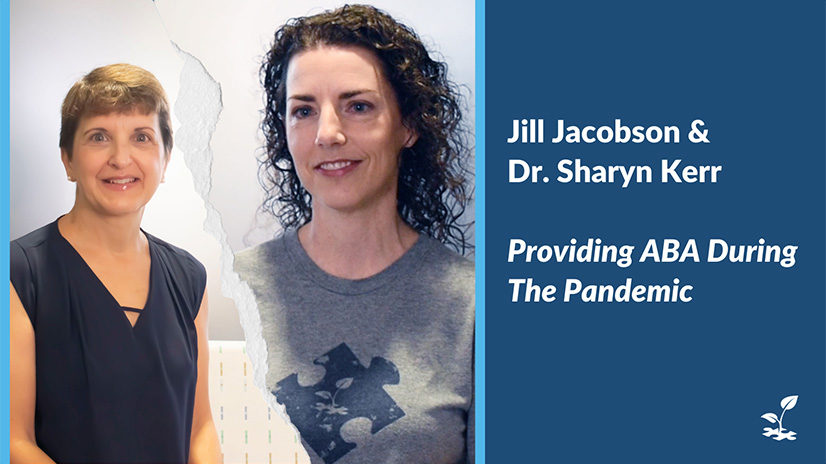
Season 1: Episode 4 – Providing ABA during a pandemic

Hosted by Dr. Sharyn Kerr, Jill Jacobson
March 20, 2024

Listen now:

or listen on your preferred platform:

Episode Description

In March of 2020 we all saw our lives drastically change as a global pandemic caused lock downs and business closures began. Many states were quick to identify ABA therapy as an essential service, however the work to ensure families safely received care and employees were able to continue in a secure working environment had just begun. Dr. Sharyn Kerr, Chief Operating Officer at BlueSprig, and Jill Jacobson, Chief Growth Officer sit down with Tim to talk about the challenges that BlueSprig faced during the early period of this pandemic. They also discuss the quick and effective decisions they made to create safe conditions for all those involved and how the process evolved over time. Our hope is that this episode can aid other providers and offer best practices for moving forward in our “new normal”.

Full transcript

0:06 Tim Crilly: Hello and welcome to ABA Unfiltered. I’m your host, Tim Crilly, and today we are joined by Dr. Sharyn Kerr, the uh Chief Operating Officer of BlueSprig, and Jill Jacobson, our Chief Compliance Officer, a little bit unwillingly. She’s our chief growth officer as well. So she wears two hats. Talk about the impact of COVID-19, the work they did to ensure that our families maintain treatment and what lasting changes BlueSprig foresees coming out of that entire process. So thank you both for joining us. I really appreciate you guys taking out some time to talk with us in our small little ABA Unfiltered community. I’ll give you a second to introduce yourself. And Sharyn, I was thinking about you coming on today. And over the last few years, I’ve been sort of introducing you as my clinical mentor as we enter into conversations with various people. And based on previous episodes of this and sort of the reputation that my clinical skills have been taking, I decided I’m going to pivot and start introducing you as one of my professional mentors. So Dr. Sharyn Kerr, one of my professional mentors I’ve known a long time, joining us. So could you please give the audience a quick intro who you are, what you do at BlueSprig, and how you ended up here? Because it’s a it’s a pretty good story.
1:16 Dr. Sharyn Kerr: Thank you for having me. In addition to my role as Tim’s professional mentor, I am the chief operating officer at BlueSprig. I actually started my career in the ABA industry 20 plus years ago now. I started as, I guess, an RBT before there was such a thing as an RBT. And like many people fell in love with the world of autism and ABA and the impact that it could have on their lives, and worked my way up, uh, became a BCBA. Along the way, also uh became a licensed psychologist. You know, as time went on, I tended to take on a little bit more operational roles. And, you know, I went back to school, got my MBA. I guess following Tim about two and a half years ago, I made the leap of faith to BlueSprig and haven’t looked back. It’s been an incredible journey so far. So thanks for having me, Tim.
2:10 Tim Crilly: Sure. Thanks, Sharyn. Jill, known you slightly less, but impressed nonetheless. So go ahead, give us a little taste at Jill Jacobson.
2:18 Jill Jacobson: Well, that’s very kind of you, Tim. I talk about that I’m the elder at BlueSprig. So I have been actually in healthcare for over 34 years, 25 of those spent in hospice and home health. I’m an RN by background, and with many years in operations and compliance and M&A activity, former president of a national ABA provider, which is what led me to BlueSprig. So I’ve been in this space now for about six years. As Tim said, currently the chief growth officer and the I’ll say newly appointed Chief Compliance Officer for BlueSprig. But I’ve been here now for about um just over a year, and like Sharyn, just great team, never look back.
3:00 Tim Crilly: Great, thank you. Today we’re gonna talk about sort of 2020. It was plugging along, it was sort of felt like a normal year at the beginning. We were all sitting in a giant ballroom celebrating our achievements over the last few years. Everything was was going well. We had a plan, and then everything changed as it did for everybody. Where were you guys? Do you remember kind of where you were when you realized, wow, this is actually a lot more serious than we might think it is? Jill, how about you? You’re you’re nodding. I know the audience can’t see that. My mom who’s who’s listening can’t see that.
3:30 Jill Jacobson: You know, absolutely. I I think there’s there’s probably two or three things that come to my mind about one to two weeks before we did a transformative deal at the beginning of the year. I reached out to Sharyn, you know, being the only nurse in the company, and I remember saying to her, hey, are we experiencing any challenges and getting any PPE? I thought, yeah, somebody better ask the question. She’s like, no, no, no, no, not really. Then the weekend before we did the deal, Sharyn and I were on the phone on a Saturday night. We have offices and markets out on the West Coast, right? And so they were a little ahead of the rest of the country. And we had a COVID-19 issue in that West Coast market, and you know, we started to scramble a little bit and make some decisions and put some things to writing. And then it was four days, I think, after we closed that deal that the decision was made that we were not going to travel to Houston for a board meeting that week. And that’s when I knew I thought, oh, okay, this is this is maybe bigger than a couple of markets in the West Coast.
4:34 Tim Crilly: Yeah. What about you, Sharyn? When did it hit you?
4:37 Dr. Sharyn Kerr: I would agree that the timing with Jill, I would say that a couple of weeks prior to that, we had our first experience. We had a BCBA supervisor that was providing some consultation in a school setting. An employee of the school was diagnosed with COVID. And so we shut down that entire clinic. And it was before testing was available, before we knew a lot, but we knew that this could be serious and we needed to shut it down. And so that was kind of our our my first exposure to wow, this could be significant. These kids are going without services because of a potential exposure. And then, you know, we handled, you know, cleaned out the clinic, got your deep cleaning, made sure everyone was okay, and then we reintroduced services. And then I’ll say it was probably about a month after that that we started to get people calling, like, what are we doing? What are we doing? This is looking bad. And at that point, it was like, okay, this is not going to be a once-off here or there. It’s becoming more prevalent, and we need to kind of figure out what our plan is. So yeah, I’d agree with you on that timing for sure.
5:46 Tim Crilly: Yeah, so pretty early on, and you know, I it’s hard to remember because everything’s super fuzzy at this point, you know, so far removed, but it did feel like someone that wasn’t necessarily involved in a lot of the initial discussions. BlueSprig was out in front of this. You know, I really got a sense that everyone was taking it really seriously, even in maybe states where other people around us maybe weren’t. So, you know, I think from that standpoint, what did you guys start to do? What were those initial steps? Because I know for us, we had two things to consider. You have the families, the treatment, but you also have employees. So, what were your thought processes behind how do we balance the safety of everybody, but still provide the services that we deem to be essential?
6:29 Dr. Sharyn Kerr: I I think you hit the nail on the head, Tim. I think that was the question we asked ourselves from the beginning. We identified early on that this was a necessary service and we could be doing a disservice to the children we work with by just shutting down completely and not providing any service, especially some of our clients that had more significant deficits. You know, there was a real health and safety aspect to not providing services. But at the same time, we needed to be very mindful of keeping all of our employees, all of our clients and their families safe. So with that kind of balancing act in mind, uh, you know, we made the decision very early on to shut down our clinics and move services to either telehealth, where appropriate, or in the home again, where appropriate. And once we made that decision, you know, we got our team together pretty quickly. And we were very fortunate we had, you know, people from you know different backgrounds and disciplines who were able to really help us develop a plan. And it started with you know developing assessment tools, you know, is this home appropriate for us to provide services in? Is this client an appropriate candidate for telehealth? And we had to develop those assessments. And some of the assessments we had, so it was kind of tweaking those assessments to make them applicable to the COVID world we’re now in. And then you’re going from those assessments then to training. You know, how do we make sure all of our staff are trained to be able to implement services through telehealth? How do we make sure our clinicians are trained to provide services in the home? We were fortunate that we were a hybrid model from the beginning. We provided services in home and in clinic, but we certainly had more children receiving services in the clinic. So providing services in the home was newer to some of our staff. So it really began with identifying what we needed to do, making sure people were trained, and then implementing it. I think the other thing that we did really early on, which was really beneficial for us, was we reworked case allocation and schedules to put people in what we call pods. So we said, look, we don’t want any more than two children working with two RBTs and one BCBA. And the thought process behind that was if someone is exposed, if someone does get sick, if something happens, we shut down that pod immediately. And the worst, it’s impacting services for two clients, not 30 clients in a clinic. So that was really a pivotal part of our plan to enable us to continue to provide services for as many children as possible while keeping people as safe as possible.
9:11 Tim Crilly: Thank you, Sharyn. That was you know very, very detailed, and I think it really probably saved a lot of opportunity early on, kept people safe and healthy. And I’m sure Jill, you just reached up on the shelf behind you, dusted off the uh Blue Spring pandemic manual, and it was just all sitting there ready to go for you. Is that does that sound about right?
9:31 Jill Jacobson: Really, really close, Tim. You know, I think that we were fortunate, right, at that point in time to have existing infection control and management plans in place to complement our health and safety policies. So it’s true, we weren’t starting from square one, and that was a real plus. But, you know, instead of ensuring that we needed to ensure that everybody was on the same page to implement those best practices and to keep everyone healthy and safe. And to Sharyn’s point, you know, the majority of our services were still at that point being performed in clinics. Not that we didn’t have home-based services at the time, but that pivot not only in training them and putting the assessment tools in place, but also now how are you going to function in that home setting to keep yourself safe and the families in those homes safe and healthy as well. So we were fortunate to have what we had in place. But as we do today, it’s important to remember that our knowledge base continues to evolve and grow through this entire process. We joked at the beginning that our processes that we were putting in place would get us through about two weeks, and it has been spot on really every two to three weeks where you’re really evaluating and maturing those processes.
10:47 Tim Crilly: That’s great. And I think you know, it it speaks volumes to the leadership team and uh hard decisions that folks had to make. So, from that standpoint, you know, obviously someone like me, I’m not in and out of clinics. I can easily work from home. I know, Sharyn, you can, you prefer not to. I know you’re kind of getting to the dirt and grime of the real world more than me. So from that standpoint, you know, what were we able to do for our employee base as a whole? Because we have a wide range of different types of roles from administrative all the way down to those frontline RBTs. So, what was our approach as it related to comfortability related to your current job status?
11:25 Dr. Sharyn Kerr: I think the first thing we did is we really recognized who was essential versus non-essential to those children receiving services. And we made a conscious effort to keep all non-essential people away from our frontline therapists and away from our kids. It was really about minimizing any potential exposure, and the fewer number of people that our RBTs and BCBAs were in contact with, the better. So that was done from day one. The other things that we did is we implemented like daily health screening. And so we were asking every parent and every employee a series of questions. And to Jill’s point, as we learned more about COVID, we had to make adjustments to that screening form. But it was something we felt was really important because we wanted our families to feel safe receiving services, we wanted our staff to feel safe delivering services. So we asked questions about you know their travel, about exposure to other people in large groups, about you know symptoms, etc. And we did that, and we still do that today. We do that every morning. And if there are any red flags on those screening tools, we have a discussion so we can better understand the risk and make a decision about whether we will continue to have services that day or cancel them. We also, from the beginning, we made a decision to continue to pay our staff. What we didn’t want to have happen is staff not feeling well, staff potentially being exposed, but coming to work anyway because they felt like they needed to get a paycheck. And so we kind of implemented kind of what we call COVID pay. We tried to keep our staff’s uh our hourly staff uh paychecks as close to your pre-COVID hours as possible. The executive team donated uh the majority of their PTO so that we could donate that to frontline staff. So again, if they’re not feeling well, they can take the time off and get paid and not feel like they have to go to work and be unwell. So we tried to create a culture of we are going to do everything we can to protect you. And we want you to feel comfortable saying, I can’t come to work if you’re not feeling well or if there’s a risk of exposure. And I think that was well received, and I think that was really helpful in minimizing any, you know, potential exposure and transmission.
13:51 Tim Crilly: That’s fantastic. To be able to wrap your arms around that employee base and make people feel like they don’t have to choose the illogical choice is a great thing for them, I would imagine, kind of coming into work every day.
14:04 Dr. Sharyn Kerr: Sorry, Tim, I was just gonna add, you know, one other thing that we did was we recognized the amount of stress that our staff were under just because of COVID, you know, just living in a COVID world was incredibly stressful for our staff. And so another thing that we did is we ended up contracting with Talkspace, which is a text-based counseling service. And that was actually also well received because you know, we have you know great leadership and we have a great HR department, but sometimes it’s the needs of our staff are a little bit beyond maybe the support that we could give. And so to be able to connect our staff with trained professional counselors that could support them through some of the anxiety of living and working in this COVID world was was also particularly helpful.
14:49 Tim Crilly: So, you know, Jill, back in January, February, you and I were kind of making the luncheon circuit, the conference circuit. And, you know, we were getting pretty good at making friends and meeting new people. It took you a little while to trust me that I wasn’t gonna do something bizarre, but so far, so good, I assume. All that got blown up. And, you know, we were out there and we were having a little fun and meeting people. And I know talking to you since you know, travel is shut down, conferences obviously aren’t happening. You have had an opportunity to talk to a lot of those folks. Sort of someone owns a smaller organization or you know, very few employees, or limited in number of contracts, or whatever it might be, you talk to a wide range of owners and you’ve been able to impart some advice. And I know it’s not something you probably want to pat yourself on the back, but could you give us a little idea of sort of the conversations you were having, some of the panic that that might have been going on around you that you were able to try to help as best as possible?
15:43 Jill Jacobson: Tim, I think first and foremost, one of the first things we committed to just beyond our employees and our parents and our families was to the industry. And so we made a decision very, very early on that whatever we were developing, tools, resources, you know, Sharyn was just talking about the health screening tool, policies, procedures. I mean, we’ve created quite a bit of resources and documentation that we would share that with whomever, whoever needed it, whoever wanted it, whoever we were speaking to, whoever reached out to us, that we were going to share that work product. And so we didn’t want to see anybody that has less resources than us struggle with that. And so we did that numerous times. The conversations, you know, I think we’ve been through a little bit of our first life cycle through COVID now. Can’t believe I’m saying that at four and a half months in, but because you know, you have the folks and not necessarily directly related to their size, quite honestly, but folks who I say from one extreme of curled up in the corner and and shut off the light and tell me when this is over, and you know, we’ll get back on our horse again, to those who looked and mirrored maybe more of our practices of pivoting. I’m not sure anybody was, I mean, Sharyn and the clinical team pivoted a three-day weekend literally to home-based and teletherapy services. But you had those that truly got it and still do, and recognize that these are essential services and did the same things we did as far as pivoting. Some went directly to just teletherapy and others uh did some home and community-based as well. And I think that what I, you know, again, I continue to have these conversations with these folks. And I think that probably the most glaring was that those who today are through that, I’m gonna call it the first life cycle of COVID and are still standing. And some of them were able to get up to 80 to 90 percent of their hours in in billable services of where they were at in January and February because everybody was having a good start to quarter one. And others maybe not. But for those who have been through it, they say, okay, I I survived it and I don’t necessarily want to do this again. So looking at and just discussing their options of what does a partnership look like, not necessarily with us, but with anybody, and others who are taking note and and saying, How do I kind of make sure that my clients and my team members are taken care of? But boy, I just want to move on and be a part of of something, something different, maybe something larger. Yeah. Um, so we have all those discussions as well.
18:25 Tim Crilly: I think if we’re ever in a world where we can actually go to a conference again and be in a large group, and you know, you see Jill walking the uh the breezeway there, you really should go up and talk to her. Uh, she’s got a lot of great advice. And a lot of people might not get this reference, but that movie Miracle on 34th Street, where the Santa works at Macy’s and will say, Well, no, no, we don’t have the right product here. These skates aren’t any good. You got to go over to Gimbels. Jill’s gonna give you that kind of advice. She’s gonna tell you what’s the good fit for you because that process looking for a partner, it’s not just about who’s asking, it’s about the things that you need for you moving forward. And so if you ever see Jill, you might miss her. She’s not, you know, the tallest lady, but you know, if you see her, you should pick her brain a little bit because she’s gonna be honest with you and tell you the questions you should be thinking about. I’m sure about three people in the world get that reference at this point in time because that’s a really old movie. Moving on, Sharyn, what’s your main takeaway? What is going to stick with you in a point where we’re this is at you know, relatively behind us? What’s a lasting lesson for you running a large organization like you do?
19:30 Dr. Sharyn Kerr: Oh, that’s a tough question. I think that for me, out my takeaway was when you mission driven and you are surrounded by a group of really smart and passionate people that are also mission-driven, you can make just about anything happen. I would say that there were times when, like Jill said, we’re on the phone very late on a Saturday night, uh, but it didn’t feel like work. It felt like, okay, what do we need to do to keep people safe and keep these kids getting services? And I think that you to Jill’s point, every agency has had different ways at dealing with COVID. And I’m just incredibly grateful for the team that we have here at BlueSprig and our ability to stay focused on our mission and pivot as quickly as we did, and in a way that was, I think, fairly organized and methodical. To Jill’s point, things changed quickly. But we were having meetings every day. And, you know, we were updating people every day so that people felt like they were aware of what was happening. If they saw something on the news, they weren’t wondering what does that mean for us? It was like, let’s see what’s gonna be discussed on the call today. And so I think it was staying focused on our mission, coming together to problem solve, and just having the agility to pivot quickly, I think was key for us.
21:02 Tim Crilly: So basically, you don’t think there’s anything that this team can’t handle? That’s your takeaway. Sure. Okay, fair enough. I mean, I do remember there was like the second or third Sunday you sent out an email to about six or seven people on a Sunday morning. Is everyone free for a call? And we were all on the call in like 12 minutes, you know, to talk about I think teleph for a few minutes. So, you know, that was for me, it’s like, well, I’m just sitting around doing nothing. I can’t leave my house, so what do I care? But you know, just that everyone was able to just be on that call, really, you know, it showed me that this was a serious group of people that were ready to take it head on. So I I totally agree with you. What about you, Jill? What are you gonna take away from this other than early retirement when possible?
21:42 Jill Jacobson: Yeah. Okay, there are two things that I have repeatedly said since this started. Number one is that in my 34 plus years, never once when I have done a SWOT analysis has pandemic come up as a threat, and it will now, every single time I’m involved in it. These are things that, you know, you just don’t expect. So, but secondly, really, Sharyn summed it up. Before it came to Blue Spray, I’ve been around the block a few times and I said to Keith, look, it’s all about the team. And we have demonstrated that to each other, to others in this space, that it really is all about the team. And, you know, we might laugh when and joke about Tim, what you just said, there’s nothing we can’t do. But you know, honestly, I think we demonstrated that to ourselves. Uh, those first 21 days, and I counted them, were I mean, it was relentless. There was no way any of us slept more than two to four hours a night. And but you knew that you could rely on each other. You knew that even though our deadline for communications to marketing was midnight, we not didn’t quite meet that uh usually four out of seven nights a week. And I knew that when I laid down and got a couple of hours of sleep when I woke up from marketing would be that communication for us to review. And it really speaks very highly of the team that is here.
23:02 Tim Crilly: I think you guys are right. I think it’s that common theme. It’s a mission-driven, dedicated group of people. And I know we’re people that listen are gonna accuse us of this being a giant commercial, but you know, I think we really believe in what we’re doing and and who we get to do it with. So it’s just people being honest. You’re not the first people that have joined the podcast and sort of mentioned similar attributes about the people they get to work with.
23:22 Dr. Sharyn Kerr: I would just add to that, Tim, just to be clear, it’s really not just kind of the executive team. It was really everyone at Blue Spring. Like our RBTs, like there was some fear there, uh, especially in the beginning when there was still so much unknown, but they were kind of like put me in. Like these kids need our help. I’m not gonna be reckless, you know, I’m gonna make safe choices, you know, I’m not gonna get on a plane and travel, I’m not gonna go out partying on the weekend, I’m gonna stay safe so that I can go see these kids and provide the service that they require. And so it was like a dedication to the mission at all levels of the company that I think made this work. Because if we didn’t have our RBTs and our BCBAs kind of recognizing how important their job was, it doesn’t matter how good our pandemic planning was, if there’s no one there to implement the service, nothing to do.
24:20 Tim Crilly: The engine that drives the whole operation, absolutely. I appreciate that, guys. I think there was some heavy lifting, and I don’t think you know you guys realize how much you guys did for a whole bunch of people. So for someone that was on the sidelines a little bit and watching, I was really impressed with the way this group came together and and handled an impossible, unknowable situation. So it was really exciting to be a part of that. Before I let you go, I do have one question. It’s a yes or a no. And based on your answer, I need an operational definition. I’m gonna let Jill go first, Sharyn. So if you could remove your headphones so you don’t hear the question, because I want Jill to be allowed to hear your response as an Aussie, you know, just someone that’s you know, maybe didn’t grow up around these parts just to get your take on this particular topic. So we’ll give you a we’ll give you a thumbs up when we’re ready. Okay, Jill, you ready?
25:15 Jill Jacobson: No.
25:16 Tim Crilly: Well, tough. Okay, it’s yes or no, and I need basically you need to rationalize why you say yes or no.
25:23 Jill Jacobson: Okay.
25:24 Tim Crilly: Okay. Is a hot dog a sandwich?
25:27 Jill Jacobson: Yes. And uh my rationale there is that I came from Chicago, and there is uh at least in their opinion, I I can’t say I’m a hot dog eater at this point, but in the opinion of those from Chicago that is the Chicago dogs are the best hot dogs in the country. And so yeah, I believe that it is a a worthy entree as a sandwich.
25:57 Tim Crilly: Okay. Uh, producer Lucas, who some of you may or may not know, is loving that, by the way. He’s off camera, off screen right now. But okay, Sharyn, go ahead. Okay. So, Jill, you get to listen.
26:09 Dr. Sharyn Kerr: I feel like I’m on a game show and I’m like Door number three. I really wish that I could read lips right about now.
26:17 Tim Crilly: Just don’t be the one that goes one dollar on the uh. I hate that person. Okay, Sharyn. So it’s a yes or no question. I need an operational definition to support why or why not. You ready?
26:31 Dr. Sharyn Kerr: Yes.
26:32 Tim Crilly: Okay, is a hot dog a sandwich?
26:38 Dr. Sharyn Kerr: Uh no.
26:42 Dr. Sharyn Kerr: And you want me to tell you why?
26:44 Tim Crilly: Why? So if I read your definition, I know if I’m looking at a sandwich or a hot dog.
26:50 Dr. Sharyn Kerr: I would say a sandwich has like a top and a bottom, and at least one filling. And to me, a hot dog doesn’t have a top or a bottom.
27:03 Tim Crilly: So it has to do with the the way in which the bread is sliced or not sliced.
27:08 Dr. Sharyn Kerr: Yeah.
27:09 Tim Crilly: Okay. Fair enough. We’ve asked some pretty heavy hitters, some brilliant clinical minds. So we’ll have some data wrapped up on this after season one. So we’ll be able to publish a definitive paper on uh whether or not a hot dog is a sandwich. So I’m really looking forward to having my name on the only research study I’ve ever been a part of to be hot dog versus sandwich.
27:29 Dr. Sharyn Kerr: I can’t wait. I can’t wait to see you guys’ results.
27:33 Tim Crilly: Uh so thank you guys very much for joining. And to all you out there listening to ABA Unfiltered, I appreciate it. And uh please tune in next time for uh another. Hopefully, it can’t be as fascinating as this one, but hopefully a great episode of some some great guests and entertainment.
27:48 Dr. Sharyn Kerr: Thanks, Tim. Thanks, Jill.
27:50 Tim Crilly: Thanks.

Find a center near you.