
100%
of assessed domains showed growth on the Vineland-3 following 12 months of services
At BlueSprig, we focus on meaningful, measurable ABA therapy results, helping children build essential life skills, improve behavior, and thrive both at home and in their communities.
Ready to see what’s possible?
of assessed domains showed growth on the Vineland-3 following 12 months of services

of graduates from the Pediatric Feeding Disorders specialty clinic met their feeding goals

of caregivers expressed they were satisfied with services their child receives, felt involved in their child’s treatment, and comfortable implementing goals.

average reduction in severe behaviors, including hurting self and others, in those receiving services at The Behavior Centers

reduction in severe behaviors by time of graduation for a sample of 2024 graduates

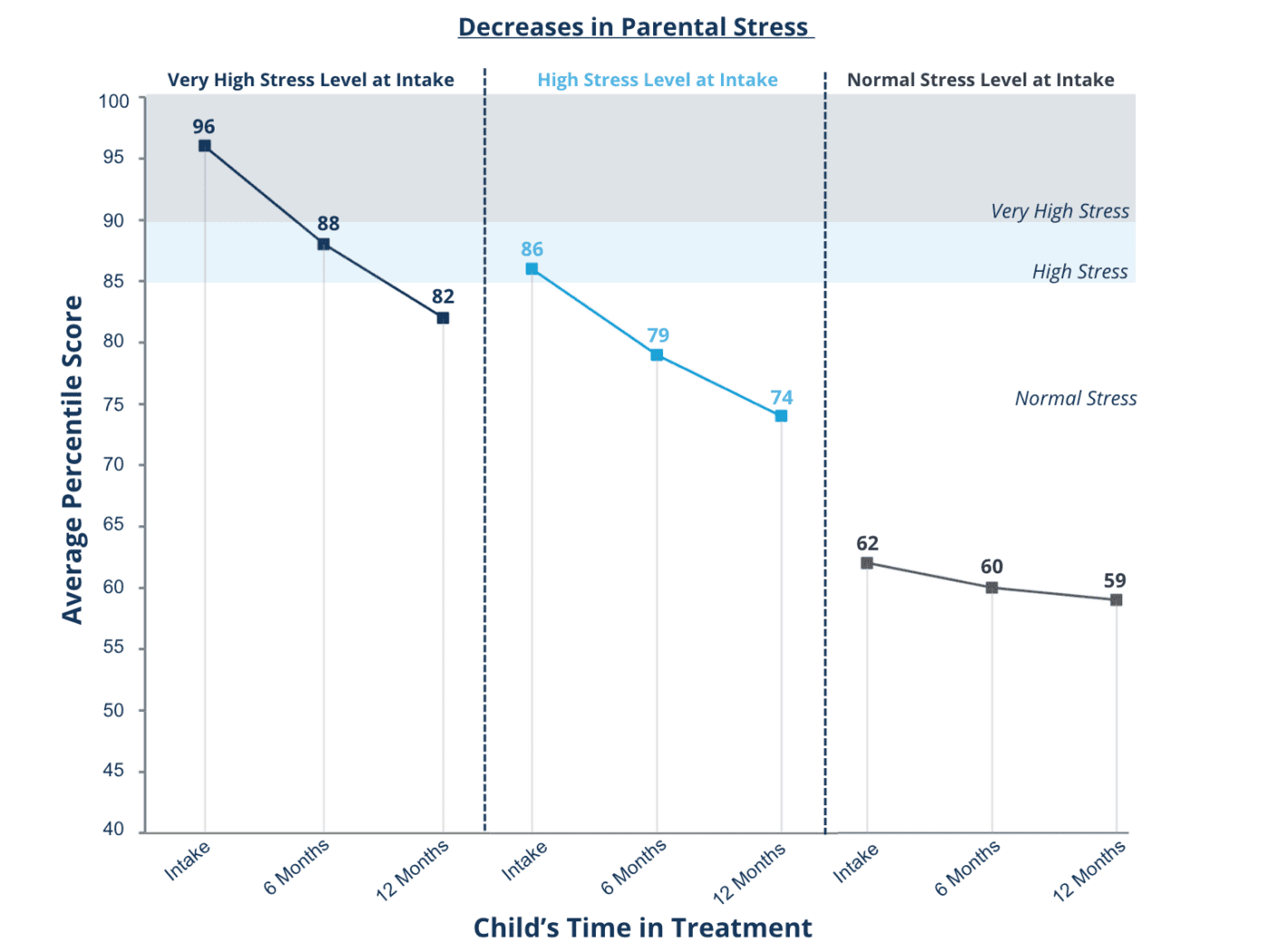
after starting at BlueSprig, caregivers with very high stress reported normal levels
*On average – based on PSI-4 results at 12 months.
So, what is the success rate of ABA therapy?
At BlueSprig, outcomes from the Vineland-3 assessment show significant gains in communication, socialization, and daily living skills.
On average, families see a 81% reduction in severe behaviors over time, and over 97% of caregivers report high satisfaction with their child’s progress. These results highlight the effectiveness of ABA therapy in driving meaningful, lasting improvements for children with autism.
Behind every milestone is a story. Our ABA therapy success stories come directly from the families we serve—parents and caregivers who have seen firsthand how individualized therapy can lead to life-changing progress. These real voices reflect the impact of our work and the hope it brings to children and their families. The results of caregiver surveys from 2024 and 2025 showed that, on average:
Of caregivers reported that their child’s ability to communicate improved.
Reported that their child displays less challenging behaviors.
Agreed that their child’s ability to interact with peers improved.
Shared that their child uses skills learned at BlueSprig in the home and community.
Testimonials were unsolicited from families no longer receiving services in accordance with the BACB Code of Ethics
Parenting a child with autism can come with emotional and mental challenges, but long-term ABA results extend beyond the child’s progress. BlueSprig’s therapy services have a proven impact on caregiver well-being.
According to the Parent Stress Index (PSI-4), caregivers receiving ABA services from BlueSprig experienced a significant reduction in stress, with many moving from clinically high levels to the normal range after 12 months of treatment.
These results highlight that quality ABA therapy not only supports the child’s development but also brings lasting emotional relief and stability to parents and caregivers.
Parental stress levels decreased after 6 and 12 months of their child receiving ABA services from BlueSprig.
One of the biggest challenges for many families is managing severe behaviors that can impact safety and daily life for the whole family.
One of the most impactful long-term effects of ABA therapy is the sustained reduction of severe behaviors that interfere with daily life. At BlueSprig, families consistently report meaningful progress in managing aggression, self-injury, and other challenging behaviors—results that are not only measurable but long-lasting. These changes improve quality of life at home, in school, and in the community.
Outcomes vary across programs, but data shows that children who attend our Behavior Centers (TBC) experience significantly greater behavior reduction compared to those in standard center-based settings, due to the higher staff-to-child ratio and intensive clinical support.
So, is ABA therapy worth it?
These results speak for themselves: BlueSprig’s programs help children replace harmful behaviors with safer, functional skills, benefiting not just the child, but the entire family unit.
Children who graduate from our Behavior Centers demonstrate some of the most impressive ABA therapy results, especially in terms of long-term behavior change. These intensive programs are designed for children with severe behavioral challenges, and they consistently deliver high success rates in preparing children for less restrictive environments, including traditional classrooms.
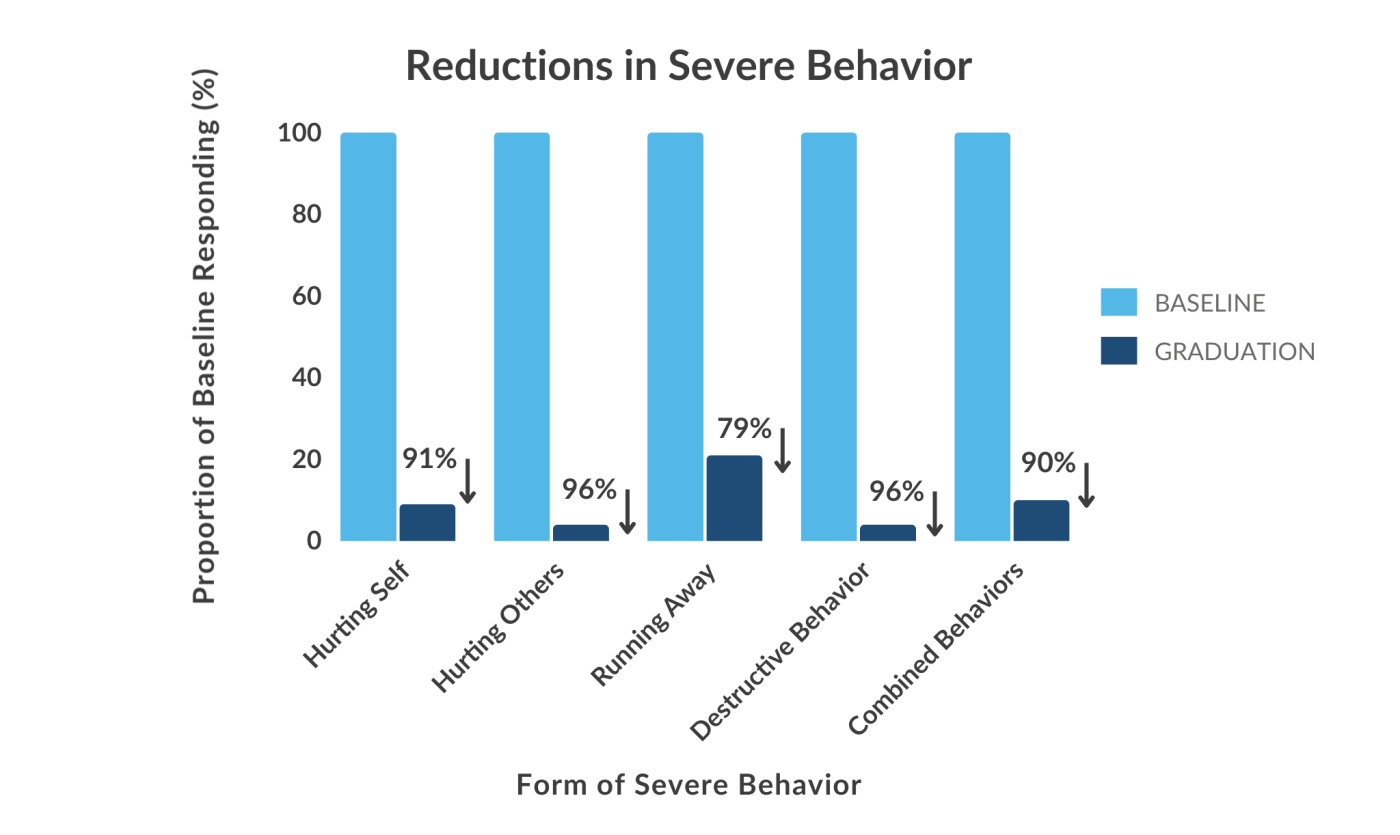
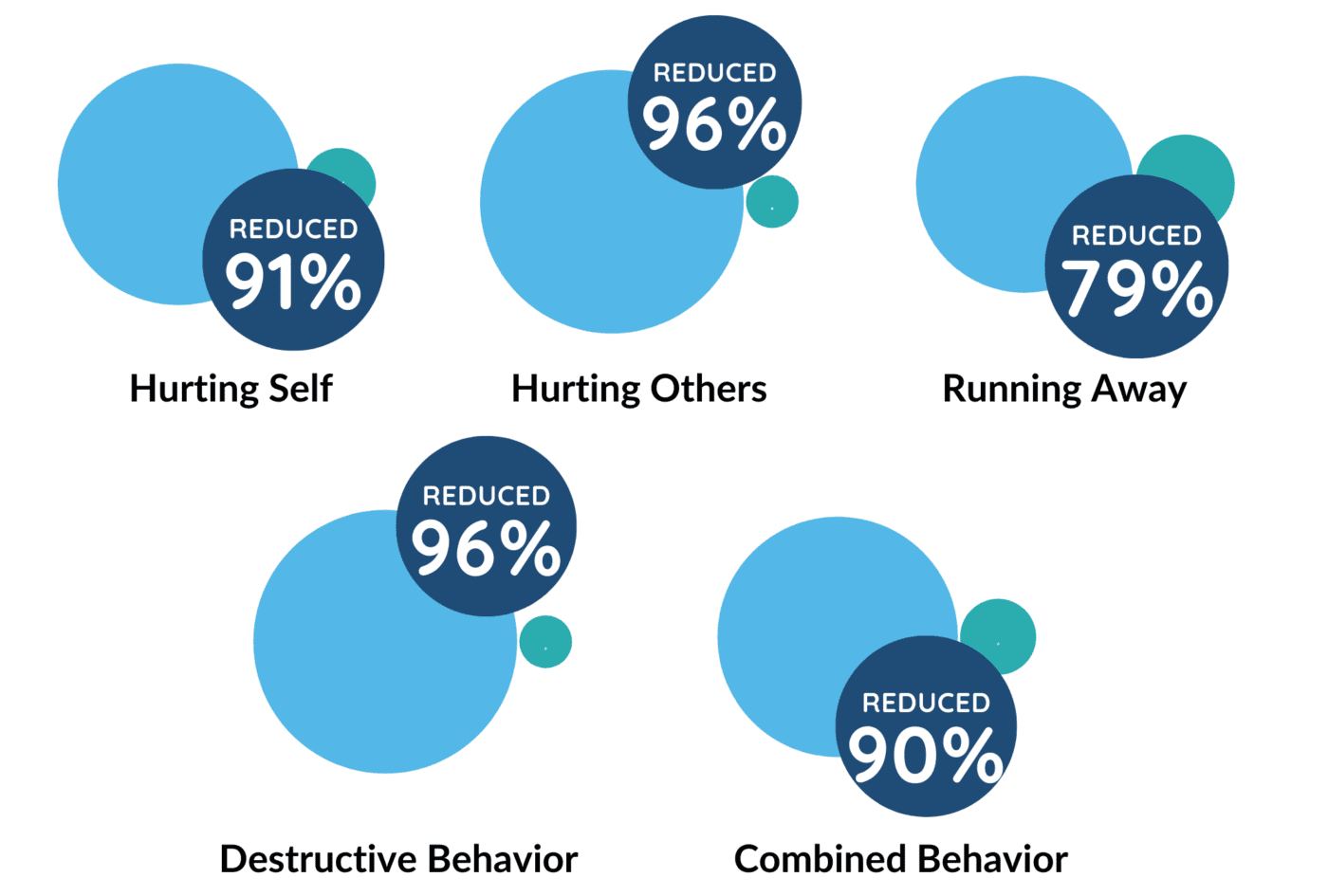
Severe behavior reduction data for 2024 graduates of The Behavior Centers (TBCs), BlueSprig’s specialty clinics providing intensive ABA services for individuals of any age impacted by severe behavior. Overall, treatment at TBCs reduced combined forms of severe behavior by 90%. This graph depicts the percentage reduction in each form of referred severe behavior by showing the percentage responding at time of graduation relative to time of admission (i.e., baseline; 100%).
Across all programs, BlueSprig graduates leave with lasting progress that reflects the true power of early, consistent intervention. They’ve shown improvements in communication, independence, emotional regulation, and social skills, proof of the long-term effects of ABA therapy when delivered by experienced, compassionate professionals.
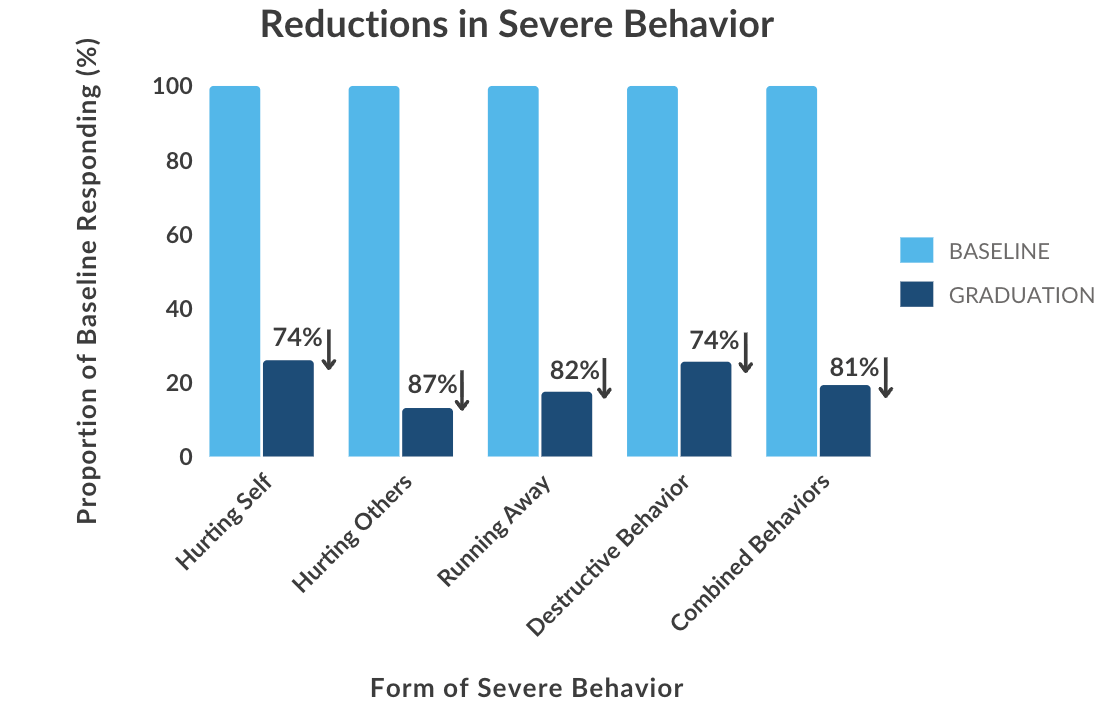
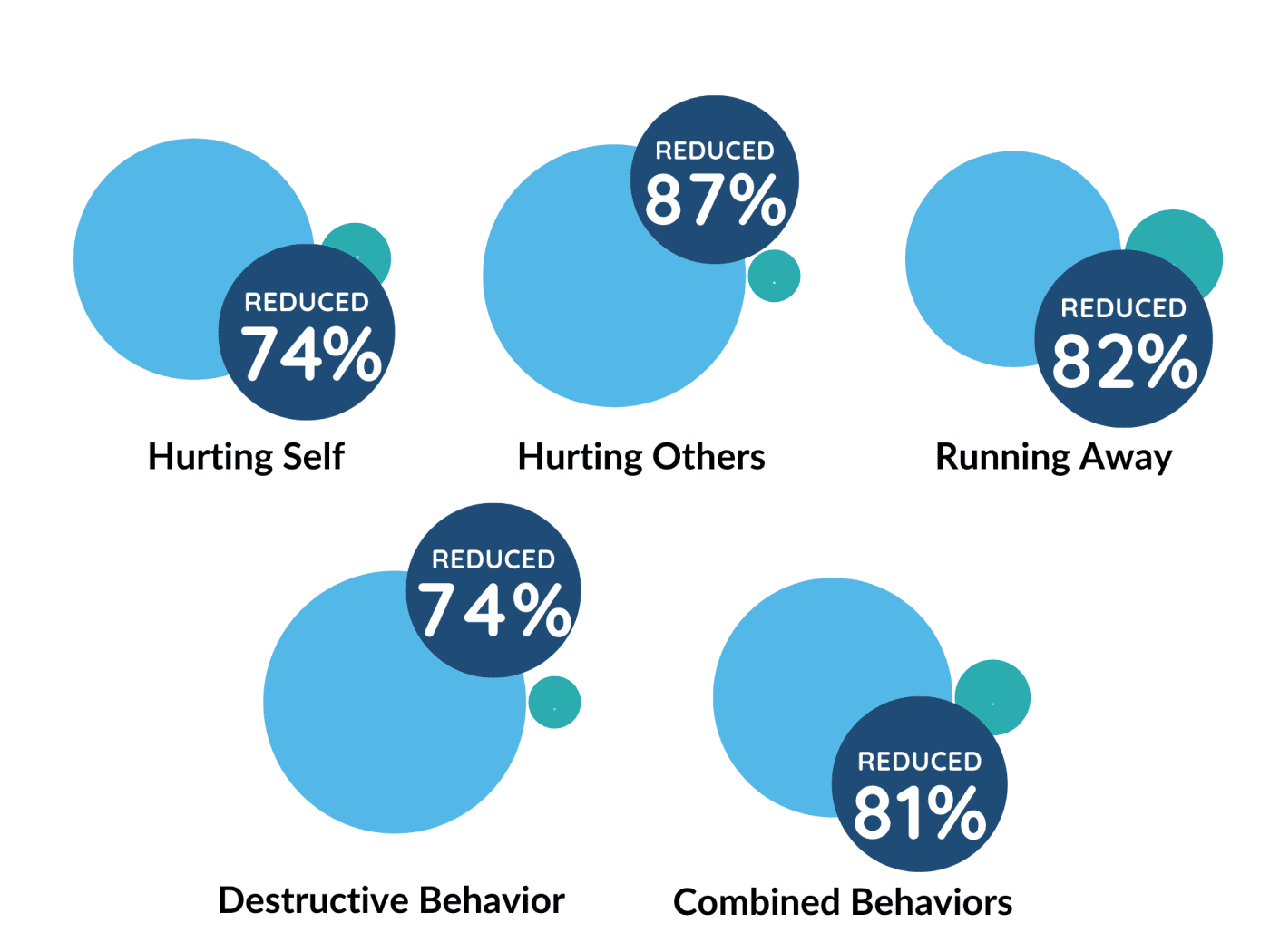
This graph summarizes outcomes for a random sample of children who graduated from BlueSprig services in 2024 and 2025 (n = 55), ages 3–14 years (M = 6.4), across 42 different center locations.
On average, children demonstrated an 81% reduction in severe behavior by the time they graduated from treatment, meaning that behaviors occurring at admission were reduced to less than one‑fifth of their original levels.
Each bar represents a specific form of severe behavior and shows how much responding remained at graduation relative to admission (with admission set at 100%), highlighting meaningful improvements achieved through treatment.

of assessed domains showed increases in growth scale values as measured by the Vineland-3.

Wondering what the success rate of ABA therapy really looks like? At BlueSprig, the results are clear: ABA therapy leads to measurable improvements in communication, socialization, daily living skills, and motor development, key indicators of meaningful progress for children with autism.
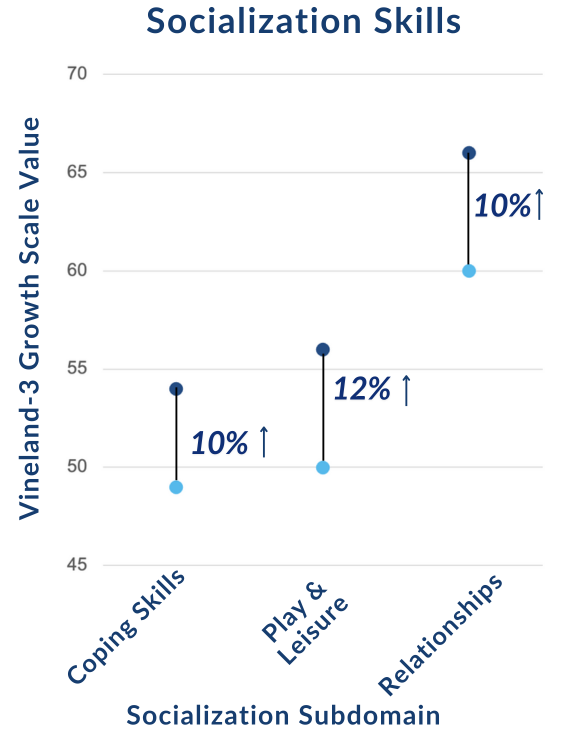
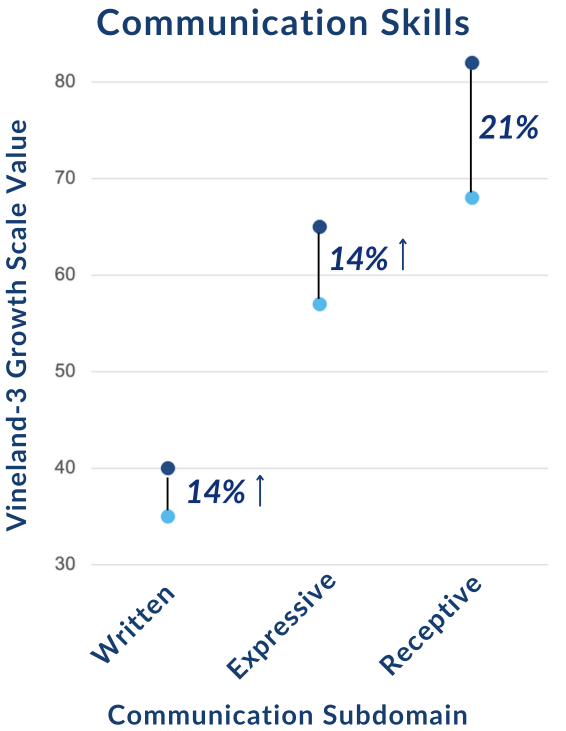
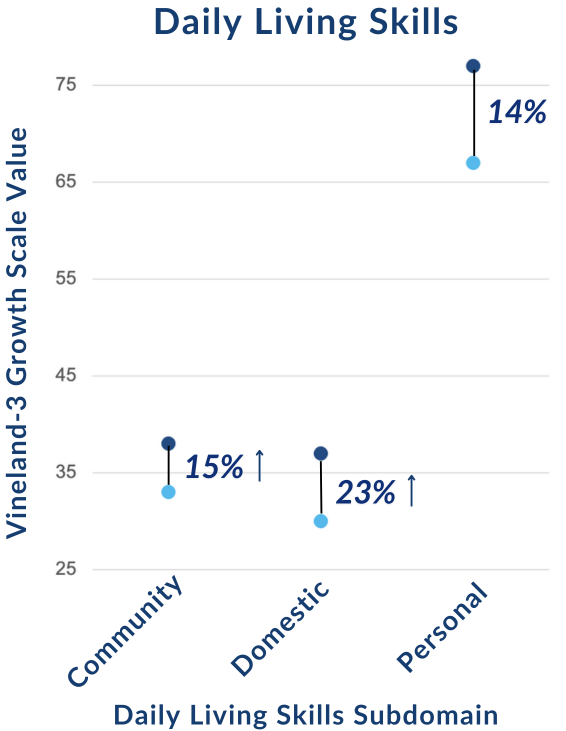
These results, from a sample of 582 clients of any age, receiving any level of service intensity, who have received ABA services at BlueSprig for at least 12 months, demonstrate the progress shown on a standardized assessment evaluating skills that are important for your child’s development and ability to function.
Parent involvement is vital to achieving lasting ABA therapy success. When caregivers actively participate in their child’s therapy journey, outcomes are stronger, more consistent, and more sustainable over time.
At BlueSprig, we view parents as essential partners in care. Through caregiver training, ongoing collaboration, and at-home strategies, families help reinforce the skills their child learns in session leading to better generalization across home, school, and community settings.
In fact, caregiver survey data shows that over 96% of parents report confidently using ABA strategies outside of therapy, with many noting improvements in their child’s behavior and communication in everyday life. This shared effort helps ensure that ABA therapy results extend far beyond the clinic.
Highly trained staff are essential to achieving meaningful and lasting outcomes in ABA therapy. When staff are well-prepared and credentialed, therapy is delivered with greater precision, consistency, and effectiveness, leading to stronger progress for clients.
At BlueSprig, we view our staff as the foundation of quality care. Through rigorous onboarding, ongoing supervision, and professional development, our team is equipped to implement evidence-based strategies that support skill acquisition and behavior change across diverse settings.
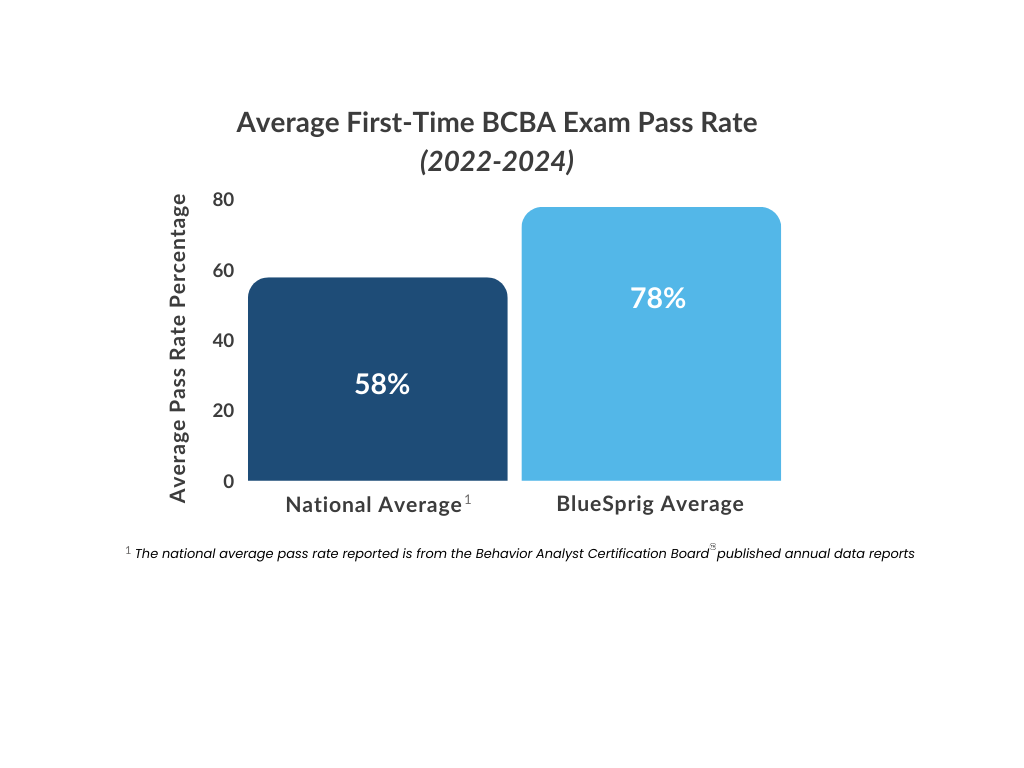
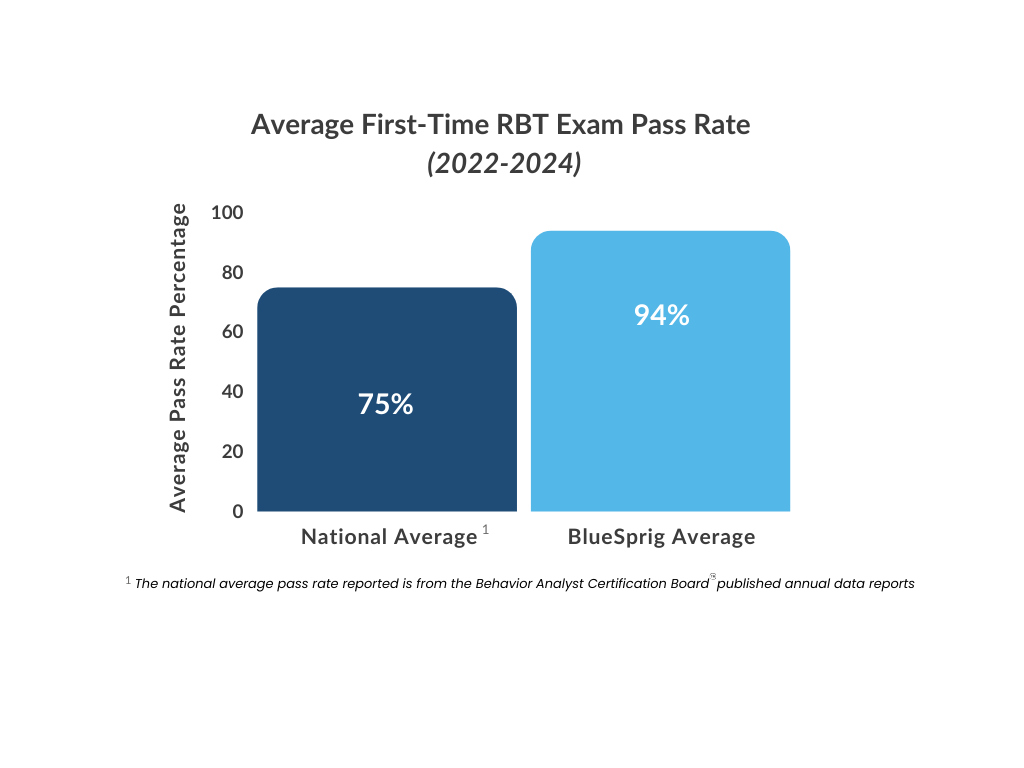
In fact, our internal data shows that first-time pass rates for the BACB’s RBT and BCBA exams consistently exceed national averages—highlighting the strength of our training programs and the readiness of our clinicians. These outcomes reflect our commitment to excellence and ensure that ABA therapy results extend far beyond the clinic.
At BlueSprig, our ABA therapy results are grounded in rigorous research, clinical data, and continuous innovation. Every strategy we use is backed by real-world evidence and peer-reviewed science.
This means the techniques we use to help children improve communication, reduce challenging behaviors, and develop daily living skills aren’t just best practices — they’re proven practices.